


Medical Device Battery Shipping
We focus on regulated handling, clean paperwork, shipment traceability and reliable delivery planning for healthcare supply chains where a rejected booking, customs hold or missing battery document can delay critical inventory.
What Medical Device Battery Shipments We Handle
We arrange DG freight for medical devices and healthcare equipment that include lithium-ion, lithium-polymer or lithium-metal batteries, including:
- Portable diagnostic devices with built-in rechargeable batteries
- Patient monitoring devices and medical electronics
- Therapy devices, handheld instruments and rechargeable accessories
- Replacement battery packs shipped with compatible medical equipment
- Spare lithium battery packs for service, maintenance or warranty supply
- Small lab, clinic and healthcare devices powered by lithium cells
- Battery-powered devices shipped from Chinese factories, OEM suppliers or distributors
For broader regulated battery cargo, our lithium battery shipping service covers additional lithium battery types and product categories beyond medical-device shipments.
Before booking, our team checks the device type, battery chemistry, watt-hour rating, packing method, origin supplier, destination country and available documents. This helps confirm whether the shipment can move by air, ocean, express-compatible channel or multimodal door-to-door freight.
Regulated Handling for Healthcare and Medical-Device Buyers
Healthcare battery cargo needs stricter control than ordinary electronics shipments. The device, battery specification and documents must match. The shipping label must match the UN number. The invoice and packing list must clearly describe the goods. If a medical device contains a lithium battery but the paperwork only says “electronics,” the shipment may face carrier rejection, customs questions or DG inspection.
We help reduce those risks by reviewing:
- Whether the battery is installed in equipment, packed with equipment or shipped alone
- Whether the battery is lithium-ion, lithium-polymer or lithium-metal
- Whether the shipment needs Class 9 lithium battery labels, lithium battery marks or a DG declaration
- Whether the packaging protects terminals, prevents short circuit and limits movement
- Whether the consignee, HS code, product description and battery documents are consistent
For healthcare buyers, traceability matters. A clean booking file should show what the device is, what battery it uses, how it is packed, which party supplied the documents and which destination rules apply.
UN Classification and Lithium Battery Compliance
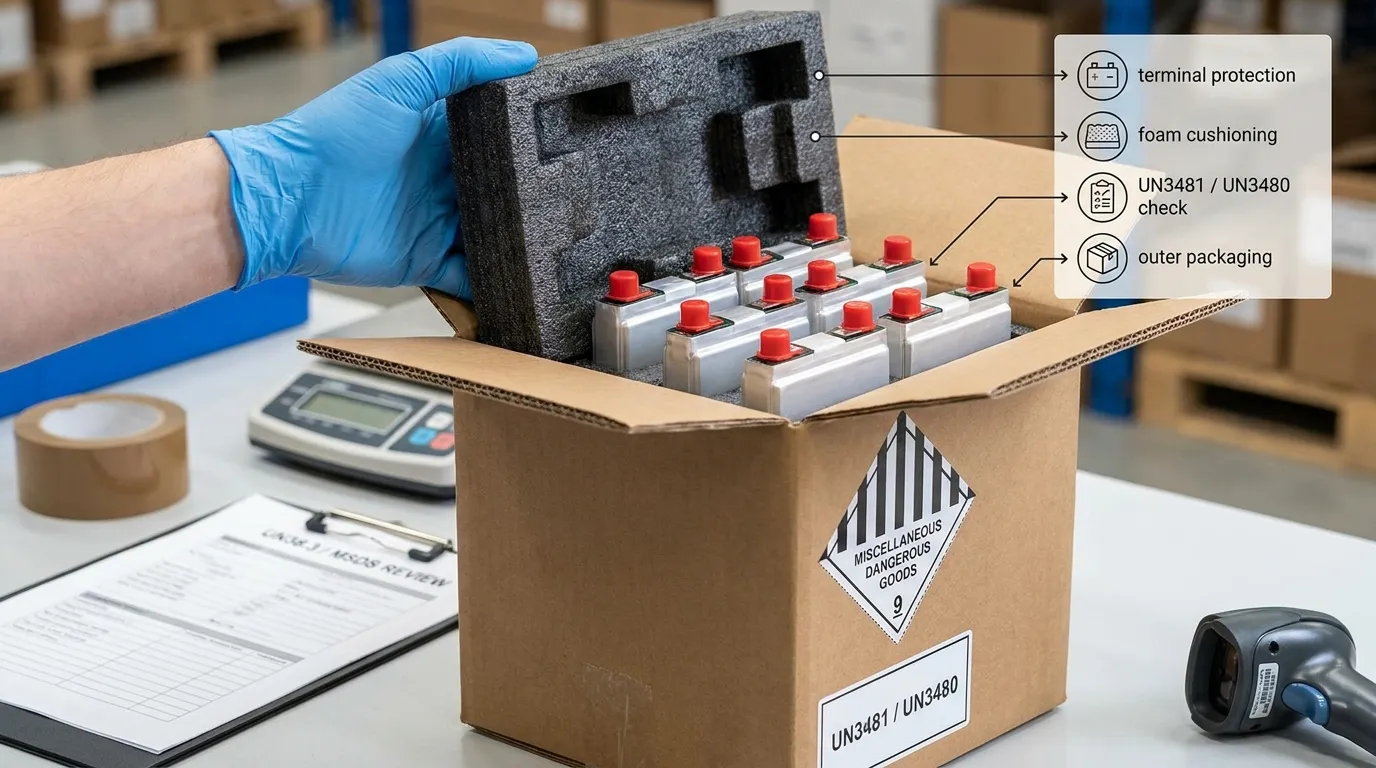
Most rechargeable medical devices with batteries installed in the equipment are commonly handled under UN3481 — lithium-ion batteries contained in equipment. If the lithium-ion battery is packed in the same box with the device but not installed, it may still fall under UN3481 as batteries packed with equipment. If spare lithium-ion packs ship alone, the classification may change to UN3480.
For lithium-metal medical batteries, the relevant classifications are usually UN3091 for batteries contained in or packed with equipment, and UN3090 for standalone lithium-metal batteries. Some special battery-powered mobility or equipment cases may involve UN3171, while UN3536 is an edge-case classification for lithium batteries installed in cargo transport units, not a normal medical-device shipment category.
Key compliance items include:
- UN38.3 test summary or report
- MSDS/SDS for the battery
- IATA DGR rules for air freight
- IMDG Code requirements for ocean freight
- Class 9 lithium battery label where required
- Lithium battery mark where required
- Cargo Aircraft Only label for restricted air shipments
- Proper shipping name and UN number
- DG declaration when required by the carrier or route
- Short-circuit protection and compliant outer packaging
For standalone lithium-ion batteries by air, state-of-charge control can be critical. A 30% SOC limit often applies to UN3480 air shipments. For devices under UN3481, the requirement depends on the exact packing instruction, battery configuration, carrier policy and route, so it must be checked before booking rather than assumed.
Shipping Modes and Lead-Time Planning
Exact transit time is confirmed at the quote stage based on origin city, destination country, carrier availability, customs channel, battery classification and service scope.
| Mode | Best For | Compliance Notes | Lead-Time Planning |
|---|---|---|---|
| Air freight | Urgent medical-device inventory, smaller cartons, higher-value goods | Strict IATA review, possible CAO restriction, document pre-check required | Fastest option, confirmed per route |
| Ocean freight | Larger volumes, heavier cartons, less urgent replenishment | IMDG packaging, labeling and customs documents must be prepared correctly | Slower but often more cost-efficient |
| Express-compatible DG channel | Small compliant shipments where carrier accepts the battery type | Acceptance depends on UN number, watt-hour rating, packing and destination | Useful when eligible, not guaranteed for all DG cargo |
| Multimodal door-to-door | Buyers needing pickup, export, freight, import and final delivery under one plan | Best for DDP/DDU coordination and customs visibility | Planned by lane and service level |
For related heavy battery cargo outside the medical-device category, see our forklift & industrial battery shipping service. For consumer mobility battery shipments, our e-bike battery shipping service covers a different set of product and carrier requirements.
Our 5-Step Shipping Process
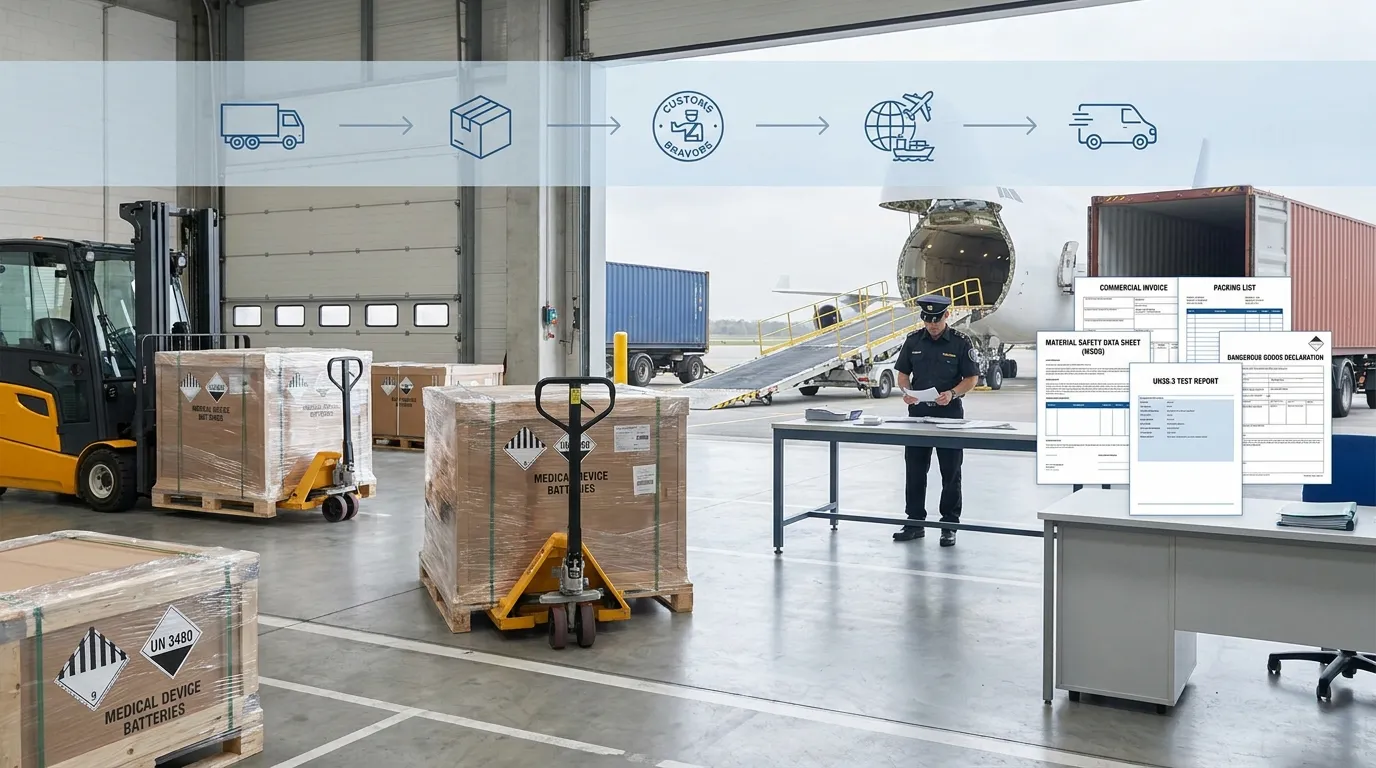
1. Supplier Pickup in China
We collect shipment details from your factory or supplier, including carton count, weight, battery specification, product photos, destination address and requested Incoterm. Pickup can be arranged from Shenzhen and other China supplier locations.
2. DG Packing, Labeling and Document Review
The shipment is checked for battery classification, packaging method, label requirements and paperwork consistency. Terminals must be protected, batteries must not move freely inside the carton, and the outer packaging must be suitable for transport.
3. Export and Customs Preparation
We prepare the shipment file for export, including commercial invoice, packing list, battery documents and DG paperwork where required. Clean descriptions help customs understand that the goods are medical devices with regulated batteries, not undeclared general electronics.
4. Freight Booking and International Transport
Based on the cargo profile, we select a suitable air, ocean or multimodal channel. Battery cargo is booked according to UN number, packing status, destination country and carrier acceptance rules.
5. Destination Customs and Final Delivery
For DDP, DDU, FOB or CIF shipments, the service scope is confirmed before booking. Door-to-door delivery can include destination customs support and final-mile delivery to warehouse, distributor, clinic supply chain partner or business address.
Documents Needed Before Booking
A complete document set helps reduce rejection risk and customs delays.
| Document | Why It Matters |
|---|---|
| UN38.3 test summary/report | Shows the battery passed required transport safety testing |
| MSDS/SDS | Provides battery chemistry, hazard and handling information |
| Commercial invoice | Supports export, import declaration and customs valuation |
| Packing list | Confirms carton count, weight, dimensions and packed goods |
| Battery specification | Helps confirm Wh rating, chemistry and classification |
| Product photos | Shows whether the battery is installed, packed with equipment or separate |
| DG declaration | Required for certain regulated routes and carrier bookings |
| HS code, if available | Helps customs classify the product more accurately |
| Consignee and destination details | Needed for customs clearance and final delivery planning |
If documents are incomplete, we identify the gap before shipment moves. That is usually safer than discovering a missing UN38.3 file after the goods reach an airport, port or export warehouse.
Why Healthcare Importers Choose Fexbuy
Fexbuy is a Shenzhen-based dangerous-goods freight forwarder with 21 years of battery logistics experience. Our team supports China-origin lithium battery shipments to the USA, UK, Germany, EU countries, Canada and Australia.
Healthcare buyers choose us for:
- DG-focused lithium battery handling
- UN38.3, IATA and IMDG compliant shipping support
- DDP, DDU, FOB and CIF service options
- Door-to-door coordination from China suppliers
- Low inspection rate through cleaner shipment preparation
- 98% on-time performance record
- Free Quote and WhatsApp RFQ support
The goal is simple: classify the cargo correctly, prepare clean documents, select a realistic shipping mode and keep the shipment moving with fewer avoidable delays.
FAQ
What documents are required for medical device battery shipping?
Most shipments need a commercial invoice, packing list, MSDS/SDS, UN38.3 test summary or report, battery specification and product photos. Some routes also require a DG declaration, Class 9 label, lithium battery mark or carrier-specific booking form.
Are medical devices with installed lithium-ion batteries classified as UN3481?
Often, yes. A rechargeable device with lithium-ion batteries installed is commonly handled as UN3481, lithium-ion batteries contained in equipment. If batteries are shipped separately, or the chemistry is lithium metal, the UN number may change.
Can medical devices with lithium batteries ship by air?
Many can ship by air, but acceptance depends on the battery type, watt-hour rating, packing method, UN number, documents, carrier rules and destination. Some shipments may require Cargo Aircraft Only handling or may be better suited to ocean freight.
Does the 30% state-of-charge rule apply?
The 30% SOC limit is especially important for standalone lithium-ion batteries shipped by air under UN3480. For batteries installed in medical equipment, requirements depend on the exact classification, packing instruction and carrier policy.
Can you handle DDP door-to-door delivery?
Yes, DDP and DDU options can be planned for eligible shipments to the USA, UK, Germany, EU countries, Canada and Australia. Final service scope depends on cargo details, destination address, customs requirements and available documents.
What causes medical-device battery shipments to be rejected?
Common causes include missing UN38.3 documents, unclear MSDS, wrong UN number, poor product description, mismatched invoice details, unprotected terminals, incorrect labeling, undeclared batteries or choosing a carrier that does not accept the battery type.
Get a Free Quote for Medical Device Battery Freight
Send your device name, battery type, UN number if known, watt-hour rating, carton quantity, gross weight, dimensions, origin city, destination country, destination address, MSDS/SDS, UN38.3 file and preferred Incoterm.
Contact Fexbuy for a free quote via WhatsApp or email, and our DG logistics team will review your shipment details, confirm the suitable route and help move your medical-device battery cargo from China with compliant documentation and reliable delivery planning.


