


Sodium-Ion Batteries: UN38.3 Battery Shipping Compliance Guide
Standards on Testing, Packaging, and Transport for Safe Global Logistics
1. The Increasing Demand for Safe Global Logistics for Sodium-Ion Batteries
Sodium-Ion Batteries (SIBs) are becoming known as a good alternative for certain applications to lithium-based technologies, especially in the areas of stored energy in the grid, low speed electric vehicles, and temporary back-up power. Compared to the past, greater international shipment of these energy-dense products are expected as production volume increases.
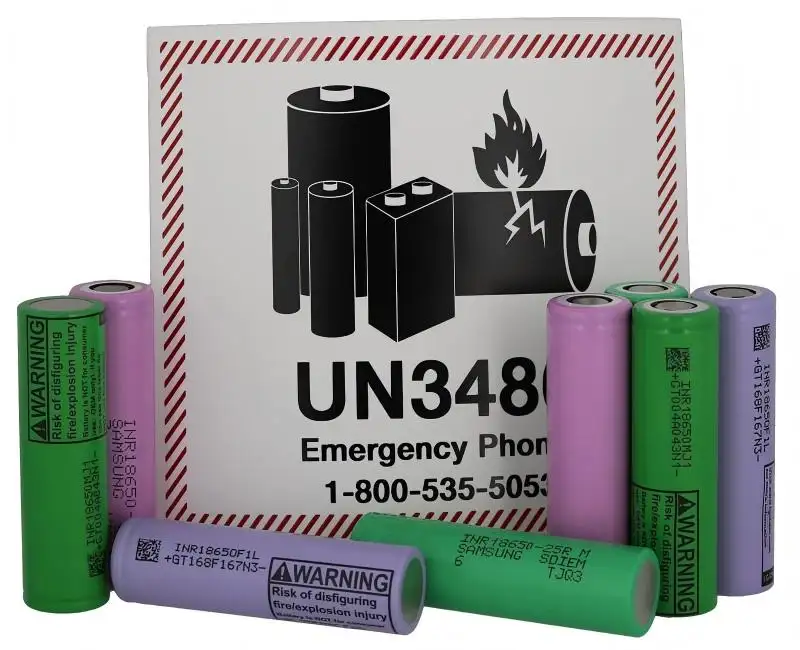
Sodium-ion chemistry involves different risks compared to lithium-ion systems, but it also poses transport risks, primarily thermal runaway, short-circuit, and leakage of the electrolyte. Thus, compliance to dangerous goods regulations along the logistics chain is a must for safety assurance to the regulators and transporters.
In the above context, compliance to UN38.3 for the international transport of batteries has become a de facto standard for logistics services worldwide.
2. The UN38.3 Test and Its Importance for Battery Transportation
UN38.3 is a reference to a section of the UN recommendations on the transport of dangerous goods, Manual of Tests and Criteria. Originally, this was specific for lithium metal and lithium-ion batteries. It refers to a set of tests that are termed environmental, mechanical, and electrical that can be used to determine the safety of batteries for dangerous goods transport.
Sodium-ion batteries have their own UN Numbers, which are:
•UN 3551 – Sodium-ion batteries contained in equipment
•UN 3552 – Sodium-ion batteries packed with equipment
•UN 3553 – Sodium-ion batteries transported on their own
However, the UN38.3 test structure is the most accepted safety standard for transport and logistics services.
3. Key UN38.3 Testing Procedures (T.1–T.8)
The procedure UN38.3 dissects the bulk of tests involved for transport of dangerous goods.
| Test | Condition | Purpose for Sodium-Ion Batteries |
| T.1 Altitude | Low pressure (≤11.6 kPa) | Tests for assurance of air travel integrity |
| T.2 Thermal | -40°C to +75°C cycling | Tests seal and stability of the battery under stress |
| T.3 Vibration | All frequency sweep Generally | Simulate the vibration of transport via road, rail and air |
| T.4 Shock | 150g / 50g | Tests for the effect of sudden transport shocks |
| T.5 External Short Circuit | ≤0.1 ohm at 55°C | Tests for safety assurance during a short circuit |
| T.6 Impact / Crush | Mechanical force or impact | Tests for safety during crush impacts |
| T.7 Overcharge | Controlled overcharge | Tests for control system and safety during an overcharge |
| T.8 Forced Discharge | Deep discharge | Tests safety during an excessive discharge |
Depending on chemistry and design variations, additional documentation on thermal stability or cell structure may be requested. Early coordination with an accredited testing laboratory can significantly improve approval efficiency for UN38.3 battery shipping.
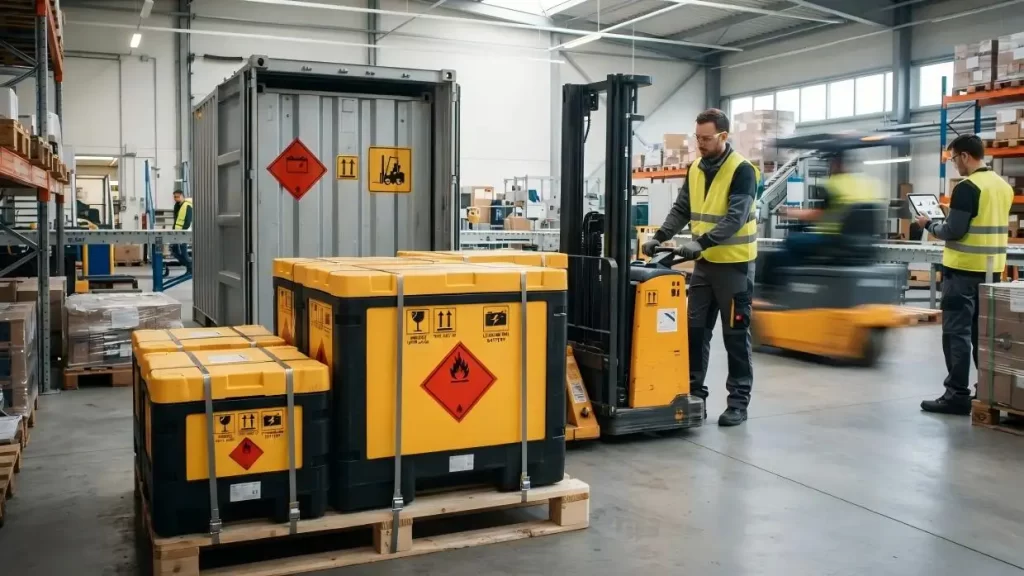
4. Packaging Requirements for UN38.3 Battery Shipping
Transit safety is primarily maintained via proper packaging. Sodium-ion batteries are generally classified as Class 9 dangerous goods. Thus, proper packaging is a necessity.
Key Packaging Requirements:
•UN-certified outer packaging
– Must be capable of withstanding pressure, and both drop and stacking forces and bearing a valid UN specification mark
•Short-circuit prevention
– Accomplished through insulation of battery terminals
•Shock and vibration protection
– Batteries must be completely immobilized via cushioning.
•Segregation compliance
– Transport regulations may necessitate that some shipments are kept separate from other hazardous materials.
•Proper labeling
– As appropriate, packages must bear the Class 9 hazard label, the applicable UN number (e.g. UN 3552), and, if applicable, a battery handling label.
5. Documentation and Marking Requirements
The documentation for UN38.3 is the most important and most time-consuming part of the process. UN38.3 shipping is based on there being no delays. Incomplete or inconsistent documentation is the primary cause of delays.
The main required documents are:
• UN38.3 Test Summary
– This summary includes the testing laboratory, the product associated with the test, and the outcome of the test.
• Material Safety Data Sheet (MSDS)
– MSDS includes the product’s characteristics, the product’s hazards, and the information for the responders in the case of an emergency.
• Dangerous Goods Declaration (DGD)
– This identifies the proper shipping name, the UN number and class, the subdivision of the hazard, and the quantity.
• Air and Ocean Transport Documents
– Statements of compliance with the IATA Dangerous Goods Regulations (DGR) or the IMDG Code must be included in these documents.
• Customs Documentation
These are documents required by the importing nation’s law.
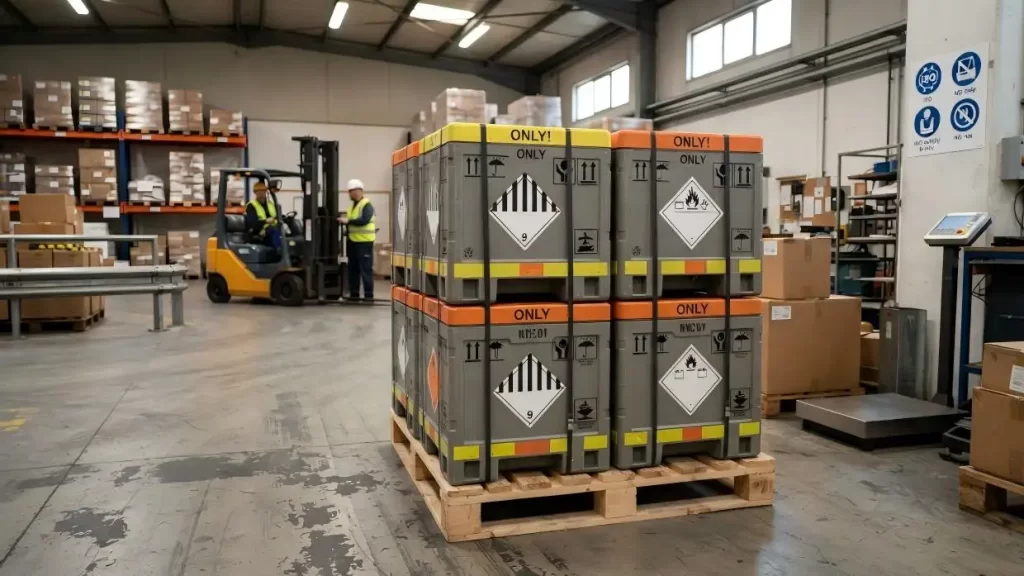
6. Transport Mode Selection for Sodium-Ion Batteries
The operational and regulatory constraints for the transport of Sodium-Ion Batteries for each mode of transport are unique.
Air Freight
•UN 3553 shipments have strict acceptance conditions.
•Airline approval is normally required.
•Limits to the state of charge enforced (usually ≤30%)
•Preference for Cargo over Passenger Air Transport.
Ocean Freight
•Bulk transport preferable (FCL/LCL)
•Governed by requirements of the IMDG Code.
•Transit times are longer but there is greater flexibility with transport capacity.
Road and Rail
•Governed by ADR or regional DG Regulations
•Common for regional and last-mile delivery.
•Pack and label to class 9 of the HS.
The use of a multimodal logistics strategy would provide the optimal balance for cost, speed and regulatory compliance.
7. Common Challenges in UN38.3 Battery Shipping
•Regulatory Evolution
– Changes to regulations for sodium-ion batteries are expected. Changes to IATA DGR and the IMDG Code will directly affect compliance.
•Test Validity Issues
– Some carriers require a recent test summary or require testing the design again.
•Packaging Limitations
– Large format cells or prototype cells may require special, design-specific packaging.
•Delays due to customs inspections
– Inaccurate HS coding and/or missing Dangerous Goods documentation can lead to an inspection.
•State of Charge
– There are restrictions on the transport of batteries by air due to the increased risk.
8. Considerations for Future Transportation of Sodium-Ion Batteries
As sodium-ion battery technology matures, the regulations around them will begin to crystallize. In the meantime, the UN38.3 standard will be the most commonly adopted regulations for the safe transport of sodium-ion batteries.
Ongoing collaboration between the manufacturers and the testing and logistics service providers will promote compliance and streamline the supply chain.
Integrated Logistics Support
Complete logistics services for the UN38.3 standard will help reduce operational burdens for the majority of companies.
Fexbuy offers integrated services for:
•Guidance and testing for UN38.3 compliance
•Dangerous goods (DG) compliant packaging
•Air, sea, and multimodal transport
•Customs services
•Warehousing at the destination in primary markets (EU, UK, US, Canada)
•Live shipment updates and DG compliant handling teams
This approach supports the transport of sodium-ion batteries in the most efficient manner while ensuring full compliance to regulations in the markets of the world.
FAQs
Q1. What is the purpose of testing sodium-ion batteries under UN38.3?
This testing aims to confirm that the batteries are safe to transport.
Q2. Do sodium-ion batteries require testing under UN38.3?
Typically, sodium-ion batteries undergo UN38.3 testing for transport safety.
Q3. What are the applicable UN numbers for sodium-ion batteries?
These batteries can be assigned UN 3551, UN 3552, and UN 3553.
Q4. Is a UN38.3 test summary a prerequisite for shipping?
Yes, any shipping company will expect a UN38.3 test summary.
Q5. Are there any limitations for shipping sodium-ion batteries by air?
Yes, there are limits on the state of charge and transport authorization is required.


