


Amazon-Optimized Shipment Splits: When More FC Destinations Can Lower Your FBA Cost
Quick Answer
Amazon Optimized Shipment Splits can lower FBA inbound cost when Amazon assigns more FC destinations and the placement-fee savings are greater than the added freight, prep, and coordination cost. The option works best for repeatable cartons, equal SKU mixes, and higher-volume shipments. It is not automatically cheaper for small, urgent, or customs-sensitive shipments.
Amazon sellers often see a strange trade-off inside Seller Central: ship to fewer places and pay more, or ship to more places and maybe pay less. That choice matters because the cheapest-looking option on Amazon’s screen may not be the cheapest after freight, labels, cartons, customs paperwork, and receiving delays. This guide breaks down when optimized splits make sense and when a simpler plan is safer.
What are Amazon-optimized shipment splits?
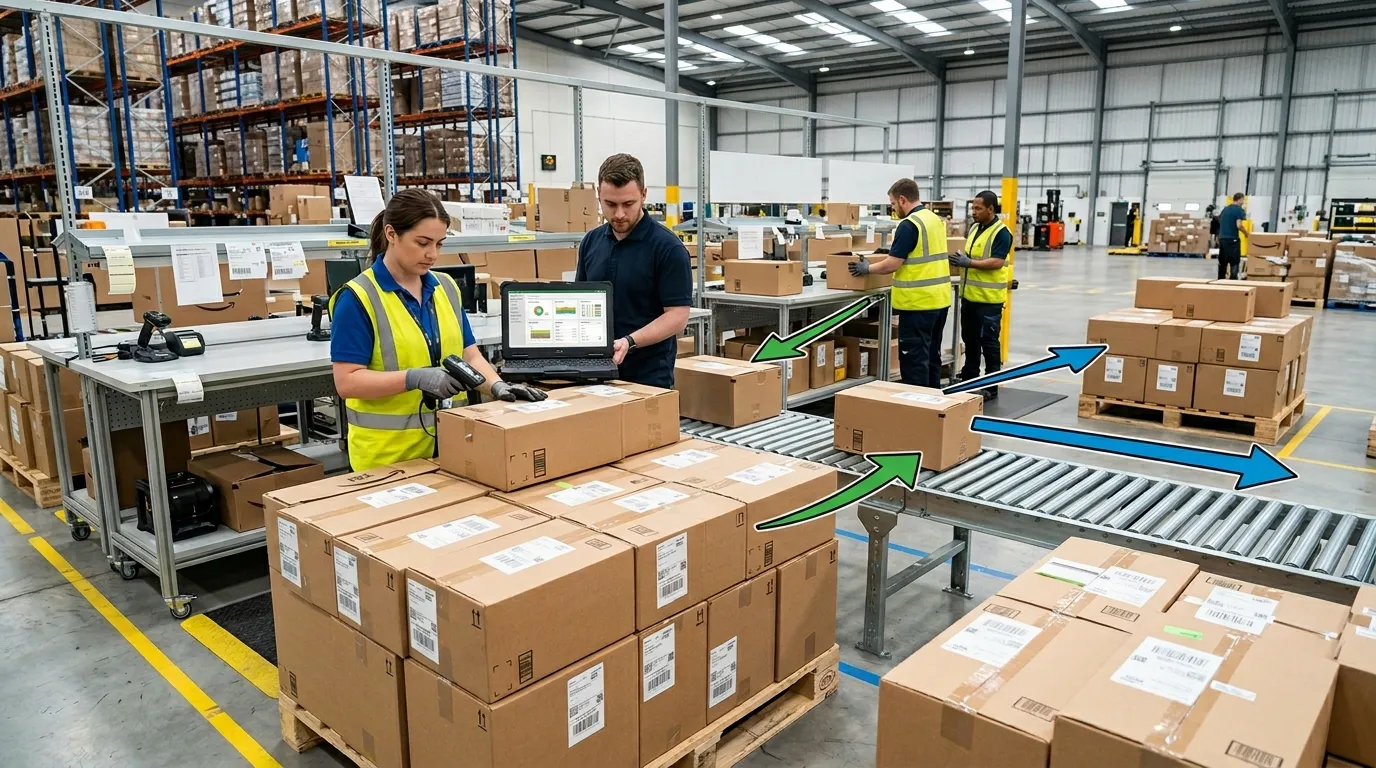
Amazon-optimized shipment splits let sellers send inventory to multiple Amazon-assigned fulfillment centers, usually to reduce or avoid inbound placement fees. The trade-off is more shipment handling, more labels, more destinations, and tighter coordination.
In an Amazon-optimized split, Amazon decides where the inventory should go across its fulfillment center network. Instead of sending everything to one FC, the seller may need to ship cartons or pallets to several destinations. Amazon uses this setup to place stock closer to where it expects customer demand.
This option is different from minimal shipment splits and partial shipment splits. Minimal splits usually mean fewer destinations and simpler shipping, but they can carry higher placement fees. Partial splits sit between the two. Amazon forum guidance says shipment split options can depend on item size, weight, the number of shipment splits, and inbound location.
Why can more FC destinations lower your FBA cost?
More FC destinations can lower FBA cost when the placement-fee savings are larger than the extra freight, prep, and coordination cost. The cheapest option is the one with the lowest total landed-to-FBA cost, not simply the fewest shipments.
Amazon charges inbound placement fees when it does more of the inventory placement work for the seller. If you choose fewer destinations, Amazon may need to move inventory internally after receiving it. That convenience can show up as a higher fee. For a wider cost view, connect this choice to your broader inbound cost strategy.
The better question is not “Which option has no fee?” It is “Which option has the lowest total cost after freight, prep, labels, cartons, and risk?” For a deeper breakdown of the fee itself, review the placement fee basics.
| Option | FC destinations | Placement fee impact | Freight complexity | Best fit |
|---|---|---|---|---|
| Amazon-optimized split | Usually more destinations | Can reduce or avoid the fee when available | Higher | Repeatable cartons, higher volume |
| Partial split | Medium number of destinations | Lower than minimal in many cases | Medium | Sellers balancing cost and simplicity |
| Minimal split | Fewer destinations | Often higher fee | Lower | Small, urgent, or simple shipments |
For example, a seller with 1,000 lightweight units in five identical cartons may see a no-fee optimized split. If the extra multi-destination freight is lower than the avoided placement fee, optimized can win. If the carrier charges too much for separate deliveries, partial or minimal may still be better.
What makes a shipment qualify for Amazon-optimized splits?
A shipment is more likely to qualify when cartons or pallets are consistent, SKU quantities match across boxes, enough boxes are available, and standard, non-standard, or special-handling items are separated into cleaner plans.
Amazon does not offer the same split options for every shipment. A clean single-SKU plan with equal cartons is easier for Amazon to divide across fulfillment centers. A mixed-SKU shipment with uneven cartons is harder to split, especially if products have different sizes, prep needs, or handling rules.
Amazon forum guidance says the no-fee optimized option may require at least five identical cartons or pallets per item, with the same quantity and item mix. SoStocked also repeats this Amazon policy language in its explanation of optimized inbound shipments. That means your carton structure can decide whether the option appears.
Use this quick readiness check before planning:
- Do you have at least five identical cartons or pallets for the item?
- Does each carton or pallet contain the same SKU mix and quantity?
- Are standard-size, non-standard, fragile, or special-handling items separated?
- Can your supplier or prep team label each carton correctly?
- Can your freight partner quote each FC destination before booking?
A low-volume mixed-SKU example shows the problem. If you have 180 units across six SKUs with uneven carton contents, Amazon may not have a clean way to split the shipment. In that case, a partial or minimal split may be safer than forcing an optimized setup that your cartons do not support.
When should you choose optimized, partial, or minimal splits?
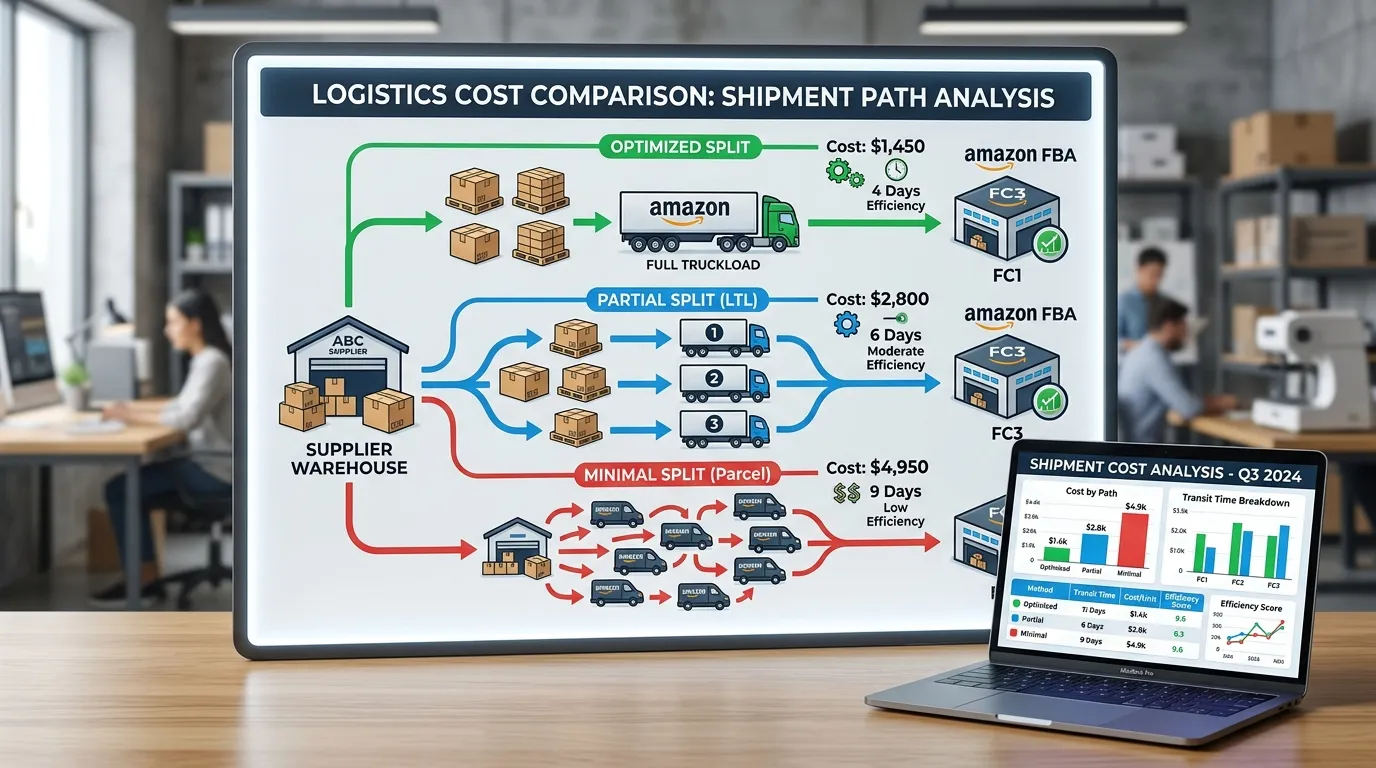
Choose optimized splits when fee savings outweigh added freight and prep work. Choose partial or minimal splits when shipment volume is low, stockout risk is high, or multi-destination delivery creates more cost than it saves.
Amazon-optimized shipment splits are not always the best choice. They work when your cartons are repeatable, your shipment is large enough, and your forwarder can handle several FC destinations without inflating the freight bill. Partial or minimal splits are safer when speed and simplicity matter more than fee reduction.
Use the table below as a practical decision filter. Then compare Amazon’s fee preview with real freight quotes and your inbound fee comparison.
| Situation | Better option | Why |
|---|---|---|
| 1,000 lightweight units in five identical cartons | Optimized split | Clean cartons may qualify, and fee savings can beat extra delivery cost |
| 180 units across six uneven SKUs | Minimal or partial split | Equal carton rules are hard to meet, and prep errors can cost more |
| 10 identical pallets for one repeat SKU | Optimized split | Pallet consistency makes multi-FC routing easier to execute |
| One SKU is close to stockout | Minimal or partial split | Faster delivery may matter more than fee savings |
| Supplier can’t create equal cartons | Minimal split | Bad carton data can cause downstream receiving issues |
A no-fee placement option can still create hidden cost. If your supplier, prep team, or forwarder cannot execute equal cartons and multi-FC routing cleanly, the fee savings may disappear through extra labor, relabeling, storage, or delayed check-in.
Why is Amazon-optimized shipment splits greyed out?
Amazon-optimized splits can be greyed out even if the setting is selected, because the shipping plan still has to qualify. Box count, SKU mix, product type, demand location, and Amazon’s network needs can all affect availability.
Some sellers choose Amazon-optimized shipment splits in their inbound settings and still see the option unavailable during shipment creation. That does not always mean the account setting is wrong. It often means the actual shipment does not fit the requirements Amazon needs for that plan.
The most common problems are practical. The shipment may have too few cartons, uneven box contents, mixed product classes, or a split that Amazon’s network does not need at that moment. Forum discussions from sellers show that optimized and partial options can be greyed out during the workflow.
Check these before rebuilding the plan:
- Increase carton count if the shipment is too small.
- Make carton contents identical where possible.
- Separate standard and non-standard products.
- Avoid mixing too many SKUs in one small shipment.
- Recheck the plan after adjusting quantities or box structure.
For a repeat pallet shipment, the fix may be simple. Ten identical pallets for one SKU are easier to split than a mixed shipment with random carton contents. For a small test order, the better fix may be to accept a partial or minimal split and optimize later when volume grows.
How do customs and receiving risks change with split shipments?
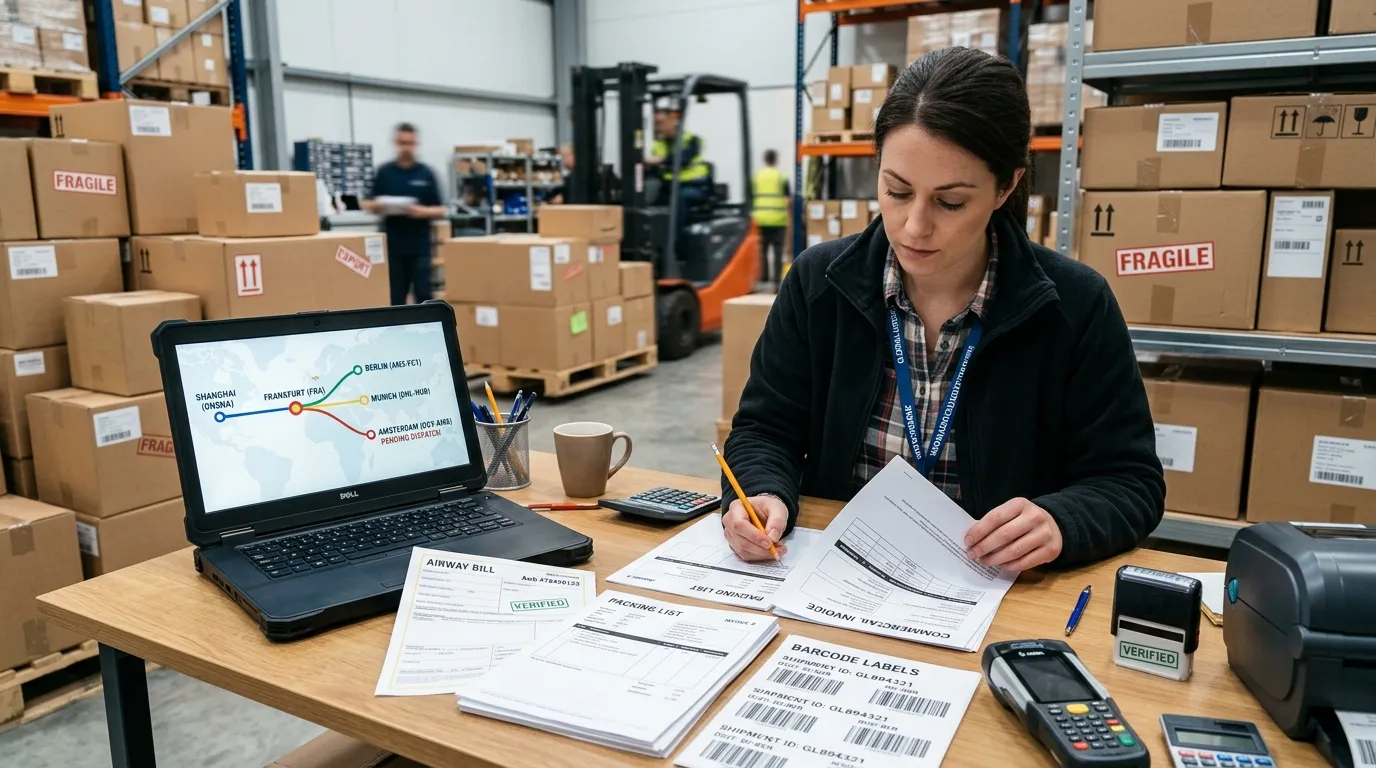
Split shipments create more moving parts, so customs documents and FC labels must match the shipment plan exactly. More destinations can reduce placement fees, but they also create more chances for routing errors, document mismatch, late appointments, and uneven receiving.
For cross-border FBA shipments, the decision should not stop inside Seller Central. A China-to-US shipment may pass through supplier handoff, export booking, customs clearance, domestic delivery, Amazon appointment scheduling, and FC receiving. If one split is delayed, only part of the inventory may become available for sale.
Documents to align before split delivery
Trade.gov lists common trade documents such as commercial invoices, packing lists, bills of lading, air waybills, and certificates of origin. For split FBA shipments, these documents need to match carton quantities, SKU descriptions, values, weights, and delivery routing.
Use a simple document check before export handoff:
- Commercial invoice matches SKU, value, and buyer details.
- Packing list matches carton count and carton contents.
- Bill of lading or air waybill matches shipment routing.
- FC labels match the correct cartons or pallets.
- Destination-level tracking is available for each split.
Here is a practical risk example. A seller ships from China to several Amazon FCs, but the invoice shows one total quantity and the packing list does not clearly separate cartons by destination. If customs, the carrier, or Amazon receiving needs destination-level clarity, one incorrect label can delay part of the plan.
What should your logistics partner check before booking?
Your logistics partner should check the Amazon plan, carton data, labels, freight cost, and customs paperwork before booking. Optimized splits can work well, but they need a forwarder who treats each FC destination as part of one controlled inbound plan.
Fexbuy’s own FBA shipping guidance focuses on prep, shipping methods, customs clearance, tracking, and avoiding warehouse delivery problems. That same practical mindset matters more with optimized splits because each destination needs correct labels, documents, routing, and delivery follow-up.
Use this split shipment readiness checklist:
| Checkpoint | What to confirm | Why it matters |
|---|---|---|
| Carton equality | Same SKU mix and quantity where required | Helps the plan qualify and reduces receiving errors |
| Box or pallet count | Enough identical cartons or pallets | Supports Amazon-optimized split availability |
| Freight quote | Cost by FC destination | Shows whether fee savings are real |
| Customs documents | Invoice, packing list, transport document | Reduces clearance delays |
| Amazon labels | Correct label on each carton or pallet | Prevents wrong-FC delivery |
| Appointment needs | Delivery rules by destination | Avoids missed receiving windows |
| Tracking | Tracking by FC split | Shows which part arrived or delayed |
For urgent replenishment, you may split the decision itself. Send the near-stockout SKU through a faster minimal or partial plan, then use optimized splits for the next repeat replenishment. That keeps sales moving without giving up long-term cost control.
What is the safest decision for most sellers?
The safest choice is to compare Amazon’s fee preview against the real cost of preparing and delivering every split shipment. Optimized splits are best for repeatable cartons, while smaller or urgent shipments may need partial or minimal splits.
For most sellers, the right answer comes from a short total-cost check. Add the Amazon placement fee, freight by destination, prep labor, carton changes, labeling work, and any delay risk. Then compare the optimized, partial, and minimal options side by side.
A simple calculation works well. If optimized splits save $180 in placement fees but add $95 in freight and $30 in prep labor, the net savings is $55. If the same plan delays one urgent SKU and causes missed sales, the cheaper fee line may not be the better business decision.
Use the FBA placement fee guide when you need to understand the fee side first. Then return to the shipment plan and test whether the operational side can support the split.
Getting the Next Step Right
Amazon Optimized Shipment Splits are best treated as a cost test, not a default setting. Start with Amazon’s fee preview, then ask your supplier, prep team, or freight partner whether the cartons, labels, documents, and FC deliveries can be handled cleanly.
If the shipment is repeatable and the savings are clear, optimized splits can lower your FBA inbound cost. If the plan is small, mixed, urgent, or customs-sensitive, partial or minimal splits may protect your delivery timeline better. The right choice is the one that lowers total cost without creating preventable receiving problems.
Frequently Asked Questions
What are Amazon-optimized shipment splits?
Amazon-optimized shipment splits are an inbound placement option where Amazon assigns inventory to multiple fulfillment centers. If the shipment qualifies, sellers may avoid the inbound placement fee, but they must manage more destinations and shipment details.
What determines Amazon-optimized splits for inbound placements?
Amazon says split options can depend on item size, weight, number of shipment splits, and inbound location. Practical eligibility also depends on box count, equal SKU mix, and whether the shipment is cleanly separated by handling type.
Why are Amazon optimized shipment splits unavailable?
They may be unavailable because the shipping plan does not qualify, even if the inbound setting is selected. Common issues include too few boxes, uneven carton contents, mixed product categories, or Amazon network demand not supporting the option.
Do Amazon-optimized splits always save money?
No, optimized splits only save money when avoided placement fees are higher than extra freight, prep, and coordination cost. Small shipments, urgent replenishment, or complex customs routing may be cheaper with partial or minimal splits.
How many boxes do I need for Amazon-optimized splits?
Amazon forum guidance says the no-fee optimized option may require at least five identical cartons or pallets per item. Each carton or pallet should contain the same quantity and item mix.
Should I mix minimal and optimized shipment splits?
Mixing strategies can work when part of the inventory is urgent and part can move through optimized splits. Use a simple cost and stockout comparison before mixing, because one delayed split can create uneven availability.


