


Ship Power Banks From China: 2026 Logistics & Policy Update for Exporters
As an overseas business owner, would you like to sell portable, stylish, fashionable, and reliable power banks? They’re great for a first sale, but legally shipping power banks demands a strict understanding of the 2026 lithium battery shipping regulations.
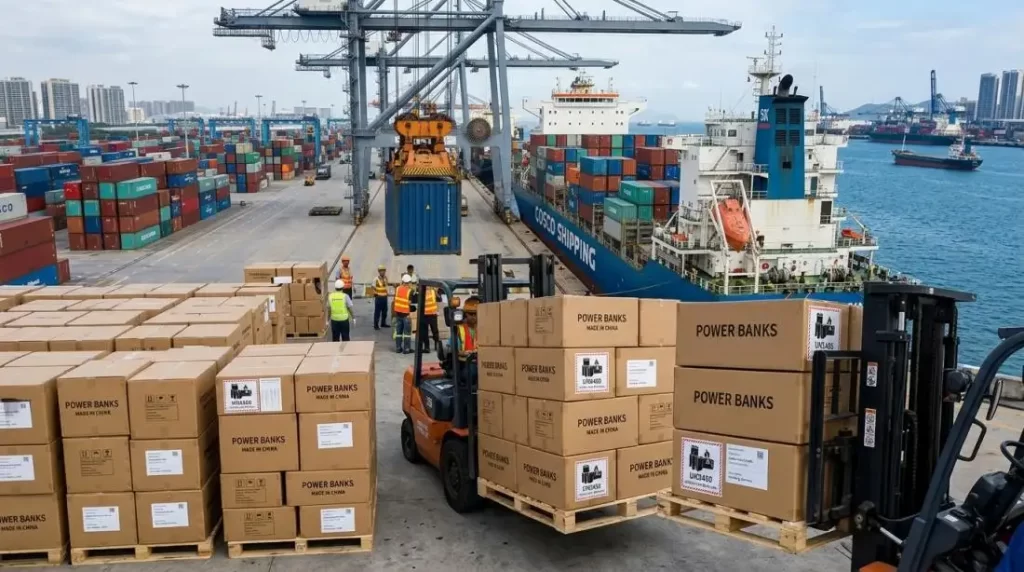
There’s a new maze of policy changes from China, and you will have to navigate them to ship power banks. Customs inspections have gotten stricter. This informative guide gives you the latest and most comprehensive policy changes to shipping power banks Exporting from China. You will see some tables and bullet points to keep it organized and as clear as possible.
Overview of Recent Changes
Before we go into detail, let’s do a quick comparison of the most important new rules:
| Policy/Regulation | Old Rule (Before 2026) | New Rule (As of 2026) | Impact of Shipping Power Banks From China |
| Customs Inspection | Non-inspected goods rarely checked | Since June 1, 2026, Customs will randomly inspect all non-mandatory inspection goods | Based on the new rules, compliance will become obligatory to help mitigate delays |
| Air Transport SoC | Below 30% recommended | Below 30% will be mandatory as of January 1, 2026 | Required measuring and documentation for each battery |
| UN38.3 Testing | Basic tests | Stacking test added (effective 2026) | Old tests will expire, and new tests will be required |
| Export Tax Rebate (Battery cells) | 9% refund | 6% from April to December 2026; 0% from 2027 | Exporting battery cells will become costlier |
| China National Standard | Not issued | GB 47372-2026 will be issued as of April 2027 | Future compliance preparations will be needed |
More Stringent Customs Inspections
As of June 1, 2026, stricter customs inspections were introduced with Announcement No. 57 from the General Administration of Customs of the People’s Republic of China, posted on May 8, 2026. This regulation fundamentally changes how customs handles non-inspected goods.
Before this change, if your product was not on the mandatory inspection list (known as “not subject to legal inspection”), you could reasonably expect smooth clearance. That era is over. Under the new rule, customs will conduct random inspections on a wide range of non-mandatory inspection goods, including electronics like power banks.
What you need to know when you Ship Power Banks From China:
• Random inspections are now routine. Customs will randomly select shipments, and there is no fixed “safe channel”.
• Expect higher scrutiny on electronic products. Power banks are classified as high-risk products.
• Having an AEO status means less scrutiny, less inspections, and greater ease during trade. Non-AEO status requires you to endure higher scrutiny.
Get your HS code classification read before shipping to avoid mistakes. Mistakes can cost you: heavy fines, severe customs clearance delays, and critical delays in securing your export tax rebates.
Recent Changes to Air & Ocean Freight Rules Related to Lithium Batteries
Transportation of lithium batteries are is inherently dangerous. That is why global shipping authorities have introduced stricter rules, many of which became mandatory in 2026.
Air Transport: The 30% SoC Rule Is Now Mandatory
Starting January 1, 2026, the State of Charge (SoC) of any standalone lithium-ion battery (including power banks, classified under UN3480) shipped by air must not exceed 30%.
This rule applies strictly to standalone power bank shipments, which face the highest risk of thermal runaway. For batteries packed with or contained in equipment (UN3481), maintaining an SoC below 30% is now highly recommended by IATA as an industry best practice to prevent carrier rejection. There are no exceptions for passenger or cargo aircraft.
What you need to do before you Ship Power Banks From China via air:
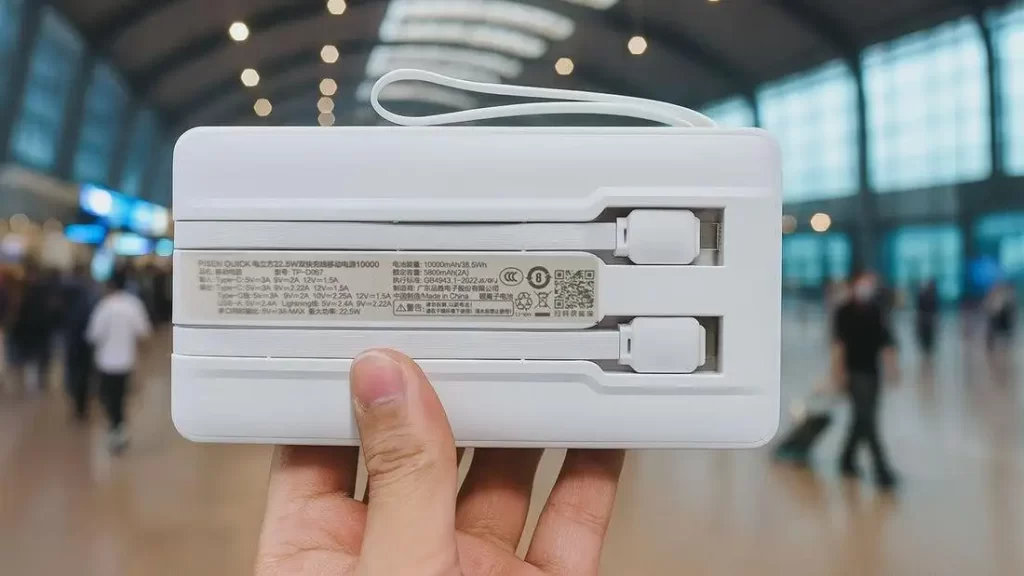
• Measure and record the SoC before packaging
• Mark “SoC ≤ 30%” on the outer carton
• Keep a battery SoC statement ready for airline review
Sea Transport: IMDG 42-24 Is Now Enforced
The International Maritime Dangerous Goods Code Amendment 42-24 became mandatory on January 1, 2026 (previously voluntary). This update aligns shipping regulations for the entry of merchandise, as sea-based transport methods become more standardized across the world, and as lithium battery logistics face unprecedented documentation and traceability standards.
UN 38.3 Testing & The New 3 ‑Meter Stacking Regulation
Shipping Power banks China will not happen without UN 38.3 testing certification. Period. Without it, no shipping company will accept the shipment.
Furthermore, a strict 3-meter stacking capability requirement is fully enforced for battery packagings. Logistics and compliance will be further complicated, as shippers must now formally demonstrate that their completed outer packaging is fully capable of withstanding a 3-meter height stack without compromising the containment or structural integrity of the lithium batteries inside.
| Aspect | Before 2026 | After 2026 |
| 3-m Packaging Stacking Capability | Not uniformly verified for non-UN packs | Mandatory 3-meter completed package stacking capability evaluation enforced |
| Validity of Transport Documents | Annual appraisal documents expire Dec 31 | Annual transport appraisal reports must be renewed; UN38.3 base tests require revision if cell specifications altered |
| Testing/Appraisal timeline | 1–2 weeks for updates | 2 to 3 weeks for comprehensive regulatory appraisal renewals |
New Power Bank Safety Standard in China: GB 47372 – 2026
In China, GB 47372-2026 (“Mobile Power Safety Technical Specifications”) was officially published on March 31, 2026, marking a major regulatory milestone for the industry. Though it does not come fully into play until April 1, 2027, how forward-looking suppliers align with this standard demonstrates exactly where global product safety regulations are heading.
Why This Matters For You: The current certification will be replaced with this legislation for Power Banks in China. If you are sourcing power banks from China for export, you should ensure your suppliers are already working toward compliance—because global buyers are increasingly demanding proof of factory-level safety standards.
The Export Tax Rebate Is Shrinking
This one matters most if you are buying battery cells or components from China. The export tax refund is being phased out in stages:
| Period | Refund Rate for Battery Cells (HS 85076000) |
| Before April 1, 2026 | 9% |
| April 1 – Dec 31, 2026 | 6% |
| Starting Jan 1, 2027 | 0% (completely eliminated) |
For finished power banks classified under HS 8504409999, the refund remains 13% for now.
What this means: Due to the rolling reduction of this fiscal incentive, suppliers are highly likely to raise prices on standalone lithium cells, creating a widening cost differential compared to fully assembled power banks.
CCC Certification is Always Required for Domestic Sourcing
If you are purchasing power banks from Chinese businesses, the supplier needs to have a CCC certification. After August 1, 2024, a power bank cannot be legally manufactured or sold anywhere in China (including for export purposes) without this certification.
In the future, the testing foundations under the current CCC framework will be upgraded to align with the more demanding and strict mandatory national safety standard (GB 47372-2026). By April 1, 2027, the CCC certification evaluation protocol will fully switch to this new standard, meaning the existing 3C certificates based on older standards will require standard version updates and supplementary compliance testing to remain valid.
Combining All Information: Your 2026 Compliance Handy Guide
If you’re ready to Ship Power Banks From China, this is your compliance guide:
• Ensure UN38.3 certification and the latest 3-meter packaging stacking capability compliance are both fully verified prior to cargo dispatch.
• Set State of Charge (SoC) to ≤ 30% strictly when shipping standalone units (UN3480) by air and maintain verified accordance logs for carrier review.
• Have your supplier’s CCC certification validated.
• Confirm the exact HS code used (8504409999 for fully assembled power banks, versus 85076000 for standalone battery cells) to ensure flawless clearance declarations.
• Be ready for random customs spot checks at Chinese exit ports due to the stringent enforcement of GACC Announcement No. 57.
• Account for shifting supply chain margins: If you are importing standalone battery cells instead of finished goods, factor in the reduced (6%) or eliminated (0%) export tax refund dynamics.
Where the Spotlight Needs to Be for Future Compliance
| Date | What Happens | What You Need to Do |
| Now to Dec 31, 2026 | 6% Battery Cell Export Tax Rebate tier active | Adjust sourcing cost structures and pricing matrix |
| April 1, 2027 | Mandatory National Standard GB 47372-2026 comes into full enforcement | Ensure manufacturer compliance to the updated safety testing regulations |
| Jan 1, 2027 | Complete elimination of battery cell export tax rebate (0%) | Review global purchasing strategies for standalone lithium cells battery cells |
Wrap Up
Power banks from China, even with new 2026 changes, remain the most reliable and cost-effective option globally. These additional frameworks on shipping power banks from China ensure that shipments meet the highest standards of international quality and safety. Navigating these mandates is not an impossible burden; however, success requires securing the correct factory certifications, backed by airtight documentation and forwarding partners who offer dedicated client support and expert technical coordination to ensure smooth customs clearance. Non-compliance will inevitably lead to severe operational and financial consequences—but with the right compliance roadmap, your 2026 shipping strategy will remain seamless.
Frequently Asked Questions (FAQs)
Q1: With each shipment of power banks from China, is UN38.3 certification required?
Yes. Each shipment must have a current (3 meter stacking test included) UN38.3 test report; 2026 requirement. The report covers the same battery model for 1 year.
Q2: Is it possible to send power banks from China via air freight if the SoC is over 30%?
No. Effective 1 January 2026, SoC is set to 30% for air freight clearance. SoC at any level is permitted for sea freight clearance, however, a dangerous goods declaration is required.
Q3: What is the effect of the 2026 rule on the length of customs ‘random’ inspections?
The average time required for customs ‘random’ inspections will increase by 2-5 days. Some of the benefits will occur for AEO certified companies. Consider this when planning delivery.
Q4: Is the export tax rebate going to be set at 0% after 2026?
Yes. The export tax rebate set at 0% will only apply from 1 January 2027 for battery cells (HS 85076000). The rebate will still be set at 13% for finished power banks.
Q5: Can power banks be sent if a supplier is lacking CCC certification?
No, It is not lawful to send power banks from that supplier. Until April 2027, all power banks sold or exported from China must have CCC certification. This requirement will be replaced by GB 47372-2026.


