


Your Ultimate Guide to Solar Generator Shipping Service: Rules, Tips, and Expert Insights
As we move towards renewable energy, solar generators are critical to a new lifestyle. They will be vital for off-grid living, in emergency situations, and during recreation. However, transporting these devices is a challenge. Cross-border logistics for Solar Generator are highly intricate. This shipping service needs to consider a multitude of international policies, hazardous material shipping laws, and the sensitive nature of the cargo. This guide gives you the vital information and provides you with helpful shipping tips. It also gives an introduction to Fexbuy, a shipping service that has more than 10 years of trusted shipping experience.
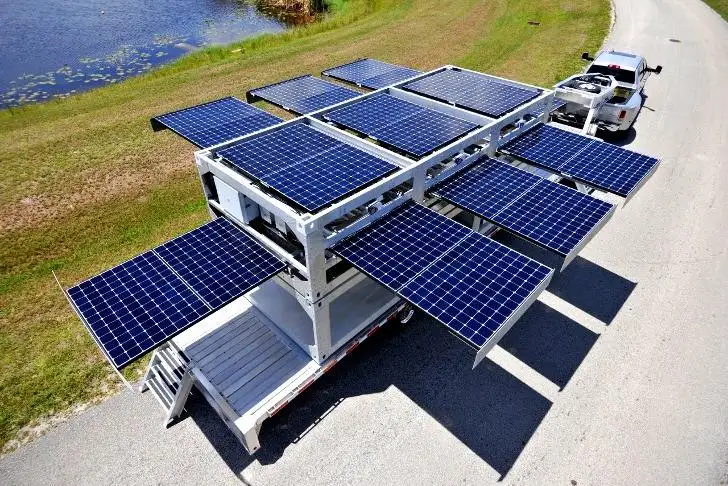
What Is a Solar Generator and Why Is Shipping Special?
Solar Generators are:
• Solar panels
• Lithium-ion batteries
• Inverters with a charge controller
Why the Challenge?
Solar generator shipping services face intense logistical challenges because high-capacity lithium batteries are strictly regulated hazardous materials. They are classified as Class 9 Miscellaneous Dangerous Goods. Within international transit frameworks, UN3480 is assigned to standalone lithium-ion batteries shipped entirely by themselves, whereas UN3481 is assigned to lithium-ion batteries that are safely contained in or packed with equipment. Because solar generators feature large batteries permanently integrated into their control chassis, they are governed by the strict packaging, labeling, and declaration laws of UN3481. This technical classification means that a solar generator shipping service must fully adhere to a plethora of shifting international transport mandates. Non-compliance results in severe operational and financial repercussions, including unexpected customs delays, heavy penalty fines, or total cargo seizure.
Key International Rules for Solar Generator Shipping
There are 4 mandatory regulations that you should familiarize yourself with prior to booking the shipping service.
1. Dangerous Goods Regulations (DGR) by IATA (Air) & IMDG Code (Sea)
For air transport under UN3481 (contained in equipment), maintaining a State of Charge (SoC) below 30% is highly recommended by IATA to ensure seamless airline acceptance. For marine transport under the IMDG Code, there is no mandatory SoC cap, but shipments are subject to rigorous maritime dangerous goods declarations, specialized container packaging, and cautious hazardous labeling.
2. UN38.3 Test Summary
Every shipment featuring lithium batteries must be accompanied by a valid UN38.3 Test Summary. This document serves as legal proof that the integrated battery cells have successfully passed rigorous laboratory testing, withstanding extreme vibration, thermal cycling, and mechanical shock tests without failure.
3. Packing Instructions (PI)
International air transit categorizes lithium-ion logistics under three distinct frameworks:
• PI965 – Lithium batteries shipped entirely alone (the most stringent regulations, restricted to UN3480).
• PI966 – Batteries packed alongside, but external to, the device.
• PI967 – Batteries securely encased inside the equipment (the mandatory protocol for integrated solar generators).
4. Marking and Paperwork
• Lithium Battery Mark: Must features the standardized border design (minimum dimensions of 120×110 mm, or 100×100 mm under permitted exceptions) with the proper UN number displayed.
• Safety Data Sheet (SDS/MSDS): A current, manufacturer-issued technical document detailing emergency response protocols.
• Commercial Invoice with Accurate HS Codes: Typically 8507.60 for the integrated lithium-ion battery systems, and 8541.43 for accompanying solar photovoltaic panels.
��� Failure to adhere to these shipping laws results in severe regulatory enforcement, with civil penalties reaching up to $50,000 per infraction in the United States and equivalent severe fines globally.
The Essential Do’s and Don’ts of Solar Generator Shipping Services
Use these bullet point lists to spot common shipping errors
✅ Do’s:
• Use rigid outer packaging: Always utilize heavy-duty, double-wall corrugated boxes lined with specialized, form-fitting protective cushioning.
• Ensure high visibility: Confirm that the standardized lithium battery marking is clearly displayed on opposite sides of the outer carton.
• Declare specifications transparently: Ensure battery terminals are fully insulated to prevent short-circuiting, and provide the shipping carrier with exact net/gross weights and the precise watt-hour (Wh) ratings.
• Verify destination carrier restrictions: Be aware of specific network limitations, as certain international postal channels (such as China Post) strictly prohibit lithium battery transport on designated routes.
❌ Don’ts:
• Don’t overcharge the units: Never dispatch solar generators with an SoC exceeding 30% when utilizing international air freight channels.
• Don’t mix incompatible cargo: Never consolidate Class 9 hazardous materials with other incompatible dangerous goods unless formally approved and strictly segregated.
• Don’t ship compromised batteries: Any structural swelling, casing distortion, or chemical leakage will result in an automatic carrier rejection at the terminal.
• Don’t cut corners on customs paperwork: Omitting a valid UN38.3 Test Summary or an updated Safety Data Sheet (SDS) remains the leading cause of international cargo seizure.
Multi-Dimensional Comparison: Air vs. Sea vs. Road for Solar Generator Shipping Service
The table below compares three common transport modes to help you select the optimal strategy based on your organizational priority, financial budget, and geographic location.
| Factor | Air Freight | Sea Freight (LCL/FCL) | Road (Truck) |
| Transit Time | 3–7 days (fastest) | 20–40 days | 5–14 days (regional/cross-border) |
| Cost per kg | High ($8–12 for DG) | Low ($0.5–1.5) | Medium ($2–4) |
| Battery SoC limit | ≤30% recommended for UN3481 (strictly enforced by carriers) | No strict statutory limit (subject to carrier approval) | Compliant hazardous materials packaging featuring active short-circuit protection |
| Packaging requirement | UN-certified box + qualified overpack | UN-certified boxes + heavy-duty wooden pallets (with secure banding) | Standard dangerous goods packaging |
| Best for | Small, high-value generators (≤100 kg total shipment) | Bulk wholesale orders, mixed pallets of 500+ kg | Cross-border regional shipments (e.g., US–Canada, EU–UK, intra-Asia) |
| Risk of delays | High (rigorous inspections at every transit hub) | Moderate (susceptible to seasonal port congestion) | Low (highly reliable unless encountering border labor strikes) |
��� Key takeaway: A professional Solar Generator Shipping Service will help you balance cost and speed. For example, sending two 30 kg solar generators by air may cost 480–720,butseafreightforafullpallet(400kg)couldbejust200–600.
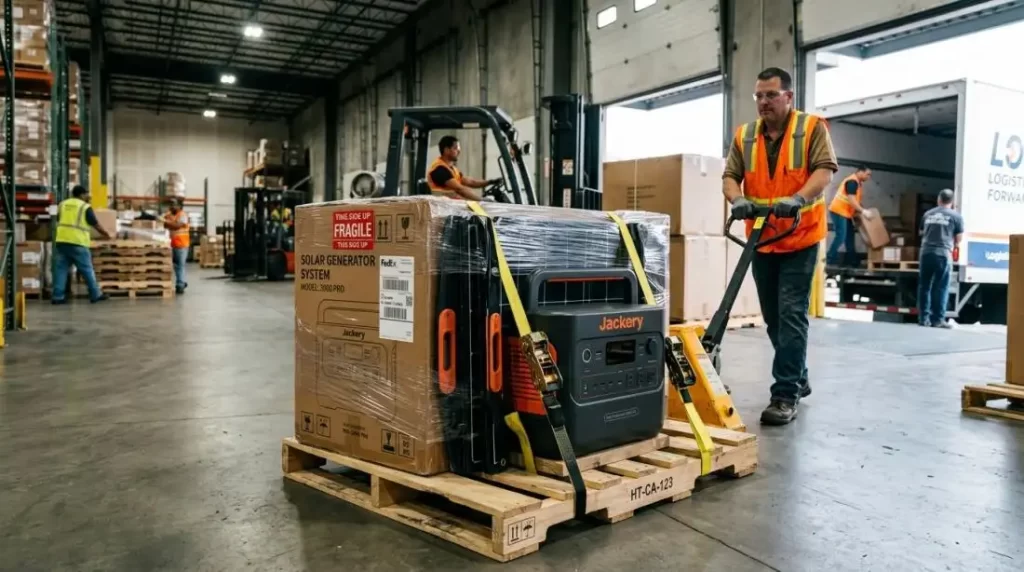
Meet Fexbuy – Your Expert Partner in Solar Generator Shipping Service
With so many rules, working with an experienced logistics provider is non-negotiable. Fexbuy is a Shenzhen-based international shipping specialist established in 2015. Here is why we stand out in the hazardous materials sector:
Fexbuy was established in 2015 within South China City, a leading cross-border e-commerce hub in Shenzhen. Today, our corporate headquarters span 500 square meters, complemented by a state-of-the-art 4,000 square meter logistics warehouse. Backed by over a decade of deep expertise in foreign trade and specialized freight forwarding, the majority of our core team members have served at Fexbuy for 5 to 7 years. Utilizing this highly experienced team alongside a trusted network of global logistics partners, we specialize in containerized cargo management, dedicated to strict quality control and attentive customer service. Our seasoned logistics specialists are always online to deliver optimized, compliant shipping solutions.
By pre-reviewing all logistics channels, we proactively mitigate operational risks. Our team is thoroughly well-versed in both domestic and international import/export customs clearance mandates, allowing us to seamlessly resolve any complex regulatory bottlenecks during transit.
How Fexbuy enhances your Solar Generator Shipping Service:
��� Real-World Case Study:
A prominent United States importer recently dispatched a bulk order of 200 solar generators utilizing Fexbuy’s consolidated sea freight (LCL) service. Fexbuy’s compliance team proactively audited the destination port’s local lithium battery intake policies, repacked each generator into compliant hazardous material outer packaging, and successfully saved the client $3,200 in base transit costs compared to traditional air freight—achieving zero customs delays from departure to final door delivery.
Step-by-Step Workflow of a Professional Solar Generator Shipping Service
When you utilize Fexbuy or a similarly qualified logistics provider, your cargo moves through a highly standardized, compliant transit pipeline:
- Inquiry & Quotation – Provide the specific battery watt-hour (Wh) rating, total gross weight, dimensions, total quantity, and final destination port.
- Pre-review & Routing – The compliance team audits the operational route to ensure the designated airlines, vessel loops, or transit hubs currently accept high-capacity lithium batteries without active bans.
- Packaging – Fexbuy uses UN4G fiberboard boxes with cushioning to pack their products at their site.
- Labeling & Documentation – This involves, among other things, the markings for lithium batteries, the UN38.3, the MSDS, and the commercial invoice.
- Customs Export – Fexbuy handles China export clearance (since 2015, they know every requirement).
- Main Transport – Choose air, sea, or road. Monitoring is provided.
- Destination Customs – Fexbuy’s partners clear the shipment using pre-submitted documents.
- Last-Mile Delivery – Transport the cleared generators via secure regional trucking directly to your warehouse or doorstep, concluded with formal proof of delivery (POD).
Conclusion: Don‘t Gamble on Solar Generator Logistics
Shipping a solar generator is not like sending a standard parcel of garments. A single missing label or an overcharged battery can result in devastating penalty fines, total loss of cargo, and even severe civil liability. Fexbuy’s dedicated solar generator shipping service provides the comprehensive compliance, rigorous security, and ultimate peace of mind your global supply chain demands.
Remember these core rules:
• Prioritize strict adherence to carrier SoC guidelines, especially when utilizing international air freight channels.
• Secure a fully verified, manufacturer-issued UN38.3 test summary before dispatching cargo to the port.
• Utilize only rigid, certified UN packaging reinforced with active internal short-circuit protection.
• Partner exclusively with a professional logistics provider who knows international dangerous goods regulations inside out.
With over a decade of foreign trade expertise, a 4,000 m² state-of-the-art warehouse, and a senior team averaging 5–7 years of specialized tenure, Fexbuy possesses the operational stability and technical expertise required to seamlessly manage your solar generator shipments. Whether you are dispatching a single prototype to Europe or a full container load (FCL) to North America, our compliance team is online and ready to resolve every logistical challenge.
Ready to ship? Contact Fexbuy Today for a free consultation on your next Solar Generator Shippment.


