


International Returns Duties and Taxes: How Sellers Avoid Paying Twice
International returns duties and taxes are not automatically refunded when a customer sends an order back. Sellers avoid paying twice by knowing who was importer of record, keeping proof of export, matching the returned goods to the original import entry, and separating recoverable customs charges from non-recoverable carrier or handling fees.
A returned order can still leave the seller with customs costs, unhappy customers, and a second bill on the replacement shipment. The hard part is not only moving the product back. It is proving to customs that the same goods left the destination country and that the right party can claim the refund. This guide shows where duty recovery works, where it fails, and how to plan returns before they damage margin.
Do you still owe duties and taxes when an international order is returned?
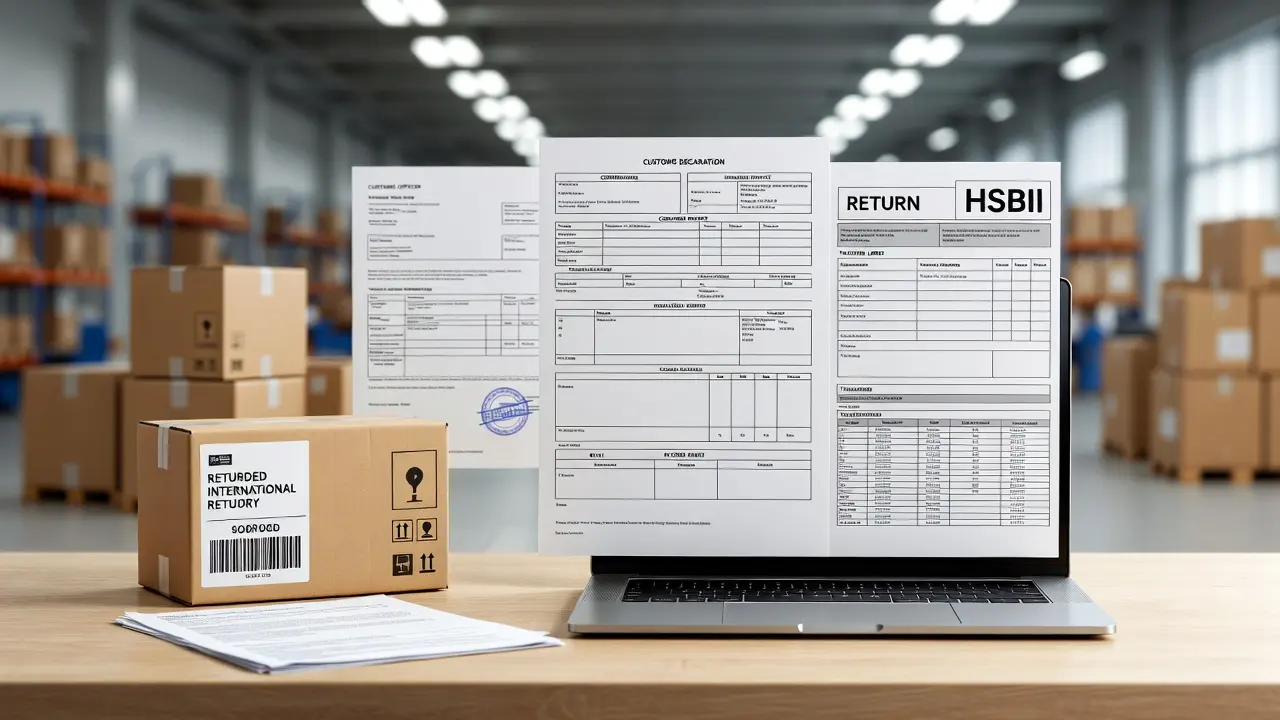
Duties and taxes can still be owed after an international return because customs assessed them when the goods entered the country. A seller may recover them only if the return qualifies and the importer can prove export, identity, value, and condition.
A return does not automatically cancel the original import event. Customs duty, import VAT, GST, and other charges are usually based on the shipment details at clearance, including declared value, HS code, origin, and destination rules. FedEx explains that duties and taxes can still apply even if the buyer later returns the order on its duties and taxes guide.
That is why the physical returns logistics process and the tax recovery process need to work together. If the shipment comes back with weak paperwork, wrong descriptions, or no proof of export, the seller may pay for the return and still lose the customs charges.
What charges can sellers recover and what usually stays lost?
Sellers may recover some import duties or taxes, but not every charge on the bill. Government-assessed duty or VAT may have a claim route; carrier brokerage, disbursement, and some handling fees are usually separate service costs.
The first step is to separate customs charges from service charges. Import duty and import VAT may have refund, repayment, or relief options if the goods qualify. Carrier fees are different. They often cover the broker’s work, cash advancement, or handling, so they may not come back even when duty recovery is possible.
| Charge type | Can it be recovered? | What usually decides it |
|---|---|---|
| Customs duty | Sometimes | Return proof, claim route, importer of record, product match |
| Import VAT or GST | Sometimes | Whether tax was paid at border or collected through checkout/accounting |
| Brokerage fee | Usually no | It is normally a carrier or broker service fee |
| Disbursement fee | Usually no | It may cover money advanced by the carrier |
| Replacement shipment duty | Usually payable again | The replacement is often a new import event |
For UK sellers, UK import VAT needs special care because the answer can change based on value, tax collection method, and import record. Trade.gov also explains that classification and tariff treatment begin with HS code research, but the importing country makes the final duty decision in its tariffs and fees overview.
Who can claim the refund: seller, customer, broker, carrier, or IOR?
The importer of record usually has the strongest claim position because customs records are tied to that party. A broker or carrier can support the process, but the seller needs the right import structure and records before the return happens.
Importer of record, or IOR, means the party legally responsible for the import declaration. This is where many sellers get stuck. The seller may want to control the refund, but the customs record may point to the customer, marketplace, broker, or another party.
DDP is not always cheaper, but it is often safer when you want control over duty recovery. DDU or DAP may look cheaper at checkout, but it can leave the customer holding the claim rights and the seller holding the customer complaint.
| Situation | Who likely paid | Who may control the claim | Recovery difficulty | Seller action |
|---|---|---|---|---|
| Seller ships DDP | Seller or seller’s broker | Seller or appointed IOR | Lower if records are clean | Keep import entry, invoice, and return proof |
| Customer pays under DDU/DAP | Customer | Customer or named importer | Higher | Explain refund limits before sale |
| Carrier pays on behalf | Carrier collects from recipient | Depends on importer record | Medium | Ask carrier or broker for claim process |
| Marketplace collects VAT | Marketplace or seller account | Depends on tax setup | Medium | Reconcile through tax reporting route |
| Seller lacks EORI in EU/UK flow | Third party may appear | Third party or broker | Higher | Review seller EORI setup |
If you want cleaner recovery options, plan the IOR structure before shipping. Waiting until the return arrives is usually too late.
What documents prove a return qualifies for duty or tax recovery?
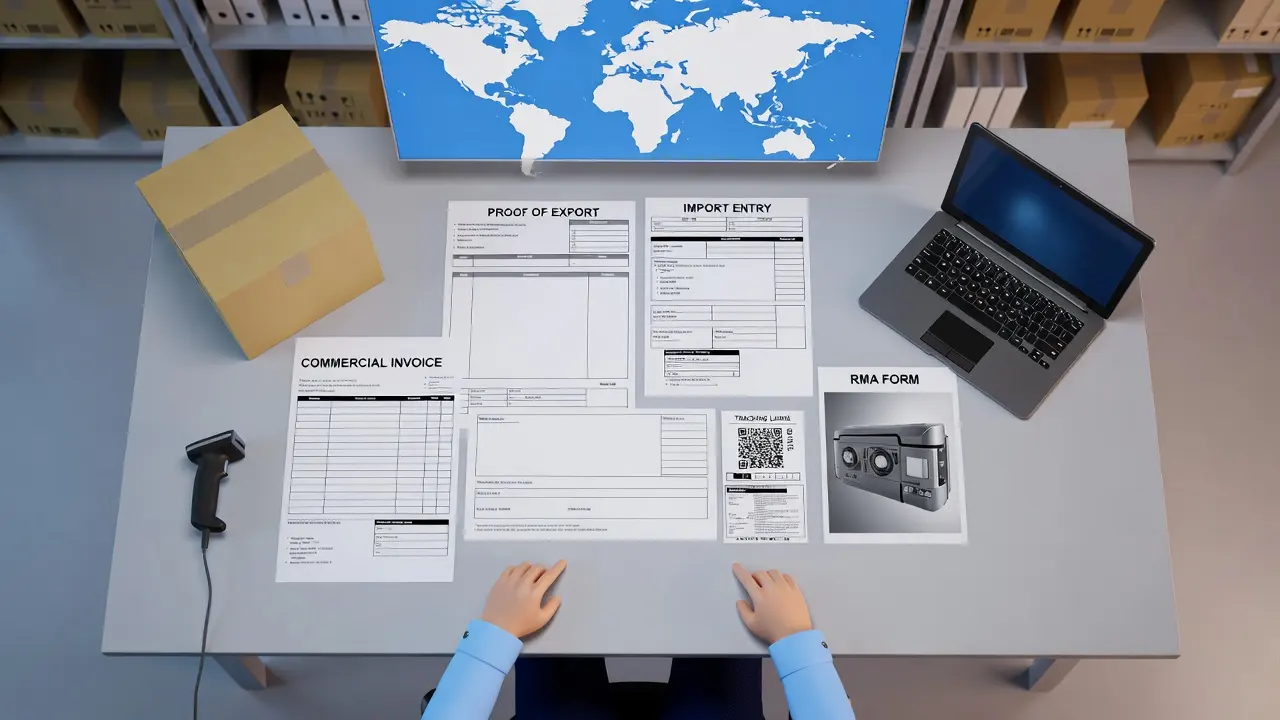
A return claim usually fails when import and export records cannot be matched. Sellers should keep the original import entry, invoice, HS code, export proof, tracking, RMA, and evidence that the same goods left the country unchanged.
Customs does not refund duty just because the customer says the product was returned. The seller needs a clear paper trail from import to return export. GOV.UK’s rejected imports guidance refers to repayment or remission routes and sets different time limits depending on the type of claim, including rejected imports and overpayments.
Minimum document set before filing
Use this checklist before approving a return label for a higher-value international order:
- Original commercial invoice
- Import entry or customs declaration
- MRN or entry reference where used
- HS code, value, quantity, and product description
- Return tracking number and proof of export
- RMA number and return reason
- Photos or inspection notes showing condition
- Customer refund record or replacement record
Data fields that must match
The product description, HS code, declared value, quantity, and tracking chain should tell the same story. If the import record says “wireless headphones” and the return paperwork says “electronics accessories,” the claim may slow down or fail.
For UK and EU returned goods, official guidance also focuses on whether the same goods return in the same state. The UK explains Returned Goods Relief on GOV.UK, and Irish Revenue gives similar EU guidance on returned goods relief.
How do UK and EU returns differ for low-value and high-value orders?
UK and EU low-value returns usually involve VAT collected at checkout, while high-value returns involve formal customs entries. That difference decides whether the seller adjusts a tax return or pursues a customs repayment or relief process.
Low-value ecommerce orders often create a different tax trail from high-value orders. Shopify’s duties and import tax documentation lists the UK low-value threshold at £135 and the EU low-value threshold at €150. Above those levels, formal import entries and customs records usually matter more.
| Route | Example | Common tax path | Return issue |
|---|---|---|---|
| UK low-value order | £90 fashion item | VAT often handled at checkout or through seller tax setup | Seller may adjust VAT reporting rather than file border duty claim |
| UK high-value order | £240 product | Formal import process may apply | Import entry and return proof become critical |
| EU low-value order | €120 accessory | EU low-value parcel rules may apply | Checkout VAT and IOSS handling matter |
| EU high-value order | €240 electronics item | Formal customs declaration is more likely | MRN, invoice, HS code, and proof of export matter |
A £90 UK fashion return is a good example. If VAT was collected at checkout, the seller’s refund and tax reporting process may handle the adjustment. It is not the same as asking border customs to refund a formal import charge.
For a €240 electronics return into the EU, the seller needs stronger customs records. The claim may need the original declaration, MRN, commercial invoice, export proof, and evidence that the item came back in the same condition. For broader parcel rules, connect this section to the EU parcel rules.
How do US returns, HTS 9801, and duty drawback differ?
HTS 9801 can help avoid new duty when previously exported goods return to the United States. Duty drawback is different: it recovers duties paid on goods imported into the US and later exported.
These two ideas are often mixed together, but they solve different problems. HTS 9801 is usually about re-importing returned US goods without paying duty again if the conditions fit. Duty drawback is about recovering duty paid on imported goods that later leave the United States.
When HTS 9801 fits
HTS 9801 may fit when goods were previously exported from the United States and later return. The point is avoiding a new duty bill on the re-import. This is more relevant when the goods are coming back to the US, not when a US seller is trying to recover duty paid in another country.
When drawback fits
Drawback may fit when goods were imported into the US, duties were paid, and the goods were later exported. For ecommerce sellers, the practical question is simple: are you trying to avoid new duty on a return, or recover duty from an earlier import? The paperwork path changes with that answer.
What happens when you send a replacement or exchange?
An exchange can create double duty exposure because the returned item and replacement item are separate customs events. The return may qualify for recovery, but the replacement usually enters as a new import unless a specific relief applies.
A free replacement can still create a customs charge. The buyer may not pay for the second item, but customs can still assess value, classification, and import treatment. That is why replacement policy should be tied to international return routing, not only customer service.
| Scenario | Duty recovery chance | Replacement duty risk | Best seller decision |
|---|---|---|---|
| Refund only | Medium to high if documents are clean | None | Best when return proof is strong |
| Return plus replacement | Medium | High | Check landed cost before sending replacement |
| Keep-it refund | Low | None | Useful for low-value items with high return cost |
| Repair return | Depends on route | Medium | Document repair purpose clearly |
| Partial return | Lower | Depends on replacement | Use item-level records |
For example, a seller sends a free replacement after receiving a returned product. The original return may qualify for recovery, but the replacement enters the destination country as a new shipment. If the seller did not plan the customs route, they may pay return freight, lose the first duty charge, and pay duty again.
When is duty recovery not worth it?
Duty recovery is not worth chasing when the claim value is low, documents are missing, the buyer was importer of record, or the goods never leave the destination country. In those cases, the admin cost can be higher than the refund.
A keep-it refund can be the right business decision for low-value products, but sellers should treat the import duty and tax as lost. If the goods never leave the destination country, recovery usually has no foundation.
| Situation | Recovery strength | Better action |
|---|---|---|
| Low-value item with high return freight | Weak | Refund or keep-it policy |
| Missing import entry | Weak | Fix data capture for future orders |
| DDU customer paid duty | Difficult | Set clearer duty policy before sale |
| Damaged or altered goods | Difficult | Check relief conditions before claiming |
| Full return with clean proof | Stronger | File claim or ask broker to support |
| Partial return with item-level records | Possible | Compare claim value against admin time |
Trying to recover every small duty charge is not smart. If the order value is low and records are incomplete, it is usually better to improve future data capture than chase one weak claim.
How can sellers prevent paying twice before the next shipment?
The best way to avoid paying twice is to design returns before shipping: choose the right Incoterm, keep import-entry data, match export proof to the return, and use a logistics partner that can manage DDP/DDU, customs, and return routing.
Prevention starts before the label is created. Choose DDP, DDU, or DAP based on control, not only checkout conversion. If the seller needs better recovery control, DDP with clean IOR records may be safer than pushing the duty bill to the customer.
Use this process before scaling international sales:
- Decide who should be importer of record.
- Use accurate HS codes, values, and product descriptions.
- Save import entries, invoices, and MRNs.
- Require RMA approval before return labels.
- Match return export proof with the original import record.
- Review replacement shipments as new customs events.
- Build duty recovery rules into the return policy.
For Amazon sellers, returns should connect back to margin planning and inbound cost strategy. For EU and UK sellers, the wider compliance setup belongs in a broader EU UK import compliance review, especially when VAT, EORI, IOSS, and declarations all affect the return outcome.
What to Do Next
International Returns Duties and Taxes should not be handled only after the customer complains. Build a simple return decision rule before shipping: who is importer of record, who paid the tax, what proof will be saved, and what happens if a replacement is needed. If your current process cannot answer those questions, start with the next high-value lane and fix the paperwork first. For China-to-global ecommerce, a logistics partner can help compare DDP, DDU, return routing, and customs document control before the next shipment leaves the warehouse.
Frequently Asked Questions
What happens if they end up returning the order, instead of keeping it?
Duties and taxes may still be owed because the charge was created when the shipment entered the destination country. A return only creates a possible recovery path if the goods leave the country and the right documents support the claim.
Can I recover duties on partial returns?
Sometimes, but partial returns are harder than full returns. The seller needs clean item-level records, matching import and export data, and a claim route that allows partial recovery for that market.
Do I need proof of export?
Yes, proof of export is usually essential for duty or tax recovery. Customs must see that the same goods physically left the market and were not simply refunded while staying with the customer.
Who should be the importer of record for better recovery outcomes?
The seller or a controlled IOR arrangement usually gives better recovery control. If the customer is importer of record, the seller may lack legal standing even when the seller wants to manage the refund.
What is the difference between duty drawback and duty and tax recovery?
Duty drawback usually recovers duties paid on imported goods that are later exported. Duty and tax recovery on returns focuses on charges paid when goods entered a foreign market and then came back.
How long does recovery take?
Recovery can take weeks or months depending on the country, claim type, and document quality. Missing MRNs, invoices, export proof, or matching product data can delay or block approval.
Are replacement shipments duty-free if the original item is returned?
Usually no. A replacement shipment is normally treated as a new import, while the original return requires a separate recovery or relief process.


