


ICS2 Compliance for Ecommerce Shipments: What Data EU Customs Requires Before Arrival
ICS2 Compliance for Ecommerce Shipments means providing accurate ENS data before goods enter or transit the EU. Sellers must prepare clear product descriptions, six-digit HS codes, buyer and seller details, consignee records, EORI information where needed, weights, package counts, and routing data. Poor data can trigger ENS rejection, customs questions, screening, Do Not Load instructions, or arrival delays.
EU customs no longer waits until goods arrive to check basic shipment risk. For ecommerce sellers, that changes the work before pickup. A vague invoice, weak product description, missing HS code, or wrong consignee record can delay a parcel, FBA replenishment, or consolidated shipment before it reaches the customer. The goal is simple: make your shipment data clean enough for customs, your forwarder, and your carrier to use without guessing.
What is ICS2 and why does it affect ecommerce shipments?
ICS2 is the EU’s advance cargo data system for goods entering or transiting the EU. Ecommerce sellers must provide accurate shipment and product data early so customs can risk-check the goods before loading or arrival.
ICS2 stands for Import Control System 2. It is the EU system for collecting safety and security data through an Entry Summary Declaration, also called an ENS. The European Commission explains ICS2 as the system customs authorities use to assess risk before goods arrive.
For ecommerce, the big change is timing. Customs needs useful data before the parcel, carton, pallet, or container reaches the EU border. That data may be checked before loading for some routes, or before arrival for others.
This affects ecommerce sellers shipping to the EU, through the EU, or into linked routes such as Northern Ireland, Norway, or Switzerland under current release coverage. It can apply to air, sea, road, rail, and inland waterway movements depending on the shipment mode and filing setup.
Your forwarder may handle the filing. Still, the seller controls the product truth. If the product data starts wrong, the filing can also become risky.
What data does EU customs need in the ENS before arrival?

The ENS needs precise product, party, routing, and transport data before the shipment reaches the EU. For ecommerce, the highest-risk fields are vague product descriptions, wrong HS codes, incomplete consignee details, and mismatched invoice data.
The ENS is not just a transport notice. It connects the product, parties, route, and transport documents so customs can assess risk. The EU says a complete ENS must include the required safety and security data for each consignment before the goods enter or transit the EU, based on its ICS2 key requirements.
ICS2 ecommerce data readiness checklist
| Data field | Seller source document | Who validates it | Delay risk if wrong |
|---|---|---|---|
| Product name | Product catalog, invoice | Seller, forwarder | Vague goods description |
| Material and use | Product listing, supplier spec | Seller | Customs questions |
| Six-digit HS code | Classification record | Seller, broker | Wrong risk profile |
| SKU and quantity | Order export, packing list | Seller, warehouse | Mismatched shipment data |
| Invoice value | Commercial invoice | Seller | Clearance query |
| Gross weight | Packing list | Warehouse, forwarder | Data mismatch |
| Package count | Packing list | Warehouse, forwarder | ENS inconsistency |
| Buyer and seller details | Invoice, order record | Seller | Missing party data |
| Consignee address | Order, FBA plan, buyer record | Seller, consignee | Delivery or customs delay |
| EORI where needed | Consignee or declarant record | Consignee, forwarder | Filing problem |
| Transport document | AWB, bill of lading, house bill | Carrier, forwarder | Filing mismatch |
DHL’s ICS2 readiness guidance also highlights six-digit HS codes, accurate commercial descriptions, party details, EORI data, and transport-level information as key parts of readiness.
Which ICS2 terms must ecommerce sellers understand?
You don’t need to become a customs broker, but you should understand the terms that affect your shipment data. These words decide who files, what must be filed, and what happens when customs asks questions.
| Term | Simple meaning for ecommerce sellers |
|---|---|
| ENS | Entry Summary Declaration. This is the pre-arrival safety and security declaration for goods entering or transiting the EU. |
| EORI | Economic Operators Registration and Identification number. The EU EORI page explains it as a customs identification number for economic operators. |
| Do Not Load | A customs instruction that cargo should not be loaded until the issue is resolved. |
| Risk mitigating referral | A customs request for extra data, screening, or action before the shipment can proceed. |
| Multiple filing | A setup where different parties submit different parts of the ENS data. |
| House-level filing | Filing detailed shipment data at house bill or parcel shipment level, not only master transport level. |
For ecommerce sellers, “multiple filing” matters because data may sit with different parties. The seller has product details. The forwarder has consolidation data. The carrier has transport data. The EU’s multiple filing guidance explains that ENS data can be submitted through one or more filings.
Who is responsible for each ICS2 data field?
Your forwarder may file the ENS, but you still own much of the data quality. Ecommerce sellers must provide accurate product descriptions, HS codes, invoice details, buyer or consignee data, and SKU-level facts before the filer submits.
A common mistake is thinking, “My forwarder handles customs, so I don’t need to worry.” That’s risky. Your forwarder can file the ENS, but they cannot magically know your product data. If your catalog says “accessories,” the compliance problem started before the booking.
For the broader customs picture beyond ICS2, sellers should also understand EU import compliance, including VAT, duty, importer records, and delivery terms. ICS2 is one part of that larger process.
| Data area | Main owner | Support role | What to check |
|---|---|---|---|
| Product description | Seller | Supplier, forwarder | Specific product type, material, use |
| HS code | Seller, broker | Forwarder | Six-digit code at minimum |
| Invoice value | Seller | Supplier | Matches invoice and order |
| Consignee details | Seller, buyer, FBA plan owner | Forwarder | Name, address, EORI where needed |
| House bill data | Forwarder | Seller | Correct shipper and consignee |
| Master transport data | Carrier | Forwarder | Route and transport references |
| ENS submission | Carrier, forwarder, house filer | Seller | Data sent before cutoff |
| Referral response | Filer, forwarder | Seller | Corrections sent fast |
Maersk’s ICS2 guide explains that cargo owners, shippers, freight forwarders, carriers, and consignees may all have a role depending on the filing setup.
What product descriptions and HS codes prevent ICS2 delays?
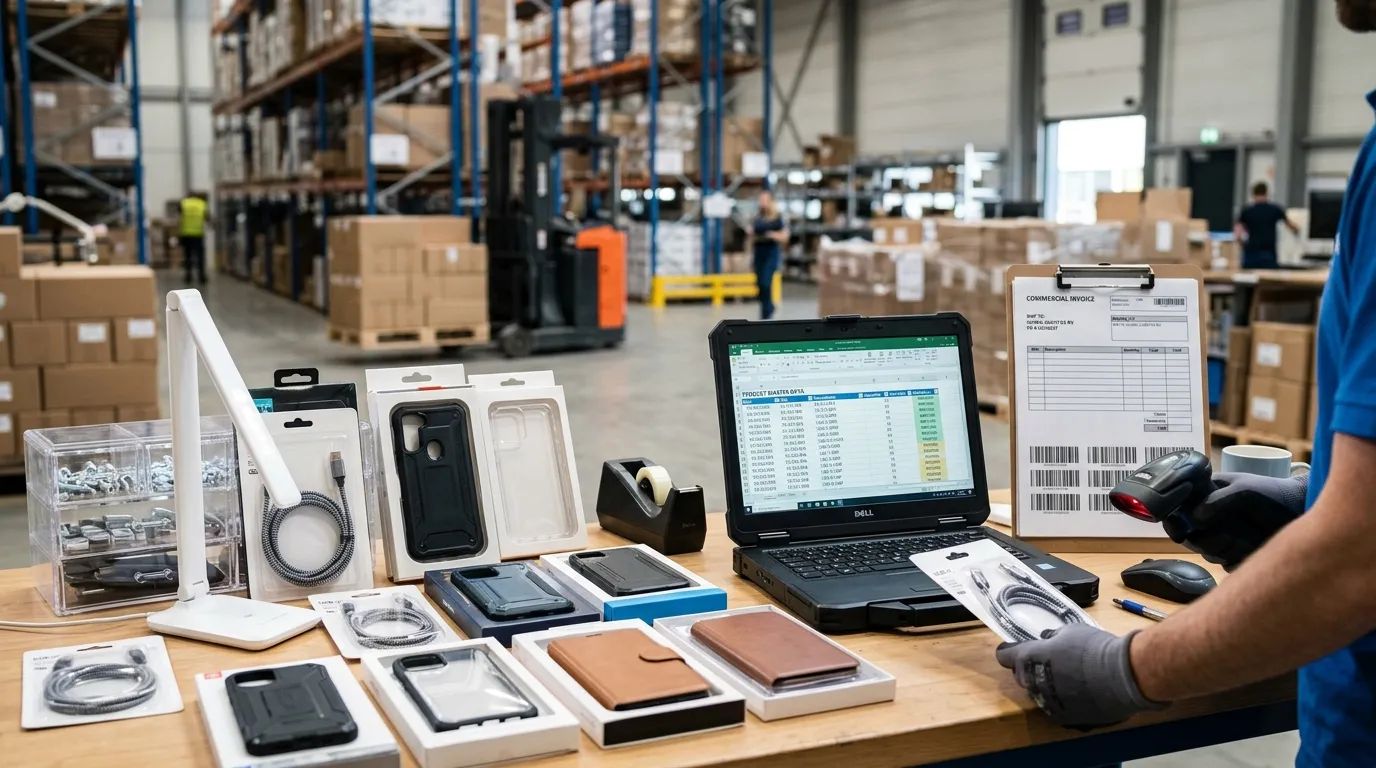
Good ICS2 product data explains what the item is, what it is made of, and how it is used. Generic labels such as “accessories” or “goods” increase rejection, referral, or inspection risk.
Product descriptions should help customs understand the real item. Avoid stop words and lazy descriptions like “sample,” “parts,” “gift,” “tools,” or “electronics.” A better description includes product type, material, function, and intended use.
Automation helps, but it does not fix bad product master data. A bad HS code or vague description simply moves faster into the wrong system. If your SKU record is weak, clean it before booking the shipment.
| Risky description | Better description | Why it works better |
|---|---|---|
| Accessories | Silicone mobile phone cases for iPhone 15 | Shows product, material, and use |
| Electronics | USB-C charging cables, 1 meter, retail packed | Identifies item clearly |
| Plastic goods | Plastic drawer organizers for home storage | Explains type and use |
| LED item | LED desk lamp with metal base, non-battery | Adds product type and key risk detail |
| Beauty device | Rechargeable facial cleansing device | Shows battery-related product nature |
Ecommerce description example
A seller shipping 800 phone accessories from Shenzhen to Germany should not use “accessories” on the invoice or product file. A better line is “silicone mobile phone cases for iPhone 15, non-battery, retail packed.” That gives customs a clearer view of the item before risk review.
Mixed SKU shipment example
A mixed FBA carton with LED lamps, USB cables, and plastic organizers should not be declared as “mixed goods.” Each SKU needs its own description, HS code, quantity, and value where needed. For FBA shipments, clean data should also align with FBA labeling requirements so records and cartons do not conflict.
What happens if ICS2 data is wrong, late, or incomplete?
If ICS2 data is incomplete or inaccurate, customs can reject the ENS, ask for more information, require screening, issue a Do Not Load instruction, or delay entry processing. The fix is usually data correction before the risk assessment resumes.
The European Commission’s ICS2 guidance explains that customs can issue referrals when data is missing or risk needs more review. For the seller, that can mean lost time, rebooking pressure, storage fees, or missed marketplace stock windows.
This is why shipment split planning matters for ecommerce sellers. If one mixed shipment is delayed because of unclear data, your whole replenishment plan may suffer.
ICS2 delay if-then table
| Customs signal | Likely cause | Seller action | Forwarder action | Business impact |
|---|---|---|---|---|
| ENS rejected | Missing required data | Send corrected fields | Resubmit filing | Shipment waits |
| More data requested | Weak product detail | Clarify description, HS code, value | Reply to referral | Extra handling time |
| Screening requested | Risk flag or unclear product | Provide product and document support | Coordinate inspection | Loading or routing delay |
| Do Not Load | Serious pre-loading concern | Fix issue before cargo moves | Hold shipment until cleared | Missed flight or vessel |
| Arrival hold | Data mismatch or late issue | Confirm invoice and packing list | Work with customs | Storage cost risk |
| Invoice mismatch | Order data differs from filing | Correct invoice or SKU data | Update filing record | Clearance slowdown |
For urgent air restocks, this can be painful. A seller sending stock to Amazon Germany by air may miss the flight if pre-loading data is incomplete. The decision point is simple: verify data 24 to 48 hours before handoff, not after the shipment is already moving.
How should ecommerce sellers prepare before pickup in China?
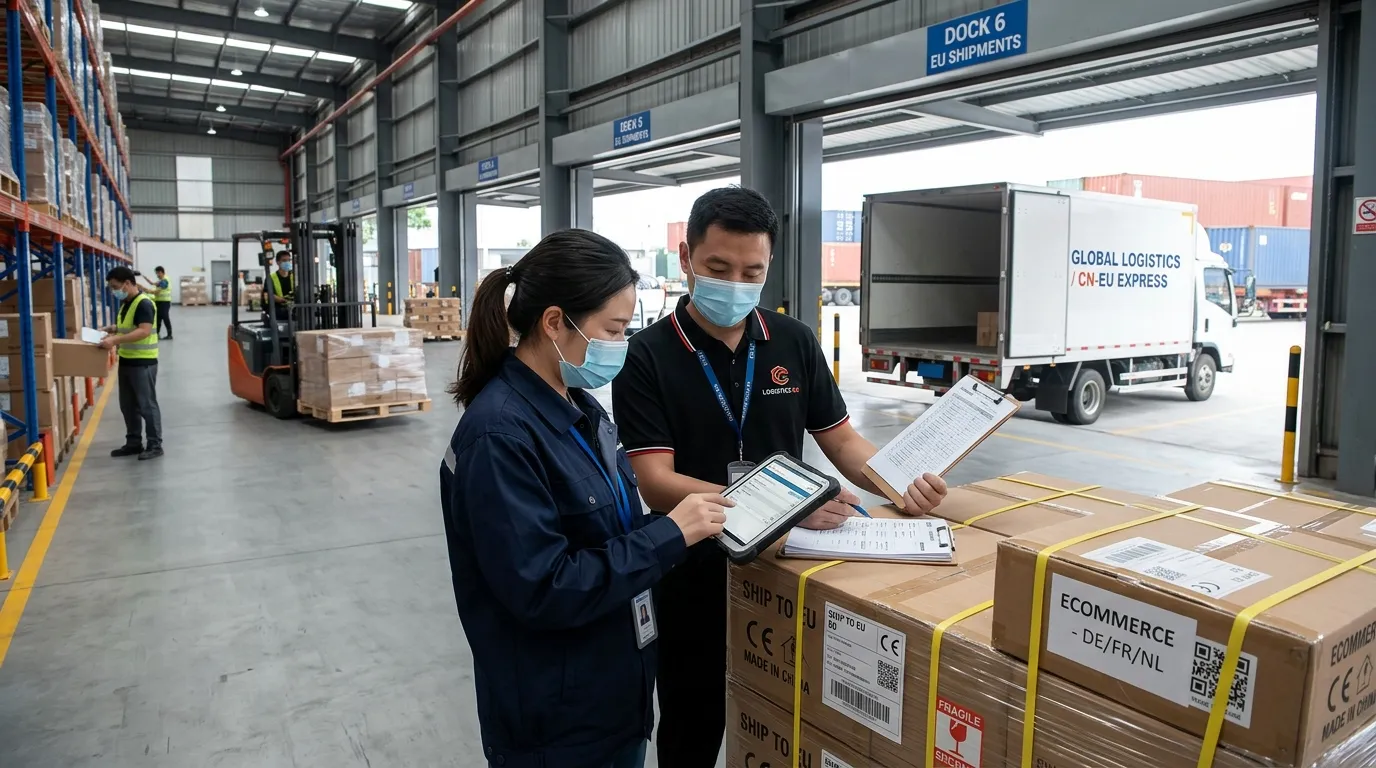
Prepare ICS2 data before pickup, not after the cargo is already moving. The seller should verify product descriptions, HS codes, invoice values, carton details, consignee records, and routing data before the forwarder files the ENS.
The safest workflow starts before the supplier releases the goods. Build a clean product file, then match it against the invoice, packing list, order export, and shipping plan. If the forwarder asks for data after pickup, your correction window is already smaller.
For FBA shipments, physical preparation also matters. If cartons, labels, pallet details, and shipment documents do not align, customs and warehouse problems can stack together. Review FBA pallet rules before cargo leaves the origin warehouse.
Use this pre-pickup checklist:
- Confirm every SKU has a clear product description.
- Check the six-digit HS code for each product type.
- Match quantity, value, weight, and carton count across documents.
- Confirm consignee name, address, and EORI where needed.
- Send product and shipment data to the forwarder before the filing cutoff.
- Ask how the forwarder handles corrections, referrals, and Do Not Load messages.
For battery-powered products, add one more check. A seller shipping rechargeable beauty devices should align the product description, HS code, invoice, battery documents, and carrier rules. If the paperwork is not ready, separating sensitive goods from general goods may reduce risk.
How does ICS2 affect Amazon FBA and marketplace sellers?
ICS2 affects Amazon FBA and marketplace sellers because customs delays can break replenishment timing. Even when Amazon is not the importer, your shipment data still needs to support the ENS, carrier filing, and customs risk check.
FBA cartons with mixed SKUs need more care. A shipment with LED lamps, USB cables, and plastic organizers needs item-level descriptions and HS codes. If the invoice only says “household items,” the filing party may not have enough detail to submit clean data.
| Seller scenario | ICS2 risk | Better decision |
|---|---|---|
| Urgent air restock to Amazon Germany | Missed flight if data fails pre-loading checks | Verify data before warehouse release |
| Sea freight FBA replenishment | Late corrections can delay arrival flow | Prepare ENS data before booking cutoff |
| Mixed SKU FBA carton | Generic item data creates customs questions | Use SKU-level invoice lines |
| Consolidated ecommerce shipment | One weak seller file can slow the flow | Pre-check data for every seller |
| Stock routed through AWD or FBA | Delay affects inventory availability | Compare timing and routing early |
For Amazon inventory planning, compare customs risk with storage, routing, and delivery timing. The choice between AWD vs FBA should not only look at fees. It should also consider how fast and cleanly stock can move through customs.
If ICS2 delays could affect your inbound plan, connect this article with your broader FBA inbound cost strategy. Compliance problems often become cost problems when stock misses its planned window.
What should you ask your freight forwarder before shipping to the EU?
Ask your freight forwarder how they collect, validate, file, and correct ICS2 data before the shipment moves. A good forwarder should tell you what data they need, when they need it, and how they handle customs referrals.
Cheap consolidation is not always the safest choice. It works when every seller’s SKU data is clean, but separated shipments may be safer when product categories, batteries, or high-risk items are mixed.
Use these questions before booking:
- Who files the ENS for my shipment?
- What product data do you need from me?
- What is the cutoff for submitting corrections?
- Do you check HS codes and descriptions before filing?
- How do you handle customs referrals or Do Not Load messages?
- Can you support mixed SKU ecommerce shipments?
- What happens if one seller’s data affects a consolidation?
This is also where broader EU and UK compliance matters. ICS2 handles pre-arrival safety and security data, but sellers still need customs, VAT, importer, and delivery-term planning.
Getting the Next Step Right
ICS2 Compliance for Ecommerce Shipments is easier when the seller treats data as part of shipping, not as paperwork after booking. Start with clean SKU records, clear descriptions, HS codes, invoice details, consignee data, and forwarder deadlines. Then confirm who files the ENS and who responds if customs asks questions.
Before your next EU shipment leaves China, ask your supplier, warehouse, and forwarder to check the same data set. That one step can prevent many delays before they become expensive.
Frequently Asked Questions
What is ICS2 Phase 3?
ICS2 Phase 3 is the rollout that extends the EU’s advance cargo data requirements across more transport modes, including maritime, road, rail, and inland waterways. Ecommerce shipments entering or transiting the EU need complete pre-arrival safety and security data.
What is an Entry Summary Declaration (ENS)?
An ENS is the safety and security declaration submitted before goods enter or transit the EU. It gives customs product, party, routing, and transport data so they can assess risk before arrival or loading.
What is the meaning of EORI and ENS?
EORI is the EU customs identification number for economic operators, and ENS is the Entry Summary Declaration used for pre-arrival risk analysis. Ecommerce sellers may need EORI data from the consignee, declarant, or relevant filing party.
Can I file the ENS myself, or does my freight forwarder handle it?
Your freight forwarder or carrier often handles ENS filing, but the seller still provides the commercial data. If your product descriptions, HS codes, invoice values, or consignee details are wrong, the filing party cannot make the shipment compliant.
What happens if I don’t submit pre-arrival data?
Customs can reject the declaration, request more information, require screening, delay entry processing, or issue a Do Not Load instruction. The shipment may then face storage fees, missed delivery windows, or rebooking costs.
What are HS codes, and why do they matter for ICS2?
HS codes classify products for customs and help authorities understand what is moving across the border. Under ICS2, wrong or vague classification can trigger questions, inspections, or declaration problems.
What if I’m shipping mixed cargo with multiple products?
Each product type should have its own accurate description, HS code, quantity, weight, and invoice line where needed. Mixed ecommerce cartons are risky when the packing list and declaration do not match the actual SKU mix.


