


EU Low-Value Parcel Customs Changes: What Sellers Should Watch Before Shipping to Europe
EU Low Value Parcel Customs Changes mean sellers can no longer treat sub-€150 EU parcels as low-friction shipments. From 1 July 2026, a temporary €3 customs duty applies by item category or tariff heading, while VAT, IOSS, and possible handling fees remain separate. Sellers should audit HS codes, invoice data, pricing, DDP/DDU terms, and checkout messaging before shipping.
Cheap parcels can become expensive when the customs data is weak or the buyer gets surprised at delivery. For ecommerce sellers shipping from China, the UK, or other non-EU markets into Europe, this change is not only a tax update. It affects product pricing, delivery promises, commercial invoices, and customer support. Before sending the next batch of parcels, sellers need to know what changed and where the real risk sits.
What is changing for EU low-value parcels in 2026?
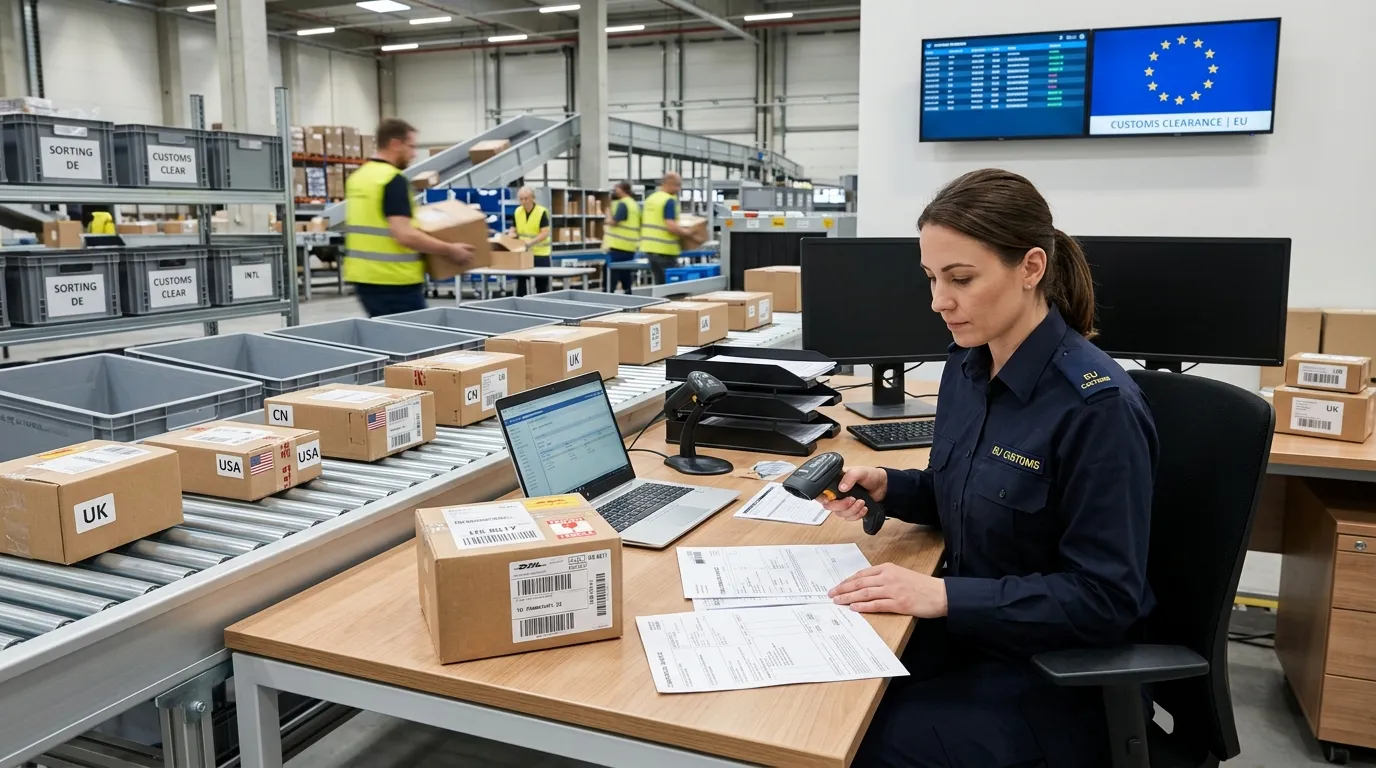
From 1 July 2026, low-value ecommerce parcels under €150 entering the EU face a temporary €3 customs duty. This does not replace VAT, and sellers still need accurate customs data, product classification, and clear customer cost communication.
The EU is moving away from the old duty-free treatment for many low-value ecommerce parcels. Under the confirmed interim rule, goods in small consignments valued below €150 will face a fixed €3 customs duty from 1 July 2026, according to the Council of the European Union.
This matters because many sellers built their EU pricing around low-value direct parcel shipping. A product that looked cheap at checkout may no longer feel cheap if duty, VAT, handling charges, or delivery collection fees appear later. The bigger issue is customer trust, not only the €3 amount.
This article focuses on the parcel-level change. For broader rules across VAT, customs records, UK imports, and seller responsibilities, see Fexbuy’s guide to EU and UK ecommerce compliance.
Is the €3 duty charged per parcel, per item, or per product category?
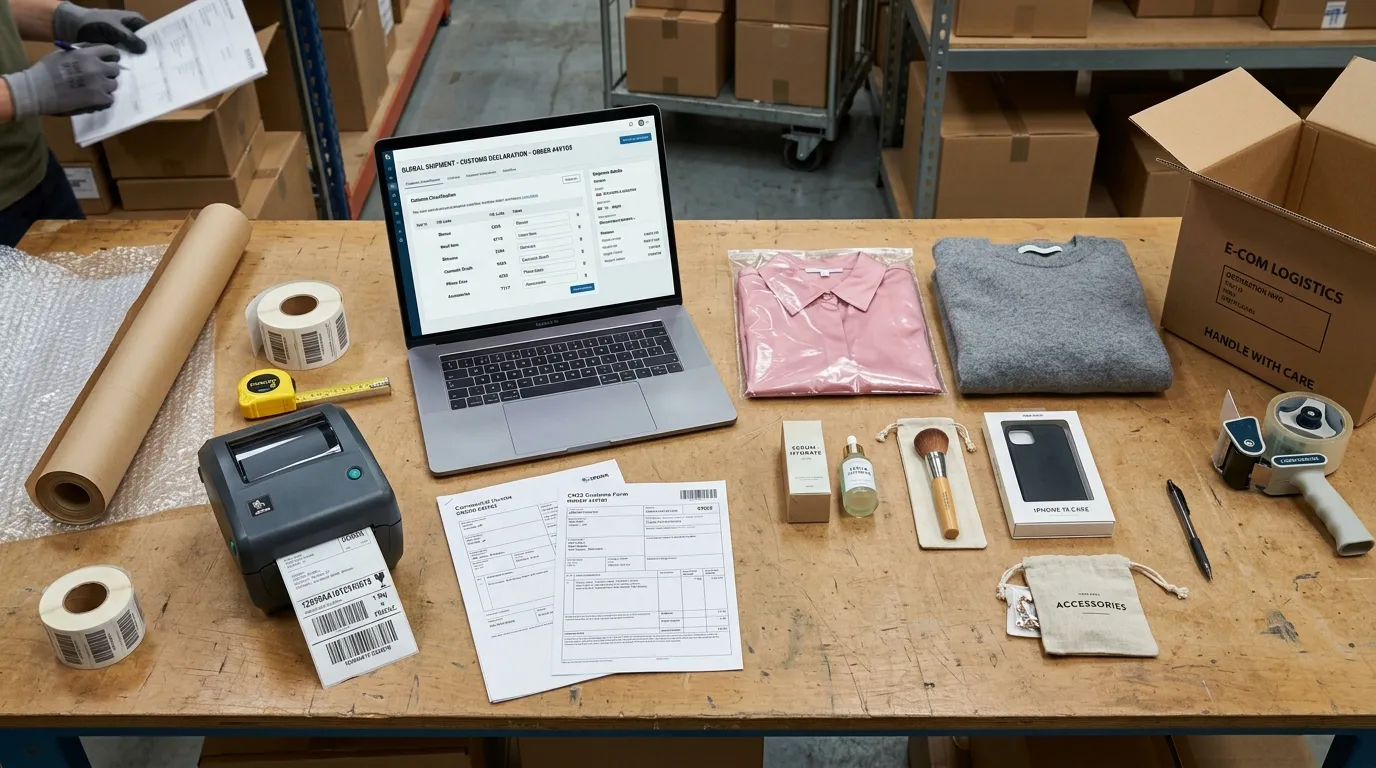
The €3 duty is not simply a flat fee per parcel. It is charged per different item category or tariff sub-heading inside a parcel, so mixed product orders can carry more than one €3 charge.
This is where many sellers can misprice orders. The Council’s later update gives a clear example: one silk blouse and two wool blouses in the same parcel count as two different tariff sub-heading categories, so the duty would be €6, not €3. That example comes from the Council’s final approval notice.
For a single-category order, the math may be easier. For a mixed basket, the seller needs better product classification before promising a landed cost.
| Parcel example | Possible duty logic | Seller risk |
|---|---|---|
| Two phone cases in the same category | €3 | Low if classification is correct |
| One silk blouse and two wool blouses | €6 | Different tariff sub-headings |
| Skincare, cosmetic brush, and plastic pouch | Could be more than €3 | Mixed categories need checking |
| One €15 gadget shipped DDU | €3 plus possible VAT or fees | Buyer may feel the charge is too high |
A beauty bundle is a good example. If a seller ships skincare, a cosmetic brush, and a plastic travel pouch in one order, each product may not sit under the same tariff logic. The seller should not guess. Check the HS code first, then build the cost into the shipping promise.
Does this change VAT, IOSS, or the future EU handling fee?
The €3 customs duty is separate from VAT and separate from the proposed EU handling fee. IOSS still matters for VAT collection, but it no longer means the seller can ignore customs-duty exposure on low-value parcels.
VAT is still a separate issue. IOSS, or Import One-Stop Shop, helps eligible sellers collect and report VAT on low-value B2C imports. It does not remove the need to classify goods correctly, declare value properly, or plan for customs duty under the new rule.
| Item | What it does | What sellers should watch |
|---|---|---|
| €3 customs duty | Adds interim customs duty to affected low-value parcels | Check product categories and tariff headings |
| Import VAT | Tax on the imported sale | Confirm collection method and checkout wording |
| IOSS | Helps handle VAT for eligible low-value B2C imports | Useful, but not a duty shield |
| Handling fee | Separate proposed or carrier-related cost area | Do not treat it as the same as the €3 duty |
The Council says the €3 duty is distinct from the proposed handling fee. Shipping platforms have also warned sellers to separate confirmed rules from possible national or handling charges, because buyers care about the final delivery cost, not the legal label attached to each charge.
If you are deciding between tax-at-checkout and duty-paid delivery, review the full IOSS vs DDP model before changing your EU checkout flow.
Which sellers and shipments are most exposed?
Sellers most exposed are non-EU ecommerce sellers shipping low-value orders directly to EU consumers, especially mixed-product parcels and low-margin orders where a small fixed duty can damage pricing or customer trust.
The risk is not equal for every seller. A brand shipping one high-margin product may absorb the cost. A marketplace seller moving cheap accessories one parcel at a time may feel it faster. The Council said 4.6 billion small packages entered the EU market in 2024, and 91% arrived from China, which shows why direct parcel flows are under heavy attention.
| Shipment situation | Risk level | Why it matters | Better action |
|---|---|---|---|
| Single product category under €150 | Medium | Duty may be simpler | Confirm HS code and price impact |
| Mixed-category parcel under €150 | High | Multiple category charges possible | Price by category logic |
| DDU direct-to-consumer parcel | High | Buyer may face surprise charges | Warn clearly or use DDP |
| Repeat EU sales volume | High | Border friction repeats often | Consider EU stock or bulk import |
| Occasional EU order | Medium | EU fulfillment may be too much | Use clean invoice data |
A Shopify seller shipping 500 low-value EU orders per month should look beyond parcel-by-parcel delivery. Direct shipping may still work, but EU bulk import or local fulfillment may reduce repeated border friction. For Amazon sellers, connect this with your wider FBA inbound cost strategy before moving inventory.
What customs data should sellers fix before shipping?
Sellers should fix product classification, declared value, origin, invoice fields, and delivery terms before shipping. These details decide how customs reads the parcel and how carriers handle charges at delivery.
Weak data creates a practical problem. A label that says “accessory” or “gift” does not give customs enough information. A China-to-France parcel with a vague description may be delayed even if the product itself is simple. The seller then gets the support ticket, not the customs office.
- Confirm the HS code or tariff sub-heading for each product.
- Match the product description to the real item.
- Confirm declared value and currency.
- Add country of origin.
- Check importer and exporter details.
- Include delivery terms such as DDP, DDU, FOB, or CIF.
- Make checkout wording match who pays VAT, duty, and fees.
- Keep carrier data and invoice data consistent.
A commercial invoice should not be treated as paperwork afterthought. Parcel platforms and customs guidance often use invoice fields such as importer, exporter, HS code, value, origin, delivery terms, and product description to assess shipments. If you are unsure whether the buyer or seller needs an importer number, read this EORI number guide.
Will these changes create more customs delays?
The rule change can create more customs delays when sellers ship with incomplete or inconsistent data. Accurate HS codes, declared values, origin details, and commercial invoices become more important because customs needs clean data to assess duty and release parcels.
The rule itself does not mean every parcel will be delayed. The real risk comes from poor data meeting stricter checks. A parcel with a clear product description, correct tariff code, fair value, and matching invoice data is easier to assess than a parcel with vague or conflicting records.
| Delay trigger | What it looks like | How to reduce the risk |
|---|---|---|
| Vague product name | “Gift” or “sample” | Use the real product name |
| Wrong HS code | Category does not match item | Check code before shipping |
| Missing origin | Country of origin not shown | Add origin on invoice |
| Low declared value | Value looks unrealistic | Use a defensible sale value |
| DDU surprise charge | Buyer refuses delivery | Explain charges before checkout |
This connects closely with EU pre-arrival data rules. If your ecommerce parcels move by air or through carrier networks, review ICS2 ecommerce compliance so shipment data is not treated as an afterthought.
For example, a €15 phone accessory shipped DDU to Germany may look cheap on the product page. But if duty, VAT, carrier collection, or handling fees appear later, the buyer may blame the seller. That becomes a conversion and support problem, not only a customs problem.
Should sellers use DDP, DDU, IOSS, or EU fulfillment?
DDP or EU fulfillment is usually safer when customer experience matters more than the cheapest displayed shipping price. DDU can work for low-frequency shipments, but it creates surprise-charge risk if buyers are not warned clearly.
DDU, or Delivered Duty Unpaid, can look cheaper at checkout because the seller is not collecting every import cost upfront. That saving can disappear when the customer gets a payment request before delivery. DDU works best when the buyer is experienced and the seller explains the risk clearly.
DDP, or Delivered Duty Paid, is better when the seller wants fewer delivery surprises. It requires better pricing and better logistics coordination, but it protects the buyer experience. IOSS still helps with VAT on eligible orders, but it should not be treated as a full customs-cost solution.
| Model | Best fit | Main risk |
|---|---|---|
| DDU | Occasional informed buyers | Surprise delivery charges |
| DDP | Customer-friendly ecommerce | Seller must price costs correctly |
| IOSS | Eligible low-value VAT handling | Does not remove duty exposure |
| EU fulfillment | Regular EU order volume | Inventory and setup cost |
EU fulfillment is not automatically better for every seller. It makes sense when EU order volume is steady. For small test-market sellers, clean direct shipping with honest checkout messaging may be more realistic. Before choosing the DDP shipping model, compare margin, order volume, and refund risk.
What should sellers update before shipping to Europe?
Sellers should update landed-cost estimates, product data, commercial invoices, checkout wording, and delivery terms before shipping. The safest approach is to treat this as an operations update, not only a tax update.
Start with your top-selling EU SKUs. Check whether each product has the right HS code, declared value, origin, and category. Then review your checkout message. If customers may pay fees later, say that before payment. If you sell into the UK too, keep the EU change separate from UK import VAT.
- Recalculate landed cost for low-value EU parcels.
- Check mixed-category bundles before setting prices.
- Fix weak product descriptions on invoices.
- Decide whether DDP, DDU, IOSS, or EU fulfillment fits each route.
- Update customer support scripts for duty and VAT questions.
- Review carrier terms for EU destinations.
- Watch future EU handling-fee and customs reform updates.
What to Do Next
EU Low Value Parcel Customs Changes should push sellers to clean up the basics before chasing a cheaper shipping rate. Start with your products, not the carrier quote. Check tariff categories, invoice data, VAT handling, and customer-facing delivery terms.
If EU orders are rare, clear DDU messaging and accurate customs data may be enough. If EU sales are steady, compare DDP, bulk import, or EU fulfillment. The right option is the one that protects margin without creating surprise costs for the buyer.
Frequently Asked Questions
When do the EU low value parcel customs changes start?
The €3 interim customs duty starts on 1 July 2026 for small parcels valued below €150 entering the EU. Broader customs reform and handling-fee rules are separate, so sellers should keep checking updates before shipping.
Is the €3 EU customs duty charged per parcel?
No, it is not simply charged per parcel. Council guidance says the duty is applied by different item category or tariff sub-heading inside the parcel, so mixed-product orders can trigger more than one charge.
Does the €3 duty replace VAT?
No, the €3 customs duty does not replace VAT. Sellers still need to manage import VAT, IOSS where applicable, product classification, and customs declaration data separately.
Does IOSS still matter after the EU parcel changes?
Yes, IOSS still matters for VAT handling on eligible low-value B2C imports. However, IOSS registration does not remove the new customs-duty exposure for affected low-value ecommerce parcels.
Will EU low-value parcel changes cause customs delays?
They can cause delays if parcel data is incomplete, inconsistent, or poorly classified. Sellers should fix HS codes, product descriptions, country of origin, declared value, and commercial invoice fields before shipping.
Should sellers use DDP or DDU for EU parcels?
DDP is safer when sellers want fewer surprise charges at delivery. DDU may work for occasional shipments, but only if the customer clearly understands that duties, VAT, or handling fees may be collected later.
Should ecommerce sellers move stock into the EU?
EU fulfillment can make sense when sellers have steady EU demand and low-value direct parcels are becoming too costly or unpredictable. It is less urgent for occasional EU orders or products with strong margins.


