


Multi-Country Fulfillment Strategy: When Sellers Should Stop Shipping Every Order Cross-Border
A Multi Country Fulfillment Strategy makes sense when cross-border shipping starts hurting margin, delivery speed, customs reliability, or returns. Sellers should not move every SKU into every country. The safer approach is hybrid: keep low-volume SKUs cross-border, move fast-moving products into regional hubs, then expand local stock only where demand is stable and savings beat storage, compliance, and replenishment costs.
Cross-border shipping is often the best way to test new markets. It keeps inventory in one place and avoids early warehouse commitments. The problem starts when one country becomes a serious sales market, but every order still moves like a one-off international shipment. At that point, freight, customs, delays, returns, and support tickets can quietly take the profit out of growth.
What is a multi-country fulfillment strategy?

A multi-country fulfillment strategy means storing inventory in more than one country or region so orders can ship from the location closest to the buyer. It helps when shipping cost, delay, or customs friction starts reducing profit and customer satisfaction.
In simple terms, you stop treating every international order as a separate cross-border shipment. Instead, you place selected inventory in the US, UK, EU, or another regional hub, then ship local orders from that stock. This can reduce delivery time, lower parcel shipping cost, and make returns easier to manage.
This does not mean sending every SKU to every country. That is usually too risky. A practical setup starts with proven markets and fast-moving SKUs. Cross-border movement of inventory between warehouses can still create customs, valuation, ownership, and record-keeping requirements, as shown in WCO guidance on e-commerce fulfillment and inventory movement.
How is this different from cross-border, in-country, and multichannel fulfillment?
Cross-border fulfillment ships international orders from one origin warehouse. In-country fulfillment stores stock inside the buyer’s market. Multi-country fulfillment uses several regional or country nodes. Multichannel fulfillment focuses on sales channels, not destination-country inventory placement.
These terms often get mixed together, but they solve different problems. A seller can sell on many channels and still ship every order from China. Another seller can sell only through one website but use local stock in the US, UK, and EU.
| Fulfillment model | What it means | Best for | Main risk |
|---|---|---|---|
| Cross-border only | Orders ship from one origin country to buyers abroad | Market testing, low volume, long-tail SKUs | Higher parcel cost and longer delivery |
| One regional hub | Stock sits in one hub serving nearby markets | Growing demand across several countries | Wrong hub choice or slow replenishment |
| Multiple country warehouses | Stock sits inside several buyer markets | High-volume, predictable markets | Dead stock and higher fixed cost |
| Multichannel fulfillment | Orders from many channels go through one fulfillment setup | Amazon, Shopify, Walmart, brand websites | Channel rules and inventory visibility |
Multi-country fulfillment is not automatically more advanced. It is more expensive when demand is weak, SKU count is too wide, or the seller cannot forecast replenishment properly. The right question is not “Can we store stock locally?” The right question is “Which market and SKU deserve local stock first?”
When should sellers stop shipping every order cross-border?
Sellers should stop shipping every order cross-border when one country has steady demand, high repeat volume, expensive last-mile delivery, frequent customs delays, or costly returns. If local fulfillment saves more than storage, replenishment, and compliance cost, the switch is justified.
A good signal is repeatable demand. For example, 40 monthly orders to Germany may not justify local stock if the catalog is wide and demand is still testing. But 600 monthly orders of one product to the UK creates a different case. At that point, cross-border parcel shipping may be too expensive and too slow.
Use a simple if-then view before moving inventory:
| Signal | Stay cross-border | Consider regional or local fulfillment |
|---|---|---|
| Monthly orders in one market | Low or unstable | Stable and growing |
| SKU demand | Spread across many slow SKUs | Concentrated in top sellers |
| Product size | Small and cheap to ship | Bulky or charged by volume |
| Delivery promise | Customers accept longer delivery | Speed affects conversion or reviews |
| Customs issues | Rare and manageable | Frequent delays or support tickets |
| Returns | Low return rate | High return cost or resale need |
Bulky products deserve special attention because parcel shipping is often charged by space, not only weight. If the package is light but large, dimensional weight costs can push a seller toward regional stock earlier than expected.
What costs should you compare before changing the fulfillment model?
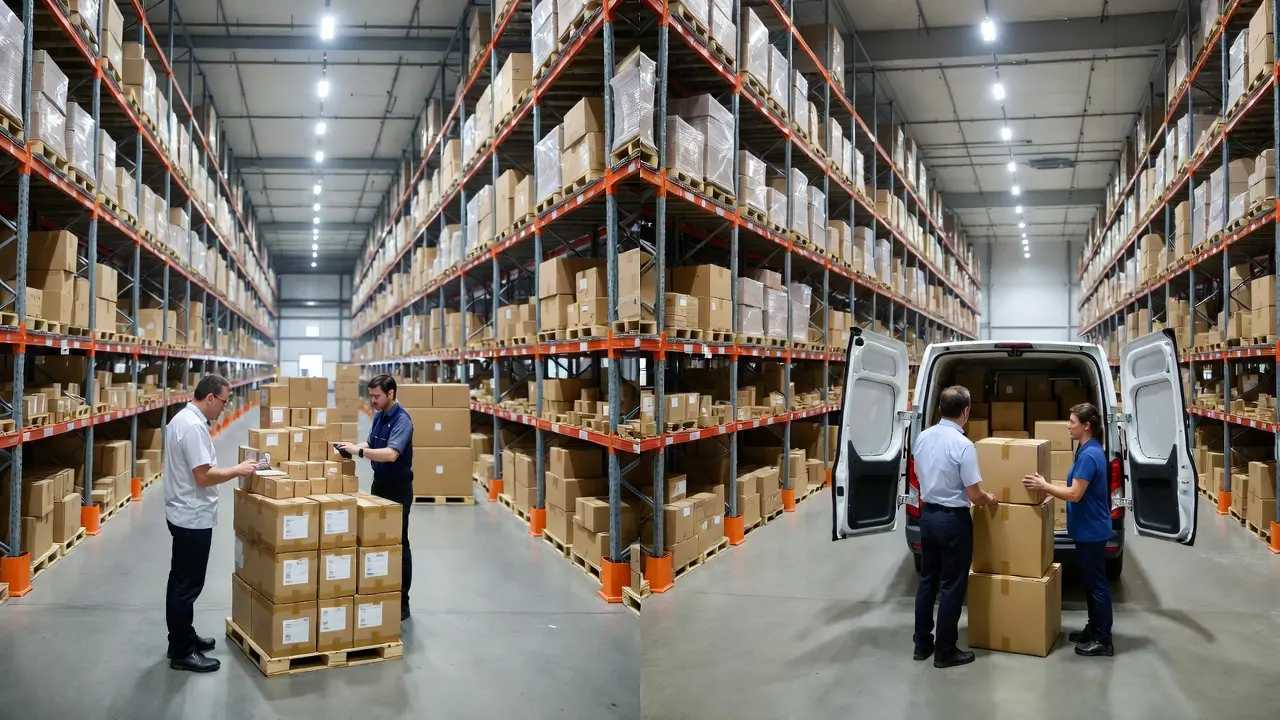
Compare total landed cost per delivered order, not only the freight rate. Include shipping, duties, taxes, customs clearance, delay risk, returns, storage, pick-pack fees, replenishment, and inventory tied up in each country.
The mistake many sellers make is comparing one cross-border shipping rate against one domestic shipping rate. That leaves out the real cost stack. Local fulfillment can lower delivery cost, but it adds warehouse fees, inventory risk, and import planning. Cross-border shipping may look simple, but every order carries international movement and possible customs friction.
For Amazon-focused sellers, connect this decision with your Amazon FBA inbound cost strategy. Inbound placement, prep, replenishment timing, and warehouse routing can change the final cost of any local or regional model.
| Cost item | Cross-border only | Regional or local fulfillment |
|---|---|---|
| International freight | Paid per order | Paid in bulk replenishment |
| Customs clearance | Repeated at parcel level | Usually handled at stock entry |
| Duties and taxes | Order-level or DDP/DDU model | Import and local sales model |
| Storage | Usually lower | Monthly warehouse cost |
| Pick and pack | May be included in parcel handling | Charged by 3PL or marketplace |
| Delivery speed | Slower across borders | Faster inside the market |
| Returns | More expensive and slower | Easier inspection and resale |
| Inventory risk | Lower | Higher if demand forecast is wrong |
Break-even cost calculator example
| Input | Cross-border only | UK local fulfillment |
|---|---|---|
| Monthly orders | 600 | 600 |
| Shipping per delivered order | $9.00 | $4.20 |
| Pick-pack and warehouse handling | $0.00 | $1.40 |
| Storage and inventory buffer per order | $0.00 | $0.70 |
| Replenishment freight per order | $0.00 | $1.10 |
| Return handling average per order | $1.50 | $0.80 |
| Estimated cost per delivered order | $10.50 | $8.20 |
In this example, local fulfillment saves about $2.30 per delivered order. At 600 orders, that is about $1,380 monthly before extra compliance or setup costs. This is not a universal rate. It shows the logic: local fulfillment wins only when volume is strong enough to spread fixed costs.
For EU sales, VAT and import handling also matter. The EU’s VAT One Stop Shop information explains that e-commerce VAT rules affect sellers, marketplaces, postal operators, couriers, customs, tax administrations, and consumers. If returns are part of the cost problem, review returns duties and taxes before choosing a model.
How do customs delays change the decision?
Customs delays change the fulfillment decision when they hurt delivery promises, refunds, customer support workload, or marketplace ratings. Moving stock into a regional node can reduce repeated parcel-level clearance friction, but it adds import and record-keeping responsibilities.
Cross-border fulfillment can work well when documentation is clean and the lane is predictable. Problems appear when sellers treat customs delay as a random event instead of a repeat cost. If the same market keeps creating holds, address checks, valuation questions, or unclear DDP/DDU expectations, the fulfillment model needs review.
Customs delay signals to watch
- Orders often miss the promised delivery window.
- Buyers ask about duties after checkout.
- Parcels pause because descriptions or values are unclear.
- Customer support keeps handling the same customs questions.
- Refunds rise because buyers refuse delayed shipments.
A regional hub can reduce repeated parcel-level clearance, but it does not remove compliance work. Sellers still need accurate valuation, records, and the right tax setup. For EU and UK shipments, hand the detailed compliance planning to an EU UK import compliance guide rather than trying to solve it inside the fulfillment article.
For imported low-value goods, the Import One Stop Shop can affect VAT handling. Ireland Revenue explains that IOSS can apply to eligible goods outside the EU sold in consignments not exceeding €150, when other conditions are met.
Which products should stay cross-border?
Cross-border fulfillment is still better for testing markets, low-volume countries, long-tail SKUs, lightweight products, and items with unpredictable demand. It avoids splitting stock too early and protects sellers from dead inventory in a country that has not proven demand.
Do not move your whole catalog into a new country first. Move the SKUs that already prove demand, create customer complaints under cross-border shipping, or lose margin because of package size. Everything else can stay cross-border until the data is stronger.
A Germany test-market scenario shows the point. If a seller ships 40 orders per month to Germany from China across 25 SKUs, local stock is risky. The better move is to improve DDP clarity, tracking, and product-page delivery expectations. Once a few SKUs show repeat sales, the seller can test a regional EU hub.
Keep cross-border when the product is small, high-margin, and easy to deliver. It also fits custom products, seasonal tests, and new markets where demand may disappear after a campaign.
Which products should move to local or regional fulfillment first?
Products should move first when they are fast-moving, predictable, expensive to ship cross-border, or difficult to return internationally. The goal is to move the SKUs where local stock changes margin or customer experience, not the SKUs that only create warehouse clutter.
| Product situation | Better first move | Why it matters |
|---|---|---|
| Fast-moving home product in the UK | Local UK 3PL | Strong volume can spread storage and handling cost |
| Bulky but lightweight item | Regional stock test | Parcel charges may rise because of volume |
| High-AOV electronics accessory | Local or regional fulfillment | Faster delivery can protect conversion and reviews |
| Fashion item with size returns | Local return point | Inspection and resale become easier |
| Long-tail spare parts | Cross-border | Demand may be too thin for local stock |
A bulky product scenario is a common trigger. A package may weigh only 2 kg, but its box takes up enough space to be charged at a higher billable weight. In that case, bulky shipment pricing can make cross-border delivery look worse as order volume grows.
For an EU regional hub scenario, say demand is steady in Germany, France, and the Netherlands. If none of those markets alone supports a country warehouse, one EU hub may be safer. It gives faster regional delivery without splitting stock across three locations.
Should you use one regional hub or multiple country warehouses?
A single regional hub is usually safer before multiple country warehouses because it improves delivery speed without splitting inventory too aggressively. Multiple country warehouses make sense only when each market has enough predictable demand to support local stock.
More warehouses can create faster delivery, but they also create more forecasting problems. Every new country node needs stock, replenishment planning, warehouse coordination, and compliance control. If sales are not stable, the seller may save on delivery but lose cash in dead stock.
| Network choice | Best when | Watch out for |
|---|---|---|
| One origin warehouse | You are testing markets | Long delivery and customs friction |
| One regional hub | Several nearby markets show demand | Hub location must match buyer geography |
| Multiple country warehouses | Each country has strong repeat volume | Stock split and higher fixed cost |
| Hybrid model | Top SKUs move local, slow SKUs stay cross-border | Requires clean SKU-level reporting |
A single regional hub is often safer than five country warehouses. Country-level warehouses only make sense when the market can support local stock without creating dead inventory. This is where good order data matters more than a bigger network map.
For US, UK, and EU growth, many sellers start with one proven hub, then add country-level stock only after repeat demand is clear.
How do returns affect the fulfillment decision?
Returns can change the fulfillment decision because cross-border returns often cost too much to recover, inspect, and resell. Local return handling can protect more value, especially for higher-priced products or categories with frequent exchanges.
A return-heavy fashion scenario makes this clear. If a seller has strong sales but many size-related returns, international return shipping may destroy margin. A local return point can inspect, restock, exchange, or dispose of items faster. That matters when the returned product still has resale value.
The WCO’s e-commerce returns case study highlights customs issues around reverse logistics, valuation, documentation, duties, and inventory management. Those issues are exactly why returns should be part of fulfillment planning, not treated as an afterthought.
For sellers facing high return friction, a deeper cross-border returns process can help decide when to consolidate, inspect, resell, or refund without return.
What should you ask a 3PL before switching to multi-country fulfillment?
Before switching, ask whether the 3PL can support your lanes, inventory visibility, customs model, return handling, and SKU-level reporting. A warehouse location alone is not enough. The provider must match your market, product type, and delivery promise.
Use this checklist before sending stock:
- Which countries and regions do you cover from each warehouse?
- Can you support DDP and DDU shipping models where needed?
- How do you handle customs documents, product descriptions, and value data?
- Can your system show inventory by SKU, country, and sales channel?
- How do you manage returns, inspection, restocking, disposal, and exchanges?
- Can you rebalance stock if one market sells faster than expected?
- What are the storage, pick-pack, inbound, outbound, and return fees?
Amazon’s 3PL evaluation advice also points to facility network, operating footprint, and customer location as key questions when choosing a provider. That fits multi-country planning because the wrong warehouse location can add cost instead of reducing it. Return capability also matters, so ask early about reverse logistics setup.
What is the safest transition plan?
The safest transition is a hybrid rollout: keep low-volume and long-tail SKUs cross-border, move fast-moving products into one regional hub, measure cost per delivered order, then add country-level stock only where demand is stable and margins improve.
Start with market data, not a warehouse list. Rank countries by order volume, repeat demand, delivery complaints, return cost, and product size. Then choose one market or one regional hub for a controlled test. Keep the test narrow enough to measure clearly.
A practical rollout looks like this:
- Keep all low-volume SKUs cross-border.
- Select 5 to 20 fast-moving SKUs for one target market.
- Compare cross-border cost against local delivered cost.
- Track delivery time, returns, support tickets, and sell-through.
- Replenish only after demand proves stable.
- Add another country warehouse only when the numbers justify it.
For example, a UK seller scenario may start with 600 monthly orders of one home product. Move that SKU to a UK 3PL, but keep slow accessories cross-border. If the local model improves delivery and lowers cost per delivered order, add the next proven SKU group.
Getting the Next Step Right
A Multi Country Fulfillment Strategy works best when it follows demand, not guesswork. Start with the countries, SKUs, and shipping problems already costing you money. Keep testing markets cross-border, move proven products into one regional hub, and use country warehouses only when volume supports them.
The next step is simple: calculate cost per delivered order for your top market. Include shipping, duties, returns, storage, pick-pack, replenishment, and dead stock risk. If the local or regional model wins after those costs, it is worth testing.
Frequently Asked Questions
What is multi-channel fulfilment?
Multi-channel fulfillment means fulfilling orders from different sales channels, such as Amazon, Shopify, Walmart, or a brand website. It is different from multi-country fulfillment, which is about where inventory is stored and which country or regional node ships the order.
What is the difference between cross-border ecommerce and in-country fulfillment?
Cross-border ecommerce ships orders from one origin country to buyers in another country. In-country fulfillment stores inventory inside the buyer’s market, so orders ship domestically after the stock has already been imported or positioned locally.
Which is better: cross-border or in-country fulfillment?
Cross-border fulfillment is usually better for testing markets, low order volume, and large SKU catalogs. In-country fulfillment is usually better when demand is steady, products are bulky or high value, and local delivery savings beat storage and compliance costs.
How do I know when to transition from cross-border ecommerce to in-country fulfillment?
Transition when a market shows steady repeat demand and cross-border delivery cost, delay, or return friction starts reducing margin. The switch should be based on per-order savings, not only on a desire for faster shipping.
Is cross-border ecommerce more expensive than local fulfillment at scale?
Cross-border ecommerce can become more expensive at scale because every order carries international freight, customs handling, and longer delivery risk. Local fulfillment adds storage and replenishment costs, so it only wins when volume is high enough to spread those fixed costs.
What are the biggest risks of storing inventory in-country?
The biggest risks are dead stock, wrong SKU allocation, extra compliance work, warehouse fees, and cash tied up in local inventory. Start with top-selling SKUs and one proven market before expanding into multiple country warehouses.
When is multi-node fulfillment NOT the right approach?
Multi-node fulfillment is not right when order volume is low, demand is unpredictable, customers are concentrated near one region, or the catalog has too many customized or slow-moving SKUs. In those cases, cross-border or one regional hub is safer.


