


Cross-Border Returns Logistics: How to Reduce Return Cost, Duties, and Customer Friction
Cross-Border Returns Logistics helps ecommerce sellers reduce return freight, duties, customs delays, and refund friction by choosing the right recovery route. Do not send every return back to origin. Compare product value, return volume, duty risk, and resale potential, then use local hubs, consolidation, duty relief, or refund-without-return where the math supports it.
A returned international order can quietly erase the profit from several successful sales. The product may need a return label, customs paperwork, warehouse inspection, refund handling, and sometimes duty or VAT review. If the process is unclear, customers also ask more support questions and lose trust. The goal is simple: decide which returns are worth recovering, and which ones should be handled another way.
What makes cross-border returns logistics so expensive?
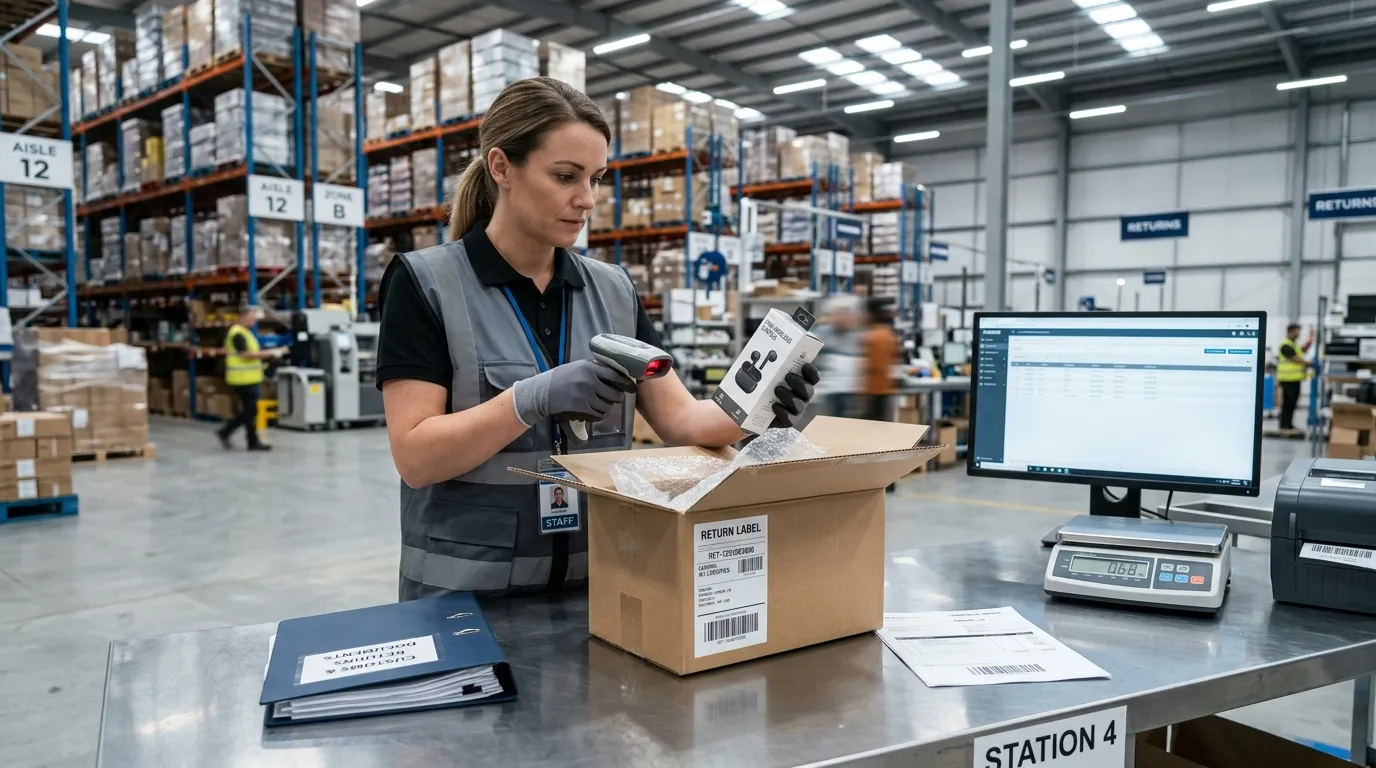
Cross-border returns logistics is expensive because the seller pays for reverse freight, customs paperwork, possible duties or VAT, warehouse handling, inspection, and refund operations. The right model depends on product value, market volume, resale potential, and customs risk.
The return freight charge is only the first cost. A seller may also pay for label creation, customs declaration, broker handling, warehouse receiving, product inspection, repacking, restocking, and customer support. If the parcel gets held at customs, the real cost rises again through delays and extra admin work.
International returns also affect cash flow. A customer expects a fast refund, but the seller may not know the product condition for days or weeks. That gap creates a hard decision: refund early and accept risk, or wait and frustrate the buyer. Competitor return guides also point to customs paperwork and border checks as common causes of delay.
| Cost layer | What it includes | Why it matters |
|---|---|---|
| Reverse freight | Return label, carrier pickup, cross-border shipping | Can exceed product margin |
| Customs handling | Declarations, invoice data, broker review | Missing data can delay clearance |
| Duty and VAT review | Possible relief, refund, or re-import charge | Affects landed return cost |
| Warehouse handling | Receiving, inspection, grading, restocking | Decides resale value |
| Customer support | Return questions, refund follow-up, tracking issues | Adds hidden operating cost |
Should you return the product, resell it locally, or write it off?
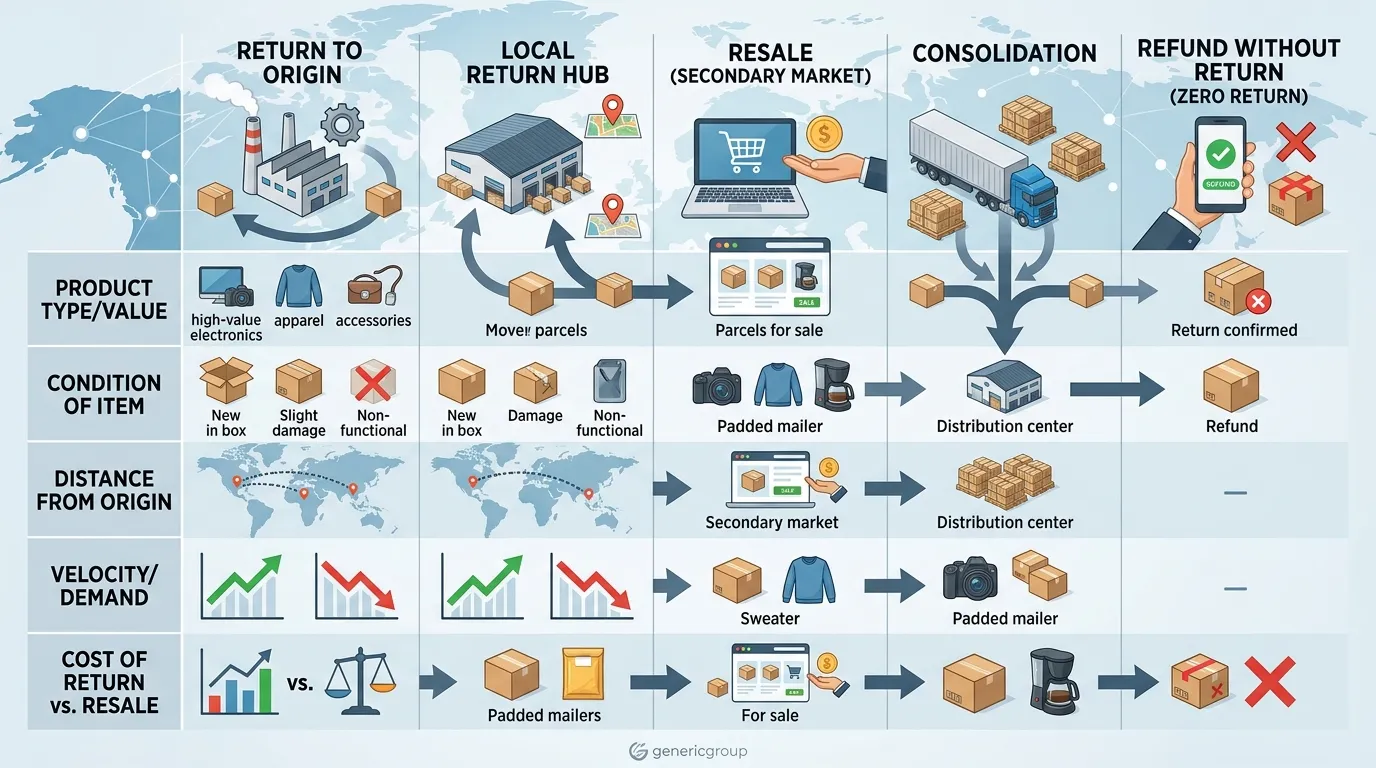
Do not return every international order by default. Return high-value or regulated products, consolidate medium-value recoverable items, resell locally when demand exists, and consider refund-without-return when freight plus handling exceeds resale value.
The first decision is financial, not emotional. If a €12 phone case costs €9 to return before inspection, the seller still has to pay handling and support costs. In that case, refund-without-return or local disposal may protect margin better than moving the product across borders again.
High-value products need different treatment. A $220 electronic device with serial tracking and resale value is usually worth recovering, especially if the seller can inspect it, repair packaging, and resell it. The return route should match the recoverable value, not the original order value.
| Product situation | Return volume | Customs risk | Best action |
|---|---|---|---|
| Low-value accessory, high return freight | Low or medium | Low | Refund without return |
| High-value electronics, resale possible | Low or medium | Medium | Return or consolidate |
| Apparel sizing return from one market | Medium or high | Low | Use local return hub |
| Damaged item with no resale value | Any | Low | Write off or dispose locally |
| Mixed SKU parcel with duty risk | Medium | High | Review documents before return |
Free international returns are not always the best customer-experience move. They work when product margin and repeat purchase value justify the cost. Paid returns, exchanges, or store credit can be safer when the item is low-margin.
Which cross-border return model fits your market?
The best return model depends on return volume and recoverable value. Direct return works for low-volume, high-value goods, while regional hubs and 3PL consolidation work better when a market generates repeat returns and customer refund speed matters.
Sending every return back to China is simple, but it is often not the lowest-cost model. Once Germany, the UK, or the US creates regular return volume, local inspection or consolidation can reduce freight waste. It can also help sellers refund faster because products are checked closer to the customer.
For Amazon sellers, the return model should connect with broader inventory and inbound planning. If your FBA stock, restock timing, and recovery costs are already tight, review your FBA cost strategy before adding a new return route.
| Return model | Best for | Main benefit | Watch out for |
|---|---|---|---|
| Direct return to origin | Low-volume, high-value items | Simple control | Slow refunds and higher freight |
| Regional return hub | Repeat returns in one market | Faster inspection and consolidation | Needs local setup |
| Local 3PL inspection | Apparel, accessories, consumer goods | Better customer experience | Requires clear grading rules |
| Bonded or customs-aware facility | Higher duty-risk products | Better customs control | More planning needed |
| Refund-without-return | Low-value items | Lowest admin cost | Fraud and policy abuse risk |
A local hub is most useful when returned stock still has value. For example, a fashion seller getting regular sizing returns from Germany can inspect Grade A items locally and resell them faster, instead of shipping each parcel back one by one.
How do customs, duties, and VAT affect returned goods?
Returned goods are not automatically duty-free. Customs authorities still need proof that the product was previously exported, is returning in the right condition, and meets the relief rules for that market.
A return is still a border movement. That means customs may ask what the item is, where it came from, why it is returning, and whether duty or VAT relief applies. If the paperwork looks like a normal import, the shipment may face normal import treatment.
For broader EU and UK import planning, connect this return process with your EU UK compliance setup. The child article should handle return decisions, but the wider compliance setup affects how cleanly returns move.
When Returned Goods Relief may help
In the UK, Returned Goods Relief can reduce import duty and VAT when goods are re-imported after export, if the conditions are met. Those conditions include timing, unchanged condition, and proof that the goods are returning.
For EU re-imports, Revenue Ireland explains that returned goods may qualify for relief from customs duty and VAT. VAT relief can depend on whether the same person who exported the goods is re-importing them.
When duties or VAT may still apply
Relief can fail when the seller cannot prove the original export, the goods have changed condition, the return period is missed, or the importer details do not match. Repairs can also change the customs treatment. The European Commission describes outward processing relief for some goods that leave the EU for processing and return later under specific rules.
Low-value ecommerce returns have their own handling details. The European Commission notes that certain low-value postal and express consignments can use simplified export formalities when returned, depending on value and duty status. That makes clean parcel data more useful, not less useful.
What documents prevent customs delays on cross-border returns?
The safest return file includes the HS code, declared value, country of origin, original order reference, reason for return, return label, and customs invoice or postal declaration. Missing or inconsistent data is a common cause of border holds.
A customs delay often starts before the parcel moves. If the HS code is missing, the declared value is unclear, or the return reason is vague, the carrier or customs broker may not know how to process the shipment. That turns a simple return into a support case.
For EU and UK sellers, customs identification also matters. If you are unsure when an EORI is needed, send the reader to the EORI number guide rather than explaining the full registration process here.
Customs delay prevention checklist
- Confirm the HS code before issuing the return label.
- Use a realistic declared value that matches the return context.
- Add the product’s country of origin.
- Include the original order number or shipment reference.
- Mark the reason clearly, such as “customer return” or “returned goods.”
- Prepare CN22, CN23, or a commercial invoice when needed.
- Check whether Returned Goods Relief may apply.
- Give the customer simple packing and drop-off instructions.
A simple customs data mistake can hold a parcel. For example, a seller issues a return label without HS code, origin, or return reason. The parcel reaches the border, but customs cannot confirm it is a return. A pre-filled invoice would reduce that risk.
Product identifiers may also become more important for low-value EU parcels. FedEx has warned that EU low-value import changes from July 1, 2026 may add new customs duty rules and require more complete product identifiers for clearance.
How should you design the customer return experience?
The customer return experience should be clear before the buyer asks for help. Give simple instructions, label options, tracking, refund timing, and drop-off guidance. If the buyer has to guess what to do, your support team pays for that confusion.
A good return policy should explain who pays for return shipping, where the parcel goes, when the refund starts, and whether duties or taxes are refundable. For high-margin goods, prepaid labels can protect trust. For low-margin goods, paid returns or store credit may be more realistic.
Use a short checklist inside your return portal or email:
- Approved carrier and drop-off option
- Return label and customs form
- Packing rules
- Refund timing
- Tracking link
- Support contact if customs asks for more data
The only retrieved PAA-style question was “How Do I Drop off a Return Package?” For sellers, the answer is simple: make the approved drop-off point obvious. If you use local return hubs, tell the customer where to send the parcel and what label to use.
When should sellers use DDP, IOSS, or local return hubs?
DDP, IOSS, and local return hubs solve different parts of the cross-border problem. DDP can reduce surprise delivery charges, IOSS helps with EU low-value VAT collection, and return hubs reduce reverse freight and refund delays in strong markets.
DDP improves buyer trust, but it does not remove the need for return planning. Sellers still need clean return documents and a recovery route, especially when duties, VAT, and product identifiers are involved. For a deeper checkout-side comparison, use the IOSS vs DDP guide.
| Option | Best use | Return impact |
|---|---|---|
| DDP | Seller wants prepaid landed cost | Fewer refused deliveries |
| IOSS | EU goods at or below EUR 150 | Cleaner VAT handling for eligible orders |
| Local return hub | Repeat returns in one market | Faster inspection and refunds |
The European Commission explains that IOSS can apply to distance sales of imported goods not exceeding EUR 150. UK sellers should also review UK import VAT, since VAT treatment affects both delivery cost and return expectations.
A common problem happens with DDU or DAP shipments. The customer sees unexpected charges at delivery, refuses the parcel, and the seller pays for a messy return. A prepaid-duty strategy can reduce refused shipments, but it must be matched with a return process.
What KPIs show whether your return process is working?
The best KPIs for cross-border returns are cost per return, return-to-refund time, return-to-resale time, recovery value, customs hold rate, and repeat purchase after return. Track them by country and SKU, not only at account level.
A return process can look fine at account level and still lose money in one market. Track Germany, the UK, the US, and other key destinations separately. Also track by SKU, because one product can create most of the return cost.
| KPI | What it tells you | Good use |
|---|---|---|
| Cost per return | Total cost to handle one return | Finds margin leaks |
| Return-to-refund time | Days from request to refund | Measures customer friction |
| Return-to-resale time | Days until stock is sellable | Measures recovery speed |
| Recovery value | Value saved after return cost | Shows if return is worth it |
| Customs hold rate | Share of returns delayed at border | Finds paperwork problems |
| Repeat purchase after return | Customer buys again after return | Measures trust |
If customs hold rate rises, check paperwork before changing carriers. If recovery value is low, change the return rule for that SKU. If refund time is slow, a local hub may create more value than a cheaper carrier.
How can Fexbuy help reduce cross-border return risk?
Fexbuy can help sellers review the return route before cost turns into a bigger problem. The starting point is simple: product type, declared value, return country, monthly return volume, current DDP or DDU setup, and preferred recovery option.
A useful logistics review should answer these questions:
- Which products are worth returning?
- Which countries need a local return hub?
- Which parcels need better customs documents?
- Which returns should be consolidated?
- Which SKUs should use refund-without-return?
Sellers shipping to the EU should also watch upcoming parcel rules. Use the EU parcel changes guide to understand how small parcel clearance may affect future return planning. The goal is to build a return setup before customs delays and refund complaints become normal.
What to Do Next
Cross-Border Returns Logistics works best when each return has a clear rule before the customer opens a ticket. Start with your top return markets, your highest-return SKUs, and your average recoverable value. Then decide which products should return to origin, move through a local hub, get consolidated, or be refunded without return.
If your returns involve EU or UK duties, VAT, DDP, or low-value parcels, review the customs data before changing carriers. A cheaper label will not fix incomplete paperwork.
Frequently Asked Questions
What is cross-border returns logistics?
Cross-border returns logistics is the process of moving returned products across countries, clearing customs, inspecting goods, recovering value, and refunding the customer. It includes reverse shipping, return labels, customs documents, duties, VAT, warehouse handling, and resale or disposal decisions.
Why do international returns get delayed at customs?
International returns get delayed when paperwork is incomplete, product data does not match, or customs cannot verify the goods are genuine returns. HS code, value, country of origin, return reason, and original shipment evidence should be prepared before the return ships.
Are returned goods duty-free?
Returned goods are not automatically duty-free. Relief may apply when the goods meet local returned-goods rules, such as proof of previous export, unchanged condition, correct timing, and matching importer or exporter requirements where applicable.
Is it cheaper to use a local return hub?
A local return hub is usually cheaper when one market creates regular return volume and the products can be resold, consolidated, or inspected locally. For low-volume, high-value goods, direct return to origin may still be simpler.
When should sellers use refund-without-return?
Sellers should use refund-without-return when the item value is lower than the combined cost of return freight, customs handling, inspection, and restocking. It works best for low-value items with low fraud risk and limited resale value.
How Do I Drop off a Return Package?
For customers, a return package should be dropped off using the seller’s approved label and carrier instructions. For sellers, offering local drop-off points can reduce support questions, speed up return intake, and improve the customer experience.


