


FBA Prep and Labeling Requirements: What to Finish Before Shipping from China
FBA Prep and Labeling Requirements should be completed before goods leave China, not after they reach Amazon. Each unit must be packaged, labeled, scan-ready, and matched to the shipment plan. Check FNSKU labels, carton labels, pallet labels, poly bag warnings, product protection, and customs documents before pickup to reduce receiving delays, rejection, and rework.
If your supplier says “the goods are packed,” that doesn’t always mean they are FBA-ready. Amazon receiving needs clean barcodes, correct packaging, carton-level labels, and shipment details that match the plan. For China-to-Amazon shipments, fixing mistakes after export is slower and more expensive. This guide gives you a pre-shipment checklist you can use with your supplier, forwarder, or China warehouse team.
What does FBA prep actually include before shipping from China?
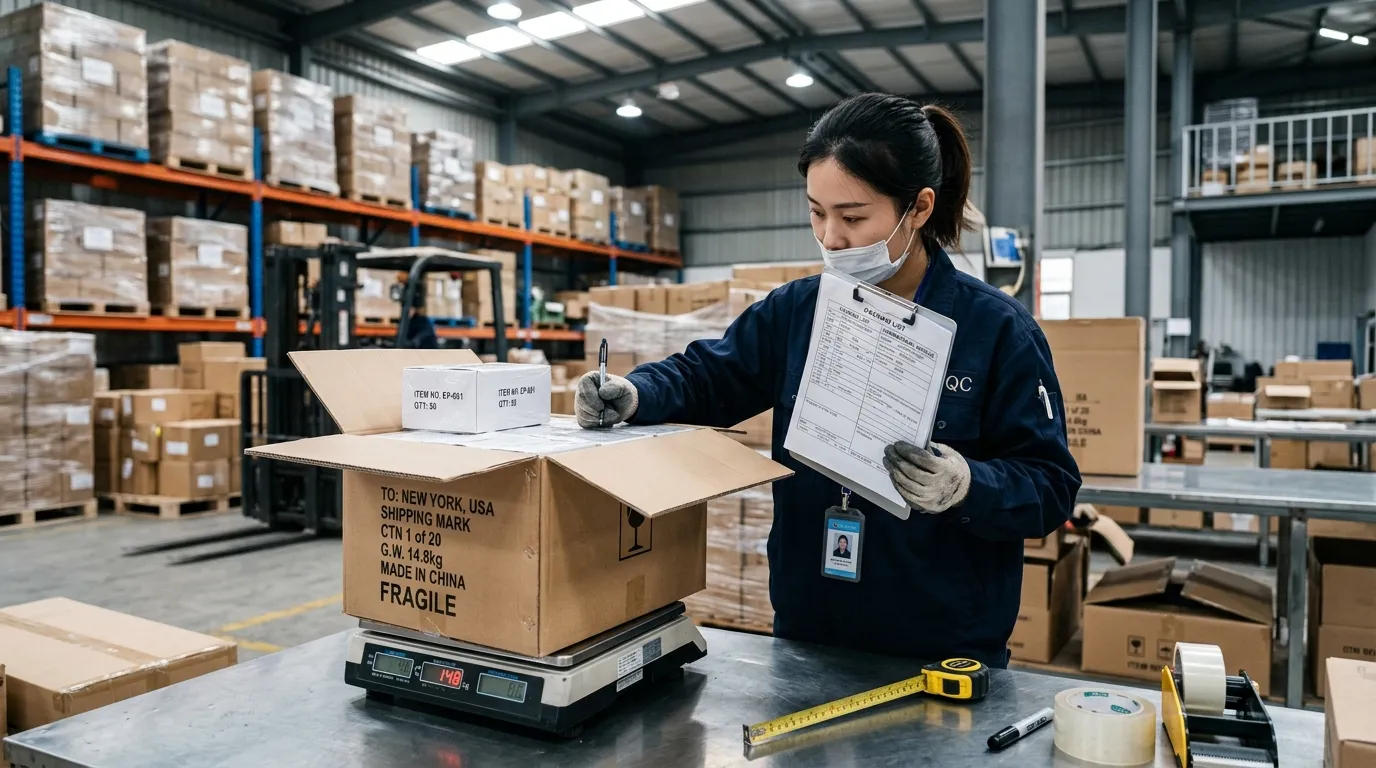
FBA prep includes the unit packaging, barcode control, carton labeling, pallet labeling, and shipment checks required before Amazon can receive inventory without manual correction. For China shipments, finish these tasks before goods leave origin.
FBA prep is the work that makes inventory ready for Amazon’s warehouse system. It includes how each sellable unit is packed, how it is labeled, how cartons are identified, and how the shipment is checked before pickup. This is separate from normal factory packing.
A product can look retail-ready but still fail FBA receiving. For example, a private-label item may have a nice box, but if the wrong barcode is visible, Amazon may scan it under the wrong code. That creates receiving delays and inventory problems.
- Each sellable unit is packed as Amazon expects.
- The correct barcode is visible and scannable.
- Conflicting barcodes are covered when needed.
- Each carton has the right FBA Box ID label.
- Pallet labels are ready if the shipment is palletized.
- Carton count, SKU count, and documents match the shipment plan.
This article focuses on prep execution. For the wider cost side, such as placement fees, routing, and consolidation, use a broader FBA inbound cost strategy.
What changed for FBA prep and labeling in 2026?
Starting January 1, 2026, Amazon stopped offering prep and item labeling services for U.S. FBA shipments. Sellers must now make sure inventory arrives fully packaged, labeled, and scan-ready before it reaches Amazon’s fulfillment network.
This change matters because sellers can’t depend on Amazon to fix missing item labels or prep work after arrival. The official Amazon SP-API announcement says U.S. FBA prep and item labeling services ended on January 1, 2026. It also says the change applies to inventory sent directly to FBA or through AWD, AGL, Amazon SEND, and Supply Chain Portal.
That means prep ownership must move upstream. For China sellers, this usually means the factory, a China warehouse, a freight forwarder, or a third-party prep partner must finish the work before export.
| Before 2026 | From January 1, 2026 |
|---|---|
| Some sellers used Amazon prep or item labeling services in the U.S. | Sellers must arrange prep and item labeling before Amazon receiving. |
| Missing labels could sometimes be corrected after arrival. | Missing labels can create receiving issues and rework risk. |
| Prep planning could happen late. | Prep planning must happen before pickup or warehouse handoff. |
| AWD and FBA flows could still depend on Amazon prep. | Inventory moving into FBA must be prepared before it enters the network. |
If you use Amazon Warehousing and Distribution, check how inventory moves after storage. The prep requirement still matters when goods later enter FBA, so compare AWD vs FBA before planning your inbound flow.
Which product labels must be finished before shipment?
Each sellable unit should have one clear, scannable identity. If you apply an FNSKU, make sure competing manufacturer barcodes are covered or made unscannable so Amazon does not receive the unit under the wrong code.
The main label question is simple: what barcode should Amazon scan when it receives the unit? Many sellers use an FNSKU, which is Amazon’s fulfillment barcode for connecting inventory to a specific seller and listing. Others may use a manufacturer barcode, such as a UPC, when Amazon allows it.
FNSKU vs manufacturer barcode
Use an FNSKU when you want tighter control over seller-specific inventory. This is common for private-label goods, bundles, products with similar listings, or products where barcode confusion could cause inventory mix-ups.
Manufacturer barcodes may work for some products, but they create more risk when multiple sellers sell the same item. If your product has both a UPC and an FNSKU visible, Amazon may scan the wrong code. The safest setup is one scannable barcode per sellable unit.
| Situation | Safer label choice | What to check |
|---|---|---|
| Private-label product | FNSKU | Cover or remove the UPC if required. |
| Same product sold by many sellers | FNSKU | Avoid inventory mix-up risk. |
| Bundle or kit | FNSKU | Only one barcode should identify the full set. |
| Manufacturer barcode allowed and controlled | UPC or manufacturer barcode | Confirm Amazon accepts it for the listing. |
Label placement mistakes to avoid
Scan-test labels before cartons are sealed. A label can look fine in a photo but fail when scanned because of poor print quality, curved placement, glossy packaging, or barcode distortion.
For example, a Shenzhen electronics seller ships 800 private-label units with the UPC and FNSKU both visible. The goods look ready, but the carton should not leave the supplier yet. The decision point is clear: cover the UPC, scan-test the FNSKU, and seal cartons only after label control is confirmed.
What packaging checks should be done at unit level?
Unit packaging should keep the product sealed, scannable, protected, and ready to stow. The safest rule is simple: nothing should open, leak, separate, hide the barcode, or require Amazon to rework the unit.
Unit packaging should match the product risk. A T-shirt, glass bottle, phone case, cosmetic liquid, and kitchen bundle do not need the same prep. The goal is to make each unit safe to handle and easy to scan inside Amazon’s fulfillment system.
Poly bags, warnings, and barcode visibility
Poly bags need special attention. If a poly bag has an opening of 5 inches or larger, it generally needs a suffocation warning. The warning should be visible before the unit is sent to Amazon, and the barcode should still be easy to scan through or outside the bag.
An apparel seller may use clear poly bags for shirts, but forget warning labels on larger bags. That mistake is easy to fix in a China warehouse. It becomes slower when the goods are already moving toward FBA.
| Packaging issue | What to check before pickup |
|---|---|
| Poly bag | Warning label, sealed bag, visible barcode. |
| Clear bag with barcode inside | Barcode scans through the bag. |
| Loose product in bag | Product cannot fall out. |
| Glossy bag | Barcode still scans without reflection problems. |
Sets, fragile items, liquids, and expiry dates
Bundles should stay together as one sellable unit. For a kitchen set with three components, loose items inside a carton are risky. Shrink-wrap the set, apply a “Sold as Set” label where needed, and expose only one barcode for the full bundle.
Fragile goods need enough protection to survive warehouse handling. Liquids should not leak under pressure or during transit. Expiration-dated products need clear date visibility because hidden dates can create receiving and storage problems.
| Product type | Common risk | Pre-shipment fix |
|---|---|---|
| Fragile item | Breakage during handling | Bubble wrap or box protection. |
| Liquid | Leakage | Seal cap, bag if needed, test for leaks. |
| Bundle | Components separated | Wrap as one unit and label as a set. |
| Expiry product | Date hidden or unclear | Keep date visible and consistent. |
| Apparel | Bag warning missing | Add suffocation warning when required. |
What carton and pallet labels are required for FBA?
Carton labels identify the box inside Amazon’s inbound workflow, while carrier labels move the freight through the transport network. Both must stay flat, visible, and scannable. Pallets also need labels that remain readable after wrapping.
Each carton in the shipment should have the correct FBA Box ID label. Do not treat this as a general carton mark. It connects the carton to the shipment plan, so one wrong label can create receiving confusion even when the units inside are correct.
Carrier labels and Amazon labels serve different jobs. Keep them separate and avoid placing barcodes over tape, seams, edges, corners, or damaged carton surfaces. Freightos also explains that FBA shipments need label discipline at the product, carton, and pallet level in its FBA requirements guide.
| Label type | Where it goes | Common mistake |
|---|---|---|
| FBA Box ID label | Flat side of each carton | Placed on seam or edge. |
| Carrier label | Visible carton surface | Overlaps Amazon label. |
| Pallet label | Each side of pallet | Covered by stretch wrap. |
| Carton mark | Outside carton if needed | Confused with Amazon label. |
A carton label mismatch can happen when a supplier mixes two SKUs inside cartons, but the shipment plan says each carton is case-packed with one SKU. Fix this before labels are printed or applied. Once the carton is in transit, correction becomes slower.
Carton-level planning also connects to shipment split planning, because different destinations may require different carton labels and routing checks.
What should your China supplier or forwarder check before pickup?
Your supplier or forwarder should confirm that the physical goods match the Amazon shipment plan before pickup. This includes SKU count, unit count, carton count, carton weight, carton dimensions, barcode status, and label placement.
This is where many China-to-FBA mistakes start. The seller creates the shipment plan, the supplier packs the goods, and the forwarder collects the cartons. If no one checks the full handoff, errors may travel all the way to Amazon.
Supplier handoff checklist
Ask the supplier to send clear photos before pickup. You need photos of unit labels, inner packaging, carton labels, carton sides, and pallet labels if used. Photos should show readable labels, not just packed cartons from a distance.
The supplier should confirm:
- SKU and ASIN match the purchase order.
- Unit quantity matches the shipment plan.
- FNSKU labels scan correctly.
- Extra barcodes are covered when needed.
- Packaging is sealed and protected.
- Carton labels are applied to the right cartons.
Forwarder warehouse verification
A China warehouse or freight forwarder can add a second check before export. This is useful when the supplier is new, the shipment has many SKUs, or the product needs special packaging.
Fexbuy’s logistics tone focuses on safe, on-time, and cost-aware shipping, and this step fits that mindset. The forwarder should confirm carton count, measure carton dimensions, check gross weight, compare documents, and report visible label problems before goods move to port, airport, rail, or courier handoff.
Can FBA prep mistakes also create customs delays?
Amazon labels do not replace customs documents. For China-to-FBA shipments, the commercial invoice, packing list, HS code, country of origin, carton count, and declared value must match the physical goods to reduce clearance problems.
Customs officers do not use your FNSKU to classify the product. They care about the commercial invoice, product description, declared value, country of origin, quantity, and HS code. The Trade.gov commercial invoice guide explains that invoices support export and import clearance and help customs assess duties and taxes.
The packing list should also match the shipment. Trade.gov says a packing list is not a substitute for a commercial invoice, but customs officials may use it to check cargo against the invoice.
| Document or field | What it should match | Risk if wrong |
|---|---|---|
| Commercial invoice | Product, value, buyer, seller, origin | Clearance questions or duty issues. |
| Packing list | Carton count, weight, dimensions | Cargo mismatch. |
| HS code | Product classification | Duty and clearance problems. |
| Country of origin | Product marking and invoice | Import compliance risk. |
| Incoterms | Responsibility for cost and clearance | Confusion over who pays or acts. |
A common example is a shipment where the packing list says 40 cartons, the commercial invoice says 38 cartons, and the FBA plan says 40 cartons. Do not ship yet. Reconcile the documents before export booking.
Trade.gov also explains that HS codes support product classification, shipping documents, tariffs, and duty rates. Incoterms help define who handles costs, documentation, customs clearance, and transport tasks. For marketplace shipments into Europe or the UK, hand off the broader VAT and import rules to EU and UK import compliance.
Should you prep at the factory, a China warehouse, or a U.S. prep center?
Prep at the factory works for simple, repeatable products only if the supplier follows Amazon rules. For mixed SKUs, fragile goods, bundles, or weak supplier QC, a China warehouse or prep partner is usually safer before goods move internationally.
Factory prep is not always the cheapest option. It works when the product is simple and the supplier is trained, but it becomes expensive when one barcode mistake creates a receiving delay after export. Low unit cost does not help if the shipment gets stuck or needs rework.
A U.S. prep center is safer for messy supplier quality, but it is not always the best route for China shipments. If the issue can be caught before export, origin-side inspection usually saves more time.
China-to-FBA prep ownership matrix
| Prep option | Best for | Risk level | Cost control | When to avoid |
|---|---|---|---|---|
| Factory prep | Simple single-SKU products | Medium | Good if supplier is trained | New suppliers or complex bundles |
| China warehouse prep | Mixed SKUs, fragile goods, bundles | Lower | Good balance | Very urgent shipments with no inspection time |
| U.S. prep center | Unreliable supplier packing | Medium | Higher domestic cost | When errors can be fixed before export |
| Seller in-house prep | Small batches or samples | Low for control, high for time | Depends on labor | Large shipments from China |
The goal is not only to follow Amazon’s checklist. The real goal is to make every unit easy to scan, safe to handle, and hard to confuse with another seller’s inventory.
Prep ownership can also affect routing and cost. If you consolidate, relabel, or split cartons before FBA, review inbound placement costs before choosing the route.
What happens if inventory arrives with prep or label mistakes?
If inventory reaches Amazon with prep or label mistakes, it can be delayed, flagged as defective, rejected, stranded, or blocked from smooth receiving. The fastest fix is prevention through scan tests, label photos, and carton-level QA before pickup.
The first risk is time. If Amazon cannot scan cartons or units cleanly, receiving may slow down. That can affect listing availability, replenishment timing, and cash flow because your products are not sellable until they are received correctly.
The second risk is rework. Wrong labels, hidden barcodes, broken packaging, loose bundles, or missing warnings can force correction. After the 2026 service change, sellers need to plan correction before Amazon receiving, not after arrival.
| Mistake | What may happen | Best prevention |
|---|---|---|
| Wrong FNSKU | Inventory received under wrong identity | Scan-test every label. |
| UPC and FNSKU both visible | Barcode conflict | Cover competing barcode. |
| Missing carton label | Receiving delay | Match labels to shipment plan. |
| Loose bundle | Set separates | Wrap and label as one unit. |
| Document mismatch | Customs questions | Match invoice, packing list, and cartons. |
The best fix is boring but effective: label photos, scan tests, carton count checks, and document matching before pickup. These checks can also reduce the placement fee impact of last-minute rework or routing changes.
Final FBA prep checklist before shipping from China
Use this checklist before the supplier releases goods or the forwarder picks up the shipment. It is simple enough to share with the factory, but detailed enough to catch the common FBA receiving problems.
| Checkpoint | What to confirm | Proof to request |
|---|---|---|
| Unit label | FNSKU or approved barcode scans | Close photo and scan result |
| Barcode conflict | Extra UPC or EAN covered when needed | Photo of each unit side |
| Packaging | Unit is sealed, protected, and ready to handle | Packaging photo |
| Poly bag | Warning label added when required | Clear bag photo |
| Bundle | Sold as one set and cannot separate | Set photo with barcode |
| Carton label | Correct FBA Box ID on each carton | Photo of every carton label |
| Pallet label | Labels visible on each pallet side | Pallet photos after wrapping |
| Carton count | Count matches shipment plan | Warehouse count sheet |
| Documents | Invoice and packing list match goods | Final document copy |
| Handoff | Supplier and forwarder agree on pickup details | Pickup confirmation |
Before printing final labels, confirm the shipment destination and carton plan. If your inventory is split across Amazon locations, check optimized shipment splits so carton labels match the right destination.
What to Do Next
FBA Prep and Labeling Requirements are easiest to manage before export, not after the shipment reaches Amazon. Send the checklist to your supplier, ask your forwarder to verify cartons, and keep photo proof before pickup. If the shipment has mixed SKUs, fragile items, bundles, or unclear barcodes, add a China warehouse inspection step. A small check before shipping can prevent a much larger receiving problem later.
Frequently Asked Questions
What is FBA prep?
FBA prep is the process of making inventory ready for Amazon receiving, storage, picking, and shipment. It includes unit packaging, barcode labeling, carton labels, pallet labels, and shipment checks before the goods reach Amazon.
What is an FNSKU?
An FNSKU is Amazon’s fulfillment barcode for identifying a seller’s specific inventory. It helps Amazon connect the unit to the correct seller and listing, especially when multiple sellers offer the same product.
Do poly bags need suffocation warnings?
Poly bags with openings of 5 inches or larger generally need a clear suffocation warning. The warning should be printed on the bag or attached as a visible label before the unit is sent to Amazon.
Where should I place the FBA Box ID label?
Place the FBA Box ID label on a flat, visible carton surface where the barcode will not fold over an edge, seam, or tape line. Keep it separate from anything that can cover or distort the barcode.
Can Amazon reject inventory for prep issues?
Yes, inventory can be delayed, rejected, stranded, or flagged when labels, packaging, shipment identifiers, or product prep do not meet FBA requirements. The safest prevention is checking every unit and carton before pickup.
Does this apply if I ship from China into U.S. FBA?
Yes, FBA receiving rules still apply when products are manufactured in China and shipped into U.S. FBA. Cross-border shipments add more risk because mistakes may be harder to fix after export.
Can Amazon still prep my inventory in the U.S.?
No, Amazon announced that U.S. FBA prep and item labeling services would no longer be available starting January 1, 2026. Sellers must prepare inventory themselves or use a qualified service provider.


