


DG Shipping For Lithium Batteries: A Complete Guide to Choosing the Correct UN Number
Choosing the correct UN number is the important part of sea transport of lithium batteries bound to the post. An incorrect assignment can result in serious incidents involving the safety of the transport. The most recent edition of IMDG Code 42-24 (effective for compliance from 1 January 2026) contains a number of either newly added or modified UN numbers. The purpose of this guide is simplified classification of lithium batteries for transport and addresses the most frequently encountered UN numbers. These include: UN3480, UN3481, UN3090, UN3091, UN3536, UN3556.
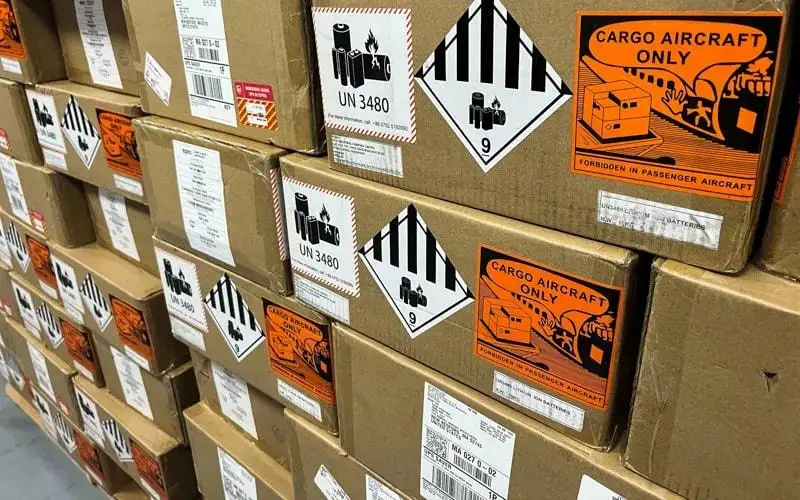
Importance of Correct UN Number in DG Shipping for Lithium Batteries
In the transport of dangerous goods, each substance or article must be assigned a unique four-digit number of the UN which must be correct. For lithium batteries, the UN number determines:
•Packaging instructions (e.g., P903, P908, P909, P910)
•Marking and labelling requirements
•Stowage and segregation rules
•Documentation (DGD, MSDS, UN38.3 test summary)
Mistakes in UN classification are among the top root causes of non-compliance notices issued by port authorities worldwide. Therefore, mastering DG Shipping For Lithium Batteries starts with mastering UN number selection.
Step 1: Identify the Battery Chemistry – Lithium–ion or Lithium Metal?
The first and most fundamental distinction:
•Lithium-ion batteries (Li-ion) – rechargeable, usually found in mobile phones, laptops, power tools, EVs.
They fall under UN3480 or UN3481 (and for vehicles, UN3556).
•Lithium metal batteries (Li-metal) – non-rechargeable, typically used in watches, medical devices, some military equipment.
They fall under UN3090 or UN3091 (and for vehicles, UN3557).
⚠️ Never mix the two chemistries under the same UN number. Even a single cell of a different type changes the classification.
Step 2: Determine if the Battery Is Installed in Equipment
Once you know the chemistry, the next question: is the battery shipped alone, or contained inside (or packed with) a piece of equipment?
For Lithium–ion Batteries
| UN Number | Applicable situation |
| UN3480 | Lithium-ion batteries alone (including batteries packed with equipment but not installed – i.e., in the same outer package but separate) |
| UN3481 | Lithium-ion batteries contained in equipment OR packed with equipment where the battery is already fitted into the device |
For Lithium–metal Batteries
| UN Number | Applicable situation |
| UN3090 | Lithium-metal batteries alone |
| UN3091 | Lithium-metal batteries contained in equipment OR packed with equipment |
Practical examples (UN3480/3481):
•A box of loose 18650 cells → UN3480
•A pallet of smartphones (each phone has a built-in battery) → UN3481
•Laptops shipped with a spare external battery pack (not installed) → The laptop is classified as UN3481; the spare battery pack is classified as UN3480 (if both are in the same transport unit, they must be declared separately).

Step 3: Special Cases – Vehicles and Cargo Transport Units
Two important updates in IMDG Code 42-24 affect DG Shipping For Lithium Batteries for vehicles and large-scale battery installations.
UN3556 – Vehicles powered by lithium–ion batteries
Starting 1 January 2026, any vehicle (car, truck, e-bike, forklift, etc.) that uses a lithium-ion battery as its primary propulsion or auxiliary power source must be assigned UN3556. The old “catch-all” UN3171 no longer applies to lithium-ion battery vehicles.
Key features:
•Applies to both new and used vehicles.
•Includes hybrid electric vehicles as long as the traction battery is lithium-ion.
•Requires specific stowage – only on deck, away from heat sources.
•SoC (state of charge) is recommended ≤30% (though not yet mandatory for sea freight, many carriers require it).
�� Note: Vehicles powered by lithium-metal batteries fall under UN3557; those with sodium-ion batteries fall under UN3558. For most consumer EVs, UN3556 is the correct choice.
UN3536 – Batteries installed in cargo transport units
UN3536 applies to lithium batteries (both ion and metal) that are installed in a cargo transport unit and are intended solely to supply power to equipment within that same unit – for example, a refrigerated container powered by an integral battery bank, or a telemetry unit attached to the container.
Important boundaries:
•The battery must be fixed inside the unit and not easily removable.
•The battery does not provide propulsion or external power.
•If the unit carries standalone batteries as cargo, those must be declared separately under UN3480 or UN3090.
Decision Tree – Which UN Number Should You Use?
Use this quick reference for DG Shipping For Lithium Batteries:
• Loose cells / battery packs, no equipment
→ Lithium-ion: UN3480
→ Lithium-metal: UN3090
• Battery already fitted inside a small device (phone, laptop, tool)
→ Lithium-ion: UN3481
→ Lithium-metal: UN3091
• Battery shipped in same box as a device but not installed
→ Device: UN3481 or UN3091 (depending on chemistry)
→ Separate battery: UN3480 or UN3090 – must be listed separately on the DGD
• Vehicle (car, e-bike, scooter, truck) powered by lithium-ion battery
→ UN3556 (not UN3171)
• Refrigerated container or similar unit with built-in lithium battery for internal use
→ UN3536
• Damaged, defective, or recalled batteries
→ Do not use standard UN3480/3090. Refer to special provisions – typically need UN numbers under P908 or separate approval.
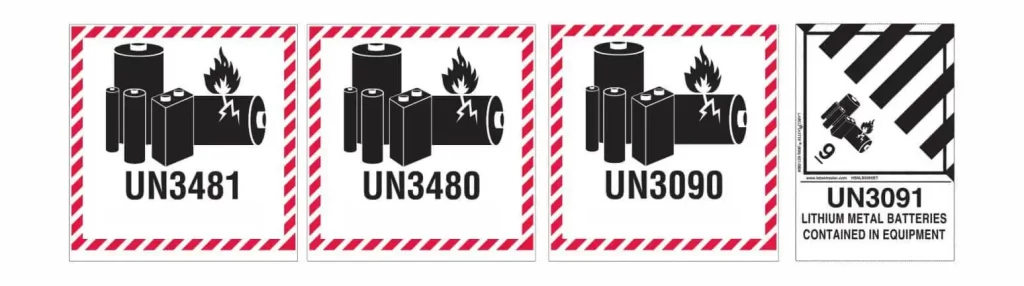
Common Mistakes in DG Shipping For Lithium Batteries
Even experienced shippers sometimes make these errors:
•Using UN3171 after 2026 for a lithium-ion vehicle – This is no longer accepted and will cause instant rejection.
•Confusing UN3480 with UN3481 – Declaring installed batteries as UN3480 leads to over-packaging and wrong documentation.
•Applying SP188 exemption incorrectly – The “small battery” exemption (SP188) does not change the UN number; it only waives certain packaging and DGD requirements. You still must assign the correct UN number.
•Forgetting UN3536 for cargo transport units with integral batteries – Many shippers wrongly classify these as UN3480.
Final Checklist for Shippers
Before you book any sea freight for lithium batteries, verify:
•Battery chemistry confirmed (ion vs. metal vs. sodium).
•Installed or standalone status.
•Is it a vehicle? → Use UN3556/3557/3558 as appropriate.
•Is it a cargo transport unit with integrated battery? → Consider UN3536.
•UN38.3 test summary available and matches the battery model.
•MSDS/SDS updated to IMDG Code 42-24.
If using SP188 exemption, still apply the correct UN number on the commercial invoice and packing list.
Conclusion
Mastering UN number selection is the foundation of safe and compliant DG Shipping For Lithium Batteries. By following the chemistry-first, equipment-second logic – and applying the new UN3556 and UN3536 where relevant – you can avoid costly delays and regulatory penalties. When in doubt, consult Fexbuy team, your trusted partner for safe, compliant DG Shipping for Lithium Batteries worldwide.. Correct classification today means smooth sailing tomorrow.
FAQ
Q1: What is the First Step in DG Shipping for Lithium Batteries?
The first step is finding the battery contents and the transport method. Shippers need to know if the battery is lithium-ion, lithium-metal, or even sodium-ion. They also need to know if the batteries are being shipped by themselves, in equipment, or embedded in a vehicle.
Q2: What Is The Difference Between UN3480 And UN3481?
UN3480 is used for lithium-ion batteries that are shipped on their own, whereas UN3481 is used for lithium-ion batteries that are part of, or in, equipment.
Q3: What Is The Difference Between UN3090 And UN3091?
UN3090 applies to lithium-metal batteries shipped by themselves. UN3091 applies to shipments of lithium-metal batteries as part of, or contained in, equipment.
Q4: Are Lithium-Ion And Lithium-Metal Batteries Classified The Same Way?
No. Lithium-ion batteries are the rechargeable type and are generally covered by UN3480 or UN3481. Lithium-metal batteries are the non-rechargeable type and are generally covered by UN3090 or UN3091.
Q5: When Should UN3556 Be Used?
UN3556 applies to vehicles powered by lithium-ion batteries. It is used when the battery is part of the vehicle’s propulsion system.


