


Africa Transport Logistics: Trends, Challenges and Integrated Solutions for 2026
Africa transport logistics is evolving quickly as trade volumes grow, e-commerce expands and governments invest in cross-border infrastructure. For businesses that import to or export from Africa, understanding how logistics works on the continent in 2024 is essential for controlling costs, managing risk and maintaining reliable supply chains.
This page gives a practical, up-to-date overview of Africa transport logistics, combining current market trends with operational insights. It is written for shippers, freight forwarders, e-commerce sellers and manufacturers who need dependable logistics solutions to and from African markets.
1. The Current Landscape of Africa Transport Logistics
1.1 Why Africa logistics matters in 2024
Africa’s trade and logistics infrastructure are changing. The African Continental Free Trade Area (AfCFTA) has expanded regional trade opportunities. Demand is rising for consumer goods, pharmaceuticals, electronics and industrial equipment. E-commerce is growing rapidly, driving small-parcel volumes across borders. Foreign investment in manufacturing, mining, agribusiness and energy continues to increase.
These shifts are pushing logistics demand across import flows from Asia, Europe and the Middle East; export flows of agricultural products, minerals, textiles and manufactured goods; and intra-Africa regional trade through ECOWAS, EAC, SADC and other trade blocs.
Logistics costs in Africa remain high relative to product value. Reasons include infrastructure gaps, port congestion, customs and documentation complexity, and limited visibility among fragmented service providers. For businesses, this combination of growth and complexity creates both risk and opportunity.
1.2 Key modes in Africa transport logistics
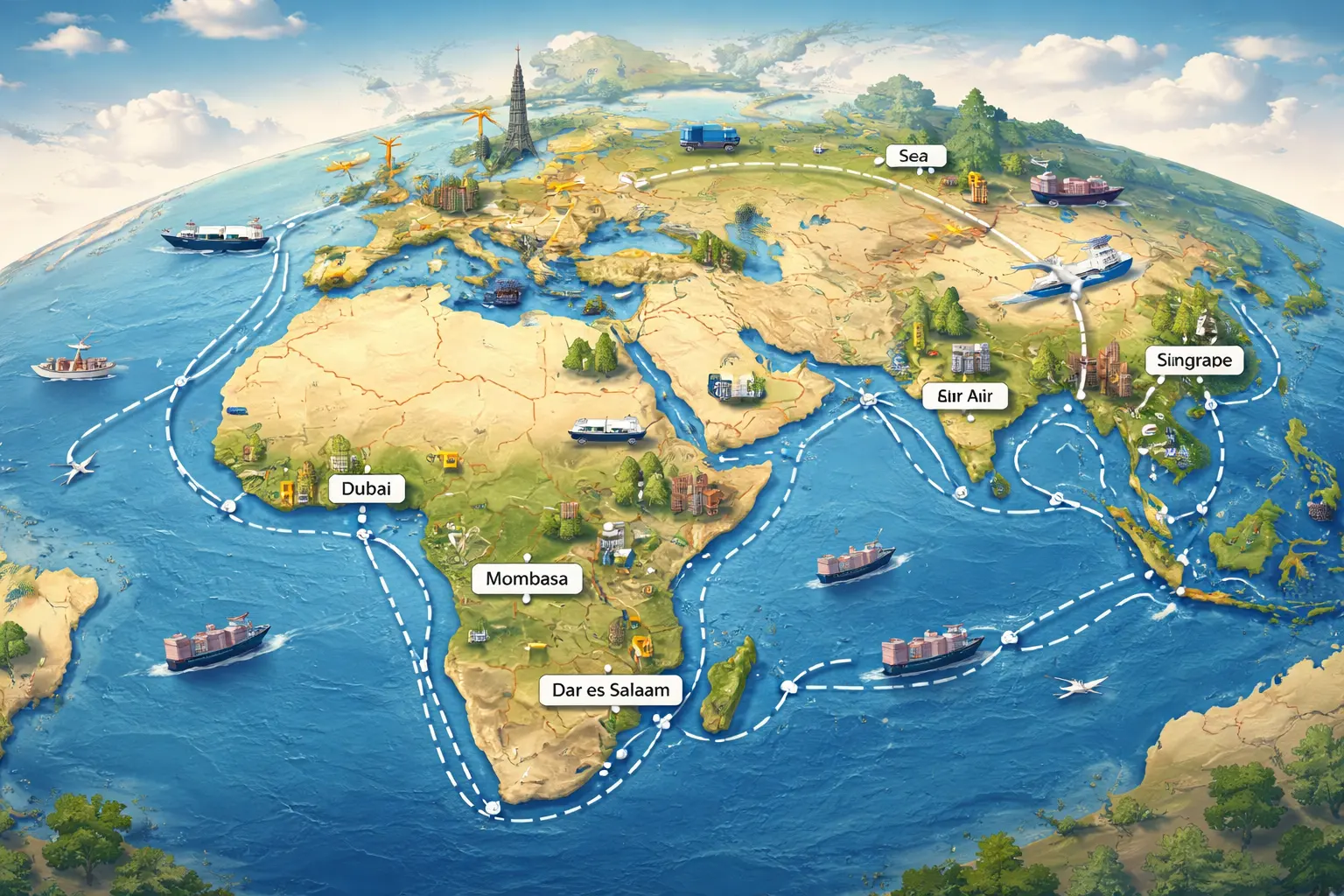
Transport logistics in Africa typically combines multiple modes. Sea freight handles long-haul trade through container shipping, Ro-Ro vehicle services, and breakbulk cargo. Air freight moves time-critical shipments, high-value cargo, e-commerce parcels, pharmaceuticals and perishables. Road transport provides inland distribution and cross-border trucking between neighboring countries. Rail plays a growing role in specific corridors like South Africa, East Africa and North Africa for bulk cargo and containers. Last-mile delivery is critical, especially for e-commerce, spare parts and business-to-consumer shipments.
Africa transport logistics strategies focus on combining these modes into integrated door-to-door solutions that balance cost, speed and reliability.
2. Market Trends Shaping Africa Transport Logistics
2.1 Corridor development and infrastructure projects
Transport corridors across Africa are reshaping logistics options. Recent years have brought port modernization and expansion at hubs including Durban, Mombasa, Lagos, Tema and Tanger-Med. New road networks and upgrades improve connectivity between landlocked countries and coastal gateways. Rail investments aim to shift heavy and bulk cargo from road to rail on selected corridors.
For shippers, the practical effects include more routing options, potential transit time reductions on improved corridors, and temporary disruption during construction periods. Because projects progress at different speeds across countries, businesses often need a logistics partner that can re-route and re-optimize as infrastructure changes.
2.2 Growth of e-commerce and small parcel logistics
E-commerce is transforming transport logistics in Africa. Small parcels and business-to-consumer shipments from global sellers to African consumers are increasing. Cross-border fulfillment, returns management and customs-compliant delivery face new demand. Logistics providers are under pressure to offer tracking, predictable delivery windows and customer service at scale.
This growth is driving expansion of air freight and express services to major African gateways, development of regional fulfillment centers closer to end customers, and greater reliance on integrated logistics solutions that combine air, road and last-mile delivery.
2.3 Regulatory and trade facilitation developments
Regulation and trade policy strongly influence Africa transport logistics. Many countries are implementing digital customs platforms. Progressive steps toward AfCFTA-aligned procedures aim to reduce non-tariff barriers. Import regulations, taxation and documentation requirements continue to change.
Shippers importing to or exporting from Africa must monitor HS code classifications, country-specific import permits and standards, rules for restricted or controlled cargo, and local tax obligations including VAT and duties. Because rules vary by country and change frequently, many businesses rely on experienced logistics partners to manage compliance and documentation.
3. Core Components of Africa Transport Logistics
3.1 Sea freight to and from Africa
Sea freight remains the backbone of Africa logistics for high-volume trade.
3.1.1 Typical sea freight services
Full container load (FCL) works well for large shipments and offers better control and security. Less than container load (LCL) consolidates cargo for smaller shipments and small-to-medium enterprises. Ro-Ro and vehicle shipping handle cars, trucks and heavy equipment. Breakbulk and project cargo services move oversized machinery and infrastructure components.
Sea freight planning for Africa needs to account for schedule reliability and possible port congestion, cut-off times and documentation requirements, and pre-carriage and on-carriage logistics from factory to port and port to final destination.
3.1.2 Strategic use cases
Sea freight works well for long-term supply of inventory to African distributors, bulk shipments of raw materials or finished goods, and heavy equipment for mining, construction or energy projects. An experienced Africa logistics provider can help compare different ports, routings and carriers to optimize transit times and costs.
3.2 Air freight and express services
Air freight plays a critical role in Africa transport logistics for time-sensitive shipments like spare parts and critical machinery components, high-value goods such as electronics, pharmaceuticals and medical devices, and e-commerce and small parcels.
Key considerations include balancing speed versus cost by using air selectively for segments that truly require it, ensuring proper packaging, labeling and documentation to avoid delays, and coordinating airport handling and customs clearance efficiently. Air freight is often combined with road delivery for complete door-to-door solutions, particularly in countries where airport infrastructure concentrates in a few major cities.
3.3 Road freight and cross-border trucking
Road transport is the backbone of inland logistics in Africa.
3.3.1 Domestic distribution
Within individual countries, road freight services include full truckload (FTL) distribution from ports to warehouses and retail networks, partial truckload (PTL) and groupage services for smaller volumes, and temperature-controlled transport for food, pharmaceuticals and other sensitive products.
Reliability depends on road conditions and seasonal factors, security and cargo protection measures, and driver availability and route planning.
3.3.2 Cross-border road logistics
Cross-border trucking connects landlocked countries to coastal gateways and supports intra-Africa trade. Key success factors include correct and complete cross-border documentation, knowledge of local regulations and transit procedures, coordinated customs clearance at borders, and realistic transit time planning with contingency options.
A well-managed cross-border road network can significantly reduce overall lead time compared to less optimized routing.
3.4 Warehousing, consolidation and distribution
Warehousing is central to Africa transport logistics, especially in gateway locations and emerging distribution hubs. Common warehousing services include bonded warehousing for goods pending customs clearance, consolidation and deconsolidation for LCL and groupage shipments, inventory management and regional distribution, and pick-and-pack services for e-commerce and retail orders.
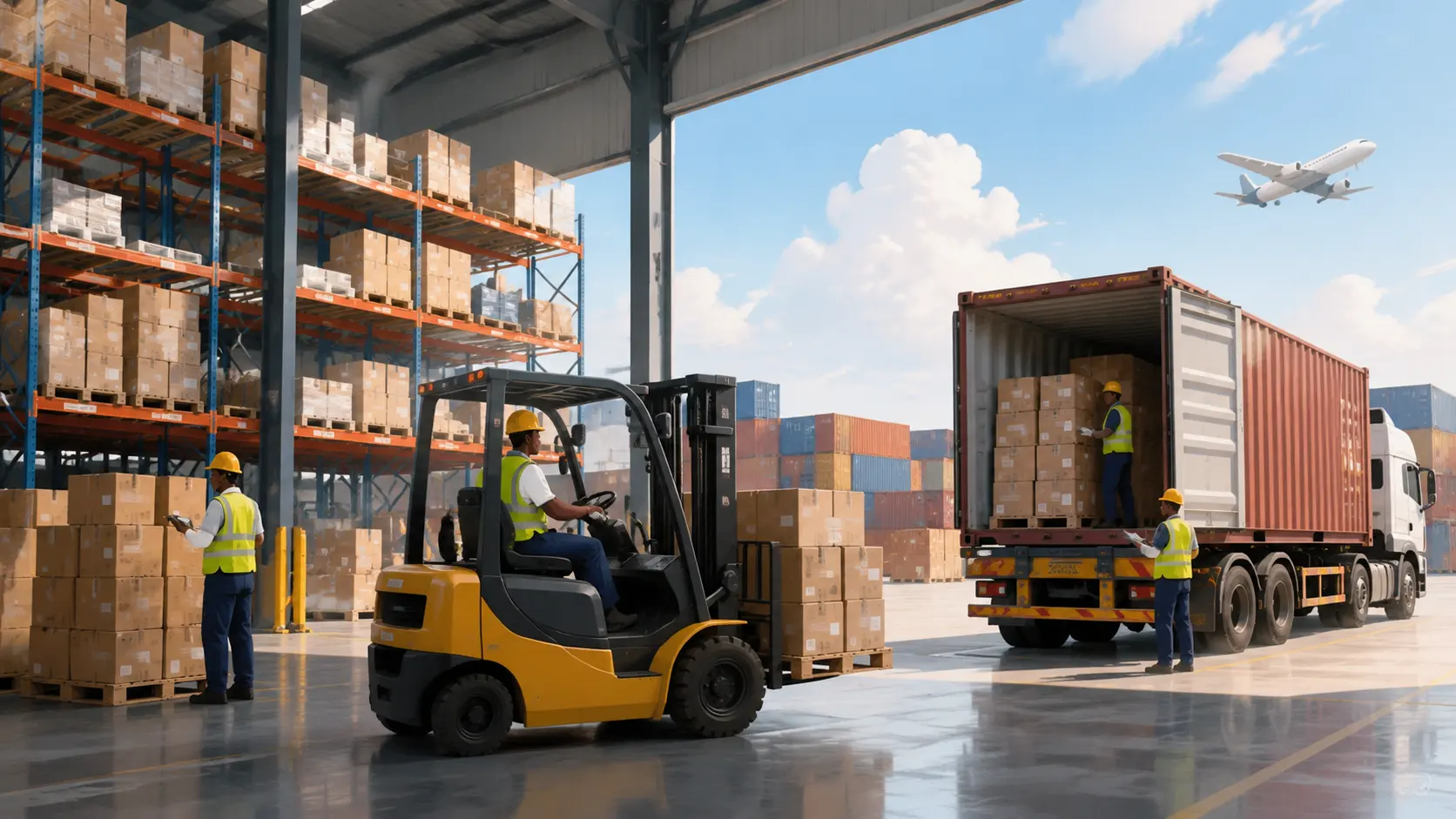
Strategic use of warehouses can shorten delivery times to final customers, allow better inventory control and demand responsiveness, and support multi-country distribution from a single hub.
4. Key Challenges in Africa Transport Logistics
4.1 Infrastructure variability and congestion
While improvements are ongoing, the level of infrastructure varies widely across African countries and even within the same country. Common challenges include port congestion and variable vessel turnaround times, limited road capacity on certain routes, and seasonal disruptions from rainy seasons and floods.
Operational implications include the need for buffer time in supply chain planning, importance of route selection and schedule flexibility, and value of local presence and on-the-ground intelligence.
4.2 Customs and compliance complexity
Customs procedures, documentation requirements and regulatory rules differ by country. Typical pain points include incomplete or incorrect documentation leading to delays, changes in local regulations that are not clearly communicated, misclassification of goods under HS codes, and lack of visibility into clearance status.
An experienced Africa logistics provider helps mitigate these issues by preparing and checking documentation before shipment, coordinating with brokers and local authorities, providing updates on clearance progress, and advising on best practices for specific products and destinations.
4.3 Fragmented service providers and limited visibility
In many markets, transport logistics is fragmented among multiple small providers. This makes coordination more complex, tracking and visibility more limited, and standardization of service levels harder to guarantee.
Businesses increasingly seek integrated Africa logistics services that cover ocean and air freight, customs clearance, inland transportation, warehousing and distribution, and last-mile delivery under a single management framework.
5. Integrated Solutions for Africa Transport Logistics
5.1 Why integrated logistics matters
For companies trading with Africa, an integrated approach to transport logistics offers a single point of coordination instead of managing multiple vendors, better end-to-end visibility across all legs of the journey, more effective cost and risk management, and easier scaling across multiple African markets.
Integrated solutions are particularly valuable where you operate in several African countries, have a mix of business-to-business and business-to-consumer shipments, need both sea and air capacity, or must handle complex customs requirements.
5.2 Typical integrated Africa logistics workflow
A practical end-to-end Africa transport logistics solution often includes planning and consulting to select routes and modes, assess risks and provide incoterms advisory. Origin services cover supplier coordination and cargo consolidation, export documentation and compliance, and port or airport handling at origin.
The main transport leg involves sea freight booking and management, air freight and express solutions, or combined sea-air or multi-modal routing. Destination services include customs clearance and duties/VAT handling, bonded or free-zone warehousing where applicable, and deconsolidation and sorting.
Inland and last-mile distribution covers road or rail transport to final destinations, business-to-business delivery to warehouses, factories or retailers, and business-to-consumer and e-commerce last-mile solutions. Ongoing optimization involves performance analysis and transit time review, route and carrier optimization, and compliance updates and documentation improvements.
5.3 How Fexbuy Logistics supports Africa transport logistics
Fexbuy Logistics specializes in international logistics with a focus on shipments between China and Africa. For companies sourcing from Asia and selling into African markets, this specialization is particularly relevant.
Key strengths include experience in China-Africa trade lanes with coordination of Asian suppliers, knowledge of African import requirements and customs processes, ability to design door-to-door solutions combining sea, air and road, and support for both bulk shipments and small-parcel logistics.
To discuss Africa transport logistics solutions tailored to your business, you can contact:
- Website: https://www.fexbuylogistics.com/
- Email: service@fexbuylogistics.com
(Information based on publicly available details from the Fexbuy Logistics website.)
6. Practical Strategies for Businesses Trading with Africa
6.1 Matching your logistics strategy to your product and market
Different product types and business models require different logistics strategies.
High-value, time-sensitive products like electronics, spare parts and medical devices benefit from air freight or hybrid solutions, bonded warehouses for fast replenishment, and priority on visibility and tracking.
Medium-value consumer goods such as apparel, home goods and fast-moving consumer goods focus on cost-optimized sea freight, combined with regional warehousing to reduce order-to-delivery time, and flexible routing to handle seasonal peaks.
Bulk commodities or heavy machinery require evaluation of project cargo solutions, special equipment and Ro-Ro services where applicable, advance planning for permits and special handling, and close coordination with local partners for site access and security.
6.2 Reducing risk and uncertainty
To reduce risk in Africa transport logistics, build realistic transit times into your planning, especially on new routes. Document requirements clearly and verify with your logistics partner before shipping. Use buffer stock for critical products in strategically located warehouses. Monitor regulatory changes that affect your product category. Work with a provider that offers contingency options including alternative ports, routes and carriers.
6.3 Cost control without sacrificing reliability
Costs can be optimized by consolidating shipments where feasible to maximize container utilization, combining sea and air strategically with air for urgent items and sea for base stock, choosing the most suitable Incoterms to align responsibilities and costs, and using warehousing and regional distribution to limit high-cost last-mile distances.
A good Africa logistics partner can provide comparative cost scenarios showing trade-offs between transit time, freight charges, duties and taxes, and inventory holding costs.
7. Choosing an Africa Transport Logistics Partner
Selecting the right logistics provider is crucial for success in African markets.
7.1 Criteria to evaluate
When assessing potential partners, consider their Africa experience and focus by looking at track records with your target countries and regions and knowledge of local regulations and customs practices.
Evaluate their network and service portfolio including capability to handle sea, air and road, availability of warehousing and distribution options, and ability to integrate multiple legs into a single solution.
Check visibility and communication through shipment tracking and status updates, dedicated support contacts, and clear escalation paths and problem-solving culture.
Review compliance and risk management including experience with documentation for your product type, security measures and cargo protection practices, and insurance options and claims handling.
7.2 When to engage a specialized China-Africa logistics expert
If your supply chain involves sourcing from China or other Asian markets to Africa, a specialized China-Africa logistics provider like Fexbuy Logistics can be especially useful.
Advantages include familiarity with Chinese suppliers and export procedures, established routes and consolidation programs from China to African destinations, ability to coordinate documentation and scheduling across time zones, and better alignment between factory, freight and final delivery.
Fexbuy Logistics positions itself specifically in this space, helping businesses streamline import flows from Asia to Africa with tailored logistics solutions.
8. Action Steps and How Fexbuy Logistics Can Help
8.1 Immediate steps for businesses expanding into Africa
If you are planning to expand or optimize your trade with Africa, start by mapping your current and target markets to identify priority African countries and customer types, assess volume, seasonality and product characteristics.
Clarify your service requirements including acceptable transit time ranges for each product line, maximum logistics cost as a percentage of product value, and compliance and special handling needs.
Engage with an Africa logistics expert to discuss feasible routing and mode options, review documentation requirements for your products, and request comparative scenarios for sea versus air, port options and warehousing strategies.
Pilot and scale by starting with one or two priority routes, monitoring performance and cost, and scaling to more markets once the model is validated.
8.2 How to contact Fexbuy Logistics
To explore integrated Africa transport logistics solutions, especially for shipments from China and other Asia origins to African destinations, contact Fexbuy Logistics:
- Website: https://www.fexbuylogistics.com/
- Email: service@fexbuylogistics.com
The Fexbuy team can help you evaluate different transport modes and corridors, design door-to-door solutions tailored to your product and markets, navigate documentation, customs and regulatory requirements, and improve visibility and control across your Africa supply chain.
9. Conclusion: Turning Africa Transport Logistics into a Competitive Advantage
Africa transport logistics in 2024 is dynamic. Infrastructure is improving, trade is growing and e-commerce is reshaping demand patterns. At the same time, complexity in regulations, infrastructure variability and fragmented service providers continues to challenge businesses.
Companies that treat Africa logistics as a strategic function rather than a last-minute operational task can gain a clear competitive advantage by designing integrated multimodal solutions, building robust customs and compliance processes, leveraging experienced Africa-focused logistics partners, and balancing cost, speed and reliability through thoughtful planning.
Whether you are just entering African markets or looking to optimize existing flows, partnering with a specialist such as Fexbuy Logistics can help you reduce risk, improve predictability and unlock new opportunities in Africa’s growing economies.


