


Lithium Battery MSDS Shipping Guide for E-commerce Sellers
Selling electronics online means navigating a set of rules for shipping lithium batteries. The Material Safety Data Sheet (MSDS) is a pillar document of this framework. Packages without an accurate Lithium Battery MSDS Shipping document may be detained, returned, or assessed a penalty. This document serves to inform e-commerce retailers on Lithium Battery MSDS Shipping requirements and helps them maintain compliance.
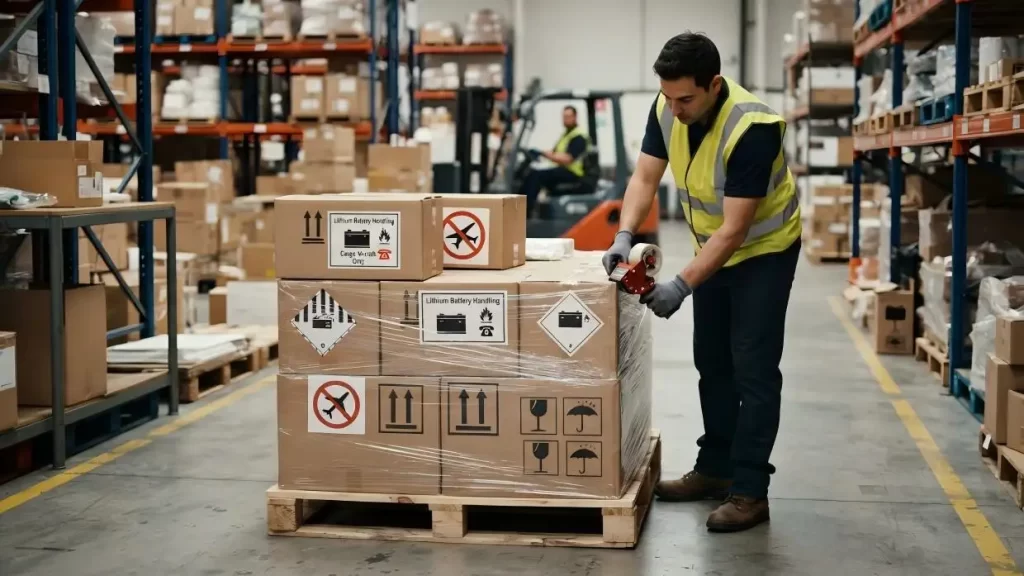
The Lithium Battery MSDS and Its Role in Shipping
An MSDS (or Safety Data Sheet, SDS) is an inventory of information pertaining to the hazards, handling, and required first aid of a substance. With respect to lithium batteries, the MSDS identifies the product as dangerous goods for the purpose of transport legislation. It assists the carrier and the regulating authority in verifying the assignment of the classification, the necessary packaging, and the supporting documentation. Regarding Lithium Battery MSDS Shipping, the document is not merely a form, but is a determining factor in whether a shipment is accepted.
The Frameworks That Regulate Lithium Battery MSDS Shipping
While the same MSDS serves as the basis for communication of the hazards for all modes of transport, each mode of transport has its own unique set of rules. The table below outlines key references.
| Transport Mode | Applicable Regulation | What the MSDS Must Support |
| Air | IATA Dangerous Goods Regulations | UN number (e.g., UN3480, UN3481), proper shipping name, hazard class, packing instruction, passenger and cargo aircraft limits |
| Sea | IMDG Code | UN number, EmS codes, marine pollutant status, stowage category, special provisions |
| Road (ADR) | ADR Agreement | UN number, classification, tunnel restriction code, limited quantity allowances |
Each regulation expects the MSDS Section 14 to contain consistent and accurate transport information. E-commerce sellers should ensure that their Lithium Battery MSDS Shipping documentation is compliant with the respective transportation mode.
Obtaining and Reviewing an MSDS for Battery Products
•Order MSDS for Individual Products: Standard MSDS may not represent the characteristics of your specific battery or cell products.
•Look at Section 14 – Transport Information: Normally the proper shipping name and UN number for lithium ion batteries are “Lithium Ion Batteries” and UN3480, respectively.
•Verify UN38.3 Compliance: An MSDS may mention the results of UN38.3 testing; however, the MSDS must be accompanied by the certificate of summary of the UN38.3 testing.
•Examine the Language and Style: The MSDS should be in the language of the importing country and typically is in English for international shipments.
Lithium Battery MSDS Shipping for Amazon FBA Sellers
When selling on Amazon FBA, additional documentation is necessary. Amazon will not accept lithium battery product inventory without an MSDS and a UN38.3 test summary. Submitting an incorrect Lithium Battery MSDS Shipping can result Amazon placing seller account listing restrictions or rejecting inbound shipments. Sellers must verify that the MSDS corresponds with the ASIN and contains all requisite transport information.
Li-ion Battery MSDS Transport Issues and Resolutions:
•Outdated MSDS: MSDS older than 2 years may lack GHS transport and classification. Please request your supplier for an updated version.
•Misunderstanding UN3480 and UN3481: There are many misunderstandings with UN3480 and UN3481. Please make sure you declare correctly in your Lithium Battery MSDS Shipping.
•No Emergency Contact in Section 1: No emergency telephone number in Section 1 is a common cause for rejection, as it does not state a 24-hour contact.
•SoC Limits Not Indicated: Although not stated in the MSDS, most of the air transport regulations allow a maximum State of Charge (SoC) of 30%. This is transport eligibility critical therefore should be verified before shipping.
•Use of the same MSDS for every transport mode: An MSDS prepared for transport by sea may not include the information required for transport by air. Therefore, Section 14 should be verified for the respective transport mode.
•MSDS for FBA that do not meet Amazon specifications: Failure to submit a complete 16 Section MSDS will cause delays to FBA Inbound approval as Amazon mandates a complete MSDS.
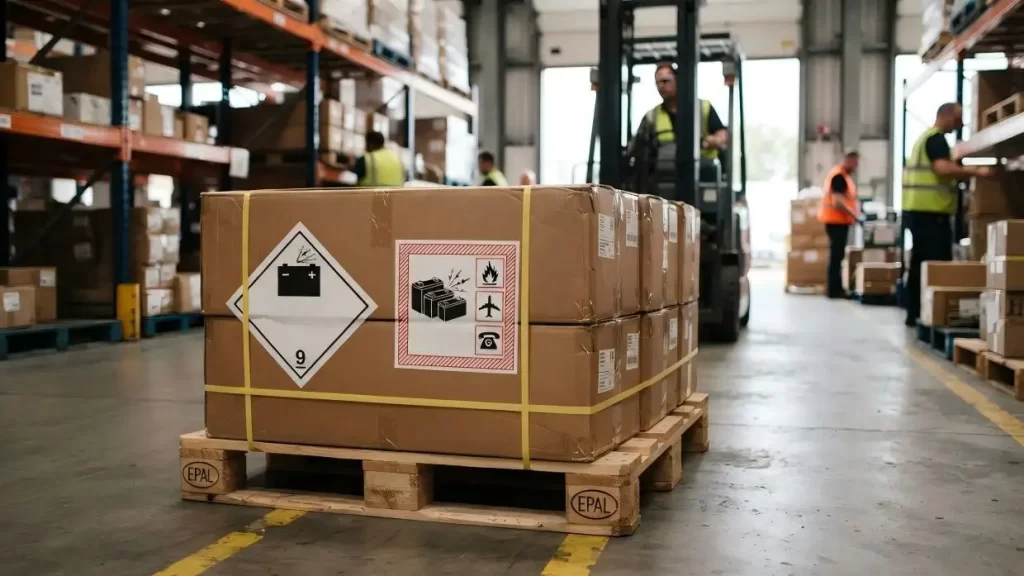
E-commerce Checklist for Lithium Battery MSDS Shipping
•Determine the Class of the Battery: The Class will be determined by the assigned regulation of UN3480, UN3481, UN3090, or UN3091.
•MSDS: Contact your supplier and obtain the latest MSDS as per the aforementioned instructions.
•Ensure UN Approved Package: Short circuit prevention, along with cushioning, are required for packaging to be UN Approved.
•Dangerous Goods Declaration: If limitation of the MSDS does not apply, the shipper’s declaration of dangerous goods must be completed.
•Labels and Marks: In accordance to the regulations, the class 9 hazard label and/or the Lithium Battery Handling Mark must be applied.
•Forwarder Document Provision: For the pre-shipment document check, the Forwarder must be provided the MSDS, UN38.3 test summary, and the declaration.
Planning for Lithium Battery MSDS Shipping can be cumbersome for an online seller. While the risks involved can be significantly reduced, the complexity of the MSDS Shipping is unlikely to be greatly diminished without a dedicated logistics partner.
Fexbuy provides Lithium Battery MSDS Shipping support for e-commerce sellers by leveraging the logistics experience of its core team of 20+ years. We offer stable channel services for air, sea, and road, and support MSDS review and UN38.3 and Dangerous Goods packaging compliance. Fexbuy’s expertise in international customs clearance and tariff delivery terms (DDP, DDU, FOB, CIF) allows Fexbuy to offer specialized logistics solutions for battery transportation. Contact Fexbuy with your transportation needs.
FAQs
Q1. What is an MSDS for lithium batteries?
An MSDS for lithium batteries provides information on the battery’s hazards and safety while handling as well as its transport classification.
Q2. Is an MSDS needed for shipping lithium batteries?
An MSDS is needed for the majority of international shipping of lithium batteries via air, sea and land.
Q3. What is the difference between UN3480 and UN3481?
UN3480 is for separate batteries, and UN3481 is for batteries packaged together with other components.
Q4. Do I need to provide a UN38.3 test report along with the MSDS?
A UN38.3 test report is mandatory along with an MSDS for the approval of transport by air and sea.
Q5. How often is an MSDS updated?
An MSDS is recommended to be updated every 2 years.


