


Home Appliance Supply Chain Logistics During Ocean Freight Disruptions
Disruptions in ocean freight lead to higher costs, longer lead times, and more uncertainty across the home appliance supply chain. Refrigerators, washing machines, air conditioners, TVs, and other appliances are some of the larger segments of the home appliance supply chain most impacted by disruptions in ocean freight due to route deviations, blank sailings, port delays and congestion, and missed transshipment connections.
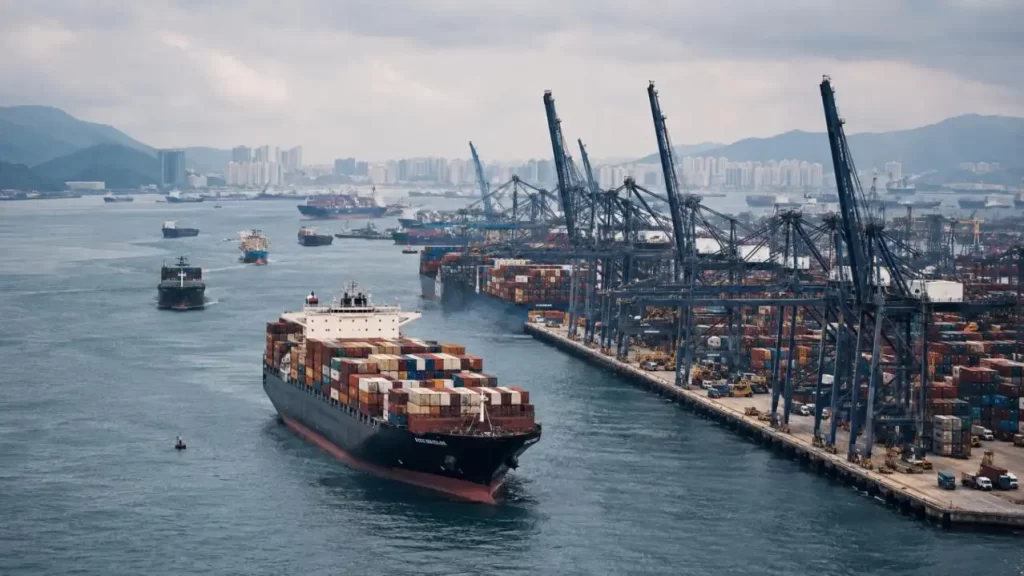
Disruptions in ocean freight impact all supply chain activities before, during, and after. Delays in shipping containers cause stockouts on the shelves, missed sales during the peak season, and full warehouses and delays in scheduled installations. The risks of such a scenario can be mitigated through strategies such as early bookings, alternate routes, safety stock, and better container load plans and shipment visibility plans, which are triggered by certain completion milestones.
Why Ocean Freight Reliability Matters to the Appliance Industry
Home appliance supply chains connect component suppliers, assembly plants, export warehouses, ports, customs authorities, regional distribution centres and final-delivery teams. A disruption at one transport node can therefore affect multiple downstream operations.
Large appliances depend heavily on container shipping because air freight is rarely economical for high-volume cargo with a large cubic footprint. Reliable Home Appliance Supply Chain Logistics must balance four priorities:
•Freight cost and available capacity
•Transit time and schedule reliability
•Product protection during handling
•Inventory availability at the destination
A delayed vessel does not simply change an estimated arrival date. It may also affect retail promotions, warehouse labour planning, dealer replenishment and customer delivery appointments.
What Drives Ocean Freight Disruptions?
Maritime Security and Route Diversions
If the peace and security of a major shipping route is compromised, carriers re-route the vessels, postpone port calls, or impose operational surcharges. Vessels detouring along longer routes consume more fuel, and a limited capacity takes longer to occupy.
Some of the expected results are:
•Revised Estimated Time of Departure (ETD) and Estimated Time of Arrival (ETA)
•Increased port-to-port transport time
•Less weekly transport capacity
•Increased fuel surcharges and risk surcharges
•Missed cut-off transshipment windows
Port Congestion and Inland Bottlenecks
Congestion in the ports may be attributed to a large volume of vessel arrivals, lack of yard space, shortage of labor, and inadequate customs inspections or poor inter-modal connections.
Even after a vessel has arrived, the container may still not be available due to:
•Restricted scheduling of the terminal appointments
•Customs delay
•Shortages of chassis and trucks
•Congestion of the receiving warehouses
Weather and Carrier Capacity Management
Disruption of port and canal operations due to typhoons, floods, storms and low water conditions, may result in carriers cancelling sailings, consolidating multiple services, or altering the port rotations. Poor or weak demand may also drive such decisions, and ultimately affect schedule reliability for services that have previously been booked.
Why Home Appliances Require Specific Logistics Controls
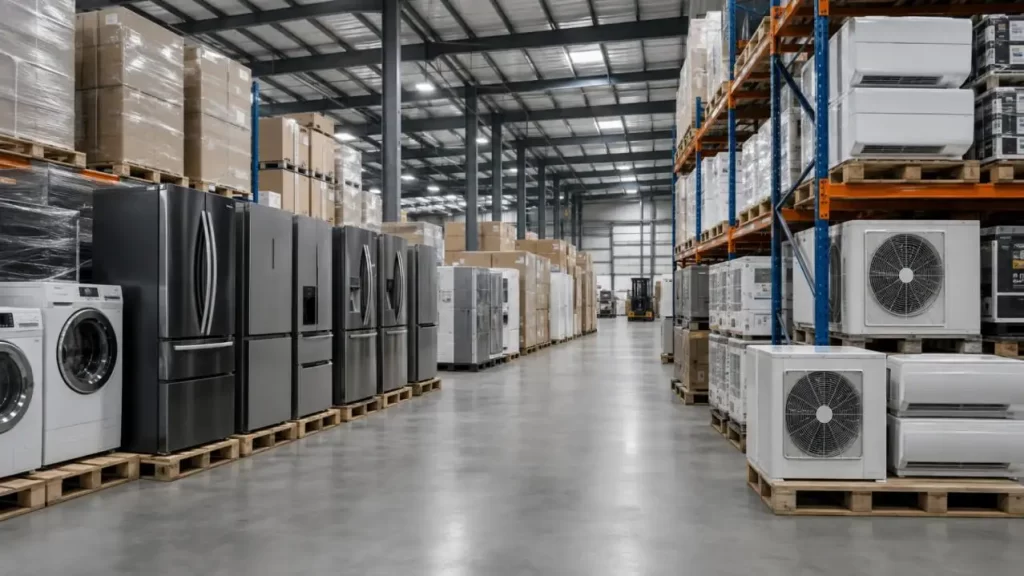
Home appliances are not treated like infant consumer goods.
| Appliance characteristic | Supply chain implication |
| Large dimensions | Increased cost of container space |
| High unit weight | Limits of loading and floor |
| Sensitive internal components | Tilting and vibration |
| Moisture exposure | Electronics and metal parts may rust |
| Seasonal demand | Inventory becomes less valuable as time goes on. |
| Multiple models and SKUs | Partial delays affects order fulfillment |
| Batteries or refrigerants | Additional supporting documentation necessary |
These characteristics affect contingency planning in the Home Appliance Supply Chain Logistics.
How Ocean Disruptions Affect Home Appliance Supply Chain Logistics
1. Lead-Time Variability
The most difficult issue is often not the average transit time, but the range of possible arrival dates. A shipment expected within five weeks may arrive earlier or later than the receiving warehouse can accommodate.
Lead-time variability affects:
•Reorder points
•Safety-stock calculations
•Warehouse appointments
•Installation schedules
•Customer delivery promises
2. Landed-Cost Uncertainty
A complete logistics cost review should include more than the base ocean rate.
| Cost category | Typical trigger |
| Ocean freight | Carrier pricing and available capacity |
| Peak-season surcharge | High-demand shipping periods |
| Fuel surcharge | Route length and bunker-cost changes |
| Congestion surcharge | Delays at origin or destination ports |
| Demurrage | Container remains inside the terminal too long |
| Detention | Equipment is returned after the free period |
| Storage and re-delivery | Warehouse or customs clearance delays |
Professional Home Appliance Supply Chain Logistics should monitor these charges before they become avoidable losses.
3. Inventory Imbalance
Disruptions to ocean freight can lead to both inadequate and excessive inventories.
When shipments are late:
•Retailers may run out of inventory of fast moving models.
•Promotions and product launches may need to be delayed.
•Dealers may start selling a competing brand.
When several delayed containers arrive together:
•Warehouse space may be insufficient.
•Labour and unloading capacity may become constrained.
•Working capital remains tied up in inventory.
Safety stock should therefore be set by SKU velocity, seasonality, replenishment time and the commercial impact of a stockout—not by applying one percentage to every appliance category.
4. Potential for More Damage to Products
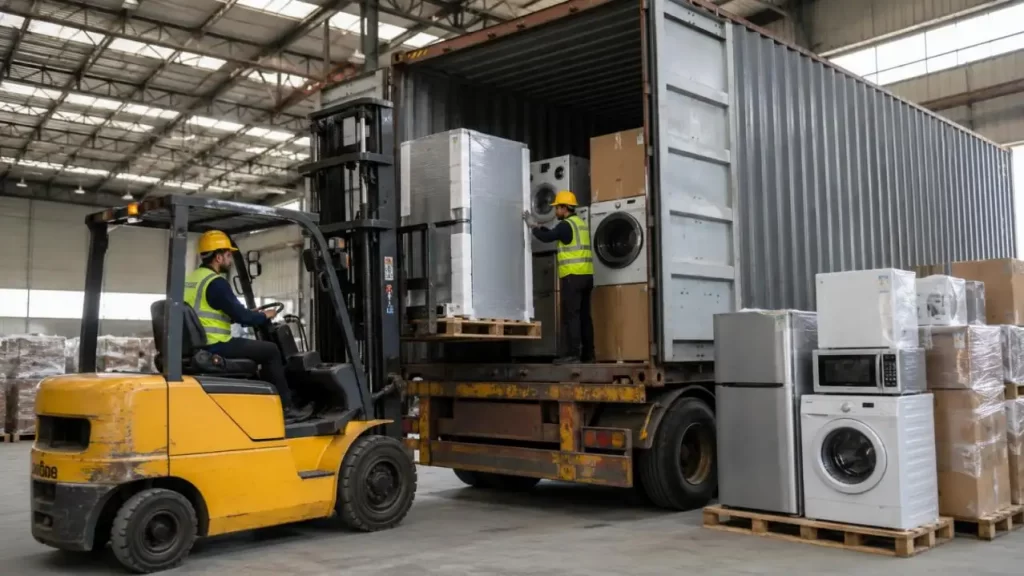
Transit legs and handling events create the potential for damage from carton compression, shifting and tilting of pallets and exposure to moisture.
Examples of controls:
•Odor, water damage, and container holes should be inspected.
•Corner boards, straps, blocking, and bracing should be used.
•Large appliances should be evenly distributed.
•Controls should be used to prevent tilting.
•Barriers and moisture absorbing desiccants should be used.
•Loading and sealing of containers should be documented.
Risk Control During the Shipping Process
| Stage | Principal Risk | Control |
| Booking | Partial loads or canceled sailings | Verify vessel, cut-off, and booking |
| Loading at the Factory | Cargo is destabilized or poorly packed | Container inspection and loading plan review |
| During Ocean Transport | Changes to the planned route or skipped ports | Track vessel movements and the updated ETA |
| Transshipment | Connecting vessel is missed | Next vessel allocation confirmation |
| At the Destination Port | Transport delays due to port congestion or customs holds | Pre-clearance documentation |
| At Final Delivery | Transport delays due to missed scheduled delivery | Pre-scheduled delivery windows |
Strengthening Resilience in the Logistics of the Supply Chain for Home Appliances
Use Multiple Routes and Modes of Transport
A comparison of direct and transshipment routes along with back up ports should be done pre-emptively, not reactively, to disruptions. For critical and time sensitive shipments, alternate modes of transport such as rail, air, or truck may be feasible for a selected group of SKUs, spare parts, or critical launch inventory.
Prioritize Booking Based on Production and Sales
Not all shipments should be considered equally time sensitive. Shipments should be categorized as:
•Routine replenishment
•Seasonal inventory
•Critical launch inventory
•High-value inventory
•Time-sensitive replacement inventory
Booking as early as possible is helpful, provided that it is done in the context of a well-defined sales and production strategy.
Track Operational Milestones
Achieving full visibility involves more than receiving a tracking number. An operational Home Appliance Supply Chain Logistics dashboard should be able to track the following:
•Booking confirmations
•Releases of empty containers
•Container gate-ins
•Actual departures of vessels
•Transshipment
•Revised ETAs
•Clearance of customs
•Delivery confirmations
Establish an Escalation Process
To facilitate swift decisions, the supply chain team should agree on the following:
•The number of days delays can occur before an escalation is triggered
•Which SKUs can be transported using rail or air
•Who gives approval for increased freight
•Who communicates the changes to customers and the warehouses
•What alternative ports or routes are considered acceptable
The Appropriate Arrangement for Shipping
| Option | Suitability | Primary Consideration |
| FCL | Appropriate for large orders of appliances | Low risk and high control over the shipment |
| LCL | Appropriate for small mixed shipments or sample shipments | Flexible, but more handling required |
| Rail | Appropriate for some China-Europe shipments | Can serve as a complementary route |
| Air | Appropriate for shipments of high value or urgent stock | Can be expensive for large appliances |
| Truck | Appropriate for regional shipments and intermodal transport | Can be the most effective way of managing port to warehouse transport |
FOB and CIF are the most commonly used terms for agreements concerning transport by sea, while DAP and DDP are used for intermodal transport agreements. The use of Incoterms® does not negate the need to cover the shipment with insurance or to have a logistics service agreement that describes the services in detail and sets a minimum standard for the packaging.
How Fexbuy Supports Home Appliance Supply Chain Logistics
A capable logistics partner can compare routes, coordinate bookings, review shipping documents, monitor transshipment risks and manage destination delivery.
Fexbuy supports international appliance shipments through sea, rail, air and truck transportation, covering Europe, the United Kingdom, the United States and Canada. Available arrangements include DDP, DAP, FOB and CIF.
Fexbuy’s service capabilities include:
✅21 years of international logistics experience
✅Multimodal transportation planning
✅Full-visibility shipment tracking
✅Transparent cost structures
✅Transportation quality control
✅Dangerous-goods-compliant support for eligible battery-powered appliances
Building a More Predictable Appliance Supply Chain
Ocean freight disruptions cannot always be prevented. However, their impact on Home Appliance Supply Chain Logistics can be reduced through realistic lead-time planning, route alternatives, disciplined loading controls and faster exception management.
Share your appliance type, cargo volume, origin, destination and required delivery date with Fexbuy to assess a practical multimodal shipping plan.
FAQs
Q1. What Home Appliance Supply Chain Logistics services does Fexbuy provide?
Fexbuy’s services for home appliances involve transport by sea, rail, air, and truck. Services provided can range from booking to reviewing documents to custom duties, to tracking the shipment, and to final delivery, based on the route and trade terms selected.
Q2. What home appliances can Fexbuy arrange for international shipping?
Fexbuy can study shipping solutions for home appliances such as washing machines, air conditioners, television sets, kitchen appliances, and vacuum cleaners, and for other household electric appliances. Booking should be preceded by reviewing packaging and dimensions, batteries, and refrigerants.
Q3. What regions does Fexbuy cover?
Fexbuy’s services exist to major locations in Europe, the United Kingdom, the United States and Canada. Availability of routes, transit time, and coverage of delivery will depend on type of cargo, origin, and destination postcode.
Q4. Does Fexbuy offer FCL and LCL services for home appliance shipping?
Yes, FCL is appropriate for large volume shipments of home appliances, while LCL may apply to shipments of samples and smaller shipments. At Fexbuy, both options will be studied considering the volume, risk of handling, and cost.
Q5. Can Fexbuy offer alternative routes for ocean freight when disruptions occur?
Fexbuy can evaluate a direct sailing, transshipment services, use of various ports, and multimodal transport. For time critical cargo, selected products, components, and replenishment stock can be transported by rail, air, or truck.


