


Why More Companies Are Choosing International Rail Shipping for Cross-Border Logistics
Cross-border logistics is no longer a simple choice between low-cost ocean freight and premium air freight. Companies increasingly need a middle option that protects lead times without pushing transport costs beyond the value of the goods. International Rail Shipping meets that requirement by combining comparatively fast transit, containerized capacity and direct access to major inland markets.
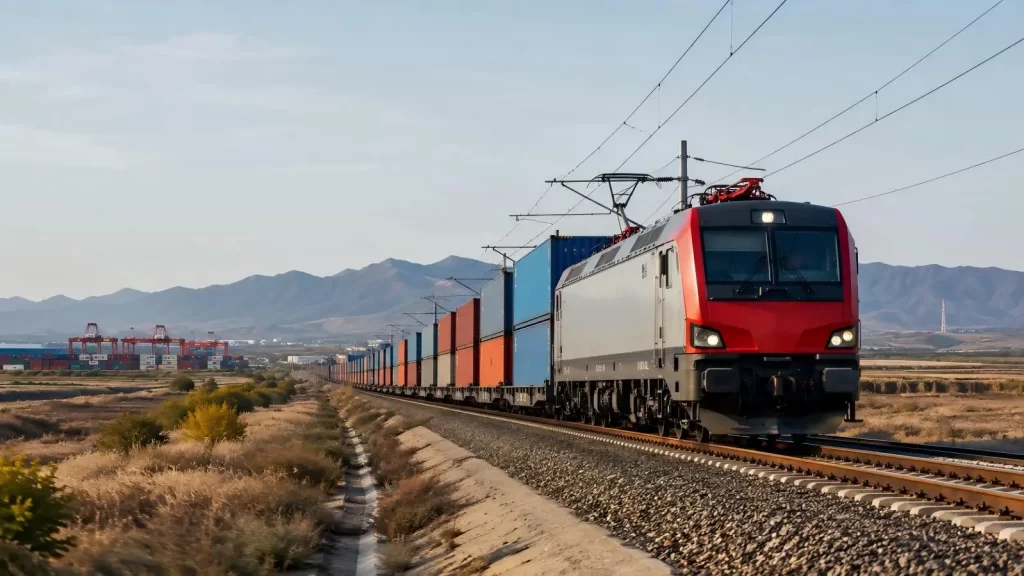
From Fexbuy’s perspective, the decision should not begin with the rail rate alone. Cargo value, delivery window, customs complexity, inventory cost and final-mile access determine whether International Rail Shipping is commercially suitable.
International Rail Shipping Fills the Air–Sea Gap
Rail is generally faster than ocean freight and more economical than air freight, although actual performance varies by corridor, season and border conditions. It is especially useful for regular replenishment and goods that lose value when they remain in transit for too long.
| Evaluation Factor | Air Freight | International Rail Shipping | Ocean Freight |
| Transit speed | Fastest | Medium-fast | Slowest |
| Freight cost | Highest | Mid-range | Usually lowest |
| Typical capacity | Limited by aircraft | Containerized capacity | High-volume capacity |
| Best use | Urgent, lightweight cargo | Time-sensitive, medium-value or high-value cargo | Heavy, bulky, non-urgent cargo |
| Main constraint | Cost and space | Corridor and terminal coverage | Long lead times and port disruption |
The relevant comparison is not simply freight rate versus freight rate. A shorter rail transit may also reduce:
• Inventory held in transit
• Safety-stock requirements
• Production delays caused by late components
• Expedited airfreight used to recover missed delivery dates
• Working capital tied up before goods can be sold
Why Businesses Are Adding Rail to Their Logistics Mix
More Controlled Inventory Replenishment
Scheduled train departures can support more structured purchasing and production plans. Unlike road-only transport, long-distance rail is less exposed to highway congestion. It can also avoid some of the port dependence associated with ocean freight.
Rail schedules are not guaranteed, however. Customs inspections, terminal congestion, equipment shortages and cross-border handovers can still extend the lead time. Professional planning should therefore use a delivery range rather than a single fixed arrival date.
Direct Access to Inland Trade Hubs
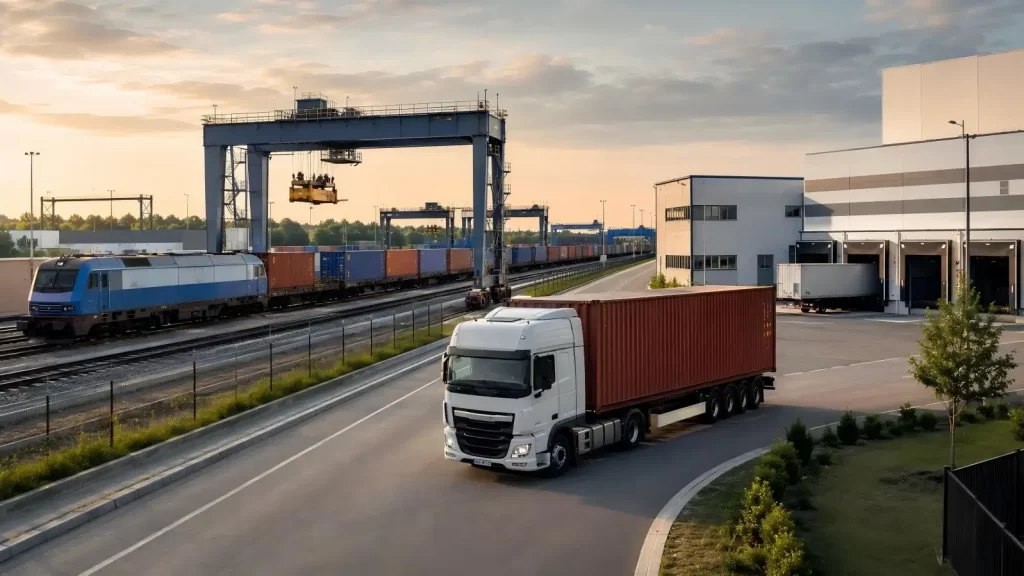
International Rail Shipping is particularly relevant when the supplier, distribution center or customer is located far from a seaport. Cargo can move by truck to an inland rail terminal, travel across the main rail corridor and return to road transport for final delivery.
This structure can reduce unnecessary coastal routing and create practical connections between inland manufacturing regions and overseas consumer markets.
More Flexible Supply Chains
Reliance on one form of transportation increases risk. With rail transport, the likelihood of having a mono-modal transport plan decreases. A flexible logistics plan can assign:
• Time sensitive orders to rail freight
• Urgent orders to air freight
• Routine high volume orders to ocean freight
Procurement teams can then choose from a greater variety of options with the flexibility to adjust to changes in air freight rates and port capacities, as well as the level of inventory. From a transport system efficiency and sustainability goal, if rail freight emits less than air freight, then it would be a greater option to achieve the goal.
What Cargo Can Use International Rail Freight?
Any cargo that can be shipped faster than sea freight and justifies the cost can likely use international rail freight.
| Cargo Category | Rail Suitability | Key Evaluation |
| Agitating machinery | High | Production deadlines and damage protection |
| Electronics | High | Value and moisture sensitivity |
| Apparel | High | Seasonal demand and sales |
| E-Commerce inventory | High | Turn around time and access |
| Bulk cargo | Medium | Rail vs. sea freight costs |
| Dangerous goods | Restricted | Corridor and classification |
| Oversized cargo | Case-by-case | Terminal and equipment |
Both FCL and LCL options can be used. FCL offers fewer cargo-handling interfaces, while LCL can be used for smaller volumes. Availability depends on the origin, destination and consolidation schedule.
How International Rail Freight Shipping Works
The rail freight shipping process includes the following steps:
- Cargo Assessment: This step considers the commodity, HS code, weight, dimensions, packaging, and delivery deadline.
- Service Design: You will determine if you will use a full container load (FCL) or less than container load (LCL) shipping service or a rail-road multimodal service.
- Origin Handling: Collects and consolidates cargo (if necessary) and delivers to departure terminal.
- Export Processing: Cargo is cleared for export and a dedicated rail corridor is assigned for the movement of the cargo.
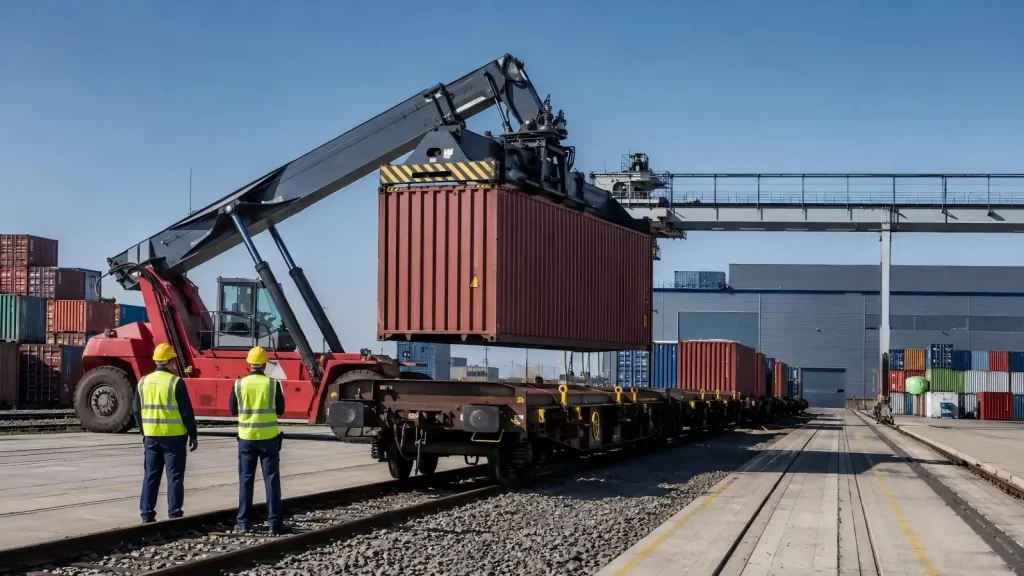
- Rail Movement: The container is transported by rail and/or border terminals.
- Destination Delivery: Import clearance is obtained and the cargo is released for terminal delivery. Last mile delivery is also done at this step.
Since there are different national rail systems using different gauges and standards, container transloading and other technical handovers are unavoidable at border terminals. Your transit plan should account for this.
The main documents of a rail consignment are:
• Commercial invoice
• Packing list
• Customs declaration data
• HS codes and descriptions of goods
• Rail consignment note
• Permits and certificates of controlled goods
• Insurance documents (if any)
Even if the train arrives on time, customs may not release the cargo if data is incomplete or inconsistent.
What Affects Rail Freight Cost and Transit Time?
At Fexbuy, we suggest that when looking at International Rail Shipping, you take a door-to-door approach:
Total Logistics Cost = Origin Pickup + Rail Freight + Terminal Handling + Customs Services + Duties And Taxes + Destination Delivery + Insurance
Some of the main variables are:
• The terminals from which you depart and arrive
• FCL or LCL service
• Chargeable weight and volume
• The type of container you use
• The first and last mile distances
• Peak-season capacity
• Customs inspections
• Storage or demurrage
• Special requirements for handling the cargo
Who sets Incoterms determines the buyer and seller obligations.
Limitations and Risk Controls
There are a number of limitations to International Rail Shipping, and it not always the best option. Some of these limitations include terminal coverage, rigid departure schedules, border processing, peak season capacity, and cargo specific routes.
Before booking, companies should verify:
• Whether the commodity is accepted across every transit country
• Whether the quoted schedule includes terminal dwell time
• Who manages customs exceptions
• Whether tracking covers the full journey
• What happens if a connection is missed
• Whether an alternative rail or multimodal route is available
Is International Rail Shipping Right for Your Business?
Rail is fastest when cargo can’t make the delay of ocean freight or can’t afford air freight. Cargo must also be able to use existing inland routes. The final decision should consider the total landed cost, transit-time, constraints on the cargo, and the flexibility of the route.
Fexbuy offers International Rail Shipping between China, Europe, and the UK. Rail is offered alongside air and sea shipping options. Businesses should contact Fexbuy to check cargo eligibility, find out more about routing and customs, and get a door-to-door transport cost estimate, before selecting a transport plan.
FAQs
Q1. What International Rail Shipping services does Fexbuy provide?
Fexbuy provides rail freight solutions for cross-border cargo moving between China, Europe and the UK. Service arrangements may include origin collection, rail transportation, customs coordination and destination delivery.
Q2. Which countries can Fexbuy reach by rail?
Fexbuy focuses on China–Europe and China–UK rail freight corridors. Exact terminal coverage, transit countries and final delivery availability should be confirmed according to the shipment’s origin and destination.
Q3. What cargo can Fexbuy transport by international rail?
Common cargo includes machinery, automotive parts, electronics, apparel, household products and e-commerce inventory. Batteries, chemicals, dangerous goods, oversized cargo and temperature-sensitive products require separate acceptance checks.
Q4. Does Fexbuy offer both FCL and LCL rail shipping?
FCL and LCL availability depends on the selected route, cargo volume and consolidation schedule. Fexbuy can assess which option offers the better balance of cost, handling and transit time.
Q5. How does Fexbuy calculate an International Rail Shipping quotation?
The quotation may be affected by cargo weight, volume, container type, departure terminal, destination, customs requirements and first- and last-mile transport. Customers should request a door-to-door quotation to identify all origin and destination charges.


