


Lithium UPS Battery Transport: Air, Sea, or Dedicated Line?
Introduction: Three Options, One Key Decision
Lithium UPS Battery Transport has arrived. We are no longer moving boxes. We are moving along with the available transport solutions that best optimize our supply chain within the scope of the law and our budget.
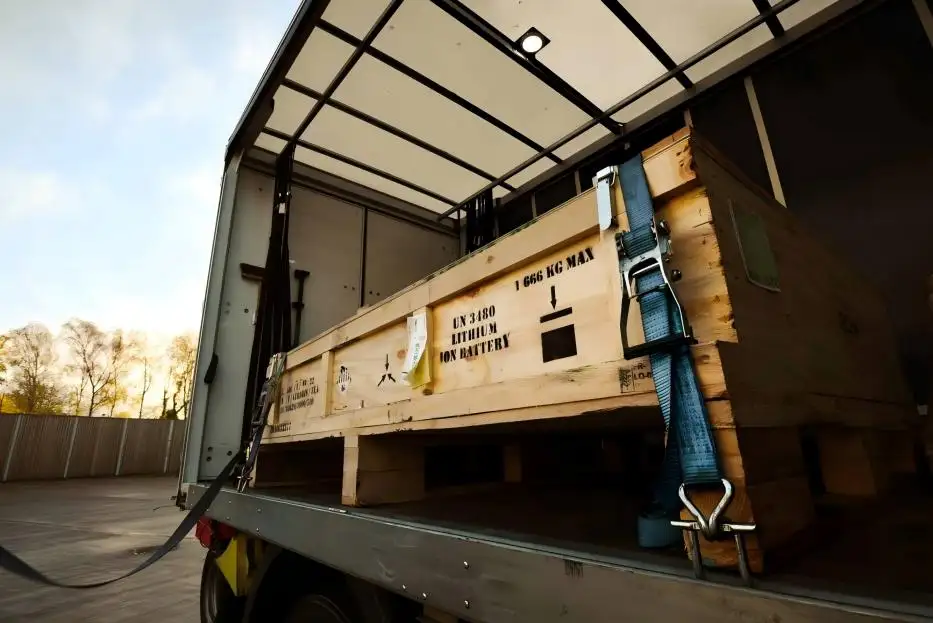
As of January 1, 2026, notable regulatory modifications governing how lithium-ion UPS systems are shipped have come into full effect. Driven by the newly enforced IATA DGR 67th Edition and IMDG Code Amendment 42-24, these updates demand comprehensive overhauls in documentation compliance, pricing structures, and freight routing logistics.
To safeguard your upcoming shipping plans, we must evaluate three primary logistical pathways: traditional air freight, bulk ocean freight, and an increasingly adopted, high-efficiency emerging solution: dedicated battery lines.Option 1: Air Freight – Quicker, But More Expensive
��� The Situation as it Stands for Shipping Lithium UPS Batteries by Air in 2026
Currently, air transport remains the fastest method for shipping lithium-ion Uninterruptible Power Supply (UPS) systems, with standard transit times reaching major global business hubs within 3–7 days. However, under the now fully enforced 2026 regulations, air logistics have become significantly more complex
Key compliance mandates under the IATA DGR 67th Edition include:
•Mandatory 30% State of Charge (SoC) Limit Expansion: A critical requirement has taken full effect for lithium-ion batteries packed with equipment (UN3481, PI 966), stipulating that the battery SoC must not exceed 30% at the time of transport. Dispatches exceeding this limit now strictly require formal state-level approvals from both the country of origin and the operator’s state. Specific to Uninterruptible Power Supply (UPS) systems featuring cells greater than 2.7 Wh, this 30% SoC threshold is a mandatory baseline for airline acceptance.
•Batteries Installed in Equipment (PI 967): For instances where lithium batteries are permanently encased within the UPS chassis, IATA has implemented a formal advisory recommendation. While not yet an absolute statutory ban, authorities strongly advise avoiding an SoC above 30%, explicitly identifying an SoC of $\le 25\%$ as the operational best-case scenario to mitigate thermal runaway risks.
•Rigorous Packaging Stacking Assessment: Under the updated criteria, both PI 966 and PI 967 have introduced stringent packaging evaluation protocols. Outer packaging must officially pass a standardized 3-meter stacking capability test to verify structural integrity under consolidated cargo pressure during transit.
•Updated Hazard Marking Protocols: For all standalone configurations and PI 966 shipments, the standard lithium battery mark must display the exact corresponding UN number—specifically UN3480 for standalone battery packs or UN3481 for batteries packed with equipment. Additionally, sodium-ion battery systems, which are now formally integrated into the hazard taxonomies, must utilize UN3551 or UN3552 respectively.
Air Freight at a Glance
| Aspect | Details |
| Transit time | 3–7 days(fastest routing) |
| Cost per kg (USA/Europe) | $7–$15+ USD (Dangerous Goods surcharges typically add an additional 30–50% to base rates) |
| SoC requirement (2026) | Mandatory $\le 30\%$ for standalone batteries (UN3480, PI965); and for batteries packed with equipment (UN3481, PI966) featuring cells greater than 2.7 Wh. |
| Who it’s for | Time-critical supply chains, high-value components, and small-to-medium cargo volumes. |
| Main challenge | Severe capacity constraints—global air cargo volumes for lithium batteries have expanded significantly, while commercial routing restrictions multiply. |
•Capacity Crunch: According to official IATA data, air-cargo shipping volumes for lithium-based power commodities have surged by 25% year-on-year. Concurrently, multiple tier-one global megacarriers—including Emirates, Cathay Pacific, Cargolux, and Qatar Airways—maintain stringent operational bans or heavy restrictions on standalone hazardous lithium battery cargo across passenger and commercial fleets.
•Documentation Overload: Every dispatch requires flawless compliance documentation, including manufacturer-verified UN38.3 test summaries, current Safety Data Sheets (SDS), formal Dangerous Goods Declarations (DGD), and valid annual transport airworthiness identification reports.
Strategic Takeaway for Lithium UPS Battery Shipping:
If your primary organizational driver is absolute speed, air freight remains the premier choice. However, logistics planners must budget for premium tariff expenses, anticipate restricted space availability, and prepare for uncompromising cargo scrutiny regarding the 30% State of Charge (SoC) mandates.
Option 2: Sea Transport – Cost Efficient, But More Complicated
��� This is the 2026 Reality for Lithium UPS Battery Shipping by Sea
Compared to other modes of transport, ocean freight represents the most cost-effective conduit for mobilizing volume shipments of lithium-ion UPS batteries. The maritime transit duration usually ranges between 20 to 40 days, while securing operational costs down to 30% or 50% of equivalent air freight solutions. Currently, a 20ft DG container typically averages $1,800–$3,500 USD, while Less-than-Container Load (LCL) hazardous shipments run approximately $120–$180 USD per CBM to major United States ports.
Key compliance requirements under the IMDG Code Amendment 42-24 for lithium UPS battery transport include:
•UN Number Reassignment: Lithium-ion powered battery systems permanently integrated into heavy equipment or transport housings now require classification under UN3556, effectively superseding the legacy, generic UN3171 classification to ensure precision in manifest filing.
•Sodium-Ion Batteries Formally Codified: Newly established classifications UN3551 and UN3552 formally cover sodium-ion battery chemistries, which are increasingly deployed as sustainable alternatives within large-scale industrial UPS topographies.
•Stringent Vessel Stowage Protocols: Lithium batteries permanently installed in cargo transport units (UN3536) are now legally assigned to Stowage Category “D.” This mandates deck-only stowage and requires units to be positioned at a minimum safety distance of 2.4 meters from any active shipboard heat source.
•Rigorous Packaging and Verification Testing: Enhanced anti-vibration packaging protocols dictate that all lithium battery assemblies, including prototype production runs, must successfully clear upgraded vibration and mechanical shock criteria under rigorous regulatory compliance mandates.
•Uncompromising Manifest Documentation: For cargo bookings exiting premier trade hubs such as the Port of Ningbo, the digital submission of a valid UN38.3 Test Summary and a current Safety Data Sheet (SDS) is an absolute mandatory baseline for Class 9 Dangerous Goods cargo. Failure to supply these verified documents results in immediate booking cancellation and severe non-compliance penalties.
Sea Freight at a Glance
| Aspect | Details |
| Transit time | 20–40 days (standard maritime pipeline velocity) |
| Cost per 20ft container | $1,800–$3,500 USD (applicable for dedicated Class 9 Dangerous Goods FCL) |
| Cost per CBM (LCL) | $120–$180 USD (USA) / $150–$280 USD (Europe) (inclusive of base freight and standard hazardous surcharges) |
| SoC requirement | Strongly recommended at $\le 30\%$ by leading ocean carriers for optimal safety, but exempt from the absolute, statutory air-freight mandates. |
| Who it’s for | Bulk commercial wholesale orders, non-urgent strategic stockpiling, and highly price-sensitive shippers. |
| Main challenge | Intricate documentation frameworks, stringent customs compliance, and extended pipeline velocity. |
Marine transport represents the premier solution for high-volume, budget-conscious lithium-ion UPS battery logistics. However, supply chain planners must proactively account for extended transit lead times and prepare for uncompromisingly rigorous documentation scrutiny now required under the newly enforced 2026 international maritime mandates.
Option 3: Dedicated Battery Lines – The New Favorite
Driven by the escalating regulatory complexity and tightening restrictions surrounding lithium UPS battery logistics, dedicated battery lines have rapidly emerged as the premier specialized logistics model. These networks feature built-in hazardous materials handling, specialized protective packaging, and proactive multi-jurisdictional compliance frameworks.
��� What is Coming for 2025 to 2026
CEVA & CMA CGM Green Infrastructure: Launched in March 2026, CEVA Logistics deployed five highly optimized, specialized containers featuring double-walled, explosion-proof containment vaults. Engineered in close strategic partnership with CMA CGM, this maritime solution is specifically designed to isolate and transport used or high-capacity lithium battery stocks. With a payload capacity of six tons per unit, these intelligent vaults feature active structural mitigation to drastically minimize the operational risks of thermal runaway during long-haul sea transits.
• CATL’s Inland Waterway Logistics: As of April 2026, CATL (Contemporary Amperex Technology Co., Limited) officially pioneered the nation’s inaugural zero-emission, green waterborne lithium battery liner service. Operating a weekly, fully integrated “door-to-door” intermodal loop between the Port of Yibin and Guoyuan Port, this specialized inland water routing currently delivers an impressive 20% reduction in base tariff expenses compared to traditional cross-border or domestic road freight.
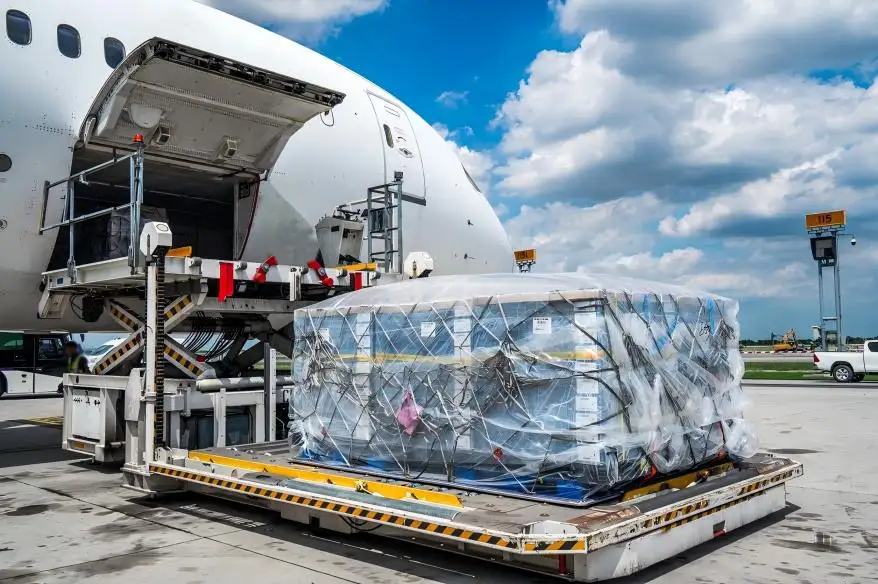
AAL Shipping has completed the successful transportation of 192 units of UN 3480 lithium-ion Battery Energy Storage Systems (BESS) from China to Australia using a heavy-lift vessel.
Dedicated Battery Line at a Glance
| Aspect | Details |
| Transit time | Varies (typically between air and sea, often 15–25 days) |
| Cost | Lower than air, often competitive with sea + fewer hidden fees |
| SoC requirement | Aligned with regulatory minimums |
| Who it’s for | Regular, high-volume shippers; companies with recurring battery exports |
| Main advantage | Tailored compliance, fewer rejections, dedicated capacity |
The conclusion of utilizing Lithium UPS Battery Transport via dedicated lines: If you are transporting substantial volumes of batteries, this option is best due to the reliability as the cost is not the absolute minimum. Dedicated lines are new, but the benefits of compliance management and consistent operations are substantial.
The Ultimate Comparison: Air vs. Sea vs. Dedicated Line for Lithium UPS Battery Transport
| Comparison Factor | Air Freight | Sea Freight | Dedicated Battery Line |
| Transit time | ★★★★★ (3–7 days) | ★★☆☆☆ (20–40 days) | ★★★☆☆ (15–25 days) |
| Cost efficiency | ★☆☆☆☆ (highest cost) | ★★★★★ (lowest) | ★★★★☆ (mid-range) |
| Capacity availability | ★★☆☆☆ (tight, many airlines restrict pure batteries) | ★★★★☆ (good, but subject to DG slot constraints) | ★★★★☆ (dedicated, not subject to general DG congestion) |
| Compliance complexity | ★★☆☆☆ (very high—IATA DGR 67th, 30% SoC mandatory for many categories) | ★★★☆☆ (high—IMDG 42-24 with new UN numbers, stricter stowage) | ★★★★☆ (lower—specialists handle compliance end-to-end) |
| Best for | Urgent samples, high-value small shipments | Bulk orders, price-sensitive cargo | Regular volume, consistent exporters |
| 2026 regulatory impact | Major—expanded 30% SoC to PI966, new packaging tests | Major—new UN numbers, deck-only stowage, enhanced documentation | Moderate—specialists absorb regulatory updates on your behalf |
2026 Compliance Checklist for Lithium UPS Battery Transport
Before choosing your shipping method, ensure you have these documents ready:
- UN38.3 Test Report (mandatory for all lithium battery shipments—new stricter requirements, including thermal runaway testing for large systems)
- Annual transport identification report (must be renewed each calendar year)
- MSDS/SDS (GHS 11th Revised Edition compliant; EU shipments require UFI)
- Dangerous Goods Declaration (DGD) for air or sea
- Dangerous Goods Packaging Certificate (certifying UN-certified packaging with 3-meter stacking test compliance for air shipments)
- For EU: Digital Battery Passport (mandatory for industrial UPS batteries over 2 kWh)
- For sea: For vehicles containing lithium batteries, proper UN 3556 classification (no longer UN 3171)
- For all: SoC verification records (mandatory for air; strong recommendation for sea)
Final Thoughts
2026 changes the game for Lithium UPS Battery Transport. Air is fast but costly, with mandatory 30% SoC and tight capacity. Sea is cheaper but complex (IMDG 42-24, new UN numbers). Dedicated lines offer a middle ground. For most moderate-to-large volumes, sea freight + a qualified DG partner works best. Urgent? Use air. Regular high-volume exports? Research routes. Collaborate with DG logistics.
Do you need assistance? Fexbuy has safe and legal battery transportation solutions. It is cost effective too, and handles everything from pick-up to drop-off.
Frequently Asked Questions
Q1: What is the impact of the 2026 SoC law on the transportation of lithium UPS batteries?
A: From January 1, 2026, lithium batteries cannot be transported with the electronic items that are classified as UN 3481, PI 966 if the batteries are above 30% charged.
Q2: What UN numbers will allow shipping Lithium UPS Batteries via ocean transport with UPS in 2026?
A: Lithium Batteries that are flammable will be classified as their own product shipments under UN 3480. UN 3481 will classify Lithium Batteries as a shipment of equipment. Lithium batteries that are shipped with a means of conveyance will, in turn, be classified under UN 3556 (the previously UN 3171).
Q3: Will shipments of Lithium UPS batteries be compliant with UN 38.3?
A: Yes. UN38.3 will be applicable for the air shipping and long distance sea shipping of Lithium UPS Batteries. Customs and your shipping line will not accept your shipment without it.
Q4: Can Lithium UPS batteries be shipped on passenger planes in 2026?
A. Most of the large airlines have an outright prohibition of transport of UN 3480 lithium batteries on passenger flights. The only option you have to get your shipment delivered is on their dedicated battery cargo planes.
Q5: What is a dedicated battery line?
A. Logistics for battery transport that is almost exclusively dedicated, fully compliant, and provides a guaranteed logistics capacity, and is often cheaper than standard air freight.


