


Rail Transport And Logistics: The Force Reshaping High-Value Cargo Across Eurasia
The shift has already begun—and 2026 is the turning point.
Not That Special…Now Essential
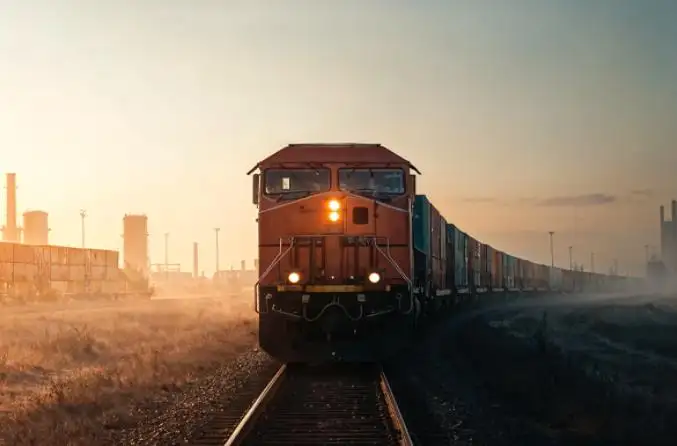
Rail Transport and Logistics has historically been seen as the middle child of freight – not as fast as air and not as cheap as sea freight. But with the current air freight charges at over $8 per kg and the piracy of ocean vessels around the Cape of Good Hope, the dynamics of freight have completely shifted.
New information corroborates the shift. In the first quarter of 2026, China-Europe Railway Express handled 546,000 TEUs across 5,460 trips—a 29% year-on-year surge. More importantly, what moves inside those containers looks nothing like the shipments of five years ago.
From T–Shirts to Tesla Parts: The Great Load Upgrade
The most telling transformation in Rail Transport And Logistics lies not in volume, but in value.
Today, automotive components, machinery, electronics, and electrical goods account for over 60% of all rail freight. The “new three”—photovoltaic modules, new energy vehicles, and lithium batteries—are accelerating their rail exports. At the Erlianhot port alone, the share of high-value goods like NEVs and home appliances has risen sharply.
Consider these tangible examples:
• Yiwu–Europe: Solar panels, auto parts, and smart electronics propelled a 21.5% increase in first-quarter export containers, turning the route from a “small commodity” corridor into a premium logistics artery.
• Yangtze River Delta: Finished vehicles and components now lead export growth, while electronics, PV modules, and high-end machinery travel reliably westbound, with products firmly matching advanced logistics ambitions.
• Xi’an–Duisburg: The Xi’an terminal alone handles over 2,000 trains so far in 2026—nearly 30% of the national total—carrying everything from auto parts to new energy materials.
In short, Rail Transport And Logistics has stopped moving “commodities” and started moving “value.”
Scheduled Trains Upgrade: From Reliable to Exceptional
Speed was once rail’s weakest promise. Not anymore.
The full-timetable rail service—a premium product jointly operated by Chinese, Kazakh, Russian, Belarusian, Polish, and German rail authorities—has reshaped what shippers can expect from Rail Transport And Logistics.
• Xi’an to Duisburg: As fast as 12 days, a 30% improvement over standard schedules.
• Xi’an to Poti (Trans-Caspian): As fast as 11 days, a 25% improvement on the newer corridor.
• Value lift: Among full-timetable trains, the average value per container has increased by 41%, as high-end partners embrace predictable replenishment cycles.
At the operational level, China’s railways now operate 22 full-timetable connections weekly, linking 9 Chinese cities to 6 European hubs. On the Zhengzhou–Hamburg corridor, the first full-timetable train cut total runtime by nearly 30%, eliminating over 100 hours of unpredictable dwell time.
For supply chain managers, this changes the trade-off entirely. Rail Transport And Logistics no longer asks you to accept slower service in exchange for lower cost. It offers both.
Clearance Efficiency: From Bottleneck to Bypass
Speed on the tracks means nothing if cargo sits at a border for days. Fortunately, clearance technology has caught up with rail’s potential.
The “Railway Express Clearance” mode—now applied to 100% of eligible shipments—has transformed how goods cross borders:
• One-stop declaration at the origin customs office; minimum transit at exit points
• Three-party data integration across customs, rail operators, and logistics providers
• Clearance times as low as 30 minutes at major Chinese rail ports
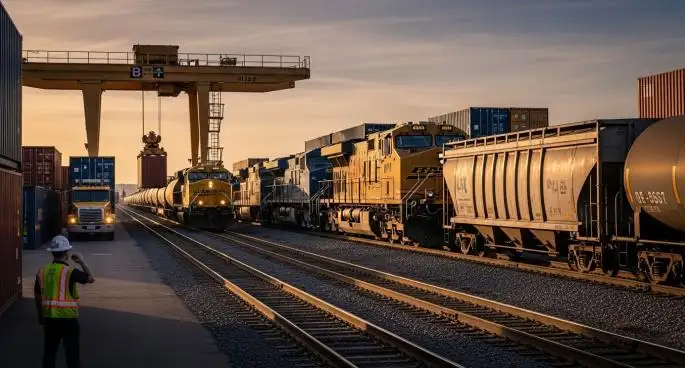
At Alataw Pass, operators have broken down traditional “serial operations” and replaced them with parallel workflows, reducing non-operational time by 25%. The 95306 “Digital Port” system now digitizes customs declaration, confirmation, and inspection processes, replacing paper-based status checks with real-time visibility.
Today’s Rail Transport And Logistics increasingly operates on a “declare once, inspect once, clear once” principle that rivals air cargo for predictability.
Security, Safety, and Green Logistics by Default
High-value goods require high-security assurances. Rail delivers.
• Physical security: Rail networks operate on controlled, exclusive routes with far lower theft and damage rates than road transport. Most weather events that stop trucks—snow, fog, heavy rain—barely slow a freight train.
• Compliance readiness: As EU ICS2 rules take full effect (June 1, 2026, for remaining member states), rail carriers with established digital systems are best positioned to submit ENS declarations within the required two-hour advance window.
• Sustainability by design: Rail Transport And Logistics emits just 1/15 the CO₂ of air freight and 1/7 the CO₂ of road haulage per ton-mile. With CBAM now fully active, this carbon advantage translates directly into lower financial compliance costs for importers.
Fexbuy: Modern Rail Logistics Aligned With 2026 Trends
The 2026 logistics landscape is defined by three forces: digital compliance, sustainability transparency, and supply chain resilience. Fexbuy has embedded each into its China–Europe rail offering.
Fexbuy’s 2026 advantages include:
• Full-timetable rail access: Scheduled departures from Shenzhen/Shanghai/Birmingham/Shenzhen/South on major corridors
• Digitally optimized clearance: Integration with ICS2 protocols and China’s 95306 “Digital Port” system to minimize border friction
• End-to-end carbon reporting: Verified footprint tracking aligned with EU sustainability standards
• Flexible capacity for high-value cargo: Dedicated allocations for electronics, auto parts, and industrial components during peak seasons
While other forwarders treat rail as a fallback option, Fexbuy positions it as a core strategic pillar—and builds service right around that conviction.
Conclusion
Rail Transport And Logistics has evolved from an alternative to an anchor. It now moves higher-value goods, faster than ever, across more corridors than any point in history—all while delivering the security and carbon performance that modern supply chains require.
For B2B brands distributing electronics, automotive parts, green energy products, or machinery across Eurasia, the question is no longer whether to use rail. It is how quickly you can integrate it into your core logistics strategy.
Fexbuy is ready to help you make that shift.
Questions and Answers
Q1. How does rail transport compare to sea freight across the China–Europe line? Is rail transport really faster?
Of course. A standard sea freight would take over 35–45 days. Rail freight takes 12–18 days. The sea freight would take almost 4 times longer.
Q2. What high-value goods are fated for rail export?
Automotive parts high-value goods include lithium batteries, electronics, and industrial machinery. Rail transport is much faster and more cost-efficient transport in comparison to sea transport and air transport for goods high-value goods that cannot afford transport delays.
Q3. How does Fexbuy cope with the customs clearance under the current new EU ICS2?
Fexbuy is seamlessly integrated with the China 95306 “digital port” and ICS2 protocols whereby pre-declared drafts and electronic seals ensure compliance. Completed clearance takes 30 minutes or less in the major rail ports.
Q4. Rail transport does not charge further than sea freight do they?
Compared to sea freight, rail is usually 20–30% more expensive, however, airfreight is usually 50% more expensive. Rail delivers a better total landed cost, in addition to reduced disruption for high-value goods.


