


Mechanics Cargo Shipping from China: Common Export Risks and Solutions
Mechanics Cargo Shipping from China takes more than just booking a container. Exporters have to plan everything from cargo measurement and packaging, to customs paperwork, loading, carrier pick-up and delivery. Heavy and large equipment has unique challenges because of its size, value, and weight. Planning mistakes can cause additional expense, equipment damage or delays in the shipping process.
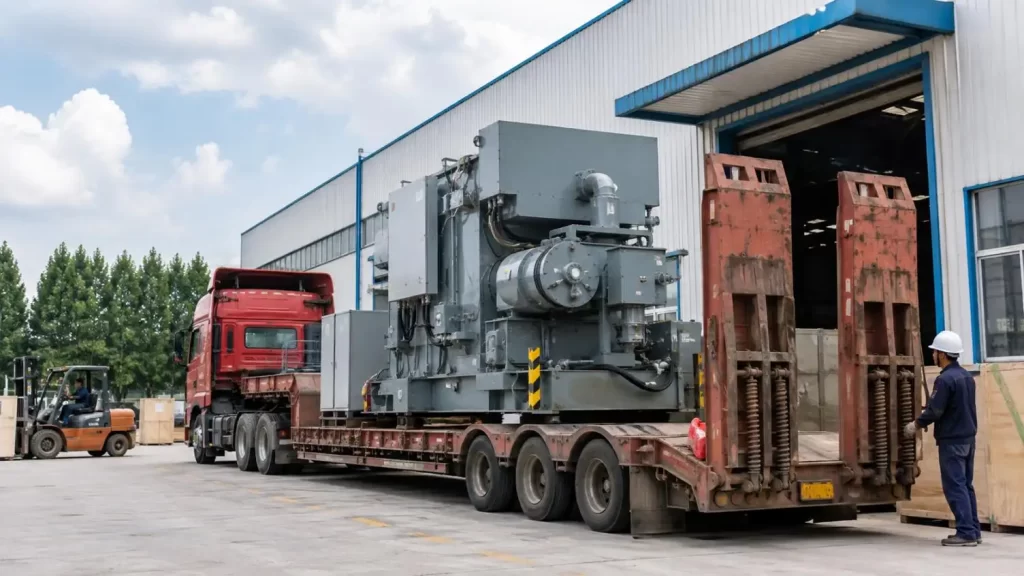
Some of the principal risks in Mechanics Cargo Shipping are inaccurate dimensions, opportunistic container selection, inadequate or no packing, error in declarations, poor lashing, restricted components and/or inadequate planning for the end destination. The risks can be mitigated by an early evaluation of cargo and having a door-to-door cost confirmed.
What Is Mechanics Cargo Shipping?
Mechanics Cargo Shipping refers to the international transportation of industrial machinery and related equipment, including:
•CNC machines and machine tools
•Injection molding machines
•Packaging and food-processing machinery
•Compressors, generators and industrial robots
•Construction equipment
•Complete production lines
•Machinery components and spare parts
The correct shipping method depends on the equipment’s packed dimensions, gross weight, value, structure and delivery urgency.
| Cargo condition | Common shipping method |
| Small or dismantled machinery | Standard container or LCL |
| Equipment exceeding container height | Open-top container |
| Oversized or irregular machinery | Flat-rack container |
| Mobile construction equipment | RoRo shipping |
| Complete production lines | Breakbulk or project cargo |
| Urgent machine parts | Air freight |
| China–Europe medium-speed delivery | Rail freight |
Risk 1: Inaccurate Dimensions and Weight
Many machinery shipping quotations are initially based on estimated measurements. However, wooden cases, steel frames and reinforced bases may increase the final height, width and gross weight.
Incorrect cargo data can result in:
•Container loading failure
•Out-of-gauge surcharges
•Insufficient crane capacity
•Trucking or port rejection
•New booking requirements
•Higher transportation costs
Before booking Mechanics Cargo Shipping, exporters should provide the packed length, width and height, net and gross weight, package quantity, centre of gravity, lifting points, stackability and cargo photographs.
For oversized machinery shipping, a loading simulation can help determine whether a standard container, open-top container, flat rack or breakbulk solution is more practical.
Risk 2: Choosing the Wrong Shipping Method
The lowest ocean freight rate does not always produce the lowest total landed cost.
| Method | Suitable cargo | Main concern |
| FCL | Machinery fitting inside a standard container | Internal movement if lashing is weak |
| LCL | Small machines and spare parts | More handling and consolidation |
| Flat rack | Overwide or overheight machinery | OOG surcharges and complex lashing |
| Open top | Overheight equipment | Weather protection requirements |
| RoRo | Mobile machinery | Limited route and port availability |
| Breakbulk | Large project equipment | More complicated handling coordination |
A complete comparison should include China pickup, warehousing, crane operation, packing, customs clearance, ocean freight, OOG charges, destination handling and final delivery.
Risk 3: Insufficient Export Packaging
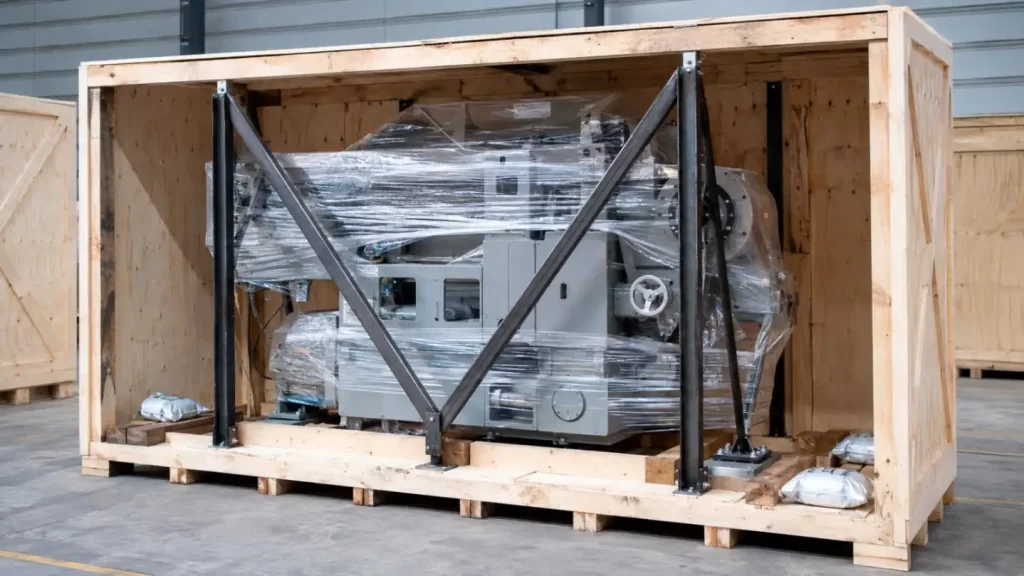
Export packaging must do more than cover the machine. It should support the equipment’s weight, prevent movement and protect sensitive components from moisture, corrosion and impact.
Common packaging problems include untreated solid wood, weak bases, unprotected protruding parts, unsecured moving components and inadequate rust prevention.
Potentially effective packaging includes:
•Reinforced wooden cases or steel frames
•Load-bearing skids and internal bracing
•VCI film or desiccants or vacuum packaging
•Waterproof wrapping with sealed openings
•Lifting and forklift points
•Center-of-gravity, shock and tilt indicators
Note that the design of the packaging depends on the selected method used for the machinery sea freight and the expected conditions of handling.
Risk 4: Errors in Customs Declarations
All data included in the customs declaration of machinery (HS code, cargo description, model, function, and equipment condition) should be provided to avoid delays in the customs clearance process.
The exporter should review and check the following documents:
•Commercial invoice
•Packing list
•Sales contract
•HS code and product description
•Equipment model and intended use
•Country of origin information
•Packaging declaration
•Dangerous goods documents
•Certificates of destination
Customs risk goes beyond the clearance of goods from China. Restrictive provisions and certifications requested at the destination as well as import fiscal regimes should be assessed prior to shipping the goods.
Risk 5: Batteries, Oil and Restricted Components
Machines may not be classified as dangerous goods as a whole. However, they may contain regulated components such as lithium batteries, lead-acid batteries, hydraulic oils, lubricants, fuel residue, gas cylinders and refrigerants.
Such components should be reported at the time of booking. Due to the cargo nature, the shipper may need an SDS, battery test reports, dangerous goods declarations, or carrier approval. Fuel and unnecessary liquids should also be drained.
Late disclosure can cause booking rejection, cargo holds or reclassification charges.
Risk 6: Loading, Lashing and Cargo Damage
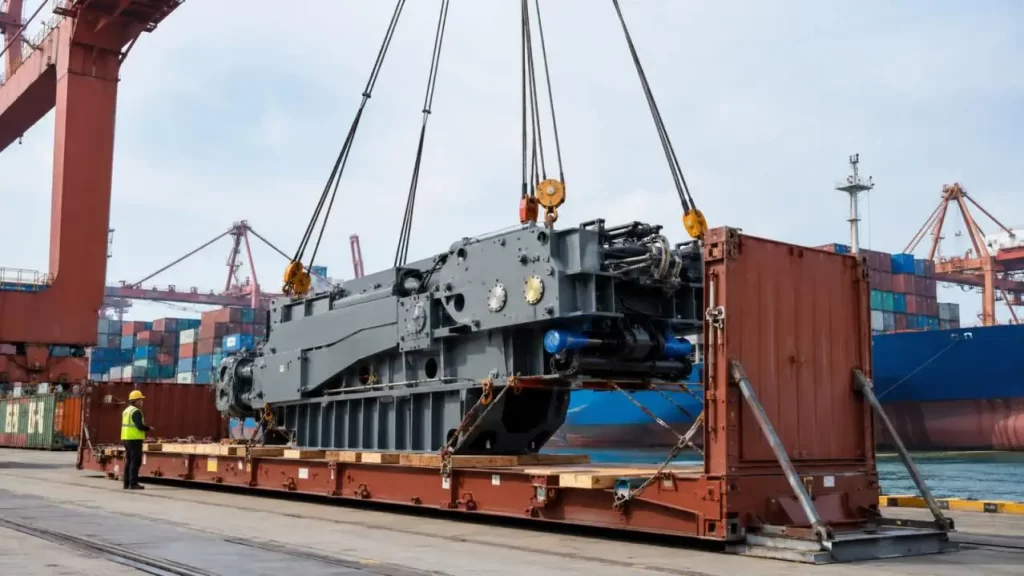
In Mechanics Cargo Shipping, improper lifting and lashing can lead to significant damages. Some of the associated risks include: usage of wrong lifting points; employing a crane that is inadequate; an unsecured machine base or moving cargo during sea transport.
A loading checklist should be able to mitigate a variety of associated risks such as:
- Checking that the cranes and forklifts onsite have adequate capacity to complete the task.
- Whether the location of the lifting point and the center of gravity have been established.
- Ensuring all doors and moving parts are secured.
- Blocking and bracing is installed, if needed.
- What lashings will be needed.
- Assessing the condition of the container prior to loading.
- Documenting the activity of the loading process.
- Inspection and sealing of the container.
Photographic evidence of the loading and lashings are employed as evidence of the state of the shipment and claims for the right to unload the cargo at the destination.
Risk 7: Hidden Destination Charges
A port-to-port quotation may exclude charges for: terminal handling, storage, inspection,
Before confirming a shipment, exporters should clarify:
•The selected Incoterm
•Origin and destination charge coverage
•Container free time
•Importer responsibilities
•Customs clearance arrangements
•Crane and unloading requirements
•Road permits for oversized cargo
A low sea freight rate may become expensive when customs delays, container detention and special delivery services are added.
How to Reduce Mechanics Cargo Shipping Risks
A reliable machinery export plan should follow seven steps:
- Collect accurate packed cargo data.
- Identify batteries, oils and restricted components.
- Compare FCL, LCL, flat rack, open top, RoRo and breakbulk.
- Design suitable export packaging.
- Verify customs documents and HS classification.
- Plan lifting, loading and lashing.
- Confirm customs clearance and final-site delivery.
When it comes to large machinery, logistics should be organized before the equipment even rolls off the production line.
Sea Freight, Rail Freight or Air Freight?
Heavy equipment, complete machines and bulk shipments are well suited for sea freight transport. Rail freight may be a viable alternative to sea and air freight for China-Europe transport. Air freight is generally best suited for high-value, time-sensitive and/or small shipments.
Many variables impact both the length of time a shipment takes and the cost, including the route, the size of the cargo, the season, where a shipment is coming from and going to, the capacity of the transport company and customs. Multimodal transport can utilize a combination of sea, rail, air and road transport to optimize cost and time of delivery.
Plan Your Mechanics Cargo Shipping with Fexbuy
Shipping heavy machinery can be a complex process that requires planning and organizing warehouse services, inspections, packaging, customs clearance, booking a transport provider, and organizing the final delivery.
Fexbuy provides China pickup, warehousing, cargo inspection and consolidation, export and customs clearance, and both FCL and LCL sea freight as well as rail, air and road freight transport. We can also coordinate shipments of DDU, DDP, FOB and CIF through their overseas agent network and shipping line partnerships.
To receive a thorough assessment of your Mechanics Cargo Shipping, please provide your equipment name and address for pick-up, your destination, the packed dimensions, gross weight, quantity, photographs, desired ship date, any batteries/oils and anything else that you consider restricted.
FAQs
Q1. What are Mechanics Cargo Shipping services provided by Fexbuy?
Fexbuy takes care of the whole process from picking up the cargo in China to warehousing, checkups, consolidation, export custom declaration, carrier booking and destination delivery. You are free to choose from FCL, LCL, rail, air and multimodal.
Q2. Are oversized Machinery shipments from China possible through Fexbuy?
Fexbuy evaluates flat-rack, open-top, RoRo and breakbulk shipments for oversized machinery. It requires customers’ packed dimensions, gross weight, pictures of the cargo with lifting pictures and CoG info.
Q3. Does Fexbuy provide door-to-door shipment of machinery?
Fexbuy will organize door-to-door shipment of machinery at DDU or DDP if the shipment terms and conditions allow so, and based on the local import regulations and if the product being shipped allows it. This will include pick up, export clearance, international shipping, customs clearance and delivery.
Q4. Will Fexbuy provide both FCL and LCL shipments of machinery?
Yes, LCL shipments of small equipment and spare parts will be considered, while FCL will be booked for larger shipments of complete machines. Fexbuy will evaluate the risks associated with each shipment and the overall cost of the shipment too.
Q5. What does Fexbuy require to give a Machinery shipment quotation?
The shipper is required to provide the name of equipment, pick up address, destination, packed dimensions, gross weight, number of packages, value of the equipment, shipment date and some pictures of the equipment. Shipments containing batteries, lubricating oils and other regulated shipment materials must also be indicated.


