


Home Appliance Transport Services from China: Customs, Documents and Export Compliance
Shipping household appliances from China requires more than selecting a freight rate and then booking container space. Exporters must harmonize numerous customs aspects (classification), commercial documents, destination market prevailing rules, requirements, product specifications, transport and packaging conditions.
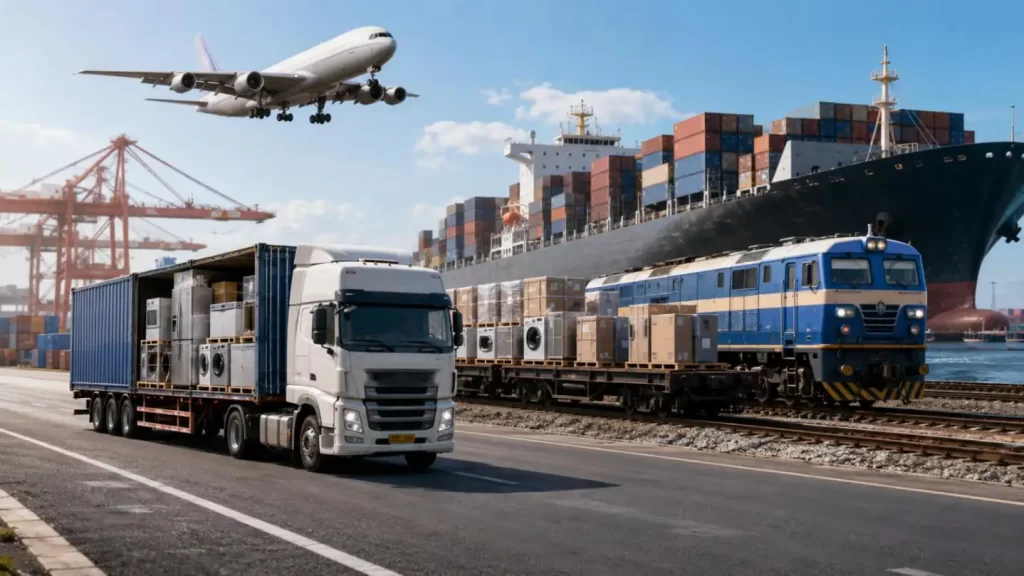
Reliable Home Appliance Transport Services begin with an accurate understanding of the cargo. For example, a refrigerator may contain regulated refrigerant; a cordless vacuum cleaner may contain lithium-ion batteries; and a washing machine may be subject to electrical safety, energy efficiency, and labeling requirements.
Requirements vary by product model, destination and transport mode. A document accepted for one appliance or market may not be suitable for another.
| Compliance Area | Main Requirement |
| Customs | Correct HS code, value, origin and cargo description |
| Shipping documents | Consistent invoice, packing list and transport records |
| Product compliance | Applicable certificates, labels and technical files |
| Special cargo | Battery, refrigerant or other regulated-material review |
| Packaging | Protection against shock, vibration, moisture and movement |
| Delivery terms | Clear Incoterm and importer responsibilities |
Why Home Appliance Transport Services Involve More Than Freight Booking
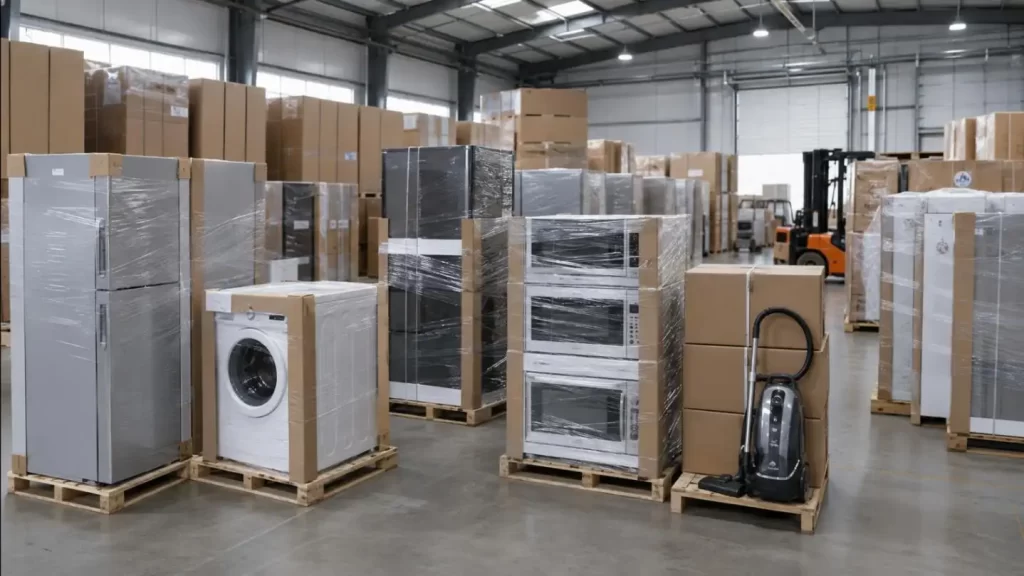
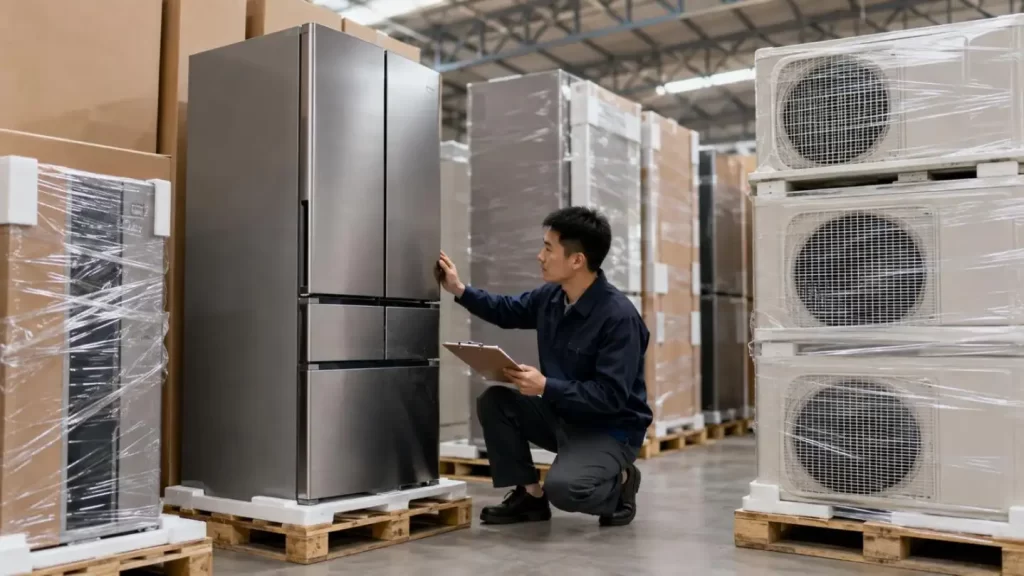
Home appliances combine several logistics risks. They are often bulky, sensitive to impact and expensive to repair or replace. Glass doors, control panels, compressors, internal drums and painted housings can all be damaged by incorrect handling or insufficient packaging.
At the same time, the shipment may be subject to:
• Export and import customs procedures
• Product safety and market-access requirements
• Lithium battery or refrigerant restrictions
• Energy-efficiency and environmental obligations
• Oversized-cargo handling rules
• Appointment-based or inside-delivery requirements
Effective Home Appliance Transport Services connect these elements within one coordinated shipping plan. The carrier transports the cargo, but the manufacturer, exporter and importer remain responsible for providing accurate product and compliance information.
Step 1: Build an Accurate Product Profile
Documentation should not begin until the appliance has been properly identified. Each shipment profile should include:
• Full product name, brand and model
• Primary function and intended use
• HS code and country of origin
• Voltage, frequency, power and plug type
• Unit dimensions and net weight
• Carton dimensions and gross weight
• Battery chemistry and watt-hour rating
• Refrigerant type and charge quantity
• New, used, returned or repaired status
• Destination country and final delivery address
Generic descriptions such as “electrical goods” or “home appliances” provide insufficient information for customs and carrier review.
| More Specific Description | More Accurate Description |
| Electrical goods | Household washing machines, Model WM-XX |
| Vacuum cleaners | Cordless vacuum cleaners with lithium-ion batteries |
| Refrigeration equipment | Household refrigerators containing R600a refrigerant |
| Kitchen appliances | Electric countertop ovens, 220-240V |
Providers of Home Appliance Transport Services are better able to recognize restricted cargo with more specific descriptions.
Step 2: Standardize Export Documents
The components of the document set depend on the Incoterm, the destination, and the product. However, most shipments require the following records:
| Document | Main Function | Common Error |
| Commercial Invoice | Declares seller, buyer, product and value | Product description differs from other records |
| Packing List | Shows quantity, packages, dimensions and weight | Totals do not match the invoice |
| Bill of Lading or AWB | Records transport and consignee information | Incorrect consignee or notify party |
| Customs Declaration | States classification, value and origin | Incorrect HS code or customs value |
| Certificate of Origin | Supports origin or preferential tariff treatment | Wrong origin criterion |
| Insurance Certificate | Confirms cargo coverage where required | Coverage does not match the Incoterm |
| Compliance Documents | Supports legal market entry | Certificate refers to another model |
| DG Documents | Supports regulated batteries or substances | Technical data is incomplete |
The following information should remain consistent across all records:
• Product name and model
• Quantity and package count
• Net and gross weight
• Customs value and currency
• HS code and country of origin
• Shipper and consignee
• Incoterm and transport route
Small inconsistencies can trigger customs questions, carrier rejection or destination delays.
Step 3: Separate Customs Clearance from Product Compliance
Customs compliance and product compliance are related, but they are not interchangeable.
Customs compliance covers:
• HS classification
• Customs value
• Country of origin
• Duties and taxes
• Importer information
• Licences or permits
• Import declaration procedures
Product compliance covers:
• Electrical safety
• Electromagnetic compatibility
• Energy efficiency
• Product and packaging labels
• Technical documentation
• Environmental obligations
• Importer or authorised representative duties
A shipment may have complete freight documents and still be refused if the appliance does not meet the destination market’s product regulations. For this reason, Home Appliance Transport Services should not be treated as a substitute for product certification or legal market-entry assessment.
Step 4: Verify Destination-Market Requirements
Requirements should be checked by product category rather than by using one general appliance checklist.
| Destination | Areas Commonly Requiring Review |
| European Union | CE marking, electrical safety, EMC, RoHS, Ecodesign, energy labels and WEEE |
| Great Britain | CE or UKCA route where applicable, electrical safety, RoHS and energy rules |
| United States | Customs entry, applicable safety requirements, DOE standards and labelling |
| Canada | Electrical certification, energy efficiency and applicable bilingual information |
For the European Union, one appliance may fall under several regulatory frameworks. Refrigerators, washing machines and televisions may also have specific energy-labelling and Ecodesign obligations.
Great Britain: Exporters must determine whether CE or UKCA marking is necessary on the product being exported, according to the sales destination. Northern Ireland has its own regulatory framework.
Requirements in the U.S. and Canada can hinge on the product category, type of electrical specification, certification route, and energy performance category.
Step 5: Identify Batteries, Refrigerants and Special Cargo
Some appliances require a carrier review in addition to Home Appliance Transport Services being confirmed.
Appliances Containing Lithium Batteries
These include robotic vacuums, cordless cleaners, and other countertop appliances. Exporters should provide:
• Battery chemistry
• Watt-hour rating
• UN number
• UN 38.3 test summary
• Battery configuration
• Applicable packing instruction
• Required marks and labels
• State-of-charge information where applicable
Refrigerators and Air Conditioners
Provide the refrigerant name, classification and charge quantity. Do not assume that every refrigerator is automatically dangerous goods. Classification depends on the substance, amount, packaging, route and carrier policy.
Booking cargo prior to this information being reviewed can cause cargo to be rejected, rescheduled, reclassified, or subjected to additional handling charges.
Step 6: Select Transport Mode and Incoterm
| Mode | Best Suited To | Key Consideration |
| Sea Freight | Full loads, large Volumes and oversized appliances | Longer transit and moisture control |
| Rail Freight | China-Europe cargo requiring balanced speed and cost | Terminal and route availability |
| Air Freight | Samples, spare parts and small, time critical appliances | Higher cost and strict battery acceptance |
| Truck Freight | Regional and China-Europe delivery | Border and road restrictions |
| Multimodal | Door-to-door supply chains of appliances | More complicated management |
FOB, CIF, DAP/DDU, and DDP transfer and define freight cost and freight risk differentiations. However, no Incoterm resolves certification, customs valuation, or importer-of-record issues on its own.
Common Mistakes in Export Compliance
• Using broad terms to describe appliances
• Selecting an HS Code based solely on how the goods look
• Failing to include batteries or refrigerants
• Using a certificate of compliance issued for a different model
• Reporting inconsistent weights and values
• Expecting a CE marking means the appliances are ready to ship
• Not checking against a confirmed importer of record.
• Assuming that DDP Shipments ensure that regulated appliances are compliant
• Booking shipments for special cargoes without prior special cargo review
• Ignoring destination energy or environmental regulations
Pre-Shipment Checklist
Prior to engaging the services of Home Appliance Transport Services, please confirm:
• The model, function, and HS Code of the appliance
• The declared value and country of origin
• Invoice and packing lists are consistent with weight and
• Requirements for the destination market
• Inclusion of batteries and refrigerants
• Whether the carrier is able to accept regulated cargo
• Export shipping and securing of the cargo
• Incoterms and the responsibilities of the importer
• The scope of the shipment insurance and ability to track the shipment
Build a More Predictable Shipping Experience with Fexb
Fexbuy supports appliance shipments through sea, rail, air and truck transportation, with DDP, DDU, FOB and CIF options for Europe, the United Kingdom, the United States, Canada and other markets. Its services include dangerous-goods coordination, customs support, transparent quotation structures, shipment tracking and transport quality control.
With 21 years of international logistics experience and a 98% on-time delivery rate, Fexbuy helps exporters build a more visible and predictable shipping process.
Exporters can submit the product model, quantity, dimensions, destination, battery or refrigerant details and preferred Incoterm for an initial transport and compliance assessment.
FAQs
Q1. What home appliance transport services does Fexbuy provide?
Fexbuy offers international home appliance transport to ship refrigerators, washing machines, air conditioners, vacuum cleaners, TVs, kitchen appliances, and smart home devices. The available transport methods are sea, rail, air, truck, and multimodal transports.
Q2. Which countries and regions can Fexbuy ship home appliances to?
Fexbuy ships home appliances to Europe, the U.K., U.S., Canada and other markets. Transport routes will be based on the shipment’s origin and destination, the home appliances, and the delivery service selected.
Q3. Does Fexbuy provide DDP shipping for home appliances?
Yes, we provide DDP, DDU, FOB, and CIF shipping. Before offering a service, DDP shipping requires an importer-of-record, arrangement, product compliance, and determination of customs value and applicable duties and taxes.
Q4. Does Fexbuy assist with the preparation of appliance export documents?
Fexbuy can review shipping details and assist with documentation for customs and transportation. The documents include the commercial invoice, packing list, bill of lading or air waybill, customs data and special-cargo documents.
Q5. Will Fexbuy ship appliances with lithium batteries?
We will ship appliances with lithium batteries, but only with a technical review by a carrier and upon their acceptance. A shipper has to provide the battery’s chemistry, watt hour rating, UN number, UN 38.3 test summary and battery configuration.


