


Mechanics Freight Forwarder: How to Reduce Heavy Machinery Shipping Costs
Heavy machinery costs during shipping can be significantly reduced if you use proper transport means, input correct cargo, do disassembly and packing of machinery in a more optimized manner, consolidate shipments, plan for clearing customs in advance, eliminate port storage or demurrages. An experienced Mechanics Freight Forwarder will always consider the total landed cost and not simply the cost of shipping of freight by sea.
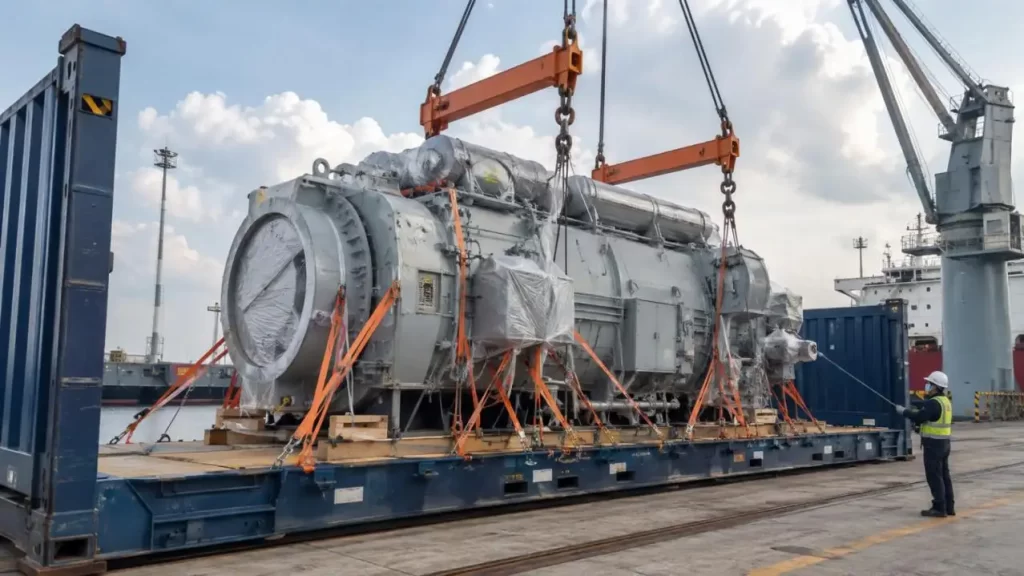
Industrial machinery shipping can be more difficult than regular commercial cargo. It can be oversized, irregular, and even heavy and difficult to load. It can require reinforced packing, special containers, route surveys, cranes and even unloading equipment at the destination. A good Mechanics Freight Forwarder will consider the cost of the entire shipment rather than just the freight rate.
What Causes Heavy Machinery Transport to be Expensive?
The cost to transport heavy machinery is the sum of many costs. The transportation from one port to another is just one part of the overall cost.
| Cost Category | Typical Charges | Common Overlooked Issues |
| Origin handling | Pickup, lifting, storage, and loading | Restricted road or loading access at factory |
| Export packaging | Wooden crates, steel bases, and moisture protection | Volume increases due to excessive packaging is charged to the shipper |
| Main transport | Sea, rail, air or truck freight | Over-looking addition costs besides the basic freight rate |
| Special equipment | Flat Rack, Open Top, RoRo | Oversize and equipment repositioning |
| Port handling | Terminal handling and lifting | Different ports charge differently for the same service |
| Customs | Declaration and payment of customs duties and import permits | Wrong HS codes or incomplete customs documentation |
| Destination service | Unloading and final delivery | Destination has no unloading facilities |
| Delay costs | Demurrage, detention, and storage | Import and transport arrangements are not complete |
The real focus should be on the total landed cost as opposed to the cheapest freight.
8 Ways to Reduce Cost of Heavy Equipment Transport
1. Be Clear About Dimensions and Weight.
Incorrect dimensions can cause misbooking, change of container, oversize charges, and port rejection. This can lead to claims for reloading.
Generally, a quotation request from Mechanics Freight Forwarders is made with the following details:
•Packed and unpacked dimensions
•Net weight and gross weight
•Center of gravity
•Equipment photographs
•Lifting points and forklift pockets
•Freight Accessories, Tie Downs, include Technical Drawings when available.
Measured details should be final export packaging because freight charges are calculated against packed cargo.
2. Select the Right Shipping Method
Cost efficient shipping methods are not always the cheapest freight rates.
| Shipping method | Suitable cargo | Cost characteristics |
| Standard Container | Machinery that fits after limited disassembly | Usually economical and well protected |
| Open Top Container | Equipment exceeding standard door height | Supports top loading by crane |
| Flat Rack Container | Overwidth or irregular machinery | Flexible but may involve oversize surcharges |
| RoRo Shipping | Mobile machinery or cargo on trailers | Reduces lifting but has limited route availability |
| Breakbulk Shipping | Very large or heavy project machinery | Suitable when containerization is impossible |
| Rail Freight | China–Europe or China–UK cargo | Cost and transit time between sea and air |
| Air Freight | Urgent, high-value machinery parts | Fast but expensive for complete machines |
A professional Mechanics Freight Forwarder should evaluate breakbulk, container, RoRo, rail, and multimodal access.
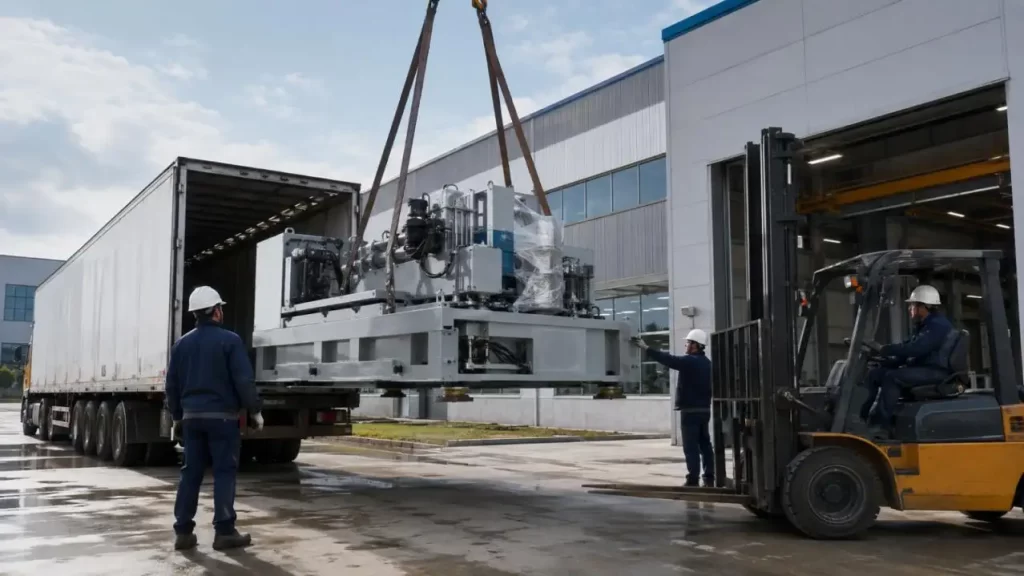
3. Always Disassemble When Possible.
Prudent disassembling reduces volume of the cargo, avoids a Flat Rack container, and increases the number of containers that can be loaded with machinery.
Too much disassembly can increase the costs for installation, testing, and post-sale services. Components need to be numbered, photographed, and secured with reassembly records as sufficient protection.
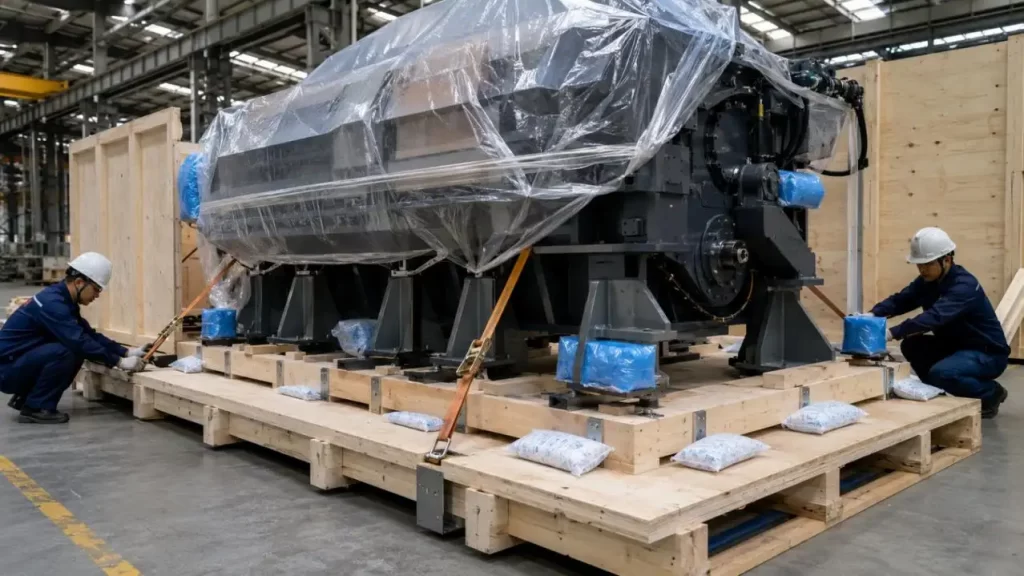
4. Optimize Export Packaging
Industrial machinery can include:
•Seaworthy wooden crates
•Reinforced steel bases
•Vacuum aluminum barrier packaging
•VCI corrosion protection
•Desiccants and humidity indicators
•Shock-resistant internal supports
•Waterproof wrapping and secure blocking
Packaging tends to be a trade-off between protection of the cargo and the efficient use of space in transport. If packaging is designed to protect the cargo too much, the risk of packaging failure increases. Packaging too little increases the risk of damage. Oversized packaging increases the cost and the volume that requires space to transport.
5. Compare FCL, LCL, and Consolidation
The majority of shipping containers do not need to be filled to their maximum capacity. LCL shipping is an option for rigid shipments. On the other hand, where heavy, valuable, or fragile cargo is involved, FCL shipping should be preferred.
| Cargo issue | Recommended method |
| Small quantity, small volume | LCL shipping |
| Heavy, valuable, or fragile | FCL shipping |
| Shipping from several suppliers | Warehouse and consolidation shipping |
| Large, oversized machinery | Flat rack/break bulk shipping |
Consolidated shipments for machinery, spare parts, accessories, and tools result in savings for the customer because of reduced shipping, collection, and documentation.
6. Anticipate Customs Delays
The difference in freight quotes will pale in comparison to the cost of customs delays. Check the following before departure:
•HS code and value of cargo
•Packing list and commercial invoice
•Instructions for the bill of lading
•Certificate of origin
•Technical specifications and purpose of the equipment
•Import restrictions for used machinery
•IPPC markings for wooden packaging
•Customs Import permits/inspection
•Declarations for fuel, oil, batteries, or regulated chemicals
Compliance issues with the cargo are highlighted by a review of shipping documents by the Mechanics Freight Forwarder before cargo arrives at port.
7. Avoid Demurrage, Detention and Port Storage
Once a container goes past the free period and is left at the terminal, demurrage charges begin to apply. Detention fees start to accrue once equipment is left at the port beyond the time ceded. Storage charges can be levied on cargo that remains in the port terminals.
Costs for booking trucks and cranes, payment of taxes, as well as final delivery coordination, can all be reduced through the advance preparation of customs documents and details of free time.
8. Use One Freight Forwarder
Using multiple providers for each step of a shipment may allow charges to be passed on multiple times with no clear responsibility, inconsistent documents, delays, and duplication.
An integrated Mechanical Freight Forwarder handles the following:
Pickup → Warehousing → Inspection → Consolidation → Customs → Transport → Clearance → Delivery
Sea, Rail or Air: Which Offers the Most Suitable Total Cost?
| Mode | Relative cost | Time | Most suitable |
| Sea | Lowest cost | Longest | Large equipment, shipping, heavy goods |
| Rail | Medium | Medium | China-Europe/UK shipment |
| Air | Highest cost | Shortest | Small equipment, urgent goods |
| Multimodal | Depends on route | Flexible | Delivery to door from the inland |
Sea freight is the most appropriate mode for large shipments as containers and other transport means can accommodate large equipment as well as special and break-bulk shipments. For shipments where ocean freight is too slow and air freight is too costly, rail freight is an option.
When making a transport decision for equipment, the cost of handling, packaging, port charges, customs, and inland transport and delivery must be considered. The time of transit should not be the deciding factor.
Cost-Reduction Checklist Before Quote Request
Include the following details:
•Machinery name, model & quantity
•Pickup & Delivery addresses
•Packed dimensions & gross weight
•Cargo value & Incoterm
•New/used
•Equipment photos
•Loading/unloading conditions
•Preferred delivery date
•Batteries, oil, fuel & dangerous goods
Complete details enable a Mechanics Freight Forwarder to accurately compare routes & equipment.
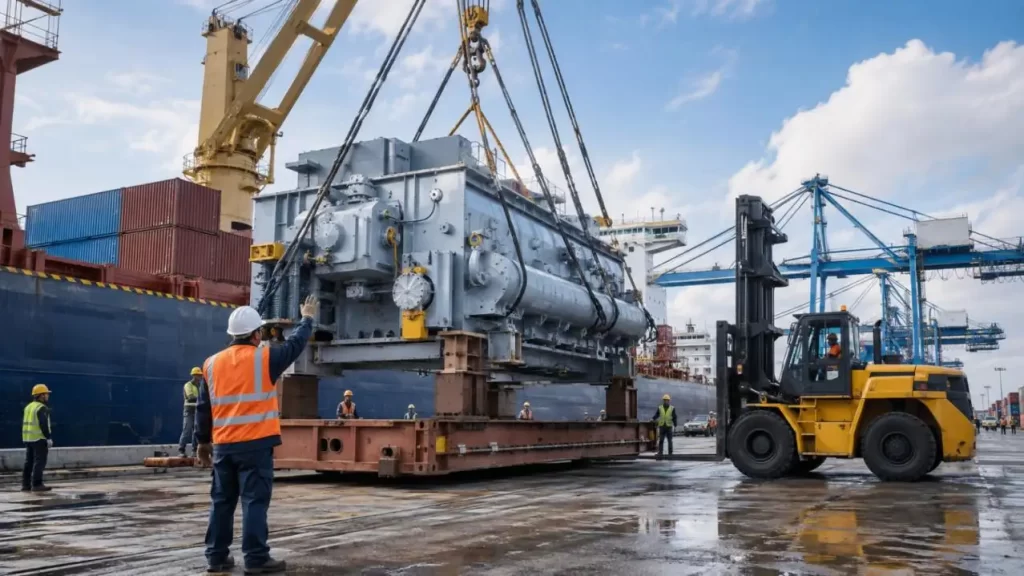
Supporting Machinery Shipping with Fexbuy
Various steps must be managed in order to reduce machinery shipping costs. Fexbuy supports the international shipping of machinery throughout the transportation process from warehouse pick up to drop off.
Our end to end service includes pick up and inspection, consolidation, FCL and LCL shipping, export customs clearance, and all forms of shipping (by sea, rail, air, and road) as well as DDU/DDP door to door deliveries.
Fexbuy offers pickup from China, Japan, Malaysia, Indonesia, and Cambodia and delivery to North America, Europe, UK, Canada, Africa, and Australia.
Being a WCA member gives Fexbuy partnerships with over 200 overseas agents and collaboration with major carriers of COSCO, Evergreen, OOCL, CMA CGM and Maersk. Through this network, Fexbuy manages origin transport, customs, and delivery in multiple countries.
The team helps with compliance for dangerous goods and lithium batteries, a declaration of dangerous goods, shipment tracking, and reviewing shipment costs. In Fexbuy’s internal service information, we have 21 years of experience in international logistics, and have a 98% on-time delivery success rate. Get Free Quote.
Final Considerations
Heavy machinery shipping costs are influenced by packaging, equipment selection, consolidation, customs preparation, port handling, and destination delivery. Early planning gives a Mechanics Freight Forwarder more opportunities to compare routes and prevent avoidable charges.
Need specialized freight forwarding services for international shipments of heavy machinery? Fexbuy evaluates the dimensions, weight, pickup and delivery locations, and required transit time of your shipment to determine the best sea, rail, air and door-to-door transport options.
FAQs
Q1. What equipment can Fexbuy transport internationally?
Fexbuy can arrange transports internationally for machinery such as industrial and production equipment, equipment components and spares, automated equipment, and oversized cargo. Using standard shipping containers may work for certain shipments. The size and weight of the cargo, the route, and the deadline will affect whether the team would consider shipping containers, an Open Top container, a Flat Rack, RoRo, breakbulk, rail, or air freight.
Q2. How does Fexbuy try to lower the cost of heavy machinery shipments?
Fexbuy does not only look at the basic freight rate. From the beginning, the team tries to control the overall cost. They may choose the appropriate equipment, consolidate freight from multiple shippers, balance the most cost effective FCL vs. LCL shipping, prepare customs documents in advance, and arrange delivery directly to the consignee to avoid storage, demurrage, and handling costs.
Q3. Does Fexbuy arrange both FCL and LCL shipments of machinery?
Yes, both shipment types are offered. Heavy machinery is usually transported in an FCL shipping container while smaller equipment and spare parts may be transported in an LCL container. The type of shipment will depend on the size, weight, value, and packaging requirements of the equipment as well as the shipping destination and the deadlines.
Q4. Can Fexbuy manage the shipment of oversized machinery?
Fexbuy will analyze oversized machinery shipments based on the packed dimensions and gross weight of the equipment as well as the route, the center of gravity, and the lifting points. Options may include the use of Flat Rack containers or Open Top containers, RoRo shipping, breakbulk transport, and special heavy haul transport arrangements on the origin or destination.
Q5. Does Fexbuy offer DDU and DDP options for door-to-door delivery?
Yes, Fexbuy can offer DDU and DDP door-to-door delivery for select routes for machines. Services may cover pick up, warehousing, inspection, consolidation, export declaration, transport, coordination of destination customs, local delivery, and final delivery. Before shipping, confirm the tax burden and import requirements.


