


UN3480 vs. UN3481: A Complete Guide to Lithium Battery Power Supply Transport Classification
Lithium battery transport comes with strict regulatory considerations. Today, lithium-ion batteries power everything from smartphones and tablets to electric vehicles. However, a primary challenge in hazardous material logistics is determining whether a battery is being shipped entirely on its own, or if it is packaged with or contained inside a device.
This critical distinction determines whether a shipment must be classified under UN3480 or UN3481. These two regulatory codes demand entirely different packaging standards, documentation workflows, and safety protocols. Misclassifying these codes inevitably results in severe customs delays, compliance fines, and critical safety hazards.
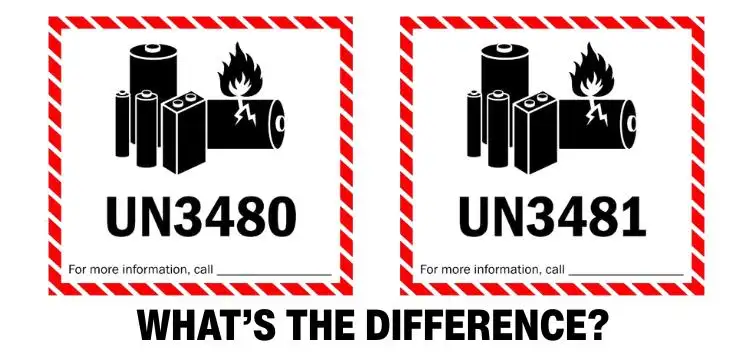
This guide explains these differences in a highly practical manner, ensuring that shippers, logistics managers, and manufacturers remain fully compliant with international hazardous materials regulations.
What Are UN Numbers in Lithium Battery Power Supply Transport?
The United Nations assigns hazardous materials a four digit code called a UN Number. In lithium battery power logistics, the two primary codes of focus are:
• UN3480 – lithium-ion batteries (including lithium polymer) transported on their own
• UN3481 – lithium-ion batteries contained in or packed with equipment
A similar distinction exists with lithium metal batteries (UN3090 and UN3091), however, this guide focuses specifically on the more commercially prevalent rechargeable lithium-ion variants.
The important thing to understand is that the distinction lies within shipping context, not the chemistry of the batteries.
UN3480: Lithium Battery Power Supply Transport on its Own
Definition
UN3480 applies to lithium-ion batteries or battery packs that are shipped by themselves. Examples include:
• Replacement laptop batteries in original packaging
• Bulk power banks for retail
• Individual battery cells for manufacturing
• Spare electric vehicle(EV) batteries
Transport Requirements (Summary)
Under IATA (air) and IMDG (sea) regulations, UN3480 shipments face the strictest rules:
| Requirement | Detail |
| State of charge (SoC) | ≤30% for air transport |
| Packaging | UN-certified packaging (Packing Group II) meeting 1.2m drop test |
| Inner packaging | Each battery/cell must be separated to prevent short circuits |
| Label | Class 9 miscellaneous dangerous goods lithium battery hazard label |
| Documentation | Shipper’s Declaration for Dangerous Goods (DGD) |
When Does UN3480 Apply?
• Batteries offered for recycling or disposal
• Samples sent for testing (UN38.3)
• Overpack containing only batteries
✅ Example: A carton of 50 individual 18650 cells, each in plastic blister packs – that’s UN3480.
UN3481: Batteries Inside or With Equipment
Definition
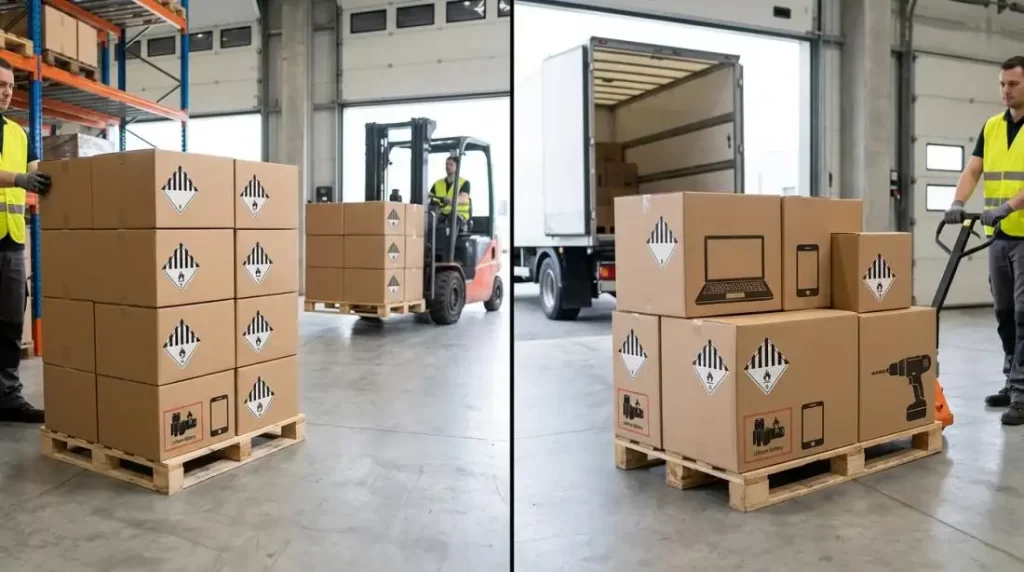
UN3481 covers lithium-ion batteries that are already installed in a device (e.g., phone, drill, e-bike) or packed in the same outer packaging as the device but not connected.
To ensure precise customs documentation, this classification is strictly divided into two regulated sub-categories:
• PI 966 (Lithium-ion batteries packed with equipment): The battery is shipped in the same outer carton as the device but is contained in a separate inner compartment or blister pack (e.g., a drone shipped alongside its uninstalled spare battery).
• PI 967 (Lithium-ion batteries contained in equipment): The battery is securely installed, connected, or fully integrated inside the device prior to transit (e.g., a smartphone with a non-removable battery).
Transport Requirements
The UN3481 is generally subject to less restrictive compliance tiers compared to UN3480, it is by no means completely exempt. The standard regulatory requirements are summarized below:
| Requirement | Detail |
| State of charge | No mandatory 30% limit (but recommended ≤30% for air) |
| Packaging | Strong outer packaging, no UN certification required unless quantity exceeds limits |
| Device protection | Equipment must be secured to prevent accidental activation |
| Hazard Label | Requires the standard Lithium Battery Mark (pre-printed with the UN3481 code); a Class 9 miscellaneous hazard label is only triggered for heavy/oversized units. |
| Documentation | Often just an Air Waybill with battery declaration (not full DGD for limited quantities) |
When Does UN3481 Apply?
• Smartphones, tablets shipped as retail products
• Cordless power tools with battery inserted
• Medical devices with internal batteries
• Electric bicycles with battery locked in place
✅ Example: A new laptop in its original box, battery inside – that’s UN3481.
Side-by-Side Comparison: UN3480 vs UN3481
| Feature | UN3480 (Batteries alone) | UN3481 (In/with equipment) |
| Hazard classification | Higher – exposed terminals, more prone to short circuit | Lower – device protects terminals |
| Air transport allowed? | Yes, but limited to cargo aircraft only (passenger ban) | Yes, may go on passenger aircraft if small cells (≤100Wh) |
| Maximum net quantity per package | Usually 35kg (air cargo) | No fixed limit for contained, but device size matters |
| Label required | Class 9 diamond | Lithium battery mark (smaller, no diamond) |
| Training for shipper | Full dangerous goods training required | Basic awareness (sometimes exempt for small cells) |
Common Misconceptions in Lithium Battery Power Supply Transport
❌ Myth 1: “A spare battery packed next to a device is still UN3481.“
Fact: It is UN3481 only if the spare battery is placed in its own protective inner slot or blister pack. If you throw a loose, uninsulated battery into the box, customs or airlines will reclassify it as UN3480 due to short-circuit risks.
❌ Myth 2: “All small batteries are exempt from regulations.“
Fact: There is no such thing as “no rules” in lithium battery logistics. While small cells (≤20Wh) and battery packs (≤100Wh) qualify for partial relief under Section IB of PI 965/966/967 for air freight or Special Provision 188 (SP188) for ocean freight, they are never fully exempt. They must still pass the UN38.3 test matrix, utilize strong/rigid outer packaging, and display the mandatory Lithium Battery Mark.
❌ Myth 3: “UN3480 cannot be shipped by air at all.“
Fact: UN3480 is strictly prohibited on passenger aircraft, but it can be legally and safely transported via Cargo Aircraft Only (CAO).Leading international carriers accept these shipments provided they strictly adhere to the mandatory≤30% State of Charge (SoC) limit, utilize UN-certified packaging, and are accompanied by a fully validated Shipper’s Declaration for Dangerous Goods (DGD).
Practical Steps to Classify Your Shipment
Use this simple decision tree for lithium battery power supply transport:
- Is the battery inside a device?
→ Yes: UN3481 (contained in equipment)
→ No: Go to step 2
- Is the battery packed in the same box but separate from the device?
→ Yes: Still UN3481 (packed with equipment). Ensure each battery is individually protected in an inner slot or blister pack.
→ No: Go to step 3
- Is the battery completely alone, even with packing material?
→ Yes: UN3480 (standalone). Go to Step 4 to check packaging tiers.
- For UN3480, determine your regulatory tier based on capacity:
• Cells ≤20Wh, batteries ≤100Wh, ≤8 cells or 2 batteries per package
• Then reduced requirements (still need strong packaging and “Lithium ion battery” mark)
Documentation Essentials
| Document | UN3480 | UN3481 |
| UN38.3 Test Summary | Required | Mandatory(for battery type) |
| MSDS / SDS | Recommended | Mandatory |
| Shipper’s Declaration (DGD) | Yes (required for all air shipments under Section IA & IB ) | No (for most consumer-size shipments) |
| Air Waybill with battery nature | Yes – must state “UN3480, cargo aircraft only” | Yes – state “UN3481 in equipment” |
�� Pro tip: Even when not mandatory, attach a battery declaration letter – many carriers request it for any lithium battery power supply transport.
Consequences of Misclassification
Mixing up UN3480 and UN3481 is more than a paperwork error:
• Air carrier penalties: Fines up to $50,000+ per violation (IATA rules)
• Customs holds: Shipment may be destroyed or returned at shipper’s cost
• Safety risk: UN3481 packaging may not survive a fire if a standalone battery shorts inside
• Legal liability: In case of incident, misdeclaration voids insurance and invites lawsuits
Final Takeaway
Understanding UN3480 vs. UN3481 is the first step toward safe and legal lithium battery power supply transport.
• UN3480 (Batteries Alone): Subject to the strictest regulatory compliance—limited to Cargo Aircraft Only (CAO) and requires full dangerous goods documentation.
• UN3481 – batteries that are contained in or packed with equipment – is a less stringent, but still requires packaging and clear marking.
Because IATA DGR and the IMDG Code update annually, always verify your shipping workflow against the latest regulatory versions. When in doubt, consult a certified dangerous goods specialist.
Accurate classification is important as it protects pilots, drivers, and warehouse employees that handle battery shipments.
FAQ
Q1: What does UN3480 mean?
A:UN3480 is the shipping classification for lithium-ion batteries transported by themselves, without any equipment, and therefore require much more stringent packaging, marking, and a greater degree of documentation.
Q2: What does UN3481 mean?
A:UN3481 covers lithium-ion batteries found in equipment like laptops, power tools and other equipment.
Q3: Which One Is More Popular, UN3481 or UN3480 When Transporting Lithium Batteries Power Supply?
A:The general classification for transport of finished goods is most likely UN3481. UN3480 is used when referring to spare batteries, replacement battery packs, and bulk shipments of batteries.
Q4: Is UN3480 Battery Transport Allowed via Air?
A:Yes, but it is strictly limited to Cargo Aircraft Only (CAO)—it has been completely banned on passenger planes globally since 2016. Furthermore, air shipments must be charged to $\le$ 30% State of Charge (SoC), use specialized packaging, and carry full dangerous goods paperwork.
Q5: Are UN3481 Shipments Subject to Lithium Battery Labeling?A:Most of the time, yes. However, international regulations offer a small exemption: if a shipment contains no more than two devices (with batteries installed inside) and the total package count is minimal, you can legally ship it without the Lithium Battery Mark.


