


Lithium Battery Freight Forwarder: How 2026 IATA Rules Change Air Cargo Shipping
From 1 January 2026, changes to the IATA rules will implement more state-of-charge controls for lithium-ion batteries in equipment listed in PI 966 and some battery-powered vehicles. At present, there are different rules for batteries shipped as cargo, batteries shipped in an equipment package, and batteries integral to the equipment. When shipping batteries in a package, shippers are required to ensure a Lithium Battery Freight Forwarder has confirmed the UN number and packing instructions, reviewed the Watt-hour rating and state of charge, checked all the documentation, and confirmed the airline’s constraints prior to booking.
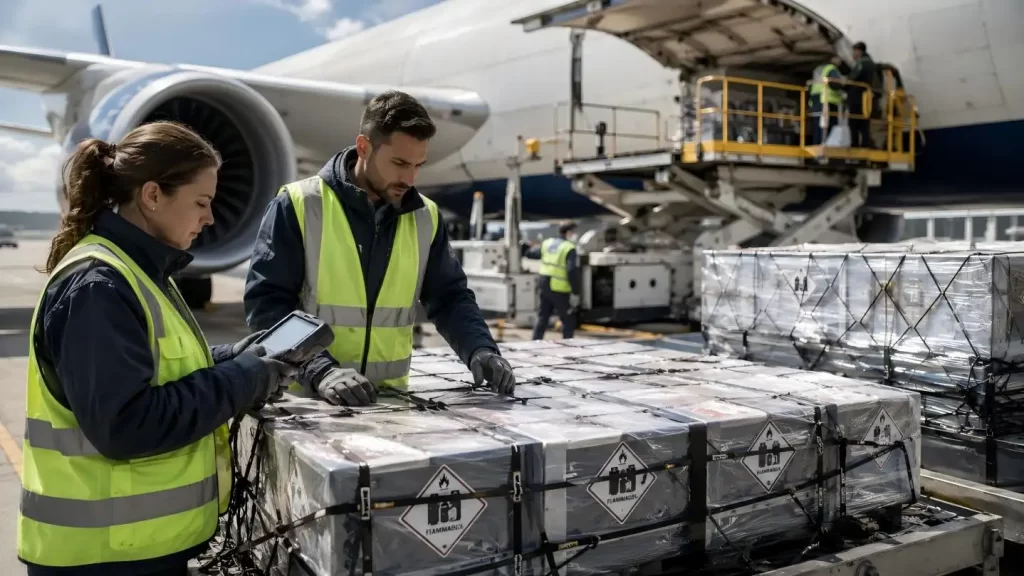
What Changed in the 2026 IATA Lithium Battery Rules?
The 67th edition of the IATA Dangerous Goods Regulations took effect on 1 January 2026. A major change extends reduced state-of-charge requirements to lithium-ion batteries packed with equipment under PI 966. Lower charge reduces thermal-runaway risk during air transport.
There is no single standard for every shipment. Requirements depend on chemistry, configuration, Watt-hour rating, packing instruction, Section, route and carrier.
The 30% State of Charge Rule Explained
State of charge, or SoC, means the percentage of a battery’s rated capacity. It is not automatically identical to the percentage shown on a device screen.
| Configuration | UN Number | Packing Instruction | 2026 Treatment |
| Batteries shipped alone | UN3480 | PI 965 | Maximum 30% SoC; cargo aircraft only |
| Batteries packed with equipment | UN3481 | PI 966 Section I | Maximum 30% SoC |
| Small batteries packed with equipment | UN3481 | PI 966 Section II | Maximum 30% when over 2.7 Wh |
| Batteries contained in equipment | UN3481 | PI 967 | 30% SoC or 25% indicated capacity strongly recommended |
| Battery-powered vehicles over 100 Wh | Relevant vehicle UN number | PI 952 | Maximum 30% SoC or 25% indicated capacity |
For PI 966 Section I, batteries above 30% SoC require approval from the State of Origin and State of the Operator. Under Section II, cells or batteries above 2.7 Wh must also be at no more than 30% SoC. Batteries above that limit must move under Section I with the relevant approvals.
For PI 967, reduced charge is strongly recommended rather than universally mandatory. Vehicles with batteries over 100 Wh must be offered at no more than 30% SoC or 25% indicated capacity; higher levels normally require State approvals. The 25% display level is a practical alternative, not a direct equivalent of 30% SoC.
What Has Not Changed in 2026?
The new rules do not replace established lithium battery air-freight requirements:
• The battery type must have passed UN 38.3 testing.
• A matching UN 38.3 test summary must be available.
• UN3480 cannot be treated as general cargo.
• UN3480 under PI 965 remains prohibited on passenger aircraft.
• Packaging, short-circuit protection, marks, labels and declarations depend on the applicable Section.
• Damaged, defective or recalled batteries cannot normally use standard air freight.
A paper UN 38.3 summary does not always need to accompany the shipment. It may be provided through a website, QR code or URL unless a State or operator requires otherwise.
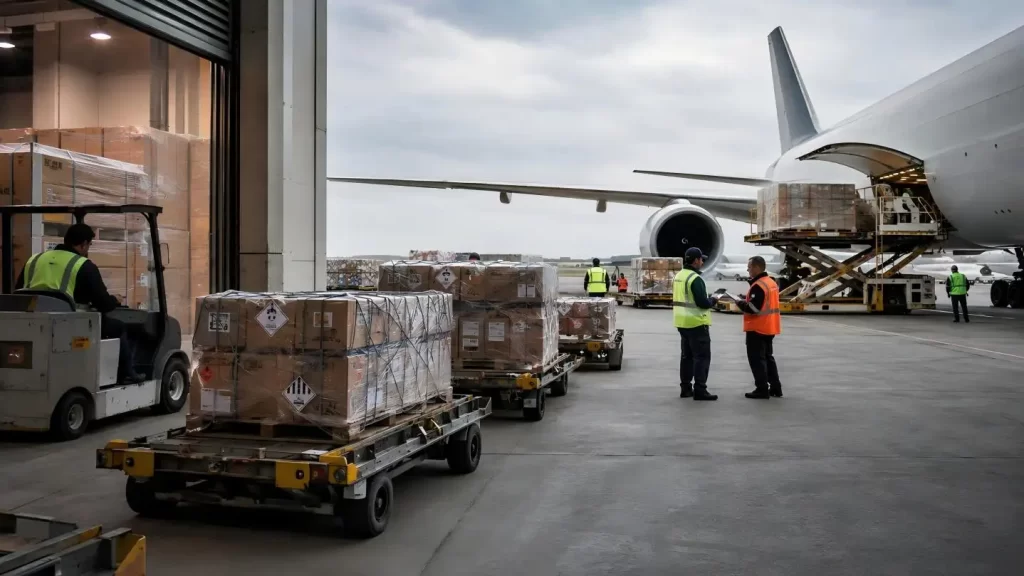
Why Classification Must Come Before Booking
A Lithium Battery Freight Forwarder should confirm:
- Battery chemistry;
- Shipped alone, packed with equipment or contained in equipment;
- Watt-hour rating;
- UN 38.3 status and model match;
- Product condition and recall status;
- Whether PI 965, PI 966 or PI 967 applies;
- Passenger- or cargo-aircraft eligibility.
Common errors include declaring a power bank as “contained in equipment,” treating a charger as qualifying equipment for UN3481, or using one test summary for unmatched models. IATA classifies power banks as batteries, while a package containing only batteries, chargers and cables does not qualify as batteries packed with equipment.
Documents a Lithium Battery Freight Forwarder Should Review
| Document or Data | Review Purpose |
| UN 38.3 Test Summary | Match model, manufacturer and test data |
| SDS or MSDS | Support product and emergency review |
| Battery Specification Sheet | Confirm voltage, capacity and Wh |
| Invoice and Packing List | Check description, quantity and weight |
| Shipper’s Declaration | Used when full DG declaration is required |
| Packaging Information | Confirm the packaging standard |
| SoC Records | Check the 2026 charge limit |
| Product and Packing Photos | Review condition and arrangement |
Required documents depend on configuration, packing instruction, Section, destination and operator requirements. An MSDS alone does not prove full compliance.
How the Rules Affect Packaging
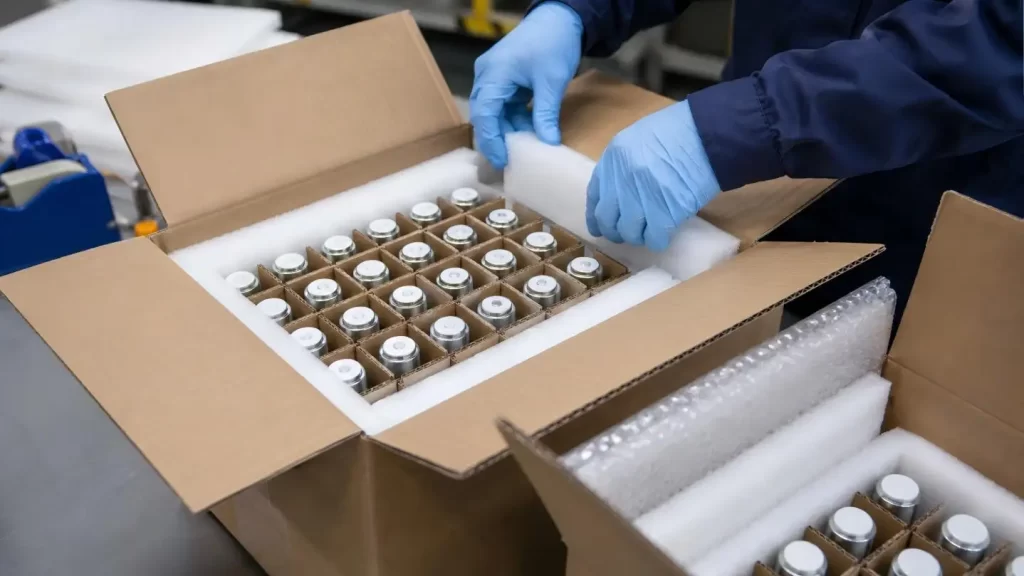
Exporters should control SoC before packing, isolate terminals against short circuits, prevent movement and protect batteries from impact or accidental activation. Packaging may be strong rigid or UN-specification packaging, depending on the Section.
Marks and labels must remain visible after palletising or stretch wrapping. Discovering non-compliant SoC after packing may require discharge, inspection, repacking and rebooking.
Why Airline Acceptance Can Still Differ
IATA DGR provides the regulatory baseline, but state and operator variations may add restrictions. Acceptance can also depend on airport capability, transit rules, aircraft type, battery net weight, dangerous-goods capacity and carrier policy.
A shipment may comply with general IATA DGR requirements and still be rejected by a particular airline or transit airport. Even when state approval has been issued, an operator is not obligated to accept the shipment. A Lithium Battery Freight Forwarder should therefore obtain route-specific acceptance before airport delivery.
Pre-Booking Checklist
• Confirm chemistry, UN number and packing instruction.
• Calculate the Watt-hour rating.
• Verify the applicable SoC limit.
• Match the UN 38.3 summary to the model.
• Review packaging, marks, labels and declarations.
• Check State and operator variations.
• Obtain written carrier acceptance.
How a Lithium Battery Freight Forwarder Supports Compliance
A specialist Lithium Battery Freight Forwarder can review classification and documents, identify packaging or labelling problems, compare carrier restrictions, coordinate dangerous-goods declarations and plan air, sea or dedicated battery-line alternatives.
The shipper remains responsible for accurate product information and legally compliant declarations.
End-to-End Battery Logistics Made Clearer
Because battery configuration, watt-hour rating, packaging and carrier restrictions vary, every shipment should be assessed before airport delivery.
Fexbuy supports battery manufacturers and exporters with UN 38.3 guidance, MSDS review, DG classification, compliant packaging, UN3480 and UN3481 air freight, DG sea freight, customs clearance, overseas warehousing, FBA preparation and destination distribution.
For an initial review, provide the battery type, UN number, watt-hour rating, packing configuration, quantity, origin and destination. Contact Fexbuy to begin a compliant battery logistics assessment.
FAQs
Q1. Can Fexbuy organize the shipping of UN3480 and UN3481 batteries?
Fexbuy can evaluate shipment of UN3480 batteries and UN3481 batteries packed with/or contained in apparatus. Acceptance is contingent upon battery package instructions, battery condition, route, carrier, and adequate documentation.
Q2. What does Fexbuy require to provide a shipping quote?
Customer should provide battery chemistry, UN number, Watt hour, packing, quantity, gross weight, dimensions, from, to, and desired shipping date; note product photos and required docs assist in evaluation.
Q3. Does Fexbuy perform a review of UN 38.3 documentation?
Yes. Fexbuy reviews the UN 38.3 test summary to confirm the shipped goods battery model and manufacturer, Watt-hour rating, and test information are in concurrence. The battery manufacturer maintains the requisite test docs.
Q4. Does Fexbuy assist with MSDS and classification of dangerous goods?
Fexbuy reviews and classifies dangerous goods with the appropriate packing instruction for the MSDS/SDS and main test documents. An MSDS does not satisfy a UN 38.3 test summary or any other shipping requirement.
Q5. Does Fexbuy provide dangerous goods packaging?
Fexbuy provides the necessary packaging based on the battery type and mode of transport including UN-certified cartons, terminal protection, cushioning, movement control, shock protection and dangerous goods marks.


