


Mechanics Logistics Services: How to Ship Heavy Machinery Internationally
International transport of heavy machinery requires exact measurements of equipment, routing analysis, suitable packaging, and assessment of the best transportation mode. Factors such as the dimensions, weight, and where the machinery is located can determine the mode of transport from the use of shipping containers to break bulk shipping, flat racks, RoRo vessels, rail transport, and multimodal transport. The planning involves custom documents and the means of transport to secure the cargo and deliver it to the destination.
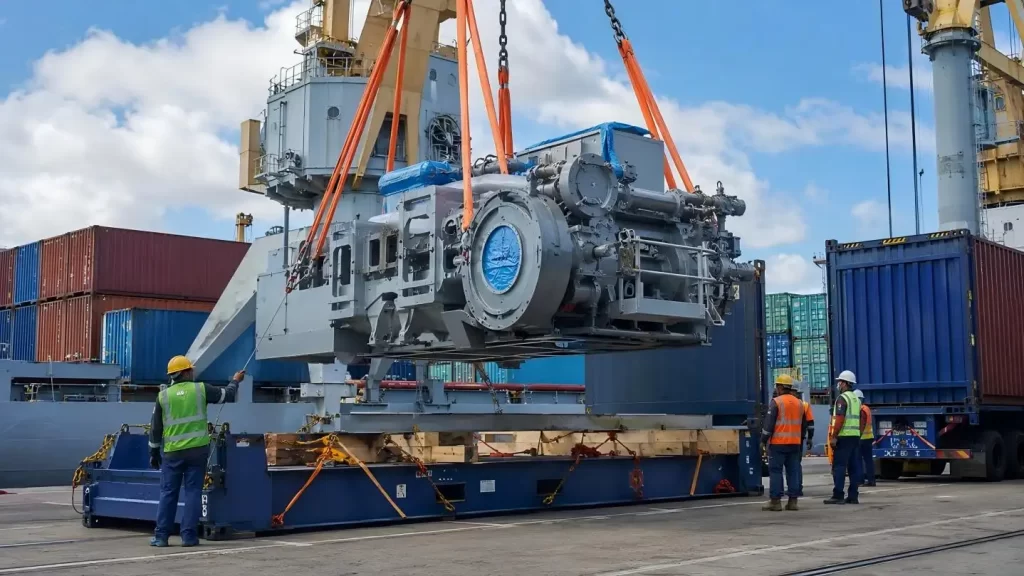
Industrial machinery is typically oversized, high value, and often quite sensitive to moisture and/or vibration. Errors in equipment size, weight, packaging, or customs documents can result in rejected bookings, additional charges, and/or delivery delays.
Professional Mechanics Logistics Services integrates factory pickup, packaging, export clearance, transportation and delivery, all within one comprehensive plan.
What Are Mechanics Logistics Services?
Mechanics Logistics Services are specialized solutions for transporting industrial machinery, production equipment, engineering components and oversized mechanical systems.
They may include:
• Factory pickup and loading
• Verification of packed dimensions, weight and centre of gravity
• Corrosion, moisture, shock and vibration protection
• Container or vessel selection
• Lifting, loading and cargo securing
• Export and import customs coordination
• Sea, rail, air, road or multimodal transport
• Destination delivery
Why Is Heavy Machinery Difficult to Ship?
Oversized Dimensions and Weight
Equipment may be overlength, overwidth or overheight, with an uneven centre of gravity or concentrated floor load. These factors affect containers, cranes, trucks and routes.
Moisture and Vibration
CNC machines and precision systems can be damaged by salt air, condensation, vibration or impact. For this reason, export packaging is necessary.
Customs and Regulatory Requirements
International machinery shipping may involve licences, certification, tariff classification, used-machinery inspection and wood-packaging controls. Solid wood packaging may need to meet ISPM 15.
Thorough Guide to Shipping Heavy Machinery
Step 1: Provide Exact Information About Equipment
You must know the name of the equipment, the HS code, packed dimensions, gross weight, center of gravity, lifting points, approximately the addresses of the sites, information regarding batteries, oil, and/or regulated materials. base quotes on “final packed data”.
Step 2: Decide On Transport Option
Think about how cost and time, as well as size and distance, influence your decision between offering customers sea, rail, air, road, or multimodal transport options.
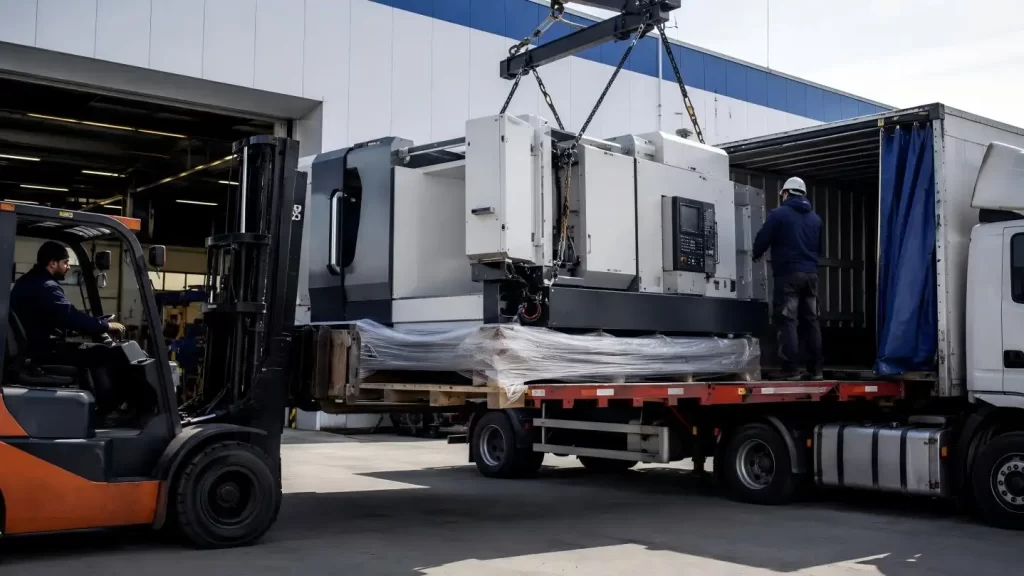
Step 3: Decide The Cargo Configuration
Some Options (but not limited to):
• Standard Containers
• Open Top Containers
• Flat Rack Containers
• RoRo
• Breakbulk
• LCL
• FCL
Step 4: Make Export Packaging Arrangements
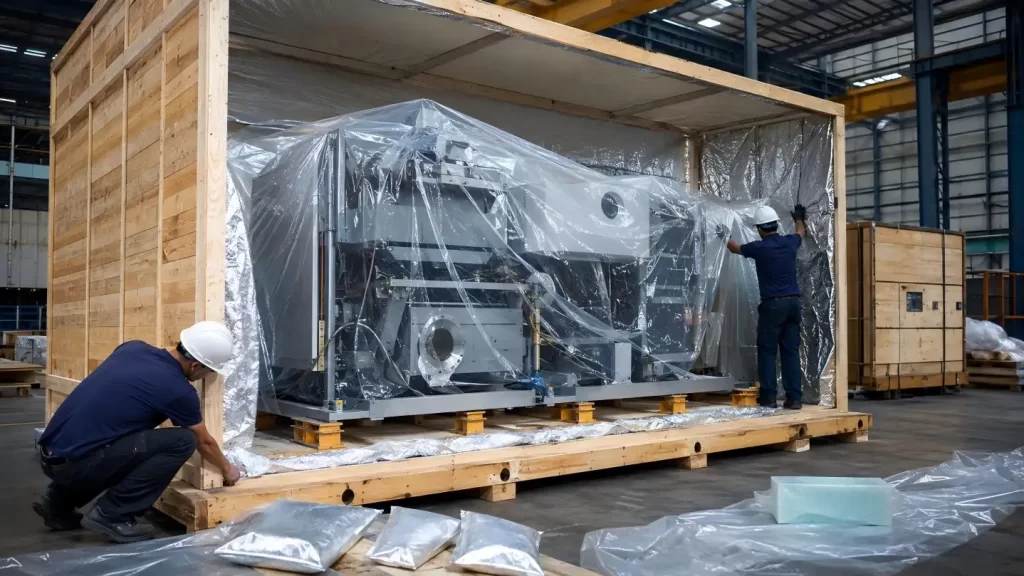
Export packaging may include heat treated cases, vacuum barriers, VCI ( Volatile Corrosion Inhibitors) materials, desiccants, shock protection, and lifting marks.
Step 5: Load and Secure the Machinery
Heavy cargo can still move during transport. Use blocking, bracing, bolting, lashing and anti-slip materials according to weight, centre of gravity and transport conditions.
A documented securing plan is particularly important for oversized machinery shipping because the equipment may experience vessel movement, braking forces and repeated handling.
Step 6: Complete Shipping Documents
These standard documents include a commercial invoice, packing list, transport document, certificate of origin, and customs information, as well as specifications and an insurance certificate for the equipment.
Additional permits may be required for used machinery, controlled equipment or machines containing batteries, fuels and other regulated materials.
Step 7: Plan Destination Delivery
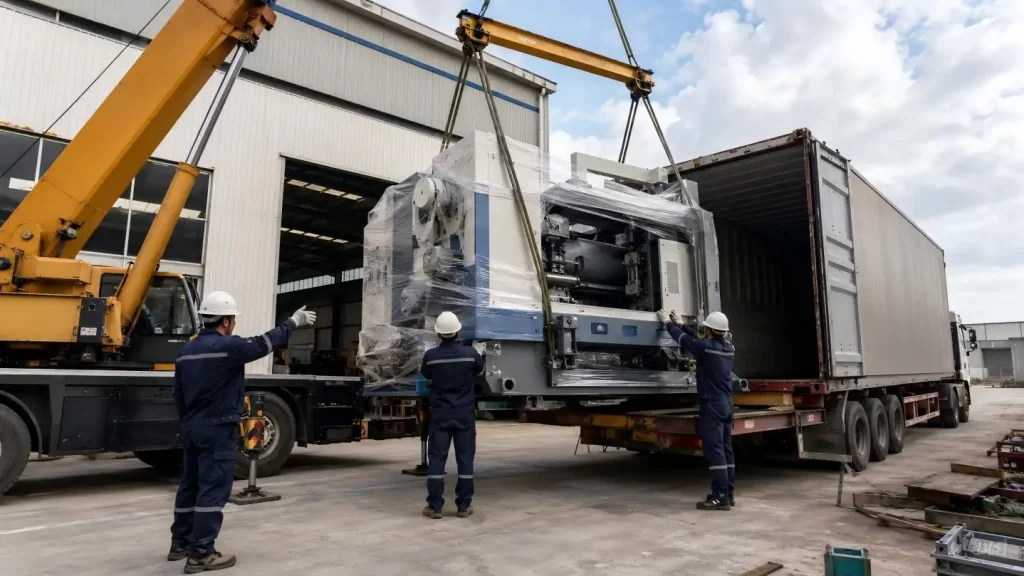
Confirm customs responsibility, permits, lifting equipment, access, floor capacity and final positioning before departure.
Which Transport Mode Is Right for You?
| Mode | Suitable Cargo | Main Consideration |
| Sea freight | Heavy machinery, production lines and oversized cargo | High capacity, but longer transit and stronger corrosion protection |
| Rail freight | Machinery between China, Europe and the UK | Useful for inland destinations; route and size limits apply |
| Air freight | Urgent parts and smaller high-value equipment | Fast but expensive and size-restricted |
| Road freight | Regional and port-to-factory transport | Flexible; oversized cargo may require permits |
| Multimodal | Cross-border door-to-door projects | Balances cost, speed and coverage |
There is no universally best option. Effective Mechanics Logistics Services compare total cost, handling risk, transit time and destination accessibility instead of focusing only on the main freight rate.
Standard Container, Flat Rack, RoRo or Breakbulk?
A standard container works when packed equipment fits inside a 20GP, 40GP or 40HQ. Open-top containers support top loading and moderately overheight cargo. Flat racks suit overwidth, overheight or side-loaded machinery.
RoRo is designed for self-propelled or towed equipment like excavators and loaders. Oversized and/or heavy cargo is transported by breakbulk shipping. LCL may be an option for the transport of smaller machines, while the transport of bulky or expensive equipment may be better suited by FCL.
The decision should always be based on packed dimensions rather than the bare machine size.
Common Risks and Preventive Actions
| Risk | Preventive Action |
| Incorrect dimensions or weight | Measure packed cargo and retain weight records |
| Cargo movement | Design securing around weight and centre of gravity |
| Corrosion | Use VCI, sealed barriers and desiccants |
| Customs delay | Confirm HS code, permits and equipment condition early |
| Unexpected charges | Request an itemized quotation |
| Failed unloading | Check access, floor loading and lifting equipment |
| Used-machinery restrictions | Verify destination rules before booking |
How Fexbuy Supports Mechanics Logistics Services
Fexbuy supports sea, rail, air and road transportation for machinery cargo. Its team can coordinate pickup, warehousing, inspection, consolidation, container loading, export declaration, international freight, import-clearance support and destination delivery.
For sea freight of machinery, Fexbuy provides options for FCL, LCL, and special-container solutions based on the packed physical size and characteristics that determine the means of handling. Carrier and overseas agent resources assist with routing and door-to-door machinery shipping.
Rail and multimodal transport may also be applicable for transport between China and Europe/UK and especially for cargo to be shipped to inland destinations. Based on the sales agreement, freight terms (FOB, CIF) and the responsibility of the importer regarding customs, we can evaluate DAP, DDP, etc.
Fexbuy assesses the following for comparison of transport options:
• Equipment weight and dimensions
• Urgency of the shipment
• Loading/unloading constraints
• Responsibility for customs
• Accessibility of the final destination
• Budget for transport
Quotations provide a breakdown of the costs related to freight, transport, customs and destination. Regular communication provides visibility for the process, and we can review machinery containing controlled materials prior to booking.
Final Heavy Machinery Shipping Checklist
Before booking:
• Verify packed dimensions and gross weight
• Identify the centre of gravity and lifting points
• Select the correct container or shipping method
• Confirm export and import requirements
• Use suitable corrosion and vibration protection
• Prepare a cargo-securing plan
• Check destination unloading conditions
• Request an itemized door-to-door quotation
Plan Your Machinery Shipment with Fexbuy
Every machinery shipment has different dimensions, loading conditions and customs requirements. Send Fexbuy the equipment details, packed dimensions, weight, pickup address and destination to receive a practical sea, rail, air or multimodal Mechanics Logistics Services plan.
FAQs
Q1. Does Fexbuy provide shipping for both FCL and LCL machinery?
Fexbuy offers both shipping methods. For FCL, we recommend shipping larger, more expensive, or more easily shipped machines. We can ship smaller machinery and spare parts via LCL.
Q2. What machinery can Fexbuy arrange for shipping?
Fexbuy can provide shipping solutions for CNC machines, packaging machines, line equipment, construction and production equipment, systems and heavy/ oversized cargo.
Q3. Does Fexbuy offer door-to-door shipping for machinery?
Yes, it is possible to arrange door-to-door shipping for your machinery. We can also take care of the entire shipping process including pick-up from the factory, shipping, customs and delivery.
Q4. Which methods of shipping does Fexbuy offer?
Fexbuy can provide shipping services using sea, rail, air and road transport. In addition, we can provide integrated transport solutions to satisfy the requirements of shipping cost and transit time.
Q5. Can Fexbuy provide shipping for oversized and/or overweight machinery?
Fexbuy can transport oversized and/or overweight machinery by using flat racks, open-top containers, and RoRo or break bulk shipping in combination with specialized transport. Before we can develop such a transport solution, we need to have the exact dimensions of the packed cargo and the gross weight.


