


UN3480 Power Bank Shipping Labels, Marks and Documents Explained
UN3480 Power Bank Shipments requires correct battery classification, compliant packaging, visible package marks, hazard labels and appropriate transport documents. For air freight, power banks will be treated as standalone lithium-ion batteries and usually prepared with IATA Packing Instruction 965. The exact requirements will depend on battery capacity and configuration of packaging, Section IA or Section IB classification, route, and airline.
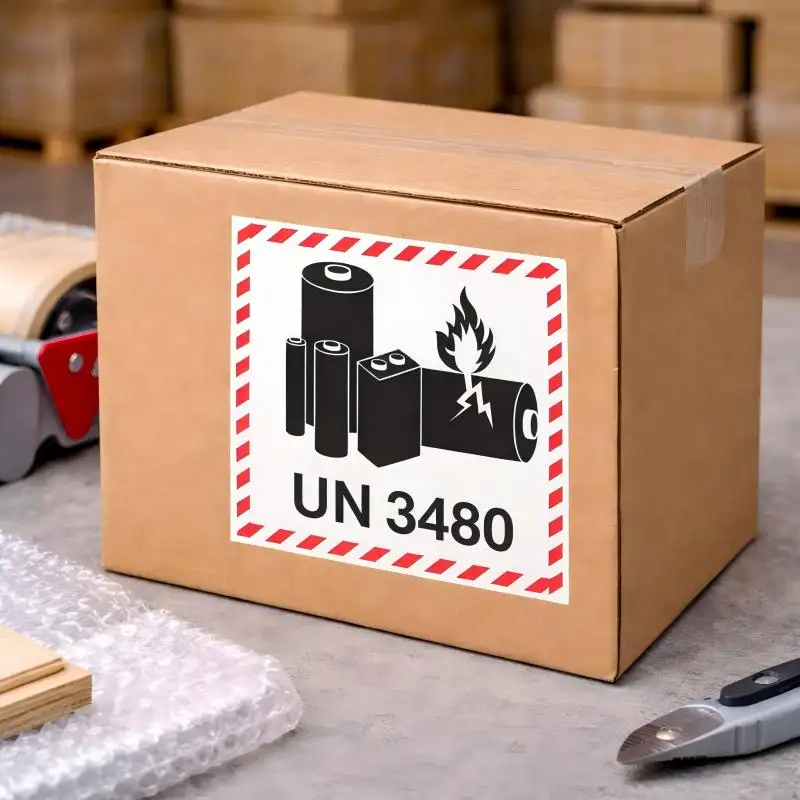
This article provides a practical overview. Always check the current IATA Dangerous Goods Regulations, national requirements and carrier-specific rules before dispatch.
What Does UN3480 Mean for Power Bank Shipping?
A power bank stores energy to charge other devices. Therefore, a power bank in which there is a display, flashlight, or charging cable is still considered a battery, not a piece of equipment.
Rechargeable lithium-ion power banks shipped separately are generally classified as UN3480, Lithium ion batteries, under Packing Instruction 965. They are not normally declared as UN3481 because they are neither installed in equipment nor packed with the equipment they are designed to power.
| Classification Item | Typical Power Bank Shipment |
| UN number | UN3480 |
| Proper Shipping Name | Lithium ion batteries |
| Hazard class | Class 9 |
| Air packing instruction | PI 965 |
| Passenger aircraft | Forbidden under standard cargo provisions |
| Cargo aircraft | Permitted subject to applicable requirements |
| State of charge | Generally no more than 30% |
Under the 2026 guidance, standalone UN3480 lithium-ion batteries must generally be offered at no more than 30% state of charge. Standard PI 965 shipments are forbidden on passenger aircraft and must move by an approved cargo-aircraft channel unless special authority approval applies.
Marks vs. Labels vs. Documents
These terms have different compliance functions.
| Category | Function | Examples |
| Mark | Identifies contents, classification or packaging status | UN3480, Lithium ion batteries, battery mark, OVERPACK |
| Label | Communicates the hazard or aircraft restriction | Class 9 lithium battery label, Cargo Aircraft Only label |
| Document | Supports classification, testing and transport responsibility | Shipper’s Declaration, UN 38.3 test summary, air waybill |
In simple terms, a mark identifies the shipment, a label communicates its hazard, and a document provides supporting compliance information.
Package Marks Required for UN3480 Power Bank Shipping
UN Number and Proper Shipping Name
A regulated package may need to display:
•UN3480
•Lithium ion batteries
The UN number and Proper Shipping Name must agree with the dangerous-goods declaration, booking information and other transport records.
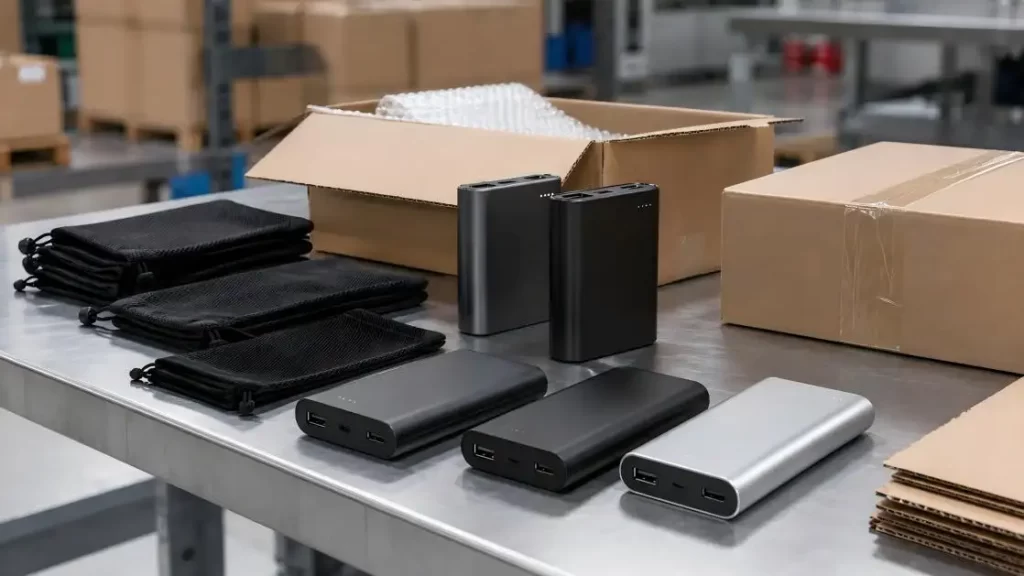
Lithium Battery Mark
For PI 965 Section IB, the package requires the lithium battery mark showing the applicable UN number. The mark must be durable, legible and visible. It should not be covered by tape, pallet wrap or another shipping label.
Section IB packages also require the Class 9 lithium battery hazard label and Cargo Aircraft Only label.
UN Specification Packaging Mark
The UN specification packaging mark is not the same as the UN3480 battery mark.
A UN packaging code identifies the tested packaging design, material, performance level, manufacturing year and approval information. By contrast, UN3480 identifies the dangerous goods being transported.
OVERPACK Mark
An overpack combines one or more completed packages into a single handling unit. When required marks and labels on the inner packages cannot be seen, they must be reproduced on the outside, together with the word OVERPACK where applicable. Not every outer carton is automatically an overpack.
Hazard Labels Used for UN3480 Air Shipments
| Label or Mark | Purpose | Typical Application |
| Class 9 lithium battery label | Identifies Class 9 lithium battery dangerous goods | PI 965 Section IA and IB |
| Cargo Aircraft Only label | Shows the package cannot travel on a passenger aircraft | PI 965 Section IA and IB |
| Lithium battery mark | Identifies the battery hazard and applicable UN number | PI 965 Section IB |
The lithium battery mark should not be called a Class 9 label because the two serve different purposes. Labels must follow the current design, dimensions, border and colour requirements. Exporters should not redraw them from unverified online examples.
Documents for UN3480 Power Bank Shipping
Dangerous-Goods Transport Documents
| Document | Main Function |
| Shipper’s Declaration for Dangerous Goods | Records classification, quantity, packing instruction and shipper certification |
| Air waybill | Provides routing and transport information |
| DG booking information | Allows the airline or handling agent to review the cargo before acceptance |
A Shipper’s Declaration is required for both PI 965 Section IA and Section IB shipments.
Battery Compliance Documents
Common supporting records include:
•UN 38.3 test summary
•Battery specification sheet
•Model, voltage, capacity and Watt-hour data
•State-of-charge information
•SDS or MSDS when requested
•Carrier-requested battery declaration or transport appraisal
An SDS or MSDS does not replace the UN 38.3 test summary or Shipper’s Declaration.
The test summary should identify the manufacturer, test laboratory, report number, test date, battery type, mass, Watt-hour rating, model numbers and pass/fail results. It must be made available, but a printed copy does not have to accompany every shipment. A website, URL or QR code may be used when the battery model can be accurately matched to the record.
Commercial invoices, packing lists, HS-code information and country-specific certificates may also be required. These requirements vary by origin, destination, customs authority and carrier.
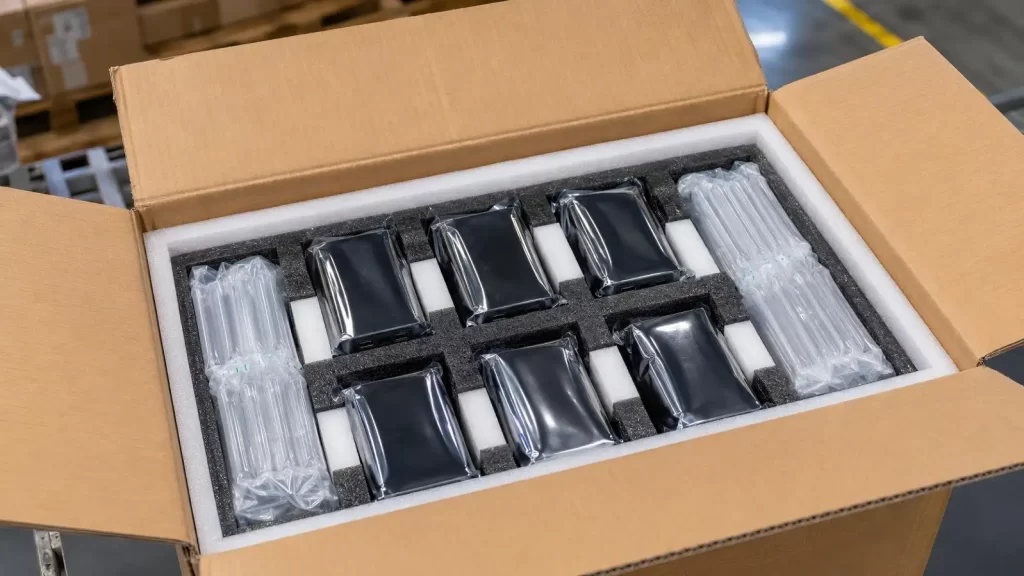
PI 965 Section IA vs Section IB
| Comparison | Section IA | Section IB |
| Typical rating | Cells above 20 Wh or batteries above 100 Wh | Cells up to 20 Wh or batteries up to 100 Wh |
| UN specification packaging | Required | Section IB performance requirements apply |
| Class 9 label | Required | Required |
| Cargo Aircraft Only label | Required | Required |
| Lithium battery mark | Normally not required solely by IA | Required |
| Shipper’s Declaration | Required | Required |
| Standard cargo-aircraft limit | Up to 35 kg net battery weight | Up to 10 kg net battery weight |
Battery capacity alone does not complete the classification. Battery condition, model traceability, package quantity, short-circuit protection and carrier variations must also be reviewed.
Common UN3480 Shipping Errors
| Error | Possible Result | Corrective Action |
| Declaring a power bank as UN3481 | Delay or reclassification | Confirm the product’s primary function |
| Model differs from the test summary | Documents may be rejected | Match model numbers before booking |
| Missing Wh rating | Classification cannot be confirmed | Verify voltage and Ah capacity |
| Labels covered by stretch film | Terminal rejection | Keep all labels visible |
| SDS used instead of UN 38.3 records | Insufficient evidence | Provide the correct test summary |
| Incorrect net battery weight | Declaration discrepancy | Declare the battery net weight accurately |
| Missing Cargo Aircraft Only label | Air-cargo rejection | Review PI 965 requirements |
UN3480 Pre-Shipment Checklist
Before arranging UN3480 Power Bank Shipping:
•Confirm UN3480 classification and PI 965 section.
•Verify the model, chemistry and Watt-hour rating.
•Match the product to its UN 38.3 test summary.
•Confirm the state of charge.
•Protect terminals against short circuits.
•Check packaging performance and UN certification.
•Apply current marks and labels.
•Cross-check the declaration, invoice and packing list.
•Obtain carrier approval before terminal delivery.
Battery Solutions for Compliant Global Shipping
Shipping UN3480 Power Banks requires more than putting labels on a box. Other aspects that need to be considered are classification, battery records, dangerous goods (DG) packaging, carrier acceptance, completion of customs declaration forms, and instructions to the destination.
Fexbuy offers battery classification and documentation review, UN 38.3 guidance, MSDS assistance, UN-compliant packaging, short-circuit protection, both air and ocean freights, customs clearance, DG compliant warehousing, FBA prep and final delivery.
Fexbuy offers 21 years of international logistics experience, worldwide partner coverage and structured transportation quality control to ensure your battery shipments are clear, efficient and compliant.
End-to-End Battery Logistics Done Right. Give us a call to review your shipment.
FAQs
Q1. Does Fexbuy ship UN3480 Power Banks?
Fexbuy offers a broad range of services for UN3480 Power Bank shipping which includes document reviews, packaging of dangerous goods, arranging air and sea freights, customs clearance, overseas warehousing, and final distribution.
Q2. What is the required documentation for shipping power banks via Fexbuy?
Power bank specifications, model numbers, voltage, capacity, their Watt-hour rating, the summary of UN38.3 test, MSDS (or SDS) and commercial invoices and packing lists are documents typically submitted by customers. Additional documents may be required based upon the carrier and destination.
Q3. Can UN38.3 and MSDS documents be reviewed by Fexbuy?
Yes, Fexbuy carries out reviews of UN38.3 documents, MSDS, battery classification. Additionally, Fexbuy reviews packing lists and shipping documents for compliance. The battery model and the shipping documents must be of the same model which has been tested.
Q4. Can Fexbuy arrange air and sea freights for UN3480 batteries?
Yes. The determination of air cargo and dedicated battery transport, DG full-container-load and DG less-than-container-load shipments depends upon battery specifications, transport volume, destination and the carrier.
Q5. Does Fexbuy ship compliant power banks (battery) packaging?
UN-certified cartons, terminal protection, cushioning and shock protective packaging for power banks are offered by Fexbuy. The packaging is determined based upon battery rating, quantity, and packing instructions.


