


How to Choose a Reliable Lithium Battery Freight Forwarder in China
The international shipping of lithium batteries is burdened with regulatory complications and safety concerns. An e-commerce importer or seller in China understands that selecting the right lithium battery freight forwarder means compliance and on time, consistent supply chain delivery.
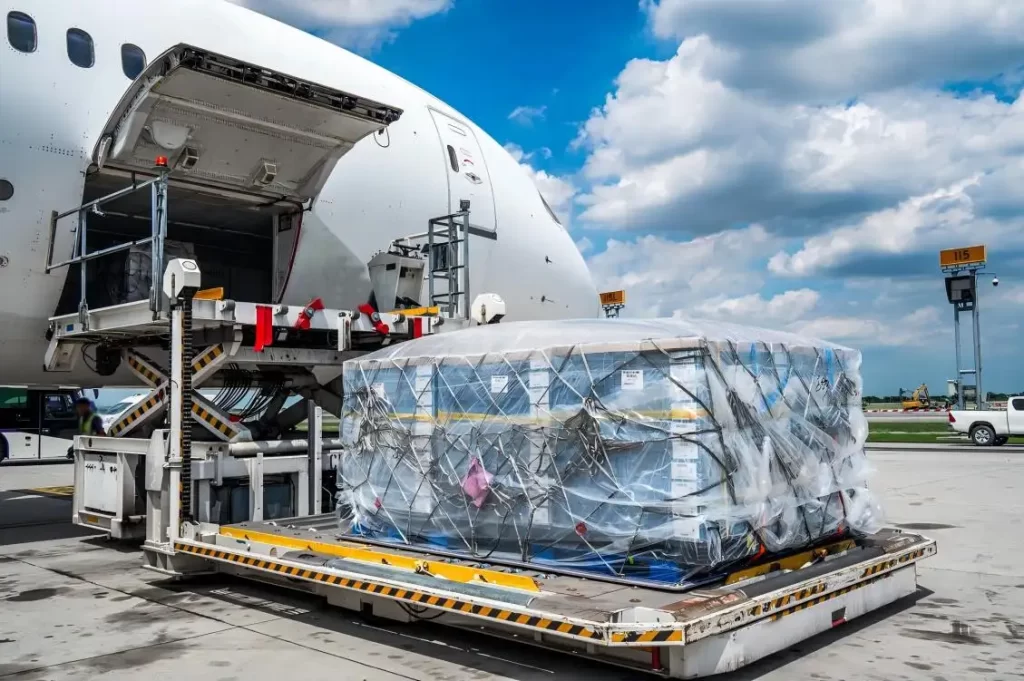
This guide illustrates the important criteria and the relevant capabilities to consider for logistics partnerships for lithium battery shipments.
Need for Specialized Lithium Battery Forwarding
Lithium batteries are considered Dangerous Goods (DG) and therefore, are subject to internationally varying transport regulations and stringent requirements related to packaging, marking, documentation, and provision to the carrier.
Issues such as improper UN classification or packaging, and absent MSDS, may cause:
•Rejection of the shipment by a carrier or an airline
•Delays to Customs clearance
•Penalties or return of the shipment
•Increased safety risk during transport
A lithium battery freight forwarder China focused service provider is able to ensure compliance for the entire process of transport from the point it is shipped to the destination.
Key Evaluation Criteria for Freight Forwarders
When reviewing logistics partners, consider actual capabilities of the service provider.
| Evaluation Area | What to Look For |
| Regulatory Knowledge | Strong knowledge of IATA DGR and IMDG Code, UN38.3, MSDS, and country specific import regulations |
| DG Packaging Capability | Available UN-approved packaging, anti-short circuit materials, and compliant danger labeling systems |
| Transport Solutions | Capability to organize air transport (UN3480/UN3481), ocean transport – FCL/LCL, and rail or road transport |
| Customs Clearance | Clearance experience for DG declarations with correct HS code and inspection |
| End-to-End Services | Dedicated to warehousing, labeling, FBA prep, relabeling and return handling |
| Shipment Visibility | Active tracking systems and prompt operational feedback |
Compliance Requirements Overview
Regulatory compliance for lithium battery logistics is primarily dictated by the destination and transport mode.
A competent lithium battery freight forwarder from China will typically provide:
•Coordination of UN38.3 testing – explaining to shippers the required testing and the laboratories that perform the testing
•MSDS preparation and review – ensuring the safety data sheet is compliant with the most recent regulations
•Assistance with Dangerous Goods classification – accurately classifying the batteries as UN3480, UN3481, etc.
•Shipping document review – providing final review of shipping documents to limit the chances of rejection
No freight forwarder will be able to completely eliminate the customs or inspection risks; however, good compliance will reduce the risks of operating interruptions.
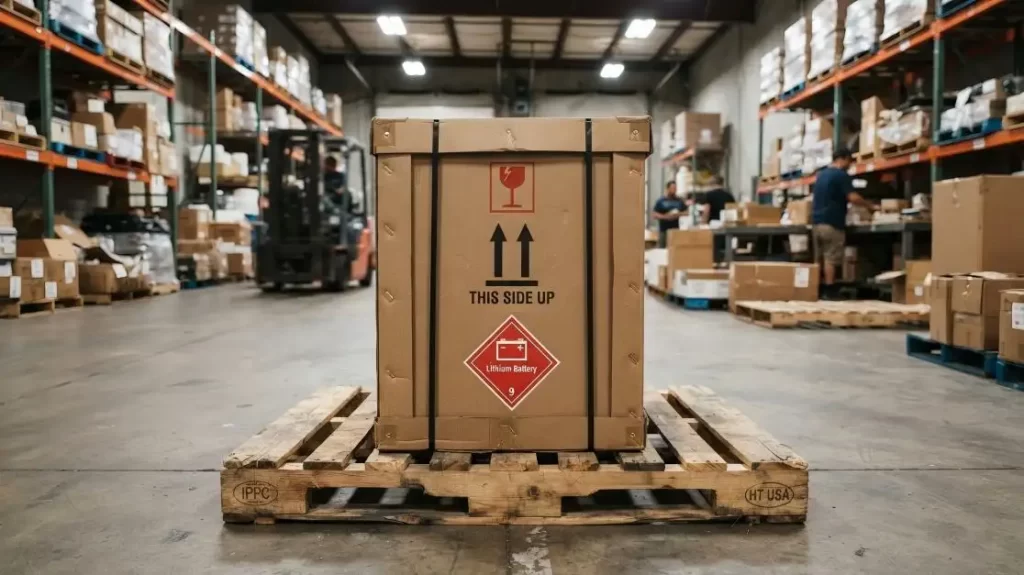
Packaging and Dangerous Goods Declarations
Packaging for the transport of lithium batteries provides a critical layer of safety. Proper packaging is designed to meet the UN requirements and to prevent as much as possible short circuit, leakage and damage due to impact.
These packaging requirements include:
•UN-certified packaging systems that have been tested for drop and pressure resistance
•Internal packaging that ensures batteries will not be in contact with one another
•Proper application of Class 9 labels, handling labels, and the “Cargo Aircraft Only” label (if required)
•Proper completion of a Shipper’s Declaration of Dangerous Goods
Improper packaging and/or labeling is one of the most common reasons for rejections by an airline.
Factors to Consider for Each Transport Mode
Each transport mode has a different set of regulatory limitations, cost structures, and transit times.
Air Freight
•Fastest option for transit
•Standalone lithium batteries (UN3480) undergo strict regulation
•Requires state-of-charge (SoC) compliance and airline?s approval
Ocean Freight
•For less urgent and higher volume shipments
•Requires proper DG stowage and documentation
•Available as FCL and LCL options
Rail and Road Transport
•Common for the China–Europe trade lanes
•Subject to regional regulations
•Often used as a cost/time balance alternative
An expert lithium battery freight forwarder from China will help you choose the correct transport mode according to your requirements for cargo type, volume, and destination.
Customs Clearance and Destination Handling
Lithium battery freight is handled differently at destination ports. Shipments are subject to additional checks for compliance with documentation, labeling, and HS code requirements.
Potential services offered are:
•Review of Dangerous Goods documentation prior to customs clearance
•HS code assessment based on battery type and usage
•Management of the Dangerous Goods compliant overseas warehousing
•Fulfillment by Amazon preparation, labeling, and redistribution
•Management of last mile delivery services
Handling shipments correctly at the destination reduces the number of inspections and the time it takes for customs clearance.
Visibility and Operational Communication
DG Logistics is a visibility and responsiveness driven business. Shipments must be monitored and tracked. With the correct system in place, status updates are routine. However, the need for personnel remains.
A strong freight forwarder for lithium battery shipments from China will integrate:
•Digital systems for shipment visibility
•Exception management systems with proactive alerts
•Dedicated account management teams
•Operations teams for exception resolution
Reliability of the system is further enhanced with supply chain complexity.
Experience and Operational Stability
The logistics of lithium battery transport is a learning business. The specialized knowledge required to manage the logistics of lithium batteries is derived from long term DG experience. The knowledge allows for the management of routing, carrier selection, and customs hurdles.
The operational performance of the company should be evaluated on:
•Recent shipment performance
•Industry referrals
•Consistency in DG cargo transport
•Ability to solve problems
An evaluation based on one factor, such as experience, is not sufficient. Execution, or the operational performance, is the most important factor to be evaluated.
Compliant Battery Logistics Solutions from Fexbuy
Fexbuy is the ideal option for businesses looking for lithium battery freight solutions from China that prioritize compliance along with Integrated multi-modal transport and end-to-end solutions. With over a decade of experience, the average client services of over 20 years of experience in the supply chain, Fexbuy is equipped to support with UN38.3 testing, DG packaging support, air and ocean services for UN3480/UN3481, worldwide customs clearance, and dedicated battery DDU lines to Europe and the USA.
Get in touch with Fexbuy to talk to a representative who can evaluate and custom design your shipping plan.
Frequently Asked Questions
Q1: What is the UN number for battery power stations?
UN3481. It is used for batteries in contained in equipment.
Q2: Are battery power stations permitted in Amazon FBA?
Yes, however, they must pass the Amazon Dangerous Goods review.
Q3: Is UN38.3 required for shipping lithium batteries?
Yes, it is a requirement for shipping lithium batteries.
Q4: What is the HS code for shipped battery power stations?
The HS Code would be 8507.60.00, however it is dependent on the product.
Q5: Do power stations shipped require DG labels?
Yes, they must have a lithium battery DG label.


