


Dimensional Weight in International Shipping: How Carton Size Changes Your Freight Cost
Dimensional Weight in International Shipping means your freight cost can be based on carton size, not just actual weight. Carriers calculate volume weight, compare it with scale weight, and charge the higher number. To reduce cost, measure cartons accurately, remove wasted space, choose the right packaging, and send exact carton data before quoting.
A lightweight shipment can still get an expensive freight quote if the carton is too large. This happens often with apparel, accessories, electronics, and other ecommerce goods shipped from China to Amazon, the EU, the UK, or direct customers. If you understand how carriers price space, you can fix carton problems before they become shipping costs.
What is dimensional weight in international shipping?
Dimensional weight in international shipping is a calculated weight based on carton volume, not scale weight. If the carton is large but light, the carrier may bill by space used instead of actual weight.
Carriers use dimensional weight because aircraft, trucks, and warehouses have limited space. A large box of lightweight products can take up the same space as a heavier shipment. That space has a cost, even if the carton does not weigh much on a scale.
This is why FedEx explains dimensional weight as a way to price packages based on size when the package is large relative to its actual weight. UPS also states that billable weight is usually the greater of actual weight and dimensional weight.
Why can carton size increase your freight cost?

Carton size increases freight cost when the package takes up more space than its actual weight justifies. A small product in an oversized carton can be billed like a much heavier shipment.
Think of a 5 kg apparel shipment packed in a large supplier carton. The clothing may not be heavy, but the carton may take up enough space to price like a 12 kg shipment. In that case, the seller does not pay for the clothing weight. They pay for the space the carton occupies.
The cheapest carton is not always the cheapest shipment. A free supplier carton can become expensive if it adds enough volume to increase billable weight. This is why carton size should be checked before the shipment leaves the factory, not after the quote looks too high.
How do you calculate dimensional weight?
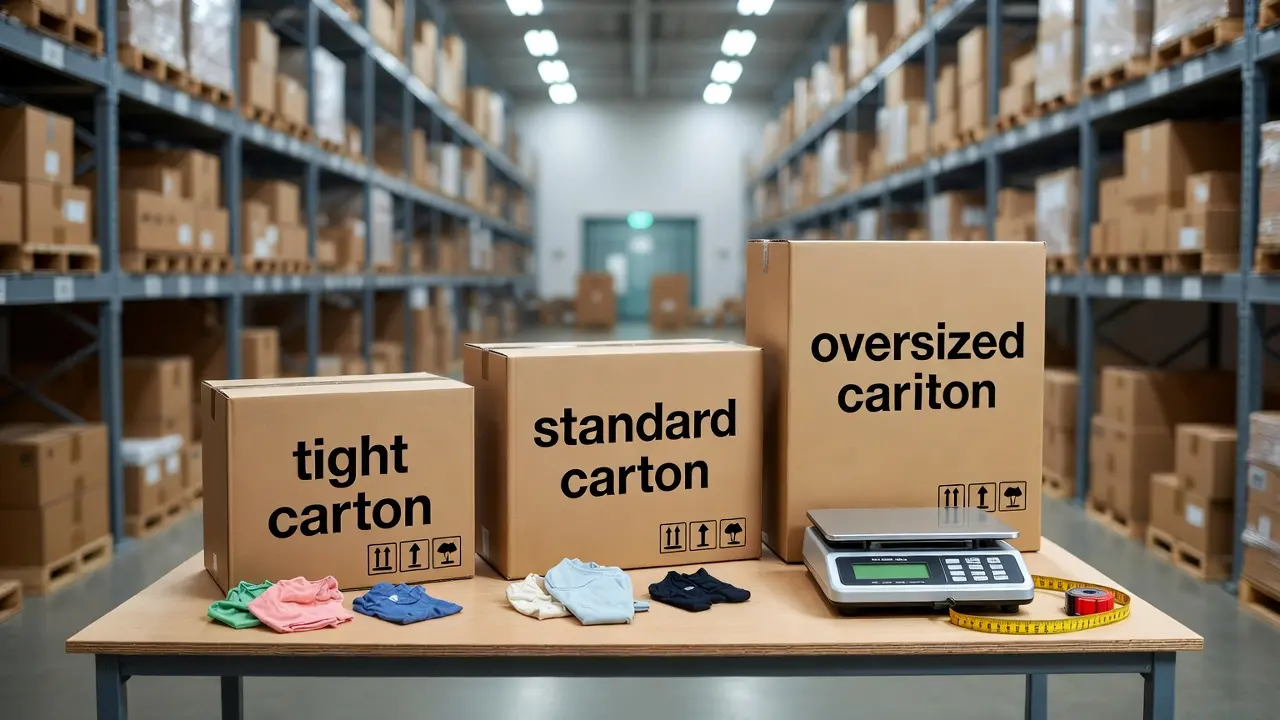
To calculate dimensional weight, multiply length x width x height, then divide by the carrier’s DIM divisor. Compare that result with actual weight and use the greater number as the billable weight.
The basic process is simple: measure the packed carton, apply the carrier’s formula, then compare the result with the scale weight. The divisor changes by carrier, service, country, and freight mode, so always confirm the divisor before making a final cost decision.
Inches and pounds formula
For many express and parcel services using inches and pounds, the common formula is:
Length x Width x Height ÷ DIM divisor = dimensional weight
FedEx lists 139 as the divisor for many U.S., Puerto Rico, and international shipments. DHL Express also shows a 139 divisor for inch and pound calculations.
Centimeters and kilograms formula
For many international express quotes using centimeters and kilograms, the common formula is:
Length x Width x Height ÷ 5000 = dimensional weight in kg
For example, a carton measuring 60 cm x 40 cm x 25 cm has a volume of 60,000 cubic cm. Divide that by 5000, and the dimensional weight is 12 kg. If the actual carton weight is 5 kg, the billable weight is 12 kg.
| Scenario | Carton dimensions | Actual weight | DIM divisor | Dimensional weight | Billable weight | Decision |
|---|---|---|---|---|---|---|
| Tight apparel carton | 45 x 30 x 20 cm | 5 kg | 5000 | 5.4 kg | 5.4 kg | Good carton fit |
| Standard supplier carton | 60 x 40 x 25 cm | 5 kg | 5000 | 12 kg | 12 kg | Too much empty space |
| Oversized carton | 70 x 45 x 30 cm | 5 kg | 5000 | 18.9 kg | 18.9 kg | Repack before shipping |
Actual weight vs dimensional weight: which one do you pay?
You pay the greater of actual weight and dimensional weight. Actual weight comes from the scale, while dimensional weight comes from carton size and the carrier divisor.
Actual weight is the real gross weight of the packed carton. Dimensional weight is calculated from the carton’s volume. Billable weight, sometimes called chargeable weight, is the number the carrier uses to price the shipment.
| Weight type | What it means | Example |
|---|---|---|
| Actual weight | The carton weight on a scale | 5 kg |
| Dimensional weight | The carton volume converted into weight | 12 kg |
| Billable weight | The higher number used for pricing | 12 kg |
This comparison matters because sellers often look only at product weight. For international shipping, carton volume can change the quote even when the product, destination, and service stay the same.
What carton mistakes create high dimensional weight?
Carton mistakes create high dimensional weight when packaging adds space without adding product value. The most common problem is using a large standard carton for small, soft, or mixed SKUs.
These mistakes are easy to miss because the shipment still looks packed and ready. The cost problem appears later, when the forwarder calculates chargeable weight or the express carrier rates each carton.
Check for these issues before booking:
- Oversized master cartons with too much empty space.
- Heavy void fill that still leaves the carton bulky.
- One carton size used for every SKU.
- Soft goods packed in rigid cartons when mailers may work.
- Bulging or irregular cartons that measure larger than expected.
Bad outbound packaging can also create problems after delivery. If products arrive damaged, rejected, or returned, the seller may face extra cross-border return costs on top of the original freight charge.
Should you right-size cartons, split cartons, or change shipping mode?
Start by right-sizing cartons before changing carriers or modes. Splitting cartons or switching modes only helps when the new carton plan lowers billable weight without increasing handling, prep, or delay risk.
Right-sizing is usually the first move because it attacks the cause directly. If a 5 kg apparel carton is billed at 12 kg because of empty space, the best fix is often a smaller carton or eligible poly mailer, not a new carrier.
Splitting cartons is not automatically smarter. It works when it lowers billable weight and handling risk, but it can backfire if it increases labels, prep time, carton count, and damage exposure. For broader shipment planning, connect this decision to your FBA inbound cost strategy.
| Situation | Best first move | Avoid | Why |
|---|---|---|---|
| Bulky soft goods | Test smaller cartons or mailers | Oversized rigid cartons | Soft goods often waste carton space |
| Fragile electronics | Reduce void space carefully | Weak packaging | Damage risk can cost more than DIM savings |
| FBA master cartons | Audit carton size by SKU family | One carton for every SKU | Mixed sizing can inflate billable weight |
| High-volume SKU | Create fixed carton standards | Guessing each shipment | Small savings repeat at scale |
| Return-prone goods | Balance protection and size | Cutting protection too far | Poor packaging may increase return duties and taxes |
How does dimensional weight affect air, express, LCL, and FCL?
Dimensional weight matters most in express, parcel, air freight, and LCL shipments. For FCL, cost is usually tied to the container, so carton size still matters for loading efficiency but not the same per-package DIM formula.
Express and air shipments are highly sensitive to space because aircraft capacity is limited. A lightweight but bulky carton can become expensive fast. This is common with apparel, home goods, foam products, low-density accessories, and promotional packaging.
LCL can also punish low-density cargo because you are sharing container space with other shippers. DHL Global Forwarding explains that chargeable weight changes by mode, and LCL may use volume-based calculations. For FCL, carton size still affects how much product fits inside the container.
| Shipping mode | How carton size affects cost | Best use case |
|---|---|---|
| Express parcel | DIM often applies per package | Urgent, small, high-value shipments |
| Air freight | Space-sensitive chargeable weight | Fast replenishment with controlled carton size |
| LCL sea freight | Volume can drive cost | Medium shipments that do not fill a container |
| FCL sea freight | Container use matters most | Large batches with strong loading efficiency |
Express is not the enemy for every bulky shipment. It is expensive when cartons are wasteful, but it can be rational for small, high-value inventory where stockout risk is higher than freight savings. Use this section with wider inbound freight cost planning, not as a one-line rule.
Can wrong dimensions cause customs or delivery delays?
Wrong or inconsistent carton dimensions can create freight quote disputes and documentation issues. Packing lists include weights and measurements, and customs or freight teams may use them to check package contents and costs.
Dimensional weight is mainly a freight pricing issue, but carton data also appears in shipment documents. A packing list should include weights, measurements, and details of the goods. Freight forwarders may use it to confirm freight cost, and customs officials may use it to check cargo.
For EU and UK ecommerce shipments, shipment data quality matters even more. The EU’s Import Control System 2 requires advance safety and security data, and incomplete data can create processing issues. For the broader compliance picture, use Fexbuy’s EU and UK import compliance guide.
What to verify before shipment leaves China
Before the supplier releases the cargo, check that the quote data matches the paperwork. FedEx customs guidance also points out that incomplete paperwork is a common reason for customs delays.
Use this quick check:
- Carton count matches the packing list.
- Gross weight is listed per carton or shipment.
- Carton dimensions are complete and realistic.
- Product descriptions match the commercial invoice.
- HS code, destination, and consignee details are consistent.
- EU small-parcel shipments follow relevant EU parcel customs changes.
What should you send your forwarder for an accurate quote?
Send your forwarder exact carton data before asking for a final quote. A quote based on product weight alone is incomplete, especially for air, express, and LCL shipments.
A clean quote request helps the forwarder calculate billable weight, choose the right mode, and catch packaging problems early. It also reduces the chance of a price change after pickup or warehouse measurement.
Include this information:
- Product name and clear product description.
- Carton quantity.
- Length, width, and height of each carton type.
- Gross weight for each carton type.
- Total shipment weight and total carton count.
- Pickup city and destination country.
- Delivery type, such as Amazon FBA, warehouse, or direct customer.
- Required timing, such as urgent restock or flexible sea freight.
- Commercial invoice and packing list when available.
If the supplier only gives product weight, ask again for packed carton data. The packed carton is what moves through the freight network, so it is the number that matters for chargeable weight.
When should you ask Fexbuy to review carton size before shipping?
Ask for a carton size review when the shipment is lightweight, bulky, high-volume, or tied to Amazon FBA or EU/UK ecommerce import. These are the cases where small packaging errors can repeat across many cartons.
A review is also useful when quotes keep changing after warehouse measurement. That usually means the original carton data was missing, rounded poorly, or based on supplier estimates instead of packed measurements.
| Situation | Why a review helps | Action to take |
|---|---|---|
| High-volume SKU | Small carton changes affect every shipment | Standardize the carton plan |
| Lightweight bulky goods | DIM weight may exceed actual weight | Test smaller cartons or mailers |
| FBA inbound shipment | Carton data affects cost planning | Check measurements before booking |
| EU/UK ecommerce import | Documents need clean shipment data | Match quote, invoice, and packing list |
| Frequent returns | Packaging may affect damage and cost | Connect outbound packing with ecommerce reverse logistics |
For example, a seller shipping electronic accessories by express may accept a higher air cost if the carton is tight and stockout risk is high. A seller shipping bulky home goods with flexible timing may get a better result by reviewing LCL or FCL options before booking.
What to Do Next
Dimensional Weight in International Shipping is easier to control before the shipment is booked. Measure packed cartons, compare actual weight with volume weight, and check whether the carton is protecting the product or only adding chargeable space.
Before your next quote, ask your supplier for final carton dimensions, gross weight, carton count, and product details. If the numbers look too high for the product type, review packaging before pickup. That one step can prevent freight surprises, document mismatches, and avoidable cost on repeat shipments.
Frequently Asked Questions
What is dimensional weight in shipping?
Dimensional weight is a calculated weight based on package volume. Carriers compare it with actual scale weight and usually charge the higher number as billable weight.
How do I calculate DIM weight for international shipments?
Multiply carton length, width, and height, then divide by the carrier’s divisor. Use 139 for many inch/lb express calculations or 5000 for many cm/kg express calculations, then compare with actual weight.
What is volumetric weight and how is it calculated?
Volumetric weight is another name for dimensional weight. It is calculated from package volume, usually length x width x height divided by a carrier-specific divisor.
What is the difference between dimensional weight and actual weight?
Actual weight is the scale weight of the packed shipment. Dimensional weight is calculated from carton size, and the higher of the two usually becomes the chargeable weight.
How can I reduce dimensional weight charges?
Reduce dimensional weight charges by using smaller cartons, removing wasted space, choosing lighter protective materials, and using mailers for eligible soft goods. Recheck high-volume SKUs before each major shipment.
Does dimensional weight apply to LTL freight?
Dimensional weight may affect LTL through density and freight class, not always through the same parcel formula. Low-density palletized cargo can still cost more because it uses more space.
Can wrong dimensions delay customs clearance?
Wrong dimensions can contribute to documentation problems when packing lists, invoices, labels, and shipment data do not match. Customs delays usually come from incomplete or inconsistent data, so carton details should be accurate.


