


Choose a Professional China Logistics Service Forwarder for Your Power Bank Orders
Introduction
Shipping power banks internationally is not like shipping ordinary electronics. As lithium-battery-containing products, power banks face strict regulations, limited carrier options, and complex customs procedures. If you are an overseas buyer relying on China Power Bank Logistics Service, selecting the right Chinese freight forwarder is critical – it can mean the difference between on-time delivery and costly delays, cargo seizures, or even destruction of your goods.
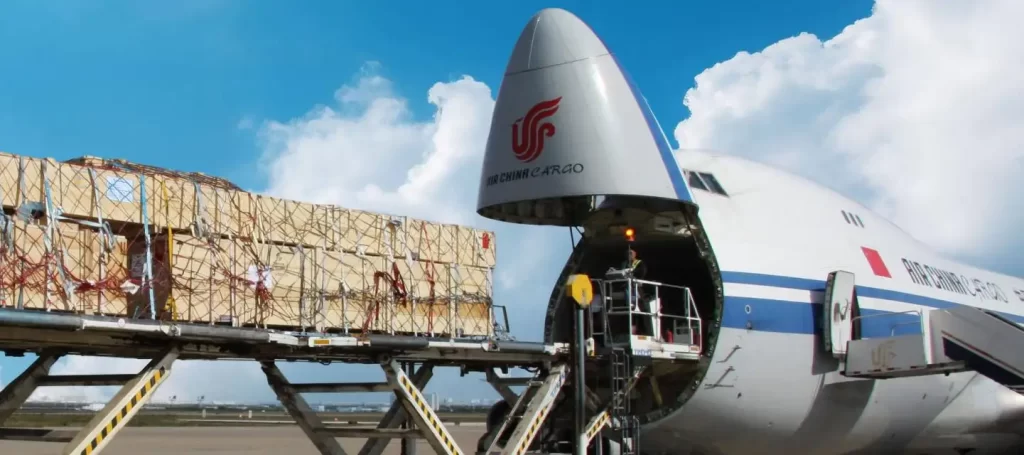
This article explains the key challenges of power bank logistics and provides a neutral, step-by-step guide to evaluating freight forwarders. We will also look at how a professional battery logistics provider (such as Fexbuy) addresses these challenges with a complete compliance-first approach.
1. Why Is Shipping Power Banks Difficult?
Before choosing a forwarder, you need to understand the four main obstacles in China Power Bank Logistics Service.
�� Regulations in Flux and Intricate Compliance
When it comes to exporting lithium batteries, some restrictions apply as per IATA DGR (Dangerous Goods Regulations). Different countries require varying documents – UN38.3, MSDS, special certifications, or unique HS codes. Missing even one document can stop your shipment at the origin.
�� Limited Air & Sea Freight Capacity
Because lithium batteries are flammable, many airlines refuse to transport pure batteries (UN3480). Even when transport is allowed, space is limited, and approval processes are strict. Sea freight also has restrictions, especially for high-capacity power banks.
�� Strict Packaging & Dangerous–Goods Declaration Requirements
Export packaging must meet UN standards: specific drop tests, pressure tests, and mandatory hazard labels. Regular freight forwarders without DG (Dangerous Goods) qualifications often make mistakes here – leading to shipment rejections.
�� Complicated Cross–Border Customs Clearance
The U.S. and EU enforce rigorous battery import controls. Missing documents or incorrect labeling systems combined with inadequate handling of Harmonized System codes leads to frequent penalties.
Only a professional forwarder dealing with China Power Bank Logistics Services can handle these challenges.
2. Assessing the Freight Forwarder for Power Banks
A fair assessment can be made with the subsequent five points.
2.1 Dangerous Goods (DG) Certification & Industry Experience
• Are IATA / FIATA or local Dangerous Goods certifications held by the forwarder?
• Is there experience in shipping UN3480 (batteries) and UN3481 (batteries loose in equipment)?
• Request a case study or a reference from a client in the power bank industry.
2.2 UN38.3 & MSDS Capabilities
A professional forwarder should not just forward documents – they should help you:
• Understand UN38.3 testing requirements.
• Prepare or review MSDS (Material Safety Data Sheets).
• Classify your products correctly (DG class 9).
2.3 Packaging & Labelling Compliance
• They must use UN-certified cartons and anti-short-circuit / shock protection.
• They should provide photos of compliant packaging before shipping.
• Ask: Do they have in-house DG packers?
2.4 Multi–Modal Transport Options
• Can they offer air freight (with limited UN3480 slots), DG FCL / LCL sea freight, and dedicated battery lines?
• Avoid forwarders that only offer one method – flexibility is crucial for cost and speed.
2.5 Near-End Visibility and Support
• Notify and serve.
• Anticipate and communicate changes, such as the new EU Battery Regulation.
To meet the five qualifications, a forwarder must be an expert in China Power Bank Logistics Service.
3. One-Stop Solution: Fexbuy‘s Example of Solving Problems
Most forwarders are not completely compliance-based ecosystem experts, although they profess expertise. Below are examples of how the Battery Solutions service by Fexbuy, as a highly professional service, addresses the problems.
3.1 Battery Compliance and Testing Solutions
Problem: Cargo is held due to the absence of UN38.3 or an MSDS that is not compliant.
Solution: Full compliance and consulting and testing, provided before shipment.
• Guidance for UN38.3 Testing
• MSDS Preparation and/or Review
• Support of DG Classification
• Inspection and Testing of Batteries
3.2 DG Packaging and International Transport
Problem: Packaging that is not certified results in the rejection of the shipment by an Airline or Carrier.
Solution: Certified DG Packaging and Multichannel Transport.
• UN Certified Cartons
• Technology That Shields from Short-Circuiting and Shock
• Air Transport of Batteries (UN3480/3481 Compliant)
• DG FCL and LCL Sea Freight
• Battery Transport Solutions
• Optimizing safety and cargo
3.3 Problems with US/Europe Customs?
• Destination Country Clearance, DG Warehousing, Last-Mile Delivery
• Dangerous Goods Customs Clearance, Submission of Dangerous Goods with HS Coding, Document Submission
• DG Warehousing
• FBA Prep, Returns, Re-Labeling
3.4 Real-Time Transparency and Support
Difficulty: Lack of real-time updates and support
Solution: Real-Time Transparency and Support; most advanced tracking and updating technology
4. Red Flags to Avoid When Choosing a Forwarder
Even with the criteria above, watch out for these warning signs:
• “We can ship anything, no documents needed” – This usually means illegal misdeclaration, which leads to customs seizures and blacklists.
• No DG license on display – Many forwarders use third-party DG agents without taking responsibility.
• Vague pricing – Battery shipments often have hidden fees (DG surcharges, inspection fees). Demand a full breakdown.
• No after-sales support – What happens if customs detains your shipment in the destination country? Professional forwarders provide customs intervention and return logistics.
5. Final Checklist Before Signing a Contract
Use this neutral checklist to compare multiple providers:
| Criterion | Ask Yourself |
| UN38.3 & MSDS support | Do they help test and prepare, or just forward? |
| Packaging | Are UN-certified boxes and anti-short-circuit materials used? |
| Transport modes | Air, sea FCL/LCL, dedicated battery lines? |
| Customs capability | Do they clear DG in the U.S./EU under their own license? |
| Tracking & communication | Real-time tracking + 24/7 support? |
| Past power bank shipments | Can they provide proof of similar orders (anonymised)? |
Final Words
Shipping power banks from China is not a standard logistics task – it requires a forwarder that lives and breathes dangerous goods regulations. By focusing on China Power Bank Logistics Service providers with strong DG qualifications, UN38.3 expertise, certified packaging, multi-modal options, and end-to-end customs & warehousing support, you dramatically reduce risks.
Professional operators such as Fexbuy demonstrate how a complete battery logistics solution works: from compliance testing to final delivery. With the checklist, you’ve got the questions, and you need to select a partner who builds a foundation on safety and compliance, not as an afterthought.
Want a trustworthy Power Bank Logistics Service from China for your next order? First, check that forwarder with the five criteria above. Your cargo and your business will appreciate it.
FAQ
Q1: Can Fexbuy customers use air and sea freight?
Fexbuy accommodates both air and sea freight for any size shipment.
Q2: Fexbuy prep for FBA?
Fexbuy provides FBA prep services, pack prep, relabeling, and return prep.
Q3: Do your shipments have UN/IATA certification?
All of our Dangerous Goods shipments that are certified also meet UN38.3/IATA DGR.
Q4: Will there be notifications during the transit of the Power Banks?
You will receive notifications while your Power Banks are in transit.
Q5: Will Fexbuy clear customs for all destination countries?
Yes. Fexbuy provides global customs clearance along with global HS Codes, Dangerous Goods and overseas warehousing.


