


Amazon AWD vs FBA: Which Storage and Replenishment Model Fits Your Inventory?
TL;DR
Amazon AWD vs FBA is not a simple replacement choice. AWD is better for bulk, seasonal, or slower-moving inventory that can sit upstream and replenish FBA later. FBA is better for fast-moving, customer-ready stock that needs Prime delivery now. Many sellers should use a hybrid model, especially when importing from China.
Amazon sellers often compare AWD and FBA because storage cost keeps rising, placement fees are harder to ignore, and stockouts can damage sales fast. The wrong choice can leave cash tied up in the wrong warehouse or leave your best SKU unavailable when demand is ready. The better question is simple: where should each SKU sit before it needs to reach the customer?
What is the real difference between Amazon AWD and FBA?
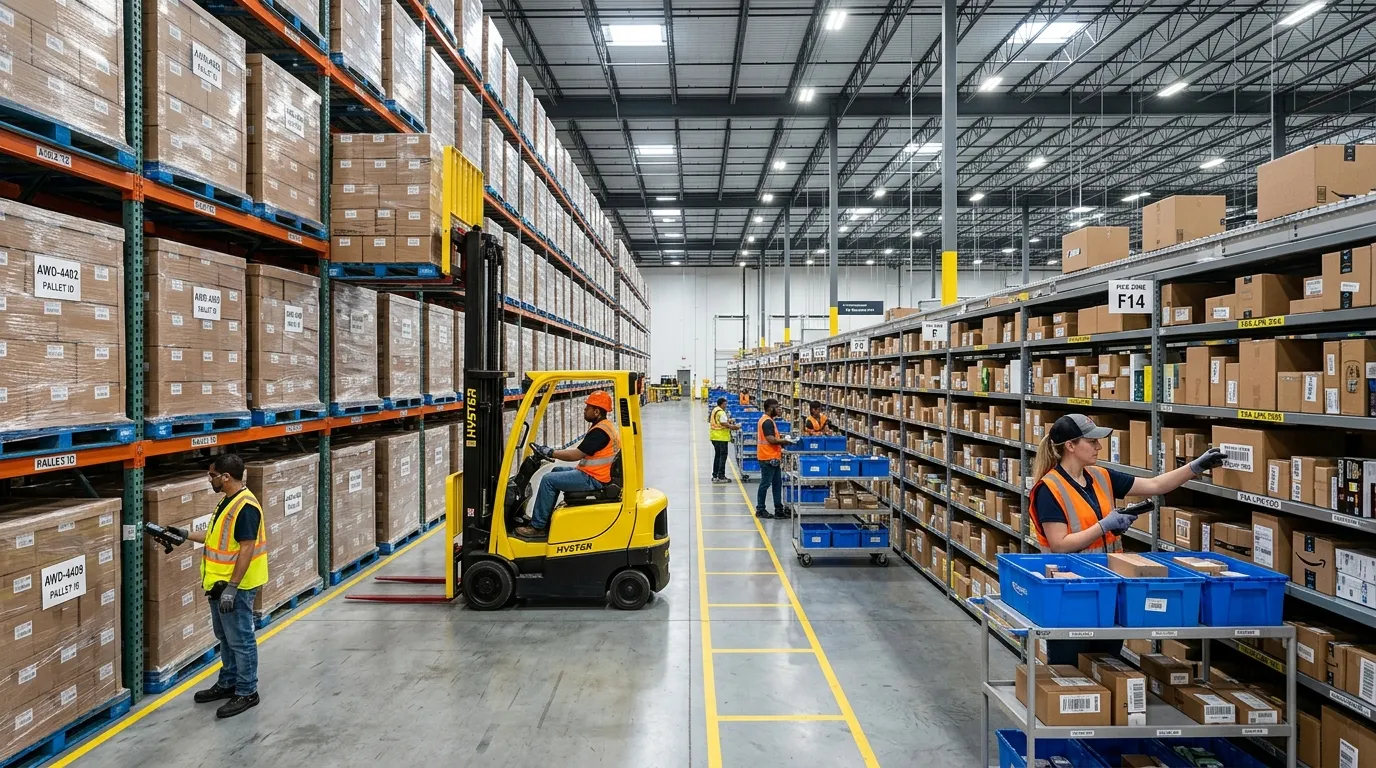
AWD stores bulk inventory before it is needed, while FBA stores customer-ready inventory and fulfills orders. Most sellers should compare them as connected layers: AWD for upstream storage and replenishment, FBA for Prime delivery and customer service.
Amazon Warehousing and Distribution, or AWD, is designed for bulk inventory storage before products move into the fulfillment network. Fulfillment by Amazon, or FBA, is the service that stores sellable units, picks orders, packs boxes, ships to customers, and handles customer service.
Amazon’s own guide explains AWD as long-term bulk storage that can replenish FBA, while FBA supports near-term customer fulfillment through Amazon’s network. That difference matters because AWD is not where your product becomes Prime-ready for the shopper. FBA still does that job.
| Area | AWD | FBA |
|---|---|---|
| Main role | Upstream bulk storage | Customer-facing fulfillment |
| Best use | Buffer stock, seasonal stock, bulk imports | Sellable stock ready for Amazon orders |
| Customer shipping | No direct Amazon customer fulfillment | Yes, including Prime-eligible fulfillment |
| Inventory flow | Can replenish FBA | Ships orders to customers |
| Main risk | Transfer timing | Higher storage and placement costs |
If you treat AWD and FBA as the same thing, the cost comparison becomes misleading. AWD may help lower upstream storage pressure, but FBA is still where customer-ready inventory needs to be when orders come in.
Does AWD replace FBA, or do sellers use both together?
AWD does not replace FBA. AWD is best viewed as a bulk inventory buffer that can feed FBA, while FBA remains the fulfillment layer that makes products available for fast Amazon customer delivery.
A practical inventory flow looks like this: factory or supplier to AWD, AWD to FBA, then FBA to customer. That setup lets sellers hold more stock upstream without sending every unit straight into FBA storage. It can work well when demand is predictable and replenishment is planned early.
Amazon also describes AWD as part of a broader supply chain system that can distribute inventory to FBA and supported non-Amazon destinations. That helps sellers who want one central pool for bulk inventory, but it doesn’t remove the need to keep enough stock in FBA for actual Amazon sales.
A hybrid model is often the cleanest setup. Keep enough inventory in FBA to cover near-term sales, then use AWD as the buffer that refills FBA before stock gets tight. The mistake is waiting until FBA inventory is already low before trusting AWD to fix the problem.
Which costs should you compare before choosing AWD or FBA?
Compare AWD and FBA by total cost per sellable unit, not storage fee alone. AWD may reduce bulk storage and placement exposure, but transfer, processing, replenishment timing, and FBA fulfillment fees still affect the final margin.
AWD often looks attractive because bulk storage can cost less than holding everything inside FBA. That’s useful, but storage is only one part of the real cost. You also need to compare transportation, processing, AWD-to-FBA movement, FBA fulfillment fees, and possible stockout impact.
If you are deciding between direct FBA and AWD, start with your inbound placement fees. Then compare the full route cost. For a wider cost model, hand off the full calculation to your full FBA inbound cost framework.
| Cost area | Direct FBA | AWD then FBA | What to check |
|---|---|---|---|
| Upstream storage | Usually less useful for bulk holding | Often stronger for bulk inventory | How long units sit before selling |
| FBA storage | Higher if too much inventory sits in FBA | Lower if only near-term stock enters FBA | Days of cover in FBA |
| Inbound placement | Can become a major cost driver | May reduce some placement pressure in certain flows | Shipment plan and destination options |
| Processing and transfer | Fewer internal moves | AWD processing and transfer apply | Cost per sellable unit |
| Fulfillment | FBA fulfillment still applies | FBA fulfillment still applies after transfer | Final order cost |
| Timing risk | Faster availability if received well | Transfer delay can hurt fast movers | Safety stock level |
AWD is not automatically cheaper. It works when storage savings are larger than transfer, processing, delay, and safety-stock costs. If the SKU sells fast, direct FBA may protect revenue better even when the storage line looks higher.
When is AWD the better fit?
AWD usually fits sellers with predictable demand, bulk purchasing, seasonal inventory, or FBA storage pressure. It is strongest when inventory can sit upstream without hurting customer delivery speed.
AWD makes the most sense when you buy in larger batches and don’t need every unit inside FBA right away. A seasonal home decor seller, for example, may import 6,000 units from China three months before Q4. AWD can hold the bulk stock, then replenish FBA as the sales window gets closer.
AWD also fits slow or steady sellers that want a buffer without filling FBA with months of inventory. A slow-moving bulky item with 800 units expected to sell over six months may drain margin if too much stock stays in FBA for too long.
AWD is usually worth testing when:
- Demand is predictable enough to plan replenishment.
- Inventory is seasonal or purchased in bulk.
- FBA storage pressure is hurting margin.
- The SKU can wait upstream before becoming sellable.
- You want a central pool for Amazon and supported non-Amazon channels.
A lower storage fee is not a strategy by itself. Sellers should choose AWD only when their forecasting, carton planning, and replenishment settings are strong enough to support it.
When is direct FBA safer?
Direct FBA is safer when the SKU sells quickly, needs fast Prime availability, requires tighter inventory control, or cannot tolerate AWD-to-FBA transfer delays. In those cases, paying more for FBA storage can protect revenue.
Direct FBA is often the safer route for launch products, fast movers, urgent replenishment, or SKUs with tight stockout risk. If a supplement SKU sells 1,500 units in 30 days, a slow AWD transfer can become more expensive than the storage savings.
This is also where optimized shipment splits can matter. Some sellers send urgent units directly to FBA, then route bulk inventory through AWD or another storage layer. That keeps sales active while the larger shipment moves more slowly.
| If your SKU situation is… | Safer choice | Why |
|---|---|---|
| Launch SKU with unknown demand | Direct FBA or small test quantity | You need fast sales feedback |
| Best seller with low days of cover | Direct FBA | Stockout risk is too high |
| Product needs special handling | Direct FBA or 3PL review | More control may be needed |
| Stock is already urgent | Direct FBA | AWD transfer may be too slow |
| Bulk reorder for future demand | AWD or hybrid | You have time to replenish |
AWD should not be the only path for critical SKUs. Use it as an upstream buffer, but keep a direct-FBA or emergency route open for products that can stock out quickly.
What is the biggest operational risk with AWD?
The biggest AWD risk is not storage cost; it is timing. If AWD inventory does not reach FBA before sellable stock runs low, the seller can lose Prime availability, Buy Box momentum, and sales despite having inventory stored upstream.
Seller concerns around AWD often focus on receiving and transfer delays. Competitor coverage from Red Stag, Cahoot, and BellaVix all points to the same issue: AWD can be useful, but sellers need a buffer because transfers are not instant.
The risk is simple. Your inventory may exist in the system, but it may not be in the place where Amazon can fulfill customer orders. For a fast-moving SKU, that timing gap can hurt more than the storage savings help.
Replenishment buffer rule for fast-moving SKUs
For fast movers, do not wait until FBA inventory is almost gone. Set a higher safety stock level inside FBA and trigger AWD replenishment earlier. If a SKU sells 50 units per day and you want 20 days of cover, FBA should hold around 1,000 units before you feel safe.
A practical setup might look like this:
| SKU type | Daily sales | Minimum FBA cover | AWD role |
|---|---|---|---|
| Fast supplement SKU | 50 units | 20 to 30 days | Backup stock only |
| Steady home item | 12 units | 25 to 35 days | Main replenishment buffer |
| Seasonal decor | Demand spikes near Q4 | Higher before peak | Bulk storage before season |
| Slow bulky SKU | 4 units | Lower FBA cover | Long-term upstream storage |
For fast movers, the safer choice may be hybrid. Send enough stock directly to FBA to protect sales, then use AWD for planned replenishment instead of emergency replenishment.
Should you ship from China to AWD or directly to FBA?
Ship from China to AWD when you are building bulk safety stock and can plan replenishment ahead. Ship directly to FBA when the inventory is urgent, fast-moving, or needed to prevent a stockout.
For China-origin shipments, the route decision should start with urgency. If inventory is needed now, direct FBA may be safer. If the shipment is a bulk reorder for future sales, AWD can work as a buffer before products move into FBA.
Amazon Global Logistics says it can support shipping from China and Vietnam to FBA and AWD, including destination customs clearance and delivery. That makes AWD a real option for planned bulk imports, but sellers still need to build enough timing buffer into the shipment plan.
Hybrid route for urgent and bulk stock
A hybrid route often works better than choosing one path for every unit. For example, send 30 percent of urgent stock directly to FBA by faster freight, then send 70 percent to AWD by ocean freight for planned replenishment.
| Scenario | Better route | Buffer needed | Decision point |
|---|---|---|---|
| Urgent replenishment | China to FBA | High FBA cover | Avoid stockout first |
| Planned Q4 inventory | China to AWD | Seasonal buffer | Keep bulk stock upstream |
| Bulk reorder | China to AWD | Replenishment schedule | Reduce storage pressure |
| Mixed supplier consolidation | AWD or 3PL first | Receiving buffer | Combine shipments before FBA |
| Customs-risk shipment | Hybrid | Extra lead time | Protect urgent units |
If your shipment plan needs multiple destinations, a split shipment plan can help decide which units go direct to FBA and which units move into upstream storage.
How do customs delays change the AWD vs FBA decision?
Customs delays do not make AWD or FBA “better” by themselves, but they change the timing risk. If stock is urgent, customs delay can make direct FBA risky unless documents, IOR setup, and buffer inventory are ready.
Customs delays mainly affect when inventory becomes available. If the shipment is urgent direct-FBA stock, a delay can create a stockout. If the shipment is bulk stock planned for AWD, the delay may be easier to absorb because the units were not needed for immediate orders.
Amazon Global Logistics says its process can include destination customs clearance and importer of record setup. CBP also explains that commercial imports can be subject to entry requirements, duties, taxes, and fees. That means sellers should prepare shipment data before the goods move, not after a customs issue appears.
Use this basic customs timing checklist before choosing AWD or FBA:
| Check item | Why it matters |
|---|---|
| Importer of Record details | Needed for proper import handling |
| Commercial invoice | Helps customs review product value and shipment details |
| HS code and product description | Reduces classification confusion |
| Duties and taxes estimate | Protects landed cost planning |
| FBA safety stock | Covers demand if clearance takes longer |
| AWD buffer plan | Reduces pressure on urgent FBA inventory |
Trade.gov lists the commercial invoice as one of the common export documents used in international shipments. If you also sell into Europe or the UK, hand off those details to an EU and UK import compliance plan instead of overloading this AWD vs FBA decision.
AWD vs FBA decision table: which model fits your inventory?
The best model depends on SKU behavior. Don’t choose AWD or FBA at the account level only. Choose by product, sales speed, stockout risk, shipment timing, and how much control you need before inventory reaches Amazon customers.
Before using the table, check your placement fee breakdown. A model that looks cheaper on storage may still lose once placement, transfer, fulfillment, and delay risk are included.
| SKU situation | Better model | Why | Main risk | Action before shipping |
|---|---|---|---|---|
| Fast-moving SKU | Direct FBA or hybrid | Needs ready-to-sell stock | Stockout from transfer delay | Keep higher FBA safety stock |
| Seasonal bulk SKU | AWD then FBA | Bulk stock can wait upstream | Missing peak window | Move units early before demand spike |
| Slow-moving SKU | AWD or 3PL comparison | Long FBA storage can hurt margin | Paying for unnecessary moves | Compare storage plus transfer cost |
| Launch SKU | Direct FBA small batch | Needs sales data fast | Overstocking wrong channel | Test with smaller quantity |
| China import with customs risk | Hybrid | Protect urgent units and bulk stock | Clearance delay | Split urgent and planned inventory |
| Multi-channel SKU | AWD if eligible | One pool may feed more channels | Destination rules and costs | Confirm supported flows first |
| Custom-prep SKU | Direct FBA or 3PL review | May need tighter handling | Prep or labeling errors | Confirm requirements before booking |
What should sellers do before the next shipment?
Start by sorting SKUs by velocity, not by supplier or carton count. Fast movers, seasonal stock, slow movers, and launch products should not follow the same route. The goal is to decide which inventory must be Prime-ready now and which inventory can wait upstream.
Then calculate the real unit cost. Include freight, placement, storage, AWD processing, transfer, FBA fulfillment, duties, and likely delay risk. If FBA placement is a key driver, review your FBA placement cost before confirming the shipment plan.
Before booking the shipment, run this short checklist:
- Segment SKUs by sales velocity and stockout risk.
- Keep enough FBA safety stock for fast movers.
- Send bulk or seasonal stock to AWD only when timing allows.
- Prepare invoice, product details, and IOR information early.
- Use hybrid routing when urgent and bulk stock have different needs.
How to Choose the Right Option
Amazon AWD vs FBA should be decided SKU by SKU. Use FBA for inventory that must be available to customers now. Use AWD for bulk stock that can sit upstream and replenish later. Use a hybrid plan when one shipment contains both urgent and planned inventory.
If you’re importing from China, don’t make the choice based only on storage cost. Map the route, customs timing, placement cost, and FBA safety stock before goods leave the supplier. That one step can prevent the most expensive mistake: having inventory in the wrong place when customers are ready to buy.
Frequently Asked Questions
What is the main difference between AWD and FBA?
AWD is upstream bulk storage, while FBA is customer-facing fulfillment. AWD stores inventory and can replenish FBA, but FBA picks, packs, ships, handles customer service, and supports Prime delivery.
Does AWD replace FBA?
No, AWD does not replace FBA. Sellers usually use AWD as a lower-cost storage layer that feeds FBA, while FBA remains the network that ships customer orders.
Is AWD cheaper than FBA?
AWD can be cheaper for long-term bulk storage, especially when inventory does not need to sit in FBA immediately. Sellers still need to include AWD processing, transportation, replenishment timing, and final FBA fulfillment costs before deciding.
How fast does AWD transfer inventory to FBA?
Transfer times vary, and sellers should not treat AWD replenishment as instant. Retrieved competitor data reports that delays can range from a few days to several weeks, so fast-moving SKUs need higher FBA safety stock.
When should I use AWD versus FBA alone?
Use AWD for bulk, predictable, seasonal, or slower-moving inventory. Use FBA alone when the SKU sells quickly, needs immediate Prime availability, or cannot tolerate transfer delays.
Can I use AWD for other sales channels outside Amazon?
Yes, AWD can support multichannel distribution to non-Amazon destinations in supported flows. It can act as a central inventory pool, but sellers should confirm eligibility, destination rules, and transfer costs before relying on it.
How do customs delays affect AWD vs FBA?
Customs delays mainly affect timing, not the basic AWD or FBA role. If inventory is urgent, a delay can cause FBA stockouts; if it is bulk buffer stock, AWD may give more planning room.


