


5 Hidden Risks in UN3481 Shipping Service (And How to Fix Them)
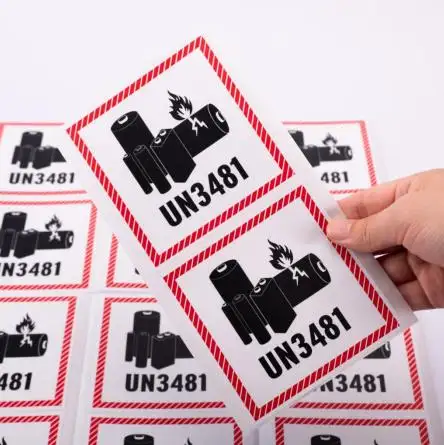
Shipping lithium batteries? You have likely utilized heard of UN3481 Shipping Service – the official regulatory classification governing lithium-ion batteries contained in or packed with equipment. Because these batteries are integrated with physical devices, many shippers assume this pipeline is inherently low-risk compared to shipping standalone cells (UN3480).
Wrong.
Since the 2026 IATA DGR 67th Edition and IMDG Code 42-24 Amendment took effect, navigating the UN3481 shipping service has become an operational minefield of hidden compliance traps. Overlooking even a minor logistical detail now exposes your enterprise consignment to immediate terminal rejection, severe regulatory penalties, or even irreversible carrier blacklisting.
Below, we reveal five hidden risks that still catch experienced exporters off guard – and exactly how to fix them.
�� Risk #1: Assuming “Contained in Equipment“ Means No Rules
Many believe that if a battery is inside a device (laptop, power tool, medical monitor), the UN3481 Shipping Service requirements are trivial. That is dangerously false.
The Hidden Danger:
Under PI 967 (batteries contained in equipment), the 2026 rules now require:
•State of Charge (SoC) ≤ 30% for cells >2.7Wh – previously just a recommendation, now mandatory for air freight.
•Equipment must be protected against accidental activation (e.g., locked switches, separate packaging).
•Short-circuit protection even when the battery is installed – many devices lack internal protection.
Fix the Problem:
•Before shipping a device, assess the State of Charge (SoC) with a discharge meter or log and include a SoC declaration in your shipping papers.
•Use locking mechanisms or place devices in separate anti-static bags.
•Use a UN3481 Shipping Service who performs a battery shipment check such as our Battery Inspection & Testing service.
✅Fexbuy Tip: Our proprietary UN38.3 Testing Guidance incorporates an advanced, mandatory SoC pre-verification audit protocol.
�� Risk #2: Misclassifying “Packed With Equipment“ or “Contained In“
This is the #1 documentation error in UN3481 Shipping Service. Let’s clarify once and for all:
| Configuration | UN Number | DG Declaration Required? | Packaging Standard |
| Battery inside device (non-removable) | UN3481 (PI 967) | No (Section II) | Strong outer packaging |
| Battery packed separately but in same box as device | UN3481 (PI 966) | Yes – full DG declaration | UN-certified packaging, Class 9 label |
The Hidden Danger:
Exporters routinely and mistakenly treat PI 966 (where spare battery cells sit alongside the device) as if it qualified for the historically simplified parameters of PI 967.
The immediate operational consequence of this error is devastating: Presenting a PI 966 shipment to international gates without a formal Dangerous Goods Declaration or utilizing un-certified retail boxes triggers an immediate regulatory red flag. Such non-compliance invariably results in protracted customs impoundments, absolute cargo forfeiture, and severe punitive fines scaling up to $50,000+ per occurrence under current maritime and civil aviation enforcement protocols.
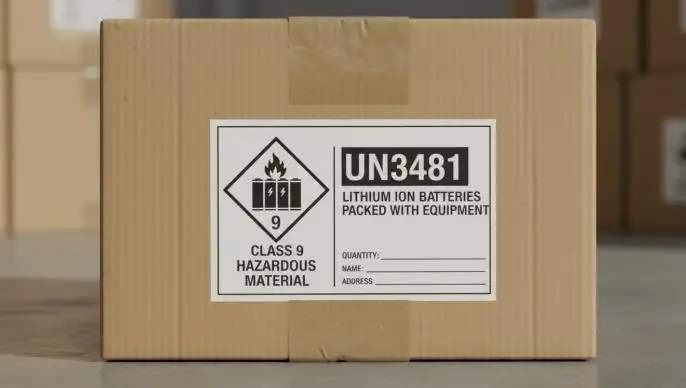
Here’s How:
•Analyze Structural Battery Removability: Methodically evaluate the physical integration of your device topology prior to manifest creation. If the lithium-ion battery cell can be mechanically extracted or separated from the host housing, you must apply the strict criteria of Packing Instruction 966 and mandate comprehensive, un-redacted Dangerous Goods (DG) declarations.
•Execute Compliant Secondary Packaging: Pack the detached battery components exclusively in verified UN-certified containers (such as specialized 4G fiberboard boxes). Ensure the interior assembly fully incorporates high-density, anti-static impact-absorbing padding to immobilize the cargo in strict accordance with the performance benchmarks of PI 966.
•Align With Certified Dangerous Goods Carriers: Secure your supply chain pipeline by selecting an authorized, elite UN3481 shipping service provider like Fexbuy. Our dangerous goods specialists supply proactive DG Classification Support, managing the legal complexities of your manifest to comprehensively eliminate compliance anxiety.
�� Risk #3: Ignoring the 30% State of Charge (SoC) Mandate
The 2026 rules made SoC limits legally binding for most UN3481 Shipping Service air shipments – yet many logistics providers still don’t enforce it.
The Hidden Danger:
If your UN3481 shipment arrives at the airline cargo terminal with batteries over 30% SoC:
•Immediate rejection – no exceptions for most major carriers (FedEx, DHL, UPS, Cargolux).
•Uncapped Financial Liabilities: The shipper assumes full, un-redacted responsibility for return domestic freight tariffs, terminal emergency hazardous storage fees, and carrier rescheduling penalties—frequently spiraling into USD 1,000–5,000 per localized pallet.
•Severe Compliance Penalties: Persistent or repeat SoC tolerance violations lead directly to the permanent suspension or revoking of the exporter’s commercial shipper accounts, crippling international supply chain channels.
How to Fix It:
•Discharge batteries to 25–28% to leave a safety margin.
•Document it – keep discharge records for 1 year.
•Use Fexbuy’s UN3481 Shipping Service air freight solution, which includes mandatory SoC checks before booking.
*Fexbuy Infrastructure:
We operate fully authorized, dedicated battery air freight allocation channels that remain 100% compliant with current UN3480/UN3481 hazardous material standards. By combining guaranteed, legally reserved block space allocation (BSA) with rigorous upstream SoC pre-screening protocols, we effectively eliminate both capacity anxiety and terminal checkpoint failures.*
�� Risk #4: Using “Regular“ Packaging Without UN Certification
Standard cartons and bubble wrap are not enough for UN3481 – even for “packed with equipment” (PI 966). The 2026 IMDG Code now requires stricter drop tests and stack tests for all lithium battery packaging.
The Hidden Danger:
•Structural Drop-Test Failures: Standard commercial packaging routinely fails to clear the mandatory 1.2-meter hazardous material drop-test standards, leading to localized crushing and outer box perforation under transit compression..
•No Class 9 hazard label = customs automatic inspection.
•No anti-short-circuit protection between terminals = fire risk during transport.
Correct Procedure:
•Source Documented UN-Specification Containers: Utilize exclusively certified dangerous goods shipping enclosures that are indelibly marked with valid UN 4G (fiberboard cartons) or UN 4D (plywood boxes) specification codes, verifying their compliance with international stack and pressure regulations.
•Deploy Non-Conductive Inner Isolation: Execute robust internal packaging control by nesting every individual equipment cell or host device within its own separate, specialized non-conductive anti-static shielding pouch to completely eliminate multi-unit electrical bridging.
•Affix Mandatory Tri-Component Hazard Labeling: Ensure that the outer face of every cargo container permanently displays the complete, non-redacted regulatory labeling matrix: the official Class 9 Miscellaneous Dangerous Goods diamond, the correct “Lithium-Ion Batteries” text endorsement, and the specific UN3481 identification code.
The Fexbuy Advantage:
As an essential standard component of our Dangerous Goods Packaging & International Transportation Service, Fexbuy supplies fully integrated, UN-certified outer packaging alongside advanced anti-short-circuit and high-density shock-absorption materials. We expertly strip the operational guesswork out of your industrial warehouse management, ensuring your tech assets clear terminal inspection queues flawlessly.
�� Risk #5: Not Considering Customs‘ Individualities
Your UN3481 Shipping Service might follow all IATA rules, but other regulations exist at the destination country, and those may change often.
The Hidden Threat (2026 Changes):
| Country/Region | Verified Regulatory Compliance Thresholds Under UN3481 |
| European Union | Mandatory Digital Battery Passports: Compulsory integration of localized QR codes mapped to trace transparency for energy capacities exceeding $2\text{ Wh}$, alongside active CE and RoHS compliance certification linkages. |
| USA (DOT/FAA) | Heightened Border Scrutiny: Comprehensive, un-redacted Dangerous Goods Declarations (DGD) are systematically enforced for all transport pipelines following the complete global phase-out of legacy Section II regulatory exemptions. |
| China Mainland | Specialized HS Tariff Declarations: Enforcement of specific custom clearance identification sub-codes designated exclusively for UN3481, demanding rigorous secondary documentation review prior to cargo release. |
| Japan | Pre-Approval High-Velocity Staging: Enforced 10-day statutory operational lead time following formal regulatory clearance before aviation carriers can legally clear UN3481 cargo for active flight routing. |
| South Korea | Standardized MSDS Notarization: Absolute legal requirement that all Safety Data Sheets (SDS/MSDS) must be officially notarized and translated into the Korean language to secure terminal entry. |
How to Fix It:
• Develop Jurisdiction-Specific Checklists: Prior to authorizing terminal dispatch, systematically construct a localized compliance matrix that incorporates the active, up-to-the-minute custom requirements of your specific destination country.
•Eradicate Operational Speculation: Eliminate guesswork by channeling your cargo exclusively through boots-on-the-ground local border authorities or partnering directly with a legally bonded dangerous goods compliance expert.
Fexbuy’s premier UN3481 Shipping Service incorporates an end-to-end Global Customs Clearance Architecture—expertly managing granular HS tariff alignment, proactive DGD structuring, and comprehensive pre-submission document reviews tailored to each destination port’s local laws.
Furthermore, we maintain a robust, certified network of DG-Ready Overseas Warehouses strategically positioned across the United States, Europe, and Asia. This planetary infrastructure functions as a critical compliance cushion, allowing your enterprise to execute single-point import clearance before distributing and storing your high-value energy assets securely and compliantly across strategic global commercial hubs.
Final Fix: Choose a True UN3481 Shipping Service Partner
The five risks above share one root cause: treating UN3481 like ordinary goods. It is not. Specialized knowledge is needed for the UN3481 Shipping Service due to SoC issues, PI966 forms, country-specific QR codes, and others.
That’s where Fexbuy can change everything for you:
| Hidden Risk | Fexbuy’s Solution |
| SoC non-compliance | Mandatory pre-shipment SoC verification |
| PI966 vs. PI967 misclassification | DG Classification Support |
| Improper protective packaging | UN-certified cartons + anti-shock protection |
| Missing country documentation | Global customs clearance + local compliance |
| Lack of visibility | Real-time tracking + automated notifications |
With Fexbuy your enterprise gains a singularly powerful, unified architecture for comprehensive battery logistics—seamlessly spanning everything from upstream UN38.3 laboratory testing and SDS generation, to compliant hazardous sea/air freight routing, through to specialized reverse dangerous goods (DG) return frameworks.
Stop concealing risks. Begin shipping smarter with Fexbuy’s UN3481 Shipping Service.
Want to get your next UN3481 shipment checked for compliance? Reach out to Fexbuy’s battery logistics experts!
UN3481 Shipping Service – FAQs
Q1: What structural asset configurations are covered under the UN3481 shipping service?
A: The UN3481 shipping service governs two distinct dangerous goods classifications where lithium-ion batteries are coupled with equipment:
Contained in Equipment (Packing Instruction 967): Where the battery cells are permanently integrated or nested directly within the physical host device chassis.
Packed with Equipment (Packing Instruction 966): Where the battery is detached from the host device but enclosed within the same primary commercial retail container.
Q2: Is cargo processed under the UN3481 shipping service legally classified as dangerous goods?
A: Yes, absolutely. All commodities moving via the UN3481 shipping service are explicitly designated as Class 9 Miscellaneous Dangerous Goods.
For PI 966 (Packed with Equipment), full hazard controls apply universally.
For PI 967 (Contained in Equipment), while the structural host device provides secondary physical protection, the shipment remains heavily regulated and must rigorously comply with the mandatory 2026 statutory guidelines.
Q3: What does the 2026 regulatory mandate specify regarding the 30% State of Charge (SoC) threshold for UN3481?
A: Regarding lithium batteries and batteries installed in equipment with a rating above 2.7 Wh and for PI 966, these batteries should be transported with a State of Charge of 30% or less. This is also applicable for PI 967, but it is more lenient.
Q4: Is a formal Dangerous Goods Declaration (DGD) compulsory for all UN3481 shipping service consignments?
A: Yes, under current 2026 mandates. For PI 966, a comprehensive, un-redacted Dangerous Goods Declaration (DGD) executed by a certified hazmat professional is an absolute prerequisite for transit acceptance. For PI 967, following the historical abolition of legacy Section II “exempt small battery” clauses, carriers and border customs now mandate electronic hazardous material declarations or verified certificates of compliance to clear the cargo for international routing.
Q5: Does the UN3481 shipping service permit the use of standard commercial cardboard boxes?
A: Only under strict regulatory parameters:For PI 966: Standard commercial boxes are strictly prohibited. You must utilize officially certified, performance-tested UN-specification outer packaging, specifically displaying indelible UN 4G (fiberboard cartons) or UN 4D (plywood enclosures) regulatory codes. For PI 967: A robust, impact-resistant outer casing is required to safeguard against terminal distortion; however, a certified UN mark is not legally required provided the structural host housing natively shields the internal battery cells from external mechanical impact.


