


Building Resilient Mechanics Supply Chain Logistics During Global Freight Disruptions
Delayed CNC control modules can stall factory commissioning, even if the main machine arrives on time. Equipment can get stuck at the port due to congestion, after the scheduled installation date.
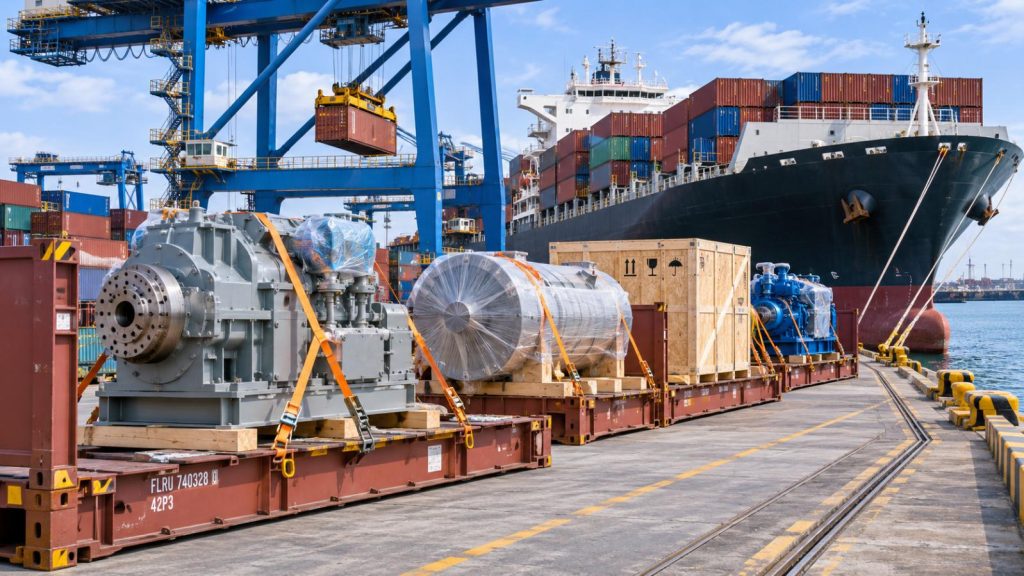
Resilient Mechanics Supply Chain Logistics requires more flexible shipping, but alignment of cargo classification, transport capacity and critical inventory, in addition to Customs documentation, prior to disruptions occurring in production.
What Creates Vulnerability in Mechanics Supply Chain Logistics?
There are physical and operational constraints on the movement of bulky, heavy and oversized industrial machinery that inhibit emergency rerouting.
| Machinery Type | Main Transport Risk | Preventive Measures |
| CNC machines | Vibration, corrosion, alignment damage | Shock-resistant packing, moisture barriers |
| Industrial motors | Concentrated loads, unstable lifting | Center-of-gravity verification, load distribution |
| Hydraulic systems | Residual fluids, leakage | Drainage assessment, cargo classification |
| Industrial robots | Sensitive controllers, missing components | Component segregation, protective packaging |
| Oversized machinery | Container and route restrictions | Flat Rack, Open Top, breakbulk evaluation |
The IMO/ILO/UNECE CTU Code covers the securement of cargo, weight distribution, and proper packing of containers.
This is relevant for Mechanics Supply Chain Logistics while changing vessels, ports, or inland transport.
Primary Disruption Risks While Shipping Machinery
As highlighted in the UNCTAD Review of Maritime Transport 2025, the diversion to the Red Sea increased the length of voyages and disrupted maritime schedules.
While there are many disruptions occurring, the following five should be of the most concern:
•Route disruption: Vessel diversions lead to missed connections.
•Port congestion: Cargo is not released for transportation due to port delays.
•Capacity constraints: Restrictions to cargo results in machinery not being shipped on the next available vessel.
•Customs exceptions: Permits or documents are not presented, or presented incorrectly.
•Additional handling: Cargo is transshipped, increasing the risk for cargo damage.
The Revised Estimated Time of Arrival (RETA) should be time-critical machinery, and assessed against the latest acceptable installation date (LASS) at the factory.
Alternatives for Freight Routes
When there are disruptions, at Fexbuy, we assess other available options for Mechanics Supply Chain Logistics against the dimensions of the cargo, the delivery lead time, and the total cost of transport.
| Transport Mode | Suitable Applications | Main Considerations |
| Ocean FCL | Complete machines, heavy equipment | Container payload, vessel schedules |
| Ocean LCL | Small machinery parts | Consolidation delays, extra handling |
| Air Freight | Urgent controllers, sensors, spare parts | Chargeable weight, size restrictions |
| Rail Freight | Containerized cargo on supported corridors | Rail capacity, border procedures |
| Multimodal | Shipments requiring alternative connections | Transfer points, documentation |
When Should Manufacturers Change Transport Modes?
Not all ocean shipments that are delayed require air freight. Other transport possibilities can be:
•Transport of heavy machinery by sea freight.
•Transporting production components via air freight.
•Utilizing other discharge ports, and overland transport.
•Using rail transport.
Prior to deciding to reroute, consider the packed dimensions, gross weight, lifting points, cargo insurance and final mile access.
For oversized cargo, ensure the equipment hired to replace the ocean freight has the capacity to transport the cargo and consider the equipment’s dimensions and how it will be handled.
What About Critical Parts and a Multi-supplier Inventory?
For inventory, priority should be given to components based on their effect on production.
Prioritize Inventory Based on Operational Importance
•Production critical: The absence of which leads to operation failure of a machine.
•Installation critical: The absence of which leads to the inability to assemble or commission a machine.
•Standard: Inventory with some flexibility regarding the timing of delivery.
Set Safety Stock based on Lead Time, Demand Variability and Production Loss.
Should Suppliers Consolidate Shipments?
Consolidating shipments may reduce the number of pickups and simplify documentation.
However, combine every purchase order into a single shipment and you create a single point of delay.
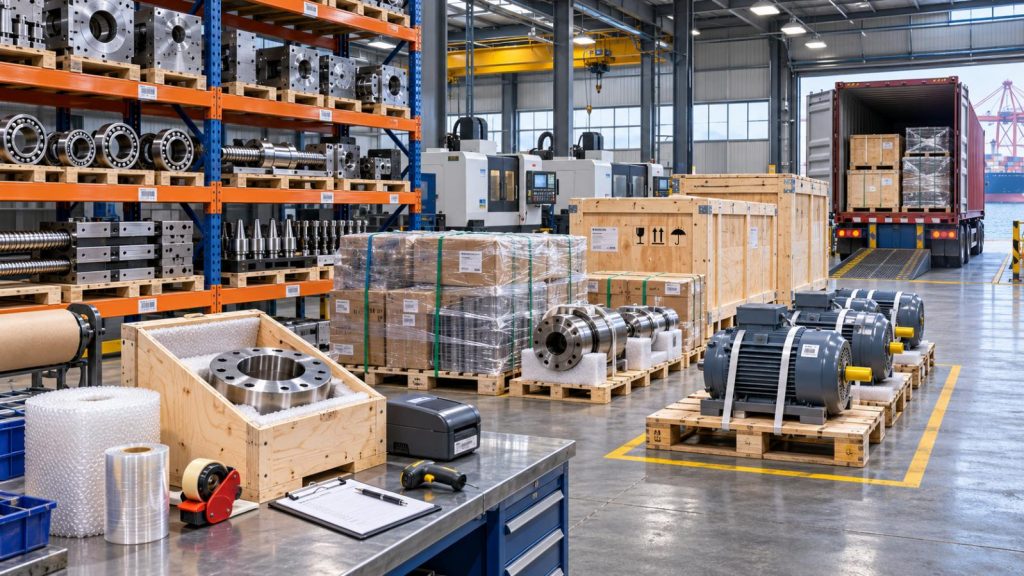
When dealing with a multi supplier Mechanics Supply Chain Logistics, we suggest segregating urgent components from standard/routine inventory during the consolidation process.
Real Costs of Freight Disruption
Freight quotes do not show the financial effects of delayed machinery.
Total Disruption Cost = Additional Freight + Storage/Handling + Production Loss + Recovery Expenses
An example is as follows:
•Emergency air freight of CNC controllers was $2,400.
•Estimated avoidable production loss was $6,500.
•Net benefit before other costs was $4,100.
Expedited shipping is justified when the loss is estimated to be greater than the cost of the shipment.
In addition to the loss, consider the following:
•Demurrage and detention charges.
•Rehandling and temporary warehousing costs.
•Additional transport and inland distribution costs.
•Changes in insurance.
The Incoterms allocate costs and risks for transport between buyer and seller. This should be read in conjunction with a project budget that accounts for contingencies.
Constructing a Mechanics Supply Chain Logistics Contingency Plan
A good plan should contain measurable decision points.
| Stage | Required Action | Decision Point |
| Detect | Inspect if the vessel is late | What is the cause of the delay? Is it Customs? Are there issues with the port? |
| Assess | Assess the effect on production and consider if inventory would alleviate the delay | Is inventory available to cover the delay? |
| Respond | Evaluate the costs of rerouting/expediting and compare to the costs of the delay | Would it be more cost effective to reroute/expedite? |
| Verify | Review actual delivery, damage, and costs | Did the alternative protect production? |
Key Performance Indicators
•OTIF: What percentage of orders is fulfilled on time and in full?
•ETA: How different are the actual times that loads arrive from the scheduled times?
•Implementation Time: How long is the period of time required to execute the supply chain recovery plan?
•Cost of Implementation: What is the unexpected and/or increase cost that is incurred because of the implementation of the supply chain recovery plan?
Example: Delay of CNC Machinery at a Port
Let’s say a manufacturer imports a CNC machining center from China.
A vessel is delayed, and control modules and other site preparation accessories are needed for the machining center.
An appropriate recovery plan would:
•Check if the control modules can be shipped independently.
•Retain the main machine on a suitable ocean service.
•Assess air freight for the other components.
•Coordinate with the contractor for machine installation and coordinate delivery dates.
•Check separate invoices, packing lists and customs classification.
•Protect the commissioning schedule of the main machine, if possible.
Supporting Resilient Mechanics Supply Chain Logistics with Fexbuy
At Fexbuy, we facilitate international machinery shipments using different modes of transport, i.e., sea, air, rail, road, or a combination of them.
Our mechanics logistics include a range of services from assessment of cargo, pick-up by supplier, consolidation, customs clearance, and delivery at the destination.
For manufacturers with unpredictable freight schedules, we help assess alternate transportation means based on the nature of the cargo, delivery requirements, and cost of transport.
If you need to ship machinery or have contingency routes checked, call us.
FAQs
Q1: How does Fexbuy support Mechanics Supply Chain Logistics during freight disruptions?
Fexbuy helps manufacturers evaluate alternative shipping routes, coordinate cargo consolidation, arrange suitable freight options, and manage customs and destination delivery requirements.
Q2: What transportation options does Fexbuy offer for industrial machinery?
Fexbuy supports sea, air, rail, road, and multimodal transportation. The appropriate method depends on cargo dimensions, weight, route availability, delivery deadlines, and budget.
Q3: Can Fexbuy arrange alternative routes when ocean freight is delayed?
Yes. Fexbuy can assess alternative ports, shipping services, and multimodal connections based on available capacity, cargo specifications, and destination requirements.
Q4: How does Fexbuy handle oversized machinery shipments?
Fexbuy can evaluate Flat Rack, Open Top, and breakbulk arrangements according to equipment dimensions, gross weight, lifting requirements, and available shipping services.
Q5: Can Fexbuy consolidate machinery components from multiple suppliers?
Yes. Fexbuy supports cargo consolidation for compatible shipments from multiple suppliers. Production-critical components can be evaluated separately when urgent delivery is required.
Share:


