


Lithium Battery Shipping From China To UK: A Step-by-Step Guide for E-commerce Sellers
Regulatory requirements, special arrangements with carriers and extra care with documentation are all necessary when shipping lithium batteries from China to the UK. To avoid unnecessary rejection of shipments, delays and increase in costs, e-commerce businesses need to be aware of the compliance requirements specific to their shipment.
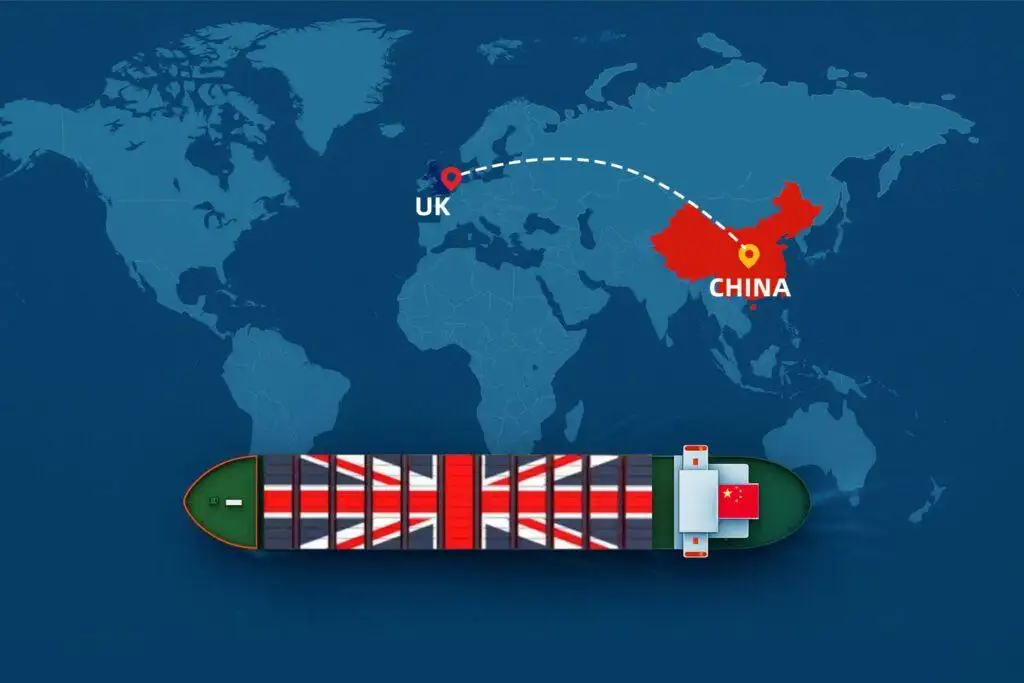
To promote safe and compliant transport of lithium batteries, this guide breaks down the transport process step by step.
The Core Challenge to Shipping Lithium Batteries from China to the UK
The regulations that pertain to the transport of lithium batteries are extensive and complicated. This is due to the classification of lithium batteries as Dangerous Goods (DG) because they present significant risks of fire and thermal runaway. The main regulations pertaining to the shipping of lithium batteries are the:
•UN’s Recommendations on the Transport of Dangerous Goods
•IATA Dangerous Goods Regulations (air freight)
•IMDG Code (sea freight)
•UK’s import and customs regulations
Failure to comply with any of the relevant regulations will most likely result in:
•Rejection of cargo by airlines or shipping companies
•Delays of customs clearance in the UK
•Costs for additional storage or costs for the return of the cargo
Step 1: Correct Battery Classification
Battery classification is the first and most critical step of the shipping process, as it dictates all the requirements which follow including the type of packaging, labeling, and regulations which will govern the transport of the battery.
Lithium batteries are primarily classified under the UN as:
•UN3480: Lithium-ion batteries by themselves (air transport will require the highest level of restriction)
•UN3481: Lithium-ion batteries when packed with equipment or when contained in equipment (air transport will be regulated by Dangerous Goods in a more flexible manner)
•UN3090 / UN3091: Lithium metal batteries (these will also be regulated in a similar manner)
Lithium batteries must also comply with the following key requirements:
•Lithium-ion batteries: the watt-hour (Wh) rating
•Lithium metal batteries: the lithium content (g)
This classification will dictate the requirements for the transport and shipping process, as well as the acceptance of the shipping company and the packaging.
Step 2: Required Testing and Documentation
Lithium batteries must also be legally tested and documented to meet the safety requirements prior to shipping.
Essential papers:
•UN38.3 Test Summary
Contains evidence for the successful completion of safety tests for the following: altitude simulation, thermal cycling, vibration, shock, short circuit, impact, overcharge, and forced discharge.
•MSDS (Material Safety Data Sheet)
Includes composition, hazard identification, and handling instructions.
•1.2m Drop Test Report
Includes integrity of packaging required for stress of handling (usually required for complete packages).
Advice:
To prevent costly delays due to retesting, always request UN38.3 and MSDS documentation prior to production or shipment planning.
Step 3: DG-Compliant Packaging and Labeling
Standard cartons do not suffice for packaging and transport of lithium batteries. Special packaging is required to meet the UN’s performance standards.
The packaging must include the following:
•UN-certified outer packaging (e.g., UN 4G boxes)
Packaging that is tested for stacking, pressure, and impact resistance
•Provision for internal protection
- Use of non-conductive materials
- Insulation of terminals
- Separation of batteries
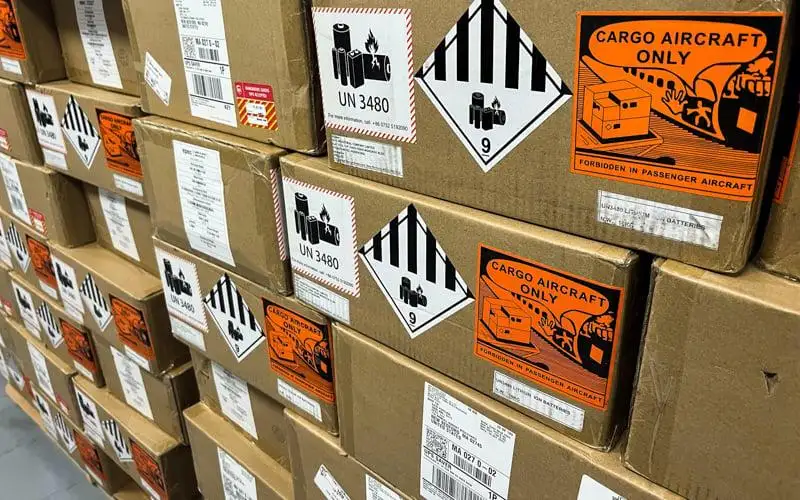
The following labels are required based on the shipment type:
| Required Labels | Shipment Type | Notes |
| Class 9 + Cargo Aircraft Only (CAO) | UN3480 Air (Section IB) | Strict quantity limits |
| Lithium Battery Mark | UN3481 (Section II) | Contact number required |
| Sea Freight DG | Class 9 Hazard Label | Requires an IMO DG declaration |
Step 4: Choose the Right Transport Mode
There is a tradeoff between cost and speed, and the acceptance conditions differ for the various modes of transport.
Air Freight
•Fastest transport option (3–7 days)
•UN3480 Air transport of lithium batteries is highly restricted
•Limited capacity for cargo aircraft
•Cost is high (per kg)
Sea Freight
•Cost effective means of transport for bulk shipments (30–45 days transit time)
•All DG classifications can be supported as long as the required documents are provided
•Offers several transport options (FCL or LCL)
Rail Freight (China–Europe)
•Transit time is 18–25 days
•Cost and speed are of a medium range
•Varies by operator (must be pre-confirmed) for DG acceptance
Step 5: UK Customs Clearance Requirements
For UK customs clearance, deliveries must be documented consistently and accurately.
Main requirements:
•Correct HS Code
- Common code: 8507.60 (lithium-ion accumulators)
•Import duties and VAT considerations
- DDP (Delivered Duty Paid): costs are covered by the seller
- DDU (Delivered Duty Unpaid): costs are covered by the buyer
•Consistent documentation
- Commercial Invoice
- Packing List
- MSDS
- DG Declaration
- UN38.3 Test Summary
Any discrepancies in this documentation are likely to result in safety inspections and clearance delays.
Step 6: Last-Mile Delivery (FBA & Direct-to-Customer)
While many delivery services solve the problem of the “last mile,” last-mile delivery services are tailored to meet the needs of e-commerce.
Conditions of Amazon FBA:
•Must comply with Dangerous Goods program requirements of Amazon.
•Shipping documents must be uploaded on the Seller Central prior to shipment.
•An Amazon approved carrier must be utilized.
Considerations for B2C delivery:
•Many couriers will refuse to carry UN3480 lithium batteries, and
•Require DG-capable courier networks.
Negate the risk of unsafe re-entry to the postal system by establishing a return logistics system in the UK.
Shipping Mode Comparison Overview
| Mode | Transit Time | UN3480 Acceptance | Cost Level |
| Air Freight (DG) | 3–7 days | Restricted | High |
| Sea Freight (DG LCL/FCL) | 30–45 days | Fully accepted | Low–Medium |
| Rail Freight (DG) | 18–25 days | Operator-dependent | Medium |
| Express Courier | 2–5 days | Mostly rejected (UN3480) | Very High |
Selection is influenced by:
•Kind of goods
•Urgency of inventory
•Budget limitations
Final Considerations
The success of lithium battery shipping to the UK from China relies on the integration of all aspects of shipping classification and the standards required of shipping documentation, packaging, and the chosen method of transport. Integration is essential to avoid disruption of the supply chain.
Partnering with a logistics provider that specializes in the transport of Dangerous Goods (DG) can reduce compliance risk and increase delivery assurance.
Comprehensive Logistics Solutions
Professional DG logistics solutions can provide sellers needing to optimize their supply chain with a single workflow that combines advice on testing, DG packaging, transport, and customs clearances for the UK.
Fexbuy offers air, sea, and rail DG logistics services and is supported by customs and warehousing services tailored to e-commerce and Amazon sellers. These services are packaged together to provide optimal solutions for the forwarding of lithium batteries.
These solutions are designed with the intention of achieving better compliance with regulations, reduced waiting time, and improved reliability of delivery for shipments from China to the UK.
FAQs – Lithium Battery Shipping From China To UK
Q1: Are special documents needed for the shipment of lithium batteries?
Lithium batteries need UN38.3, MSDS, and DG declarations.
Q2: Is it possible to ship lithium batteries via air from China to the UK?
Yes, of course it is. However, air shipment of lithium batteries is subject to strict DG and carrier limitations.
Q3: What is the typical UN number for lithium batteries?
Typical lithium batteries have UN3480 and UN3481 numbers.
Q4: Is UN38.3 testing compulsory?
Yes, UN38.3 testing is compulsory for all lithium battery shipments.
Q5: What are the cost-effective options when it comes to shipping?
Of the available options, sea freight is the most cost-effective.


