


Special Requirements for Portable Power Station FBA Shipping (≥2000Wh)
Portable power stations with a capacity of 2000Wh or greater are excellent for off-grid power supplies, outdoor work, and home back-up. However, when it comes to FBA shipping, these large units are considered more complicated from a logistics standpoint than the standard units.
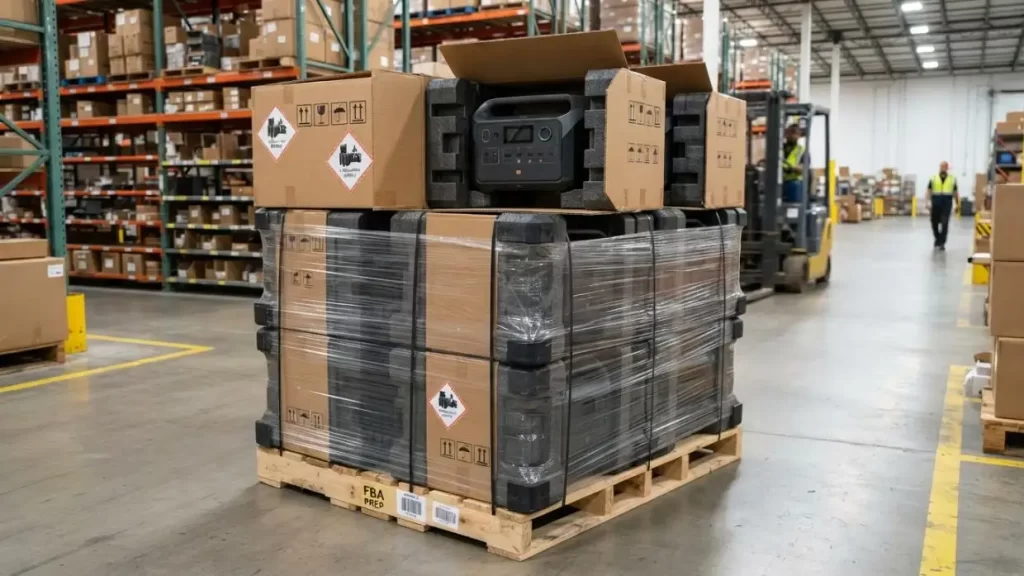
The greater the energy density, the more it impacts the classification of dangerous goods, the modes of transport available, the packaging, and the compliance with Amazon FBA. The following provides the main points on the Portable Power Stations that exceed 2000Wh.
1. Classification of Dangerous Goods & Transport Limitations
The greater the capacity of the battery, the greater the regulatory concern, and the more it will affect transport options.
UN3480 vs UN3481 Classifications
•UN3481 (lithium batteries contained in equipment): Most of the Portable Power Stations are of an integrated design, and therefore, fall into this classification.
•UN3480 (lithium batteries shipped separately): This classification will apply if the battery pack is removable or shipped separately.
Classification will vary based on the design of the product and packaging, and the interpretation of the carrier, and will need to be assessed on a case-by-case basis.
Air Transport Limitations
According to the IATA Dangerous Goods Regulations (DGR):
•Lithium-ion cells greater than 20Wh and batteries greater than 100Wh will have severe limitations for transport on passenger aircraft.
•These may be accepted on cargo aircraft under very strict conditions.
•In practice, shipments of 2000Wh or greater will almost always be ineligible for air transport.
Sea Transport (IMDG Code)
Once this transport becomes the primary option:
•These will be classified as Class 9 Dangerous Goods.
•There will be a requirement for:
- UN38.3 test report.
- MSDS/SDS.
- A Dangerous Goods Declaration.
There will be restrictions from the transport carriers, including but not limited to:
•Limited stacking.
•On-deck transport for certain routes.
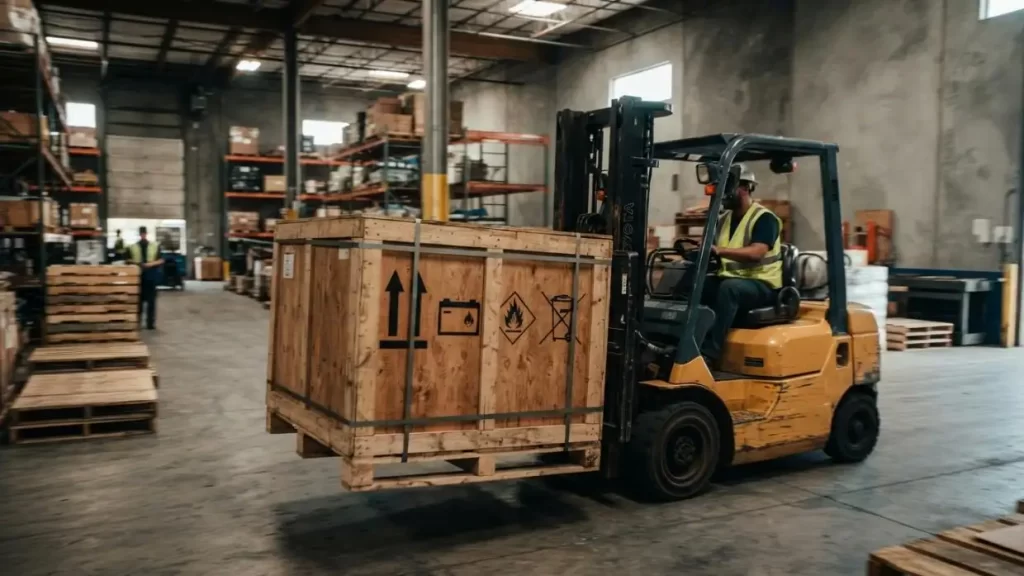
2. Packaging & Labeling Details
High-capacity units necessitate reinforced packaging due to increased weight and energy risk.
UN-Certified Packaging
Must meet the UN’s standards on the packaging of dangerous goods. The packaging must also be resistant to drops, and vibrations, and withstand stacking. Resistance to those factors must be proportional to the packaging’s weight.
•Common gross weight per unit ranges from 25-50 kg.
Internal Protection Requirements
•Anti-shock foam or molded inserts.
•Terminal protection caps.
•Anti-static materials, if applicable.
•Total immobilization within the carton.
Mandatory Labels
The following labels are typically on the packaging:
•Class 9 Hazard Label
•Lithium Battery Label
•UN Number Label
•With or without the label
•Cargo Aircraft Only label
Labeling incorrectly or not at all is a frequent cause for rejection of the shipment by FBA or delays at customs.
Palletization Requirement
Due to excessive weight, units must be palletized.
•Pallet structure must comply with Amazon’s standards.
•Palletization must have:
- Stable stacking
- Standardized dimensions
- Secure wrapping and strapping
3. Amazon FBA Oversize & Dangerous Goods Handling
High-capacity portable power stations frequently are classified on multiple FBA classification layers.
Oversize Classification
Products that are greater than 2000Wh frequently surpass the following:
•Weight limit of 22.7 kg or 50 lbs
•Length of the longest side being 63.5 cm or 25 in
➡️ These products are usually classified as Large Oversize or Special Oversize.
This classification results in:
•Increased fulfillment fees
•Increased limitations on the handling of the shipment in the fulfillment warehouse
Dangerous Goods (Hazmat) Classification
•Must be stored in a fulfillment center for dangerous goods that is approved by Amazon.
•The center may have restrictions on the warehouse’s capacity, and may reject shipments if the quota of dangerous goods is fulfilled.

ASIN Approval Requirements
Amazon may require:
•Battery Safety Certificates
•Thermal management documentation
•Additional documents may be requested to certify compliance with high Wh ratings.
Completing the hazmat review as soon as possible will avoid delays.
4. Documentation & Compliance Requirements
UN38.3 is only one of several documentation requirements for high-capacity battery shipments.
Core Documentation
•UN38.3 Test Summary (mandatory)
•MSDS/SDS (must be for the specific chemistry and Wh rating)
•Dangerous Goods Declaration (DGD)
Other Certifications (market dependent)
Depending on the market, Amazon or Customs may require the following:
•UL 2743 (US)
•CE / UKCA (EU / UK)
•CSA C22.2 (Canada)
•RCM (Australia)
These documents are not shipping requirements. However, they are usually required for Amazon FBA hazardous materials clearance.
5. Logistics Strategy: Ocean-Centric DG Shipping
When considering systems of 2000Wh or more, shipping planning becomes ocean freight centric.
DG-Compliant LCL (Less than Container Load)
•Must use forwarders approved for Class 9 lithium batteries
•Not all consolidators accept DG cargo and some may require additional handling DG surcharges
DDP (Delivered Duty Paid) Shipping
This is the most common shipping line used to consolidate the previously mentioned stages of shipping and to reduce the burden of documentation and compliance on the seller.
Interim Warehousing
Some sellers opt to utilize overseas DG compliant warehouses to:
•Re-label to Amazon FBA Compliance
•Prepare shipments
•Arrange for DG compliant shipments to be sent on a staggered basis.
6. Shipping Mode Comparison by Capacity
| Capacity Range | Primary Transport Mode | FBA Size Tier | Air Freight Feasibility | Typical Weight |
| <1000Wh | Air / Sea LCL | Standard / Small Oversize | Widely available (DG required) | 8–15 kg |
| 1000Wh – 2000Wh | Sea LCL / Limited Air | Large Oversize | Restricted but possible | 15–25 kg |
| ≥2000Wh | Sea FCL / LCL | Large / Special Oversize | Rarely feasible | 25–50+ kg |
➡️ As capacity increases, it becomes more reliable and the only viable option.
Conclusion: Creating a Compliant FBA Strategy for High-Capacity Units
Shipping portable power stations of 2000Wh and above that comply with Amazon’s specifications and policies is a complex process that involves product design, packaging, and logistics.
Important factors for successfully shipping high-capacity battery products to Amazon include;
•Classification of dangerous goods well in advance
•Completion of UN38.3 and Safety Data Sheets (SDS) forms
•Strong packaging that meets UN certification
•Use of dangerous goods qualified ocean freight partners
•Amazon’s hazmat approval prior to shipping goods to Amazon
With the right level of coordination to the factors above Amazon can receive and ship high-capacity battery products globally with ease.
If you are shipping 2000Wh+ portable power stations, Fexbuy offers battery logistics services that provide UN 38.3 compliance, packaging certified as dangerous goods, and ocean/DDP shipping services to the US, UK, Canada, and Australia via Amazon FBA.
FAQs
Q1: What is the UN number for portable power stations?
UN3480 or UN3481, depending on whether the power bank is packed with the equipment or not.
Q2: Is UN38.3 needed for FBA?
UN38.3 report and summary are required for FBA.
Q3: Do 2000Wh units always need to be shipped by sea?
As a general rule, 2000Wh units need to be shipped by sea.
Q4: Are portable power stations dangerous goods?
Portable power stations are dangerous goods under Class 9.
Q5: Does Amazon FBA allow oversized power stations?
They allow oversized power stations, but they will be in the oversize or special handling tiers.


