


Lithium Battery FCL Container Shipping
As a Shenzhen-based dangerous-goods forwarder, we support UN38.3, IATA and IMDG compliant shipping, with DDP, DDU, FOB and CIF options. For bulk importers, FCL gives better loading control, lower unit freight cost and fewer consolidation risks than mixed LCL cargo.
What Lithium Battery Cargo Can Ship by Sea FCL?
Sea FCL is suitable for battery cargo that has enough volume or risk sensitivity to justify a dedicated container. Typical shipments include standalone lithium-ion batteries, lithium battery packs, energy storage system batteries, e-bike and scooter batteries, power tool batteries, consumer electronics with installed batteries, industrial backup power batteries and battery-powered equipment.
The exact handling route depends on how the battery is classified. For example, standalone lithium-ion batteries usually move under UN3480, while lithium-ion batteries packed with or contained in equipment usually move under UN3481. Lithium metal batteries may fall under UN3090 or UN3091. Battery-powered vehicles or equipment may require UN3171, and certain battery cargo transport units may involve UN3536.
Before booking, our DG team checks the cargo description, battery type, watt-hour rating, packing method, carton labels and documents so the container can be declared correctly.
What’s Included in Our FCL Battery Shipping Service?
Fexbuy provides end-to-end support for full-container lithium battery shipments from Chinese suppliers to overseas consignees. The service can include supplier pickup, document review, DG warehouse coordination, export customs, carrier booking, container loading, ocean freight, destination customs clearance and final delivery.
Depending on your trade term, we can support DDP, DDU, FOB or CIF shipping. For buyers who need a broader overview of available transport options, our main lithium battery shipping service page explains how different battery cargo can move by sea, rail, air or express.
For FCL projects, we focus on three things: correct DG classification, safe container loading and smooth customs clearance. These are the details that reduce rejection, inspection and delay risk.
Why Choose FCL for Bulk Lithium Battery Shipments?
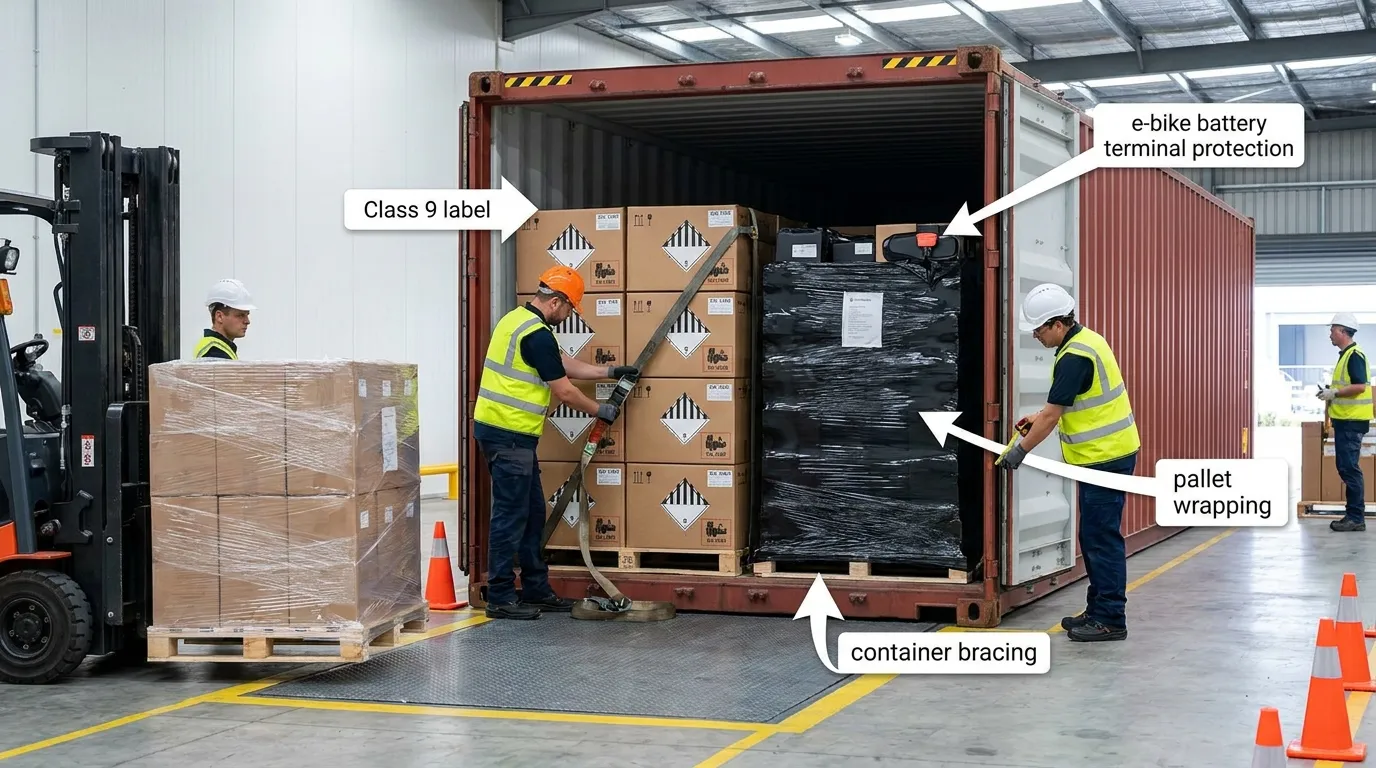
FCL is usually the best option when the cargo volume is high, the shipment needs a dedicated DG container, or the importer wants better control over loading and documentation. Compared with LCL, a full container reduces the risk of cargo being mixed with incompatible goods from other shippers.
FCL also gives better control over pallet layout, label visibility, carton condition, lashing and bracing. This matters for lithium battery cargo because damaged cartons, blocked hazard labels, poor pallet wrapping or inconsistent paperwork can lead to carrier rejection or port inspection.
For bulk shipments, FCL can also reduce the freight cost per unit. The total container cost may be higher than a small LCL shipment, but when the cargo fills a 20GP, 40GP or 40HQ container efficiently, the unit cost is usually more competitive than air, express or small-batch consolidation.
FCL vs LCL for Lithium Battery Shipping
| Factor | FCL Sea Freight | LCL Sea Freight |
|---|---|---|
| Best for | Bulk battery cargo, full-container volume, repeat imports | Smaller battery shipments that do not fill a container |
| Container control | Dedicated container for one shipper | Shared container with other cargo |
| Handling risk | Lower cross-handling after loading | More warehouse and consolidation handling |
| DG acceptance | Cleaner when documents and labels are consistent | Depends on consolidation rules and compatible cargo |
| Unit cost | Usually lowest for large volumes | Better for small cargo volume |
| Speed | Route and sailing dependent | May require extra consolidation time |
| Best buyer | Manufacturer, distributor, Amazon seller, ESS/e-bike importer | Small importer, sample batch, trial shipment |
If your shipment is too small for FCL, a dedicated LCL battery route may be more practical. If your China-Europe shipment needs a middle option between ocean and air, lithium battery rail freight may be worth comparing. For urgent samples or replacement parts, a compliant lithium battery express shipping service may be faster than sea freight.
UN Classification, IMDG Compliance and Carrier Acceptance
Lithium batteries are Class 9 dangerous goods, so sea freight must follow the applicable IMDG requirements. The shipment must be declared with the correct UN number, cargo name, packaging method and hazard information.
For most commercial battery cargo, the carrier or DG booking team will request the UN38.3 test summary, MSDS or SDS, commercial invoice, packing list, product photos, carton photos and battery specifications. Some shipments also require a Dangerous Goods Declaration, Class 9 labels, lithium battery marks and container placards depending on the cargo type and booking rules.
Packaging must prevent short circuit, movement and accidental activation. Terminals should be protected, inner packaging should separate batteries, outer cartons should be strong enough for ocean freight, and pallets should be wrapped without covering required marks. During FCL loading, cartons and pallets need proper bracing so the cargo does not shift during sea transport.
State of charge should also be checked before shipment. The 30% state-of-charge rule is especially important for certain air shipments, but battery condition and charge level may still be reviewed by carriers, DG warehouses or project rules for sea freight. The safest approach is to confirm the battery status before booking, not after the cargo reaches the port.
Route Planning and Mode Comparison
Exact transit time depends on the origin city, loading port, destination port, carrier schedule, DG approval, customs clearance and final delivery address. We confirm lane-specific timing at the quote stage after checking cargo details and destination requirements.
| Option | Best Use | Cost Level | Speed | Notes |
|---|---|---|---|---|
| Sea FCL | Bulk lithium battery cargo, repeat orders, full container loads | Lowest unit cost for volume | Slower | Best control for DG container loading |
| Sea LCL | Smaller compliant shipments | Medium | Slower to medium | Depends on consolidation acceptance |
| Rail | China-Europe battery cargo where available | Medium | Medium | Useful when ocean is too slow and air is too costly |
| Express/Air | Samples, urgent parts, small approved cargo | Higher | Fastest | Stricter IATA and airline rules |
Our 5-Step FCL Shipping Process
Cargo and document check
You send battery type, UN number if known, MSDS/SDS, UN38.3, packing list, invoice, carton details and destination address. Our team checks whether the shipment is suitable for FCL sea freight.
Supplier pickup and DG warehouse coordination
Cargo is collected from the factory or supplier in China. If needed, it is routed through a DG-capable warehouse for label, carton and document checks before container loading.
DG packing, labeling and container loading
We review carton marks, lithium battery labels, Class 9 labels, pallet condition and photos. For FCL cargo, loading layout, lashing and bracing are important to prevent movement during ocean transport.
Export customs and sea freight
The shipment is declared for export customs, and the DG booking is handled with the carrier. Once accepted, the container moves by ocean freight to the destination port.
Import customs and door delivery
At destination, the shipment moves through customs clearance. Under DDP, duty and tax handling can be included in the door-to-door solution. Under DDU, the consignee handles import duties and taxes according to the agreed terms.
Documents Needed for a Lithium Battery FCL Quote
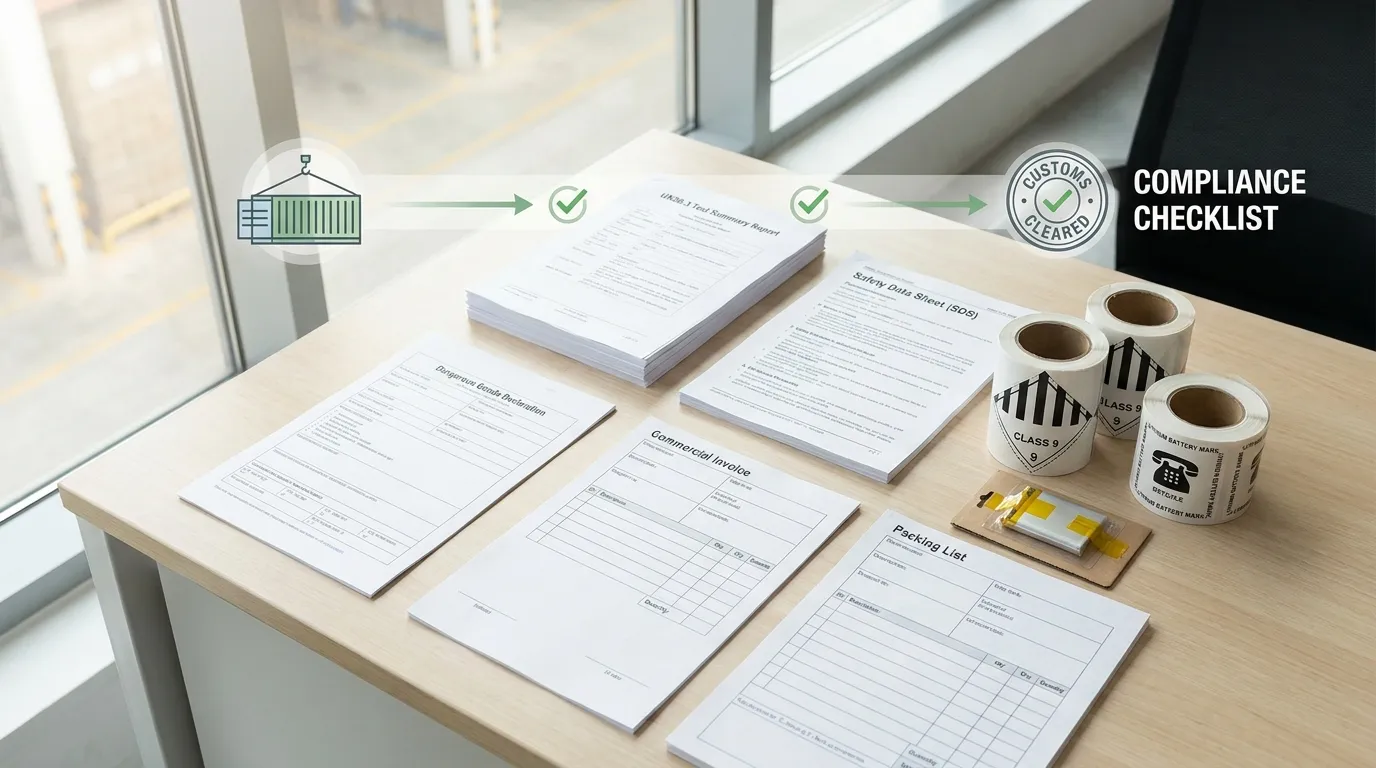
| Document or Detail | Why It Matters |
|---|---|
| UN38.3 test summary | Proves the battery has passed required transport tests |
| MSDS/SDS | Shows chemical, hazard and handling information |
| Commercial invoice | Used for customs value and cargo description |
| Packing list | Confirms cartons, pallets, weight and dimensions |
| Battery specification | Confirms lithium-ion or lithium metal type, Wh rating or lithium content |
| Product and carton photos | Helps verify labels, marks and packaging condition |
| Destination address | Needed for DDP/DDU delivery cost and customs planning |
| Incoterm | Confirms whether the shipment is DDP, DDU, FOB or CIF |
Incorrect documents are one of the most common reasons battery shipments are delayed. Cargo names, UN numbers, HS codes, carton labels and declared product details must match.
Why Choose Fexbuy for Dedicated DG Battery Containers?
Fexbuy has 21 years of freight forwarding experience and specializes in dangerous-goods lithium battery logistics from China. Our team supports UN38.3, IATA and IMDG compliant handling, and we arrange shipments to the USA, UK, Germany, the wider EU, Canada and Australia.
For importers, the value is not only booking a container. The value is avoiding common DG mistakes before the cargo reaches the port: wrong UN number, missing MSDS, weak cartons, hidden labels, poor palletization, unclear importer details or unrealistic delivery terms.
With a 98% on-time record, low inspection rate and door-to-door service options, Fexbuy is built for serious battery shippers that need compliance, communication and predictable execution.
FAQ
Can lithium batteries be shipped by FCL container from China?
Yes. Many lithium batteries can move by sea FCL when they are correctly classified, tested, packed, labeled and declared. The forwarder must check the UN number, MSDS/SDS, UN38.3, packaging, carton marks and carrier acceptance before booking.
Is FCL better than LCL for UN3480 lithium battery cargo?
For larger standalone battery shipments, FCL is usually safer and more efficient because the container is dedicated to one shipper. It gives better control over loading, labeling, pallet condition and document consistency. LCL may still work for smaller approved batches.
What documents are required for lithium battery FCL container shipping?
The core documents usually include UN38.3 test summary, MSDS/SDS, commercial invoice, packing list, product specifications, battery photos, carton photos and correct DG declaration details. Destination customs may also require importer and tax information.
What is the difference between UN3480 and UN3481?
UN3480 is used for lithium-ion batteries shipped by themselves. UN3481 is used when lithium-ion batteries are packed with equipment or contained in equipment. The correct classification affects labeling, packaging, declaration and carrier approval.
Can you arrange DDP delivery for full-container battery cargo?
Yes, DDP may be available depending on the destination country, cargo type, customs requirements and importer information. DDP should be checked at the quote stage because duties, taxes and compliance rules vary by lane.
Why do lithium battery sea freight bookings get rejected?
Common reasons include missing UN38.3, incomplete MSDS, wrong UN number, damaged cartons, covered labels, poor packaging, unclear cargo photos, mismatched invoice details or late DG booking submission. A document check before pickup helps reduce these risks.
Get a Free Quote for Your Battery FCL Shipment
Send your cargo details by Free Quote form or WhatsApp, and our DG team will check the safest shipping plan. Please include battery type, UN number if known, MSDS/SDS, UN38.3, carton quantity, weight, dimensions, origin city, destination country, delivery address, Incoterm and target shipping date.
For bulk lithium battery cargo from China to the USA, UK, Germany, EU, Canada or Australia, we can help you compare FCL, LCL, rail and express options — then quote the route that fits your cost, compliance and delivery requirements.


