


Drone Battery Shipping Service
We support importers, drone brands, repair suppliers, Amazon sellers, distributors, and manufacturers that need compliant pickup, packaging review, export handling, customs clearance, and door-to-door freight options.
What We Ship for Drone and UAV Battery Cargo
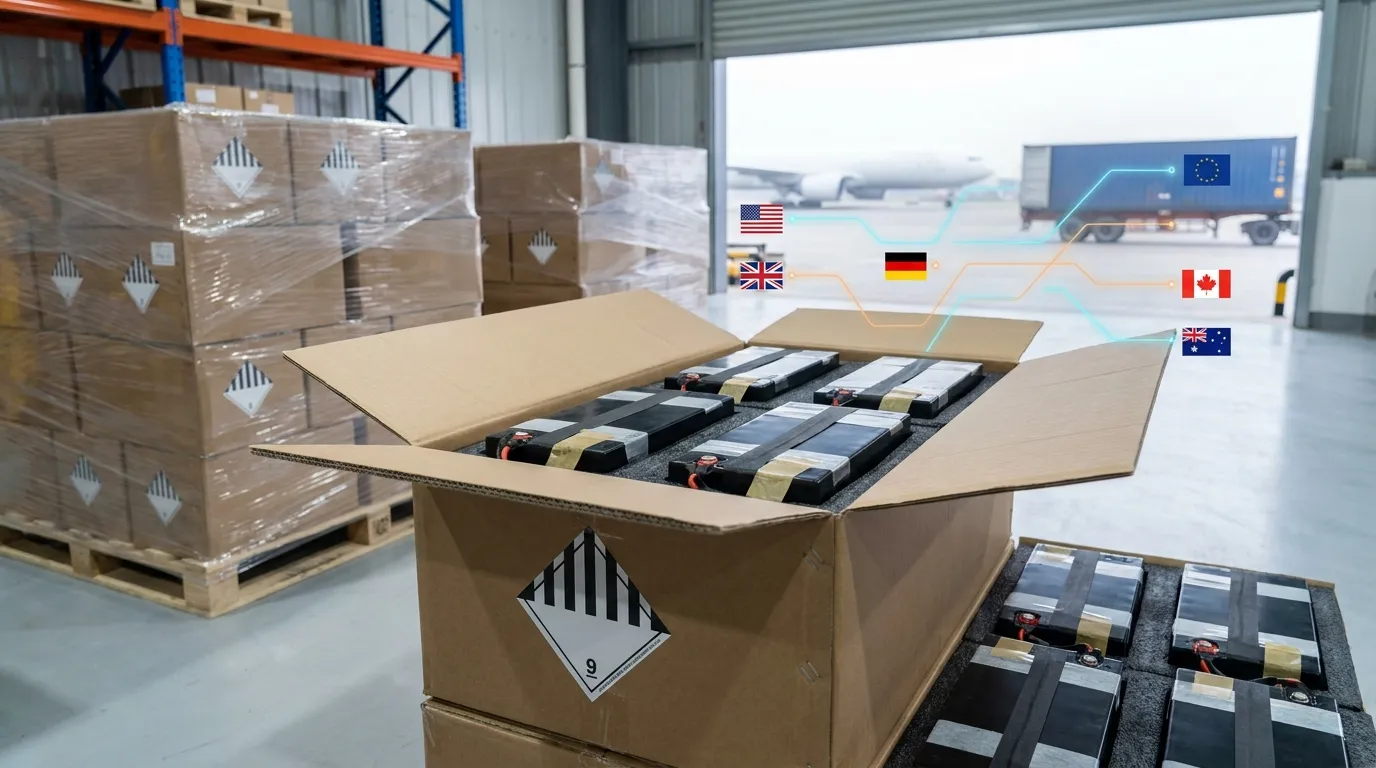
We handle rechargeable lithium-polymer and lithium-ion battery shipments used in consumer drones, FPV racing drones, agricultural drones, mapping drones, inspection UAVs, industrial drones, and spare battery kits.
Typical cargo includes:
- Standalone drone battery packs
- Spare LiPo and lithium-ion UAV batteries
- FPV drone batteries and charger kits
- Drones packed with batteries in the same carton
- Drones with batteries installed in equipment
- Replacement batteries for repair centers and distributors
- Mixed lithium battery cargo after DG review
Drone batteries are not treated as ordinary accessories. Even small packs can create carrier rejection risk if the Wh rating, UN number, state of charge, labels, or documents do not match the shipment. Our team checks these details before booking so the cargo is routed through a suitable DG channel.
For broader battery cargo, see our lithium battery shipping service.
What Is Included in the Service
Our service is designed for buyers who need one forwarder to manage the shipment from China pickup to destination delivery. Depending on the cargo and lane, we can support:
- Supplier pickup in Shenzhen, Guangzhou, Dongguan, Shanghai, Ningbo, Yiwu, and other China export hubs
- Battery classification review before acceptance
- UN38.3, MSDS/SDS, invoice, and packing list check
- DG packaging and labeling guidance
- Air, sea, and door-to-door routing options
- DDP, DDU, FOB, and CIF freight terms
- Export customs support in China
- Import clearance coordination at destination
- Final delivery to warehouse, business address, fulfillment center, or distributor
Exact routing depends on battery type, Wh rating, quantity, packaging condition, destination country, and whether the batteries are standalone or packed with drone equipment.
Why Drone LiPo Batteries Need DG Handling
Drone batteries are often high-discharge LiPo packs. They are compact, energy-dense, and sensitive to impact, overcharge, compression, and poor storage. A battery that is swollen, damaged, overcharged, or packed with exposed terminals can be rejected or restricted before loading.
The most common shipping risks are:
- Swollen LiPo packs from aging, impact, or over-discharge
- Short circuit from exposed connectors or loose batteries
- Incorrect storage charge before air freight
- No UN38.3 test summary or incomplete MSDS
- Wrong UN number on documents
- Missing Class 9 lithium battery label
- Cargo Aircraft Only label missing where required
- Weak cartons that do not protect batteries from movement
- Invoice and packing list descriptions that do not match the battery cargo
A general forwarder may only check weight and destination. A DG battery forwarder checks whether the cargo is acceptable before it reaches the airline, vessel, warehouse, or customs point.
UN Classification and Compliance for Drone Batteries
Drone battery shipments are usually classified based on how the battery is shipped.
| Shipment type | Common UN classification | Notes |
|---|---|---|
| Standalone rechargeable drone battery packs | UN3480 | Lithium-ion / lithium-polymer batteries shipped alone |
| Drone batteries packed with drone equipment | UN3481 | Batteries packed in the same package with equipment |
| Drone batteries contained in drone equipment | UN3481 | Battery installed inside the drone or device |
| Lithium metal batteries, if applicable | UN3090 / UN3091 | Used only when the chemistry is lithium metal, not rechargeable LiPo |
| Complete battery-powered equipment | Case-by-case review | Some equipment classifications require additional DG review |
For air freight, standalone UN3480 lithium-ion and LiPo batteries are more restricted than batteries packed with or contained in equipment. They may require Cargo Aircraft Only handling and must follow the relevant IATA packing instructions, state-of-charge limits, documentation, and labeling rules.
For ocean freight, IMDG requirements still apply. Sea freight may be more suitable for larger volumes, heavy battery cartons, or shipments where air routing is too restrictive.
Air, Sea, Express and Door-to-Door Options

The right mode depends on shipment size, urgency, battery classification, destination rules, and service term.
| Mode | Best for | Main DG considerations | Lead-time note |
|---|---|---|---|
| Air freight | Urgent commercial cargo and samples | UN3480 restrictions, SoC limit, airline acceptance, CAO label where required | Confirmed per airline, route, and DG acceptance |
| Sea freight | Bulk drone batteries, pallet cargo, lower-cost routing | IMDG declaration, correct packing, container and port rules | Confirmed per vessel schedule and destination port |
| Door-to-door DDP | Importers needing duties/tax and delivery support | Customs data must be complete and accurate | Confirmed after destination postcode and cargo review |
| DDU delivery | Buyers managing duties/tax at destination | Importer must handle local charges and clearance responsibility | Confirmed by lane and consignee details |
| FOB/CIF freight | Manufacturers or trading companies shipping under trade terms | Export file and freight documents must match | Confirmed during RFQ review |
We regularly support China to USA, UK, Germany, EU, Canada, and Australia routes. Final mode recommendation is confirmed after reviewing the battery model, quantity, gross weight, carton size, documents, and destination address.
Packaging Callout: Prepare Drone Batteries Before Shipping
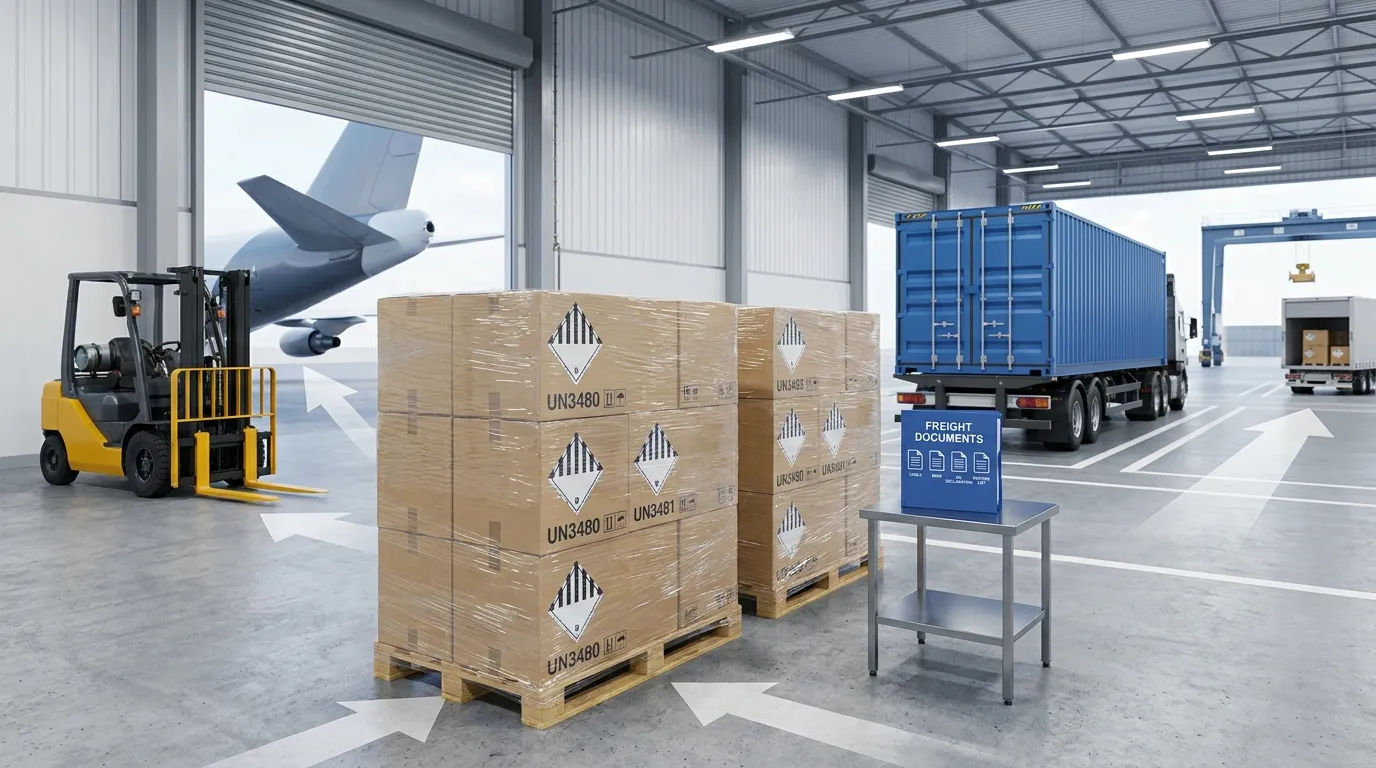
Packaging is one of the main reasons lithium battery cargo gets delayed or rejected. Drone batteries should be prepared before pickup, especially for air freight.
Key packaging checks include:
- Keep air-shipped lithium-ion/LiPo batteries at the required state of charge, commonly not more than 30% where applicable.
- Do not ship swollen, leaking, burnt, punctured, or visibly damaged LiPo batteries without prior DG review.
- Protect terminals and connectors against short circuit.
- Pack each battery to prevent movement, crushing, or contact with other batteries.
- Use strong outer cartons suitable for the battery weight and route.
- Apply lithium battery marks, Class 9 labels, and Cargo Aircraft Only labels where required.
- Make sure labels, invoice, packing list, MSDS, and DG declaration describe the same goods.
- Do not mix undeclared batteries with general drone accessories.
If drone kits include laptops, controllers, tablets, or other devices with batteries, the shipment may overlap with laptop & device battery shipping requirements.
5-Step Drone Battery Shipping Process
1. Pickup from Supplier or Factory
You send the battery specs, shipment details, supplier address, and destination. We arrange pickup from the China supplier, warehouse, factory, or trading company after the cargo is accepted for DG review.
2. DG Packing and Labeling Review
Our team checks whether the battery is standalone, packed with equipment, or contained in equipment. We review packaging, terminal protection, labels, carton condition, and whether the cargo needs additional DG packing work before export.
3. Documents and Customs File
We check the commercial invoice, packing list, UN38.3 test summary, MSDS/SDS, battery model, Wh rating, and shipment description. For DG cargo, inconsistent paperwork can create inspection and rejection risk.
4. Freight Booking and Export
The cargo is routed by air, sea, or door-to-door service based on the classification, urgency, volume, and destination. For standalone drone batteries, airline acceptance and cargo-aircraft-only rules are reviewed before booking.
5. Destination Clearance and Delivery
We coordinate customs clearance support and final delivery based on the chosen term: DDP, DDU, FOB, or CIF. For DDP and door-to-door shipments, destination details and product descriptions must be accurate before dispatch.
Documents Needed for a Drone Battery Shipping Quote
To quote correctly, send as many of these details as possible:
| Required detail | Why it matters |
|---|---|
| Battery model and chemistry | Confirms whether it is LiPo, lithium-ion, or another chemistry |
| Wh rating, voltage, and capacity | Needed for classification and carrier acceptance |
| Quantity and carton count | Affects mode, packing, and freight cost |
| Gross weight and carton dimensions | Used for chargeable weight and routing |
| UN38.3 test summary | Commonly required for lithium battery transport |
| MSDS/SDS | Supports DG identification and handling |
| Product and packaging photos | Helps detect labeling or packing problems early |
| Commercial invoice and packing list | Required for export and import customs |
| Destination country, postcode, and delivery type | Needed for lane, DDP/DDU, and final delivery quote |
| Shipment type | Standalone battery, packed with drone, or installed in drone |
If you also ship removable batteries for tools or industrial kits, our power tool battery shipping service may be relevant for similar rechargeable battery cargo.
Why Choose Fexbuy for Drone Battery Freight
Fexbuy is a Shenzhen-based dangerous-goods freight forwarder with 21 years of battery logistics experience. We support lithium battery shipments under UN38.3, IATA, and IMDG compliance workflows, with door-to-door options for major import markets.
Buyers choose us because we focus on the problems that cause drone battery shipments to fail: wrong UN classification, missing test documents, weak packaging, overcharged batteries, unclear customs descriptions, and unsuitable freight mode.
Our service advantages include:
- DG-specialist handling for lithium battery cargo
- China export support from major manufacturing regions
- USA, UK, Germany, EU, Canada, and Australia shipping lanes
- DDP, DDU, FOB, and CIF options
- Door-to-door delivery support
- Low inspection rate through better document and packing review
- 98% on-time performance record
- Free Quote and WhatsApp RFQ support
Drone Battery Shipping FAQ
Can I use a drone battery shipping service for standalone LiPo batteries?
Yes. Standalone rechargeable drone batteries are commonly shipped as UN3480 lithium-ion or lithium-polymer batteries, but they require proper DG documents, packaging, labels, and carrier acceptance before shipment.
Are drone batteries UN3480 or UN3481?
Standalone drone batteries are usually UN3480. Batteries packed with drones or contained inside drones are usually UN3481. The final classification depends on the exact cargo setup and must match the documents and packaging.
Can drone batteries be shipped by air freight?
Yes, but air freight is more restricted than sea freight. Standalone UN3480 batteries may require Cargo Aircraft Only handling, approved routing, correct labeling, and state-of-charge compliance before airline acceptance.
What state of charge is needed for air shipping?
For many standalone lithium-ion and LiPo air shipments, the battery must not exceed the applicable state-of-charge limit, commonly 30%. The required SoC is checked against the shipment type and current air-freight rules.
Can swollen drone batteries be shipped?
Swollen, leaking, burnt, punctured, or damaged LiPo batteries should not be shipped as normal cargo. They require special DG review, and many carriers may reject them due to fire and thermal runaway risk.
What documents do I need to ship drone batteries from China?
Prepare the UN38.3 test summary, MSDS/SDS, commercial invoice, packing list, battery model, Wh rating, voltage, capacity, quantity, carton dimensions, and product photos. A DG declaration may also be required depending on mode and classification.
Get a Free Quote for Drone Battery Shipping
Send your battery specs, cargo photos, quantity, carton size, gross weight, supplier address in China, destination country, postcode, and preferred service term. Our team will check the UN classification, documents, packaging, mode options, and door-to-door route before quoting.
Get a free quote from Fexbuy, or send your drone battery shipment details by WhatsApp or email for a DG-compliant shipping plan.


