


Customs Clearance for Ecommerce Parcels from China: Data, Duties, and Delay Prevention
Customs clearance for ecommerce parcels from China fails when the data arriving with the shipment is incomplete, inconsistent, or wrong. Customs agencies check six fields before releasing any parcel: product description, declared value, HS/HTS code, country of origin, consignee details, and shipment purpose. Errors trigger holds lasting 2 to 15-plus business days, unexpected duty bills, or denied entry. This guide explains each data field, how holds and exams work, and includes a pre-clearance checklist to prevent delays before your next shipment leaves China.
Most clearance failures are not random bad luck. They are data problems, and data problems are preventable. If your parcels are getting held, returned, or hit with surprise duty bills, the fix starts before the shipment leaves your supplier’s warehouse.
What Customs Agencies Actually Check Before Your Parcel Clears
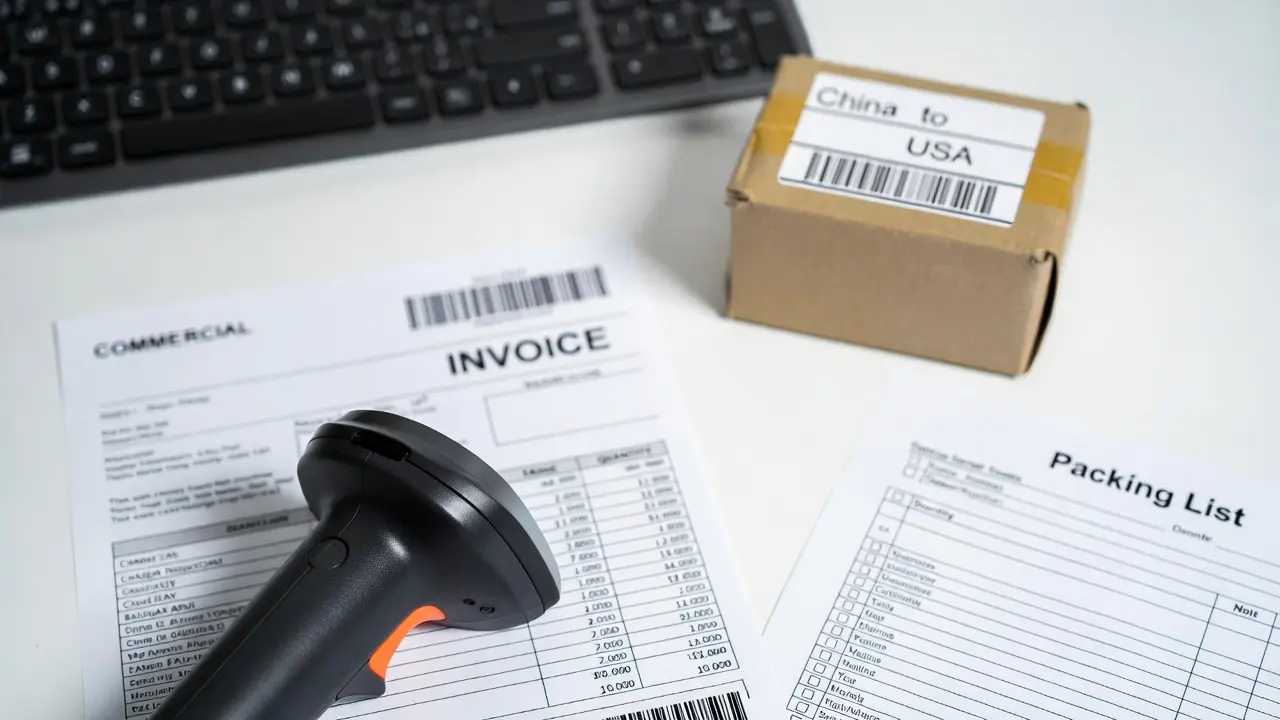
Customs agencies evaluate six core data fields on every inbound ecommerce parcel from China: product description, declared value, HS/HTS code, country of origin, consignee details, and shipment purpose. Errors or omissions in any one field are enough to trigger a hold, a duty reassessment, or a denial of entry.
Here is what each field actually requires.
1. Product Description
Vague descriptions fail. “Electronics” fails. “Accessories” fails. “USB-C charging cable, 5V/3A, 1 meter, nylon braided” passes. CBP requires a description specific enough to determine the correct tariff classification without ambiguity. If a CBP officer cannot identify the product’s function, material, and intended use from the description alone, that parcel will stop.
2. Declared Value
This must equal the actual transaction value: what you paid the supplier, in the currency of the sale. It cannot be the retail price, the replacement value, or a number chosen to minimize duty exposure. CBP cross-references declared values against market pricing data for common product categories. A $45 product declared at $10 is a red flag, not a savings strategy.
3. HS/HTS Code
The Harmonized System (HS) code is a standardized 6-digit product classification number used by customs agencies worldwide. In the US, it extends to a 10-digit Harmonized Tariff Schedule (HTS) code that determines your exact duty rate. The wrong code does not just mean a document hold; it can trigger a duty reassessment and, in cases of deliberate misclassification, a financial penalty. Verify your code using the USITC HTS Online database before every shipment.
4. Country of Origin
For China-origin goods, this should be straightforward. Where it gets complicated: products that are partially manufactured in China but assembled elsewhere, or products where the substantial transformation occurred in a third country. If origin documentation does not match the declared origin, CBP will investigate.
5. Consignee Data
Full legal name, complete delivery address, and a working phone number or email for duty billing notifications. For formal entry shipments — those that cross the threshold requiring a licensed customs broker — you also need the consignee’s Employer Identification Number (EIN) or Tax ID. Missing or incorrect consignee data is a common cause of last-minute holds that delay parcels that were otherwise correctly documented.
6. Shipment Purpose
This field distinguishes a commercial sale from a gift, a sample, or a personal-use item. CBP treats each category differently. A parcel marked “gift” on a commercial invoice for a paid customer order is a misdeclaration. Samples should be marked “Not for Commercial Sale” with a value noted. Getting this field wrong, even without intent to deceive, creates a document discrepancy that customs will flag.
Why Customs Holds Happen — and How Long They Last
Most customs holds on China ecommerce parcels fall into two categories: document holds, triggered by missing or inconsistent data and typically resolved in 2 to 5 business days, and physical examination holds, triggered by risk flags or random selection, which can extend to 15-plus business days. Vague product descriptions and mismatched declared values are the most common triggers.
Understanding which type of hold you are dealing with changes what you do next.
| Hold Type | Common Trigger | Typical Resolution Time |
|---|---|---|
| Document Hold | Vague description, value mismatch, missing consignee EIN | 2 to 5 business days |
| Non-Intrusive Inspection (NII) | Risk scoring, shipper history, product category | 5 to 10 business days |
| Intensive Examination | Physical inspection of contents | 10 to 15-plus business days |
CBP uses a targeting system that scores shipments before they arrive. New importers with no established compliance history, electronics categories, and China-origin goods all receive higher scrutiny scores. Calling holds “random” is technically correct but practically misleading. Your shipment history, product category, and the quality of your data all influence how often your parcels get pulled. For context on how the regulatory landscape has changed since de minimis was suspended, see our guide on post-de-minimis China shipments.
HS Codes: The Single Biggest Source of Clearance Errors
An HS code is a standardized 6-digit number that identifies your product category for customs purposes. The US extends this to a 10-digit HTS code that determines your exact duty rate. Using the wrong code, even unintentionally, can trigger a hold, increase your duty assessment, or result in a penalty. Always verify your HTS code using the USITC database at hts.usitc.gov before shipment.
Here is a worked example. A seller is shipping portable Bluetooth speakers from China.
- Product: Portable Bluetooth speaker
- HS Heading: 8518 (Microphones, loudspeakers, headphones, amplifiers)
- US HTS Code: 8518.22.0000 (Single loudspeakers mounted in their enclosures)
- MFN Duty Rate: 0% (base rate)
- Section 301 Tariff Surcharge: 25% (China-origin goods, electronics category)
- Declared customs value per unit: $30
- Total duty per unit: $7.50
Now imagine the seller used “8543” (electrical machines not elsewhere classified) because that is what their supplier put on the invoice. CBP reclassifies the goods to 8518. They reassess duty at the correct rate and issue a notice. The seller now owes back-duty on the full shipment plus, if the misclassification appears intentional, a penalty.
Most sellers who use wrong HS codes are not committing fraud. They are copying the code from the supplier’s invoice without checking it independently. The supplier’s job is to export the goods, not to optimize your US import classification. Those two codes are often different. CBP has the authority to reclassify goods retroactively, and penalties for deliberate misclassification can reach four times the unpaid duty. Independent verification is not extra work. It is risk management.
Common misclassified categories in China ecommerce include electronics accessories, apparel with mixed-material content, cosmetics and personal care products, and hand tools. If you are also evaluating which small parcel shipping options from China suit your business, HS code accuracy belongs in that decision too. Some shipping methods require more rigorous pre-classification than others.
How Duty Billing Works for Ecommerce Parcels from China
For ecommerce parcels from China to the US, duty is now assessed on all shipments regardless of value. Under DDP terms, the seller pays before delivery. Under DDU or DAP terms, the consignee is billed at the door, and if they refuse, the carrier typically holds the parcel for 5 to 7 days before triggering a return. Section 301 tariffs on Chinese goods add significant duty rates on top of standard MFN rates.
The de minimis exemption that previously allowed China-origin shipments under $800 to enter the US duty-free was suspended in May 2025. Every commercial ecommerce parcel from China now requires duty payment, regardless of value. There is no threshold to fall under.
Duty is calculated as: duty rate (MFN rate plus any applicable Section 301 surcharge) multiplied by the customs value. Section 301 tariffs on China-origin goods currently add 25% to 145% depending on the product category. For many product types, the Section 301 rate is the larger number.
Here is how DDP versus DAP plays out in practice.
A seller ships 50 parcels on DAP (Delivered at Place) terms to US customers. Average duty per parcel is $8. The carrier bills each consignee separately at delivery. Twelve consignees refuse to pay. The carrier holds those 12 parcels for 7 days, then initiates a return. The seller now owes return freight on 12 parcels at roughly $15 per parcel, plus loses the original shipping cost and the inventory value.
Under DDP (Delivered Duty Paid) terms, the same seller pays $400 upfront in duty on all 50 parcels. Zero returns from duty refusal. Zero consignee friction.
Here is the honest version of that comparison: DDP protects the buyer experience, but it transfers unpredictable tariff exposure to you as the seller. For high-duty-rate categories — which covers most electronics, apparel, and accessories from China under current Section 301 rates — absorbing that duty upfront means absorbing that risk. Some sellers choose DAP deliberately on high-tariff products and communicate the duty expectation to buyers at checkout. That is a legitimate approach when tariff rates make DDP margins unworkable. Neither is always right. The choice depends on your product’s duty rate, your customer base, and your margin structure.
| Scenario | Who Pays | When | Risk If Unpaid |
|---|---|---|---|
| DDP | Seller | Before delivery | Seller absorbs full tariff risk |
| DAP/DDU | Consignee | At delivery | Consignee refusal triggers return |
| Formal Entry (broker required) | Importer of record | Before release | Parcel held until duty cleared |
For a complete breakdown of how duties combine with freight and fulfillment costs to determine your landed cost per unit, see our guide on landed cost calculation for China imports.
Holds, Exams, and Denied Entries: What Actually Happens to Your Parcel
A customs hold means your parcel is paused pending a data issue — it is usually resolvable. A customs exam means CBP is physically or electronically inspecting the shipment — you wait. A denied entry means CBP has refused the parcel entry into the country — it will be returned or destroyed. Knowing which situation you are in determines your next step.
Customs Hold
A hold means CBP has flagged a documentation issue and paused the parcel pending resolution. You or your customs broker will receive a CF-28 (Request for Information) or CF-29 (Notice of Action) from CBP identifying the specific problem. Respond promptly with the requested documents. A corrected commercial invoice, proof of transaction value, or a product specification sheet resolves most document holds within a few business days. Do not reship the same product on a replacement order before resolving the hold. A second shipment with the same data errors will produce the same hold.
Customs Examination
An exam means CBP is inspecting the physical contents. Non-intrusive inspection (NII) uses X-ray or imaging technology without opening the parcel. An intensive exam involves opening the package and physically inspecting contents. You cannot intervene during an exam. Your customs broker can check status through the ACE (Automated Commercial Environment) portal, but there is no mechanism to speed up CBP’s examination process. Exam fees can apply, particularly for intensive examinations, and those fees are the importer’s responsibility.
Denied Entry and Return to Origin
Denial happens when CBP determines the goods cannot legally enter the US. Common triggers include prohibited or restricted products, counterfeit goods, missing import permits (FDA registration for food or cosmetics, FCC certification for electronics), or a confirmed misdeclaration. CBP issues a CF-29 stating the reason. You have a protest window, typically 180 days, to contest the decision. If you do not protest or the protest fails, the goods are returned to the shipper or destroyed. Return shipping costs fall entirely on the shipper.
A worked example: A seller ships 200 units of a USB wall charger without FCC certification documentation. CBP issues a CF-29 citing a missing import permit. The goods are held, then ordered for re-export. The seller pays return freight (roughly $800 for a commercial parcel of that size), loses the original shipping cost, and still owes the Chinese supplier for the goods. Total loss on a $2,000 shipment: $1,800 or more. The FCC certification process that would have prevented this costs a fraction of that.
This is also where the warehouse-versus-direct-ship decision has real stakes. Our comparison of warehouse vs. direct ship risk factors covers how denied-entry risk factors into that choice.
How Clearance Failures Cause Final-Mile Disruption
A parcel released from customs does not immediately continue to the buyer’s door. It re-enters the carrier network at the back of the sorting queue. Delivery promise windows have already passed. Your customer opened a dispute two days ago.
The cascading effects of a single clearance failure look like this:
- Customs hold adds 5 to 10 business days to transit time
- Parcel re-enters carrier network behind schedule with no priority routing
- Delivery window missed; customer contacts support or files a dispute
- If duty was billed to the consignee under DAP or DDU terms, the customer may have refused delivery before the hold was even resolved
- Return initiated before you knew the parcel was stuck
The cost is not just the delay. It is the customer service time, the dispute resolution, the return processing, and — if this is an Amazon order — a potential seller metrics flag.
Clearance failures on Amazon FBA inbound shipments create a separate problem. FBA inbound deadlines are fixed. A shipment stuck in a customs exam does not earn an exception from Amazon’s receiving window. The shipment either arrives on time or it counts against your inbound performance. For sellers evaluating routing options that reduce this exposure, direct injection shipping reliability is worth understanding before your next shipment plan.
Pre-Clearance Data Checklist: What to Confirm Before Every Shipment Leaves China
This checklist covers the data fields that CBP and destination customs agencies review. Check every item before the parcel leaves your supplier. For China ecommerce compliance after de minimis, this checklist applies to every commercial shipment regardless of value.
Product Data
- Product description uses specific technical language: material, function, voltage or wattage if applicable, dimensions if relevant
- HS code verified in the USITC HTS database (10-digit for US shipments)
- Country of origin documented as China and matches certificate of origin if required
Value and Commercial Invoice
- Declared value equals actual transaction value, not estimated retail or replacement value
- Commercial invoice includes unit price, quantity, total value, and currency
- Invoice matches packing list line by line with no quantity discrepancies
Consignee Data
- Full legal name and complete delivery address
- EIN or Tax ID included for any formal entry shipment
- Contact phone or email for duty billing notifications
Shipment Purpose
- Shipment purpose stated as commercial sale if it is a commercial sale
- Samples marked “Not for Commercial Sale” with a declared value and “NCV” notation
- Gift notation used only for actual personal gifts, not for purchased orders
Compliance Checks
- Product is not on the CBP prohibited and restricted items list
- Required import permits or certifications attached: FDA, FCC, CPSC as applicable
- Section 301 tariff rate confirmed and factored into your landed cost calculationTip: Run this checklist once per SKU, not once per shipment. Product data, HTS codes, and compliance items do not change parcel to parcel. The consignee and value fields do. Building a per-SKU data sheet saves time and reduces the chance of errors under volume.
How Fexbuy Prepares Parcel Data and Clearance Workflows Before Handoff
Most clearance failures happen because no one reviews the data before the shipment enters the carrier network. The supplier fills out the commercial invoice. The seller assumes it is correct. The parcel arrives at customs with a vague description or a wrong HTS code, and the hold notification arrives days later when the delivery window has already closed.
Fexbuy’s role is to catch those errors before the shipment departs China. That means reviewing product descriptions for customs specificity, cross-checking HTS codes against the USITC database, confirming commercial invoice values match purchase records, and verifying consignee data is complete for the destination country’s entry requirements.
The difference is timing. A hold resolved before departure costs nothing. A hold resolved after the parcel is sitting in a CBP examination facility costs time, money, and customer trust.
For sellers moving high volumes of small parcels, the pre-departure review also covers compliance flags: products requiring import permits, categories on restricted lists, and correct shipment purpose declarations. These are the items that create denied-entry scenarios, not just document holds.
Fexbuy also prepares clearance workflow documentation so that when a parcel does attract a CBP inquiry, the response materials are already organized. A CF-28 response that takes 4 hours to file instead of 3 business days cuts hold time significantly.
If you are planning the broader cost structure for your China-to-US operation, our guide on how duties factor into your total landed cost covers how pre-clearance preparation fits into the full cost picture.
The Value Misdeclaration Problem: A Real-Cost Example
This scenario comes up repeatedly. A seller marks a $45 product at $10 on the commercial invoice. The reasoning: lower declared value, lower duty. The outcome: CBP’s pricing database flags the discrepancy. CBP issues a CF-29, reclassifies the declared value to $45, calculates duty on the correct value, and assesses a penalty for the undervaluation. The seller now owes the original duty amount plus a penalty, and the parcel is held until payment clears.
The financial math never works. The duty saved on a $35 value reduction, at a 25% rate, is $8.75 per parcel. The penalty for misdeclaration can be multiples of the unpaid duty. Beyond the financial penalty, a misdeclaration flag on a shipment creates a compliance record that increases CBP’s scrutiny of future shipments from the same importer. It is not a one-time cost.
Accurate declared values are not a concession to the tax system. They are what keeps your import operation functioning without interference. Customs clearance for ecommerce parcels from China runs smoothly when the data is clean — and the data is only clean when someone takes responsibility for checking it before departure, not after a hold notice arrives.
Frequently Asked Questions
How long does customs clearance take for packages from China?
Customs clearance for China ecommerce parcels typically takes 1 to 3 business days when all data is correct and complete. Document holds add 2 to 5 business days. Physical examination holds can extend clearance to 15 business days or longer, with no fixed timeline once a physical exam is initiated. Accurate product descriptions, correct HTS codes, and complete declared values are the most direct way to minimize clearance time on every shipment.
What happens if my package is held at customs?
A customs hold means CBP has paused your parcel pending review of its documentation or contents. You or your customs broker will typically receive a CF-28 (request for information) or CF-29 (notice of action) identifying the specific issue. Responding promptly with the requested documents, usually a corrected invoice, proof of value, or product specification, is the fastest path to release. Do not reship the same item before the hold is resolved, as a second shipment with identical data errors will produce the same hold.
Do I have to pay customs duties on packages from China to the US?
Yes. The de minimis exemption that previously allowed China-origin shipments under $800 to enter the US duty-free was suspended in May 2025. All commercial ecommerce parcels from China are now subject to applicable import duties and Section 301 tariffs, regardless of declared value. Duties are calculated on the declared customs value. Under DDP shipping terms, the seller pays before delivery. Under DAP or DDU terms, the consignee is billed at delivery and may refuse payment, which triggers a return.
What is an HS code and why does it matter for customs clearance?
An HS code is a standardized 6-digit product classification number used by customs agencies worldwide. In the US, it extends to a 10-digit Harmonized Tariff Schedule (HTS) code that determines the exact duty rate applied to your product. An incorrect HTS code can result in a customs hold, a duty reassessment at a higher rate, or in cases of deliberate misclassification, a financial penalty. Use the USITC HTS Online database at hts.usitc.gov to verify the correct code before each shipment type.
Why is my package from China stuck in customs?
The most common reasons a China ecommerce parcel gets stuck in customs are: a vague or incomplete product description, a declared value that does not match the commercial invoice, an incorrect or missing HTS code, a missing consignee EIN for formal entry shipments, or selection for a physical examination. Check whether you have received a CF-28 or CF-29 notice from CBP. That notice will identify the specific issue. If no notice has arrived, contact your carrier or customs broker for a status update through the CBP ACE portal.
Can a package from China be returned or destroyed by customs?
Yes. CBP can refuse entry to a parcel and order it returned to the shipper or destroyed. This typically happens when goods are on the prohibited or restricted list, when misdeclaration is confirmed, when required import permits are missing, or when counterfeit goods are identified. Return shipping costs are borne by the shipper. If goods are destroyed, no compensation is paid. A CF-29 notice will state the specific reason for denial and the available protest period, which is typically 180 days.
What documents are required for customs clearance of ecommerce parcels from China?
The minimum documents required for ecommerce parcel customs clearance from China to the US are: a commercial invoice with product description, quantity, unit value, total value, and currency; a packing list; the consignee’s full legal name and address; the 10-digit HTS code; and the country of origin. Formal entry shipments require a customs bond and typically a licensed customs broker. Product categories including electronics, food, cosmetics, and medical devices require additional import permits or certifications from agencies such as the FCC or FDA before arrival.


