


Top Cross Border Logistics Provider | China-Global Freight
Imagine your high-value shipment of lithium-ion batteries is sitting at the Port of Long Beach. Suddenly, your broker calls with bad news. Because of the new Section 122 global tariffs and the expanded Section 301 investigations launched in March 2026, your landed costs just jumped by 10%. Even worse, the airline rejected your last air freight booking because the State of Charge (SoC) exceeded the new 30% limit for batteries packed with equipment.
If this sounds like a headache, you’re not alone. Navigating international trade in 2026 requires more than just a truck and a ship. It requires a partner who understands that a single regulatory oversight can wipe out your entire quarterly profit. Choosing the right cross border logistics provider is no longer just about finding the cheapest rate. It’s about finding a strategic ally who keeps your supply chain moving when the rules of the game change overnight.
What is a cross border logistics provider in 2026?

A cross border logistics provider is a specialized entity that manages the end-to-end movement of goods across international boundaries. They handle everything from initial freight booking and customs brokerage to tax compliance and last-mile delivery. In today’s market, the most effective providers act as an “AI co-pilot” for your supply chain. They use predictive analytics to reroute cargo around port strikes or geopolitical disruptions before they even happen.
For businesses sourcing from Asia, partnering with an expert in cross-border logistics services from China is essential. These providers don’t just move boxes; they manage the complex documentation required to satisfy the latest 2026 USTR “Forced Labor” and “Overcapacity” investigations. Consequently, they provide the “Control Tower” visibility you need to protect your brand from sudden detentions at the border.
The 2026 regulatory landscape: Why your provider needs a pulse on policy
As of March 2026, the global trade environment has shifted dramatically. If your logistics provider isn’t talking to you about Section 122 and Section 301, they are already behind the curve.
Navigating the new Section 122 and Section 301 tariffs
Following a landmark Supreme Court ruling in early 2026, the US government immediately imposed a 10% global tariff under Section 122 of the Trade Act. Furthermore, the USTR self-initiated massive Section 301 investigations on March 11, 2026. These investigations target 16 economies, including China, the EU, Vietnam, and Mexico.
Specifically, these probes focus on “manufacturing overcapacity.” For e-commerce sellers, this means that even if you’ve shifted your sourcing from China to Vietnam or Malaysia to avoid tariffs, those lanes are now explicitly in the crosshairs. A knowledgeable provider will help you audit your HTS codes and country-of-origin documentation today to prepare for potential rate hikes this summer.
Strategic cross-border logistics in North America
In North America, the focus is currently on maintaining resilience. With West Coast port labor contracts back on the table for late 2026, diversifying your port entry strategy is critical. Your provider should be offering multi-modal options—perhaps shifting some volume to East Coast ports or utilizing bonded warehouses in Mexico to delay duty payments until the final sale.
Specialized cargo: Mastering the 2026 battery shipping rules
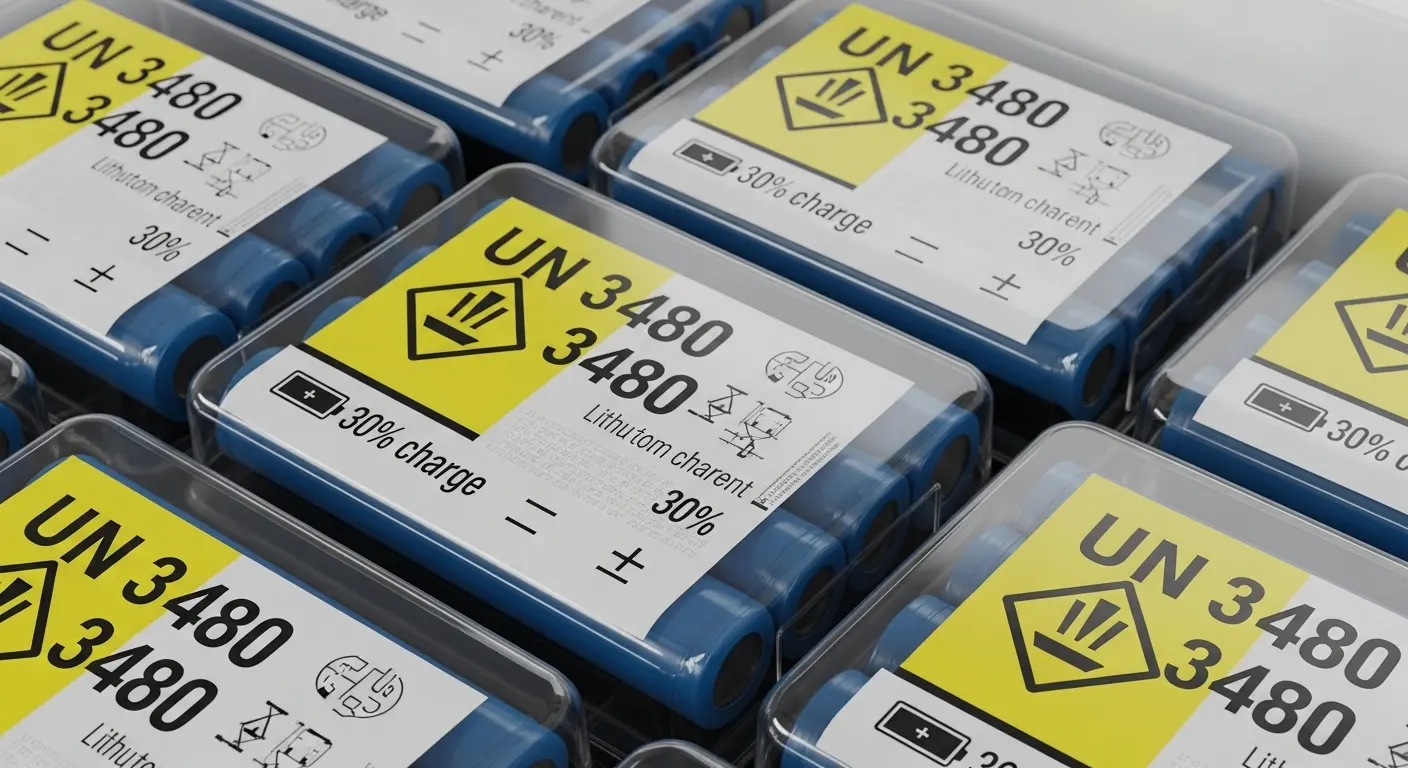
If you ship electronics, your cross border logistics provider must be a master of the IATA 67th Edition Dangerous Goods Regulations. As of January 1, 2026, the rules for lithium batteries have become significantly stricter.
The 30% State of Charge (SoC) mandate
The most impactful change in 2026 is the expansion of SoC limits. Previously, the 30% limit only applied to standalone batteries (UN 3480). However, effective this year, lithium-ion batteries packed with equipment (PI 966) must also be shipped at ≤ 30% of their rated capacity.
This isn’t just a suggestion; it’s a mandatory safety requirement to prevent thermal runaway during transport. If your factory is still shipping devices at full charge, your freight forwarder should be flagging this immediately. Without the proper “State Approval” under Special Provision A331, these shipments are strictly prohibited on passenger aircraft.
Why battery expertise matters for your global cross-border logistics
Shipping batteries is no longer a “general cargo” task. It requires:
- UN 38.3 Test Summaries: These must now be digitally accessible via URL or QR code on your documentation.
- DG-Trained Personnel: Even for smaller Section II shipments, your provider must ensure all staff have documented, “adequate instruction” on the 2026 updates.
- Aircraft Configuration Controls: Since standalone batteries are forbidden as cargo on passenger planes, your provider must have solid contracts with “Cargo Aircraft Only” (CAO) carriers.
Expanding into emerging markets: The African opportunity
While much of the world is focused on the US and China, savvy brands are looking at Africa logistics services as a major growth engine for 2026. The continued implementation of the African Continental Free Trade Area (AfCFTA) is finally reducing the intra-continental trade barriers that have historically plagued the region.
Overcoming infrastructure hurdles with local expertise
Logistics in Africa isn’t about just moving freight; it’s about navigating the “First Mile” and “Last Mile” in secondary cities like Lucknow or Nairobi. In 2026, we’re seeing a surge in Hub-and-Spoke networks that utilize new inland logistics zones.
However, you must be aware of local pre-inspection requirements. Many African nations require PVOC (Pre-Export Verification of Conformity) or SONCAP certifications. Without a provider who understands these localized rules, your goods will sit in a port racking up demurrage fees that quickly exceed the value of the cargo itself.
AI and the 2026 “Smart” supply chain
By March 2026, Artificial Intelligence has moved from a “fun experiment” to the literal foundation of modern logistics. A top-tier cross border logistics provider now uses AI as a “co-pilot” for every shipment.
Predictive analytics vs. reactive logistics
Traditional logistics was reactive—you found out about a delay when the ship didn’t arrive. In 2026, AI-powered control towers predict these issues. For example, if an AI detects a brewing port strike in Asia, it can automatically reroute your cross-border freight forwarding from China before the congestion even starts.
Furthermore, AI now handles routine tasks like:
- Automated Supplier Communication: Confirming order readiness and stock levels without manual emails.
- Real-Time Carbon Tracking: Providing shipment-level ESG data that many major retailers now require for 2026 compliance.
- Dynamic Route Optimization: Selecting the most sustainable and cost-effective transport mode based on current fuel prices and weather patterns.
Financial transparency: Decoding DDP vs. DAP
In a world of rising tariffs, how you pay for your logistics is just as important as how you move the goods. Most quotes you’ll receive from a provider will use either DDP or DAP Incoterms.
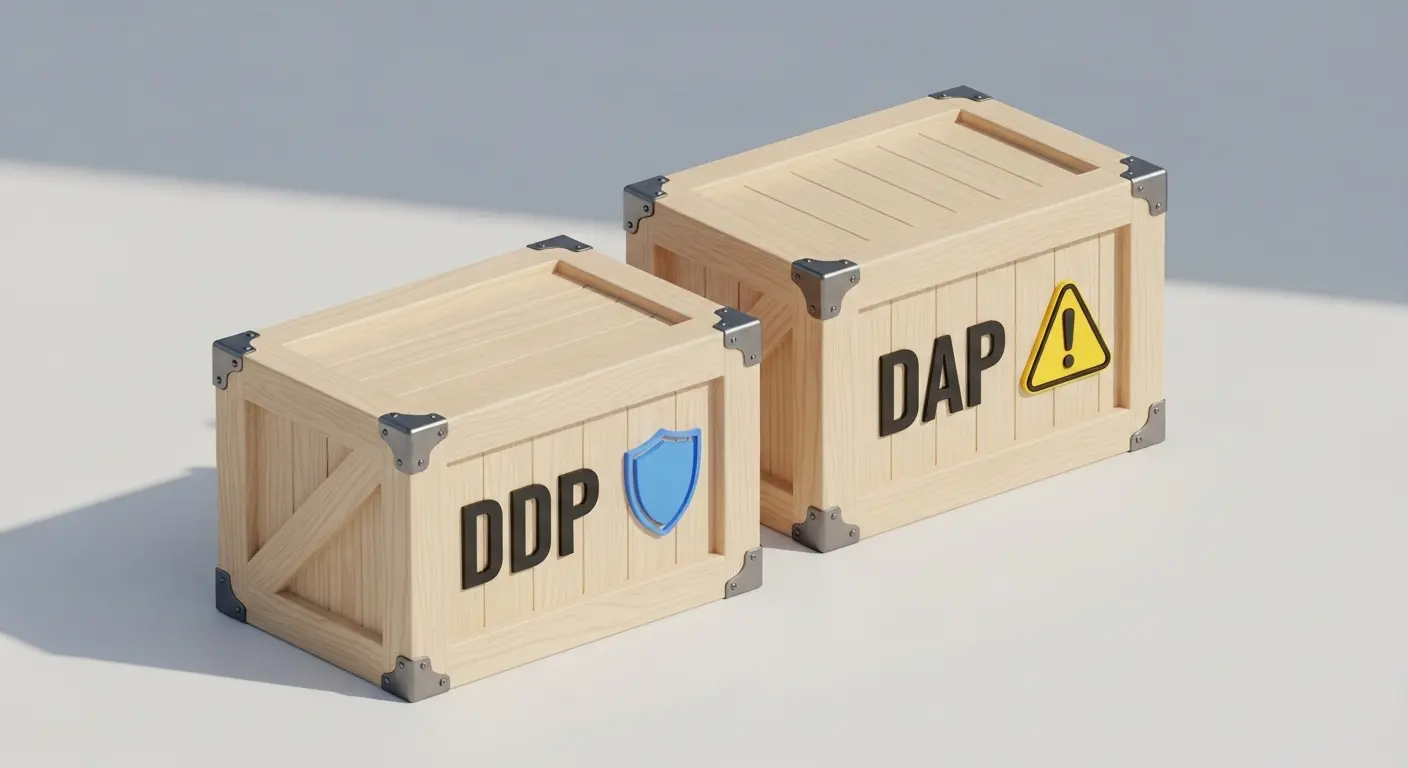
DDP (Delivered Duty Paid): The “All-Inclusive” choice
DDP is the preferred choice for e-commerce sellers in 2026. Under this term, the provider handles everything: freight, insurance, customs clearance, and most importantly, all duties and taxes. The price you see on the quote is the final “landed cost.” This removes the risk of your customer getting hit with a surprise tax bill at their front door.
DAP (Delivered at Place): The “Pay as You Go” choice
DAP is often chosen by larger corporations with their own local tax offices. You pay for the freight to the destination, but the receiver is responsible for the taxes and duties. While DAP might look cheaper on the initial quote, it often leads to delays if the receiver isn’t prepared to pay the 10% Section 122 global surcharge immediately upon arrival.
| Feature | DDP (Delivered Duty Paid) | DAP (Delivered at Place) |
| Duty/Tax Responsibility | Seller (Logistics Provider) | Buyer (Receiver) |
| Customs Clearance | Handled by Provider | Handled by Buyer/Broker |
| Risk of Delay | Low (Pre-paid) | High (Depends on Buyer) |
| Recommended For | E-commerce, FBA, SMBs | Enterprise, Internal Transfers |
5 Questions to ask a cross border logistics provider in 2026
Before you sign a contract, put your potential partner to the test with these five questions based on the current 2026 landscape:
- “How are you managing the March 2026 Section 301 investigations for our product category?” If they can’t discuss the new overcapacity probe, they aren’t monitoring your risk.
- “Do you have an automated system for verifying the 30% SoC limit on our battery-packed equipment?” This is a mandatory 2026 safety check.
- “Can you provide shipment-level carbon footprint data for our ESG reporting?” Many EU and US retailers now mandate this.
- “What is your backup plan if West Coast ports experience slowdowns in late 2026?” They should have a pre-vetted East Coast or Gulf Coast alternative.
- “Do you offer AI-driven ‘Control Tower’ visibility for mid-transit rerouting?” You need to know they can move your cargo before the strike starts.
FAQ: Navigating cross-border trade in 2026
What is the new Section 122 global tariff?
In early 2026, the US government imposed an immediate 10% global tariff on most imports under Section 122 of the Trade Act. This follows a Supreme Court ruling regarding the limits of presidential power under IEEPA.
Can I still ship lithium batteries on passenger planes?
Generally, no. UN 3480 (standalone batteries) and UN 3090 (lithium metal) are forbidden as cargo on passenger aircraft. Additionally, from January 1, 2026, batteries packed with equipment must be at ≤ 30% charge to be considered for most air transport.
How does AI help reduce my shipping costs?
AI reduces costs by optimizing inventory placement (holding stock closer to the customer) and using predictive analytics to select the most efficient routes, thereby avoiding expensive port congestion fees.
Why is everyone talking about “forced labor” investigations again?
On March 12, 2026, the USTR initiated a new set of Section 301 investigations into 60 economies regarding their enforcement of forced labor prohibitions. This means customs scrutiny will be higher than ever for products sourced from these regions.
What is the difference between a freight forwarder and a CBLP?
A freight forwarder primarily moves cargo from point A to B. A cross border logistics provider (CBLP) offers a more holistic service, including tax compliance, regulatory monitoring, AI-driven visibility, and “last-mile” delivery strategy.
Stop fighting the border and start scaling your brand
The logistics world of March 2026 is fast, complex, and unforgiving. Whether you’re navigating the new Section 301 probes or the latest IATA battery mandates, you need a partner who doesn’t just “ship” but “strategizes.”
At Fexbuy, we specialize in high-complexity cargo and high-volatility corridors. We provide the AI-driven visibility and deep regulatory expertise you need to keep your margins safe when the global trade map shifts.


