


What You Need to Know About Lithium Power Supply Shipping in 2026
Shipping Lithium Power Supplies has forever changed the future of supply chains. However, they can’t be used like traditional shipments. For transportation purposes, lithium batteries are classified as dangerous goods, Class 9. Lithium battery shipping regulations changed in 2026. This document will explain how to ship lithium batteries, describe regulatory changes, and recommend how to shift your shipping to a compliant and safe method.
What‘s Meant By Shipping Lithium Power Supplies?
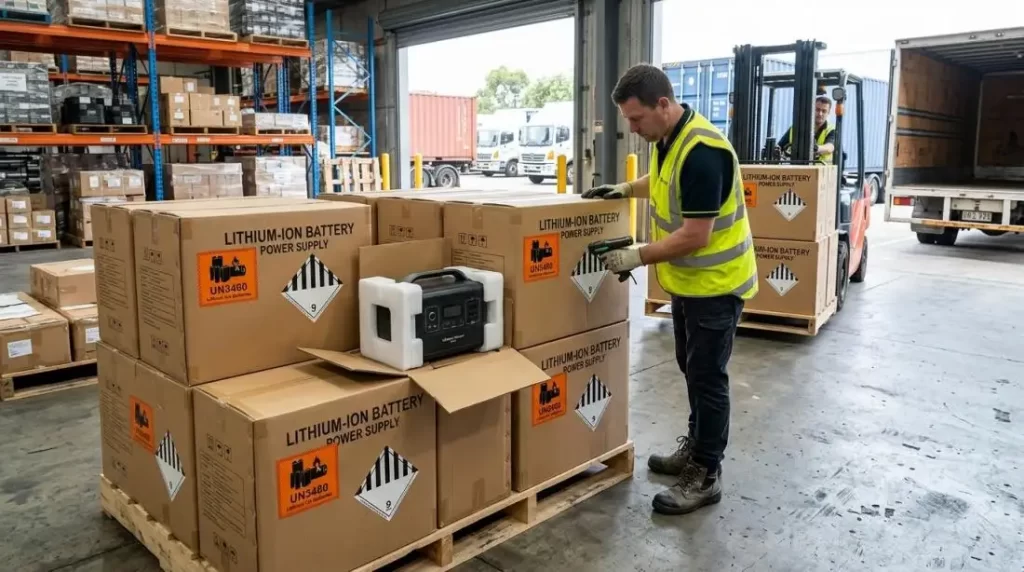
Shipping lithium power supplies refers to the shipping of items that are loaded, carried, or contain lithium-ion and lithium-metal batteries. These items can range from individual lithium batteries/battery packs to portable battery packs. Because they can short circuit and/or catch fire, there are shipping regulations to cover them by the IATA, IMO, and the UN.
The Backbone: UN38.3 Safety Testing
Lithium Power Supplies will have to undergo the UN38.3 Safety test to be shipped. This is a mandatory 8-part test which simulates travel and determines the behavior of the battery under the test conditions. The tests include:
•Altitude simulation (low pressure)
•Thermal cycling (-40℃ to +75℃)
•Vibration
•Shock
•External short circuit
•Impact or crush
•Overcharge
•Forced discharge
As of 2026, the UN38.3 reports will need to comply with Rev.6/7 standards and shipments will be subject to the IATA DGR 67th Edition. A new 3-meter stacking test has been added for certain shipments, and the temperature cycling parameters have been optimized for more extreme air transport environments.
⚠️ Important: A cell-level UN38.3 report does not cover a battery pack—you must test the finished product. Reports with missing lab accreditation or outdated (Rev.5) versions will be rejected.
2026 Air Transport Changes: 30% SoC Now Mandatory Across the Board
One of the biggest changes for lithium power supply shipping in 2026 involves the state of charge (SoC) limit.
Previously, only loose batteries (UN 3480, PI 965) were required to be shipped at no more than 30% charge. Batteries packed with devices (UN 3481, PI 966) only had a recommendation. From 1 January 2026, that recommendation became a requirement. Now, batteries packed with devices must also be shipped at ≤30% SoC.
The table below summarises how the rules have changed:
| Shipment Type | UN / PI Number | Before 1 Jan 2026 | From 1 Jan 2026 |
| Loose batteries | UN 3480 (PI 965) | ≤30% SoC required | ≤30% SoC required |
| Batteries packed with equipment | UN 3481 (PI 966) | Recommended ≤30% | ≤30% SoC mandatory |
| Batteries inside equipment (end device) | PI 967 | ≤100% permitted | ≤100% permitted (unchanged) |
| Battery-powered vehicles (>100 Wh) | UN 3556/3557/3558 | Not standardised | ≤30% SoC required |
This change aims to reduce fire risk during flight, as lower charge levels lower the chance of thermal runaway in case of mechanical damage or short circuit. For power supplies exceeding 2.7 Wh, the 30% cap is mandatory; smaller batteries should follow the recommendation.
2026 Sea Transport Updates
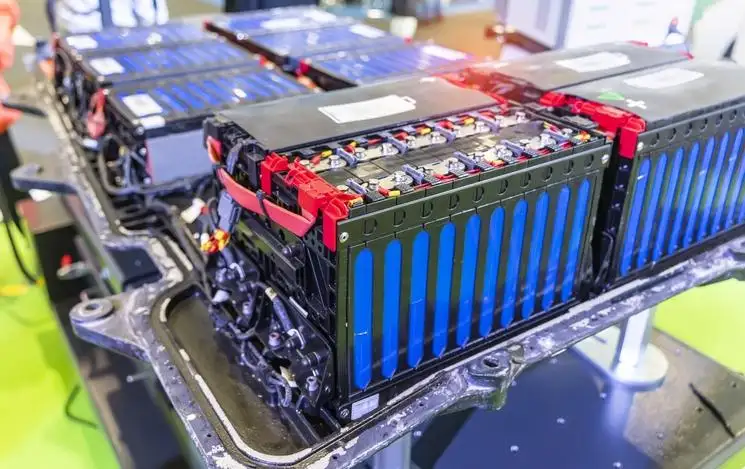
Lithium power supply shipping by sea is not immune to regulatory tightening. The IMDG Code Amendment 42-24 became mandatory on 1 January 2026, bringing several important updates.
Key sea transport changes:
•New UN numbers for battery-powered vehicles – Generic UN 3171 is no longer acceptable. Lithium-ion vehicles must use UN 3556; lithium-metal vehicles use UN 3557; sodium-ion vehicles use UN 3558.
•Stowage restrictions – Lithium batteries installed in cargo transport units (UN 3536) are now stowage category D, meaning they can only be stowed on deck, never inside the hold. A minimum 2.4-metre separation from heat sources is required.
•Sodium-ion batteries – Formally incorporated into Class 9 with UN 3551 (cells) and UN 3552 (batteries in equipment).
•Packaging instruction P912 – Updated with stricter mandatory requirements for vehicle lashing, battery insulation, and fire-prevention labelling.
Documentation You Need for Compliant Lithium Power Supply Shipping
To avoid rejection or detention, you must prepare the following documents:
| Document | Purpose | Who Issues It |
| UN38.3 test report | Proves battery safety | CNAS/CMA-accredited lab (Rev.6/7) |
| MSDS/SDS | Contains 16 sections including battery type, UN number, Wh, SoC, and emergency measures | Manufacturer or qualified lab |
| Air transport identification certificate | Specifies UN number, packing instruction, permitted aircraft types | Recognised civil aviation authority (e.g. DGM) |
| Shipper’s declaration (DGD) | Required for pure batteries or high-energy cells (>100 Wh) | Shipper (must be signed and stamped) |
| Dangerous goods packaging certificate (as needed) | Verifies UN-certified packaging | Inspection authority |
| State-of-charge proof | Confirms ≤30% SoC (new 2026 requirement) | Shipper |
⚠️ Note: The air transport identification certificate expires on 31 December of each year and must be renewed annually. Old certificates are invalid from the first day of the new year.
Packaging and Labelling Essentials
Proper packaging and labelling are non-negotiable for lithium power supply shipping.
Packaging requirements:
•Battery terminals must be insulated (e.g. with tape or anti-static bags) to prevent short circuits.
•Pure batteries must be placed in independent compartments, preventing contact with each other.
•UN-certified boxes with cushioning materials (bubble wrap, foam) are mandatory.
•Packages must pass a 1.2-metre drop test (or 3-metre stacking test as required).
•Heavy shipments require wooden pallets.
Labels that must be clearly displayed on outer cartons:
•Class 9 dangerous goods diamond label
•Lithium battery handling mark (including UN number and a contact phone number)
•“CARGO AIRCRAFT ONLY” (for cargo-only flights)
•Upward arrows
•Watt-hour rating (Wh)
Per the IATA DGR 67th Edition, the requirement for a contact telephone number on the Battery Mark is now entirely optional and will be permanently banned starting January 1, 2027. To ensure your packaging artwork remains future-proof for shipments extending into late 2026, Fexbuy strongly recommends transitioning immediately to the streamlined, text-free Battery Mark that omits the telephone number and removes all legacy “CAUTION” lettering.
Comparison: Air vs. Sea vs. Land Transport for Lithium Power Supply Shipping
| Feature | Air Transport (IATA DGR 2026) | Sea Transport (IMDG 2026) | Land Transport |
| SoC limit | ≤30% for UN3480, UN3481, and PI966 | Suggested ≤30% (not mandatory) | Varies by country |
| UN38.3 required | Yes – mandatory | Yes – mandatory | Usually required |
| Primary hazard | Fire risk (thermal runaway) | Fire and leakage | Short circuit / fire |
| Packaging test | 1.2m drop test; 3m stacking test for some shipments | 1.2m drop test | Typically 1.2m drop test |
| Stowage restriction | Cargo-only aircraft for pure batteries | UN3536: deck stowage only, ≥2.4m from heat | Standard isolation |
| Documentation | DGD, SoC proof, air certificate | SEA CERT, MSDS (updated to 42-24) | Shipper’s declaration |
| Cost | High | Moderate | Low to moderate |
| Speed | 1–3 days | 15–30 days | 3–10 days |
Emerging Considerations: EU Battery Regulation and New Chemistries
Beyond the transport rules themselves, lithium power supply shipping is increasingly affected by market-specific requirements. For shipments destined for the European Union, the EU Battery Regulation (2023/1542) now requires:
•Digital Battery Passports – Each battery must have a unique digital ID containing data on material sources, carbon footprint, manufacturing history, and recyclability.
•CE marking – Mandatory for all batteries placed on the EU market, with strict hazardous substance limits and battery management system (BMS) requirements.
Sodium-ion batteries will also be regulated similarly to lithium-ion batteries. They will be assigned separate UN numbers (3551, 3552, 3558) and other similar processes will likely be adopted for sodium-ion batteries as well.
Practical Steps to Ensure Compliance
For companies that want to sell lithium batteries legally beyond 2026, please adhere to the following practical steps:
•Verify UN38.3 Revision Alignment: Ensure your manufacturing facility updates all UN38.3 test summaries to Revision 6 or Revision 7 standards. Your reports must explicitly show successful validation under the optimized temperature cycling matrix and the mandatory 1.2-meter drop test (and the 3-meter stacking test where packing instructions dictate). Outdated Revision 5 summaries will be automatically rejected by terminal systems.
•Institutionalize Factory-Floor SoC QC: For each air cargo consignment under PI 965 and PI 966, implement a verified quality control log ensuring the State of Charge (SoC) is tested and locked $\le 30\%$ prior to final carton sealing. Maintain digital multi-meter or testing equipment logs at the warehouse floor; carriers and aviation auditors retain the legal right to inspect these records during random terminal audits.
•Manage Annual Air Certification Timelines: Do not rely on historical documentation. The Aviation Transport Condition Verification Certificate must be renewed annually at the turn of the calendar year. A separate, unique certificate or Master Air Waybill (MAWB) declaration is required for every individual air cargo dispatch
•Deploy Chemistry-Specific Vehicle UN Numbers: When shipping self-propelled battery vehicles via ocean freight under IMDG Code Amendment 42-24, completely discontinue the use of the generic UN 3171 classification. You must declare UN 3556 for lithium-ion vehicles (such as e-bikes and EVs) and UN 3557 for lithium-metal configurations to clear maritime booking screenings.
•Enforce Flawless Dangerous Goods Placarding: All exterior shipping packaging must be marked with the correct UN number placards, the standard Class 9 Miscellaneous Dangerous Goods diamond label, and the text-free global Battery Mark. Do not print legacy “CAUTION” text or outdated contact phone numbers, as these are actively being phased out by international transit bodies.
•Mandate Hazmat and Compliance Training: Because shipper compliance checklists have been heavily overhauled by the IATA DGR 67th Edition, ensure your logistics and supply chain personnel undergo certified Dangerous Goods (DG) compliance training. A certified team prevents costly cargo rejections at port gate-in..
Be prepared for EU compliance, you will need to ship with a Battery Passport which is a CE marking, which is in accordance with your carbon footprint, and other conformance data.
Conclusion
Fexbuy is one of the first to identify the issues that will arise in 2026 as lithium-based products are transported. We are a fully battery-compliant solution with battery logistics across a range of verticals. You can trust us with your most difficult cargo.
We have a variety of logistics services and UN38.3 compliance testing, MSDS creation, dangerous goods classification, and specialized UN packing, battery transport by air and sea, battery storage, and dangerous goods ready warehouses, as well as other services. Fexbuy has cutting edge tracking technology and is ready to provide whatever you need.
Do not allow the existing limitations to negatively affect your business. Contact Fexbuy to get an instant quote for a full regulatory compliance review. We have secure and flexible shipping solutions to safely transport Lithium batteries.
FAQ
Q1: Is a separate UN38.3 report required for each shipment of lithium batteries?
No, you do not need to re-test the product for every shipment. However, every single consignment presented to a carrier or customs house must be accompanied by a valid, certified UN38.3 Test Summary that accurately matches the exact model number and batch specifications of the cargo. If you modify the battery cells, the internal BMS, or the structural casing, an independent re-test is legally mandated before your next dispatch.
Q2: What could happen if I fly a battery with >30% state of charge (SoC) in 2026?
Your shipment will be refused, returned, or destroyed. A SoC of ≤30% must be demonstrated for UN3480 and UN3481 shipments (batteries packed with equipment). Failure to comply could lead to penalties and a temporary restriction of the user’s right to ship goods.
Q3: Can I use the same packaging for sea and air freight?
Not necessarily. Air freight must use packaging certified by UN to withstand a 1.2m drop test (and occasionally a 3m stacking test). Otherwise, look to IMDG Code 42-24 to review requirements for sea freight.
Q4: Will sodium-ion batteries be regulated like lithium-ion batteries?
From 2026, sodium-ion batteries will be assigned UN numbers (cells, UN 3551; batteries within equipment, UN 3552; batteries in vehicles, UN 3558). The regulations related to packaging and testing will also be similar to lithium.
Q5: How does Fexbuy maintain compliance with the new 2026 rules? What services do they offer?
Fexbuy provides end to end battery shipping solutions including UN38.3 testing and consultancy, the drafting of a Material Safety Data Sheet, Dangerous Goods (DG) classification, UN certified packaging, dedicated line air and sea freight, a DG compliant warehouse, and clearance of customs. For a free compliance check, get in touch with us.


