


China Global Logistics Services: Complete Guide to Shipping from China in 2026
You placed an order with a Chinese supplier. Now comes the part nobody warns you about — actually getting it to your door, on time, without surprise fees eating your margin.
China global logistics services sound straightforward. In practice, they’re anything but. Wrong incoterm, wrong freight mode, one mislabeled battery package — and your shipment stalls at customs for two weeks while your Amazon ranking tanks.
This guide breaks it all down simply. You’ll learn which freight mode fits your cargo, what DDP actually means in a real shipment, how to ship lithium batteries legally, and what to look for in a logistics partner before you commit. No fluff. Just what works.
What Are China Global Logistics Services?
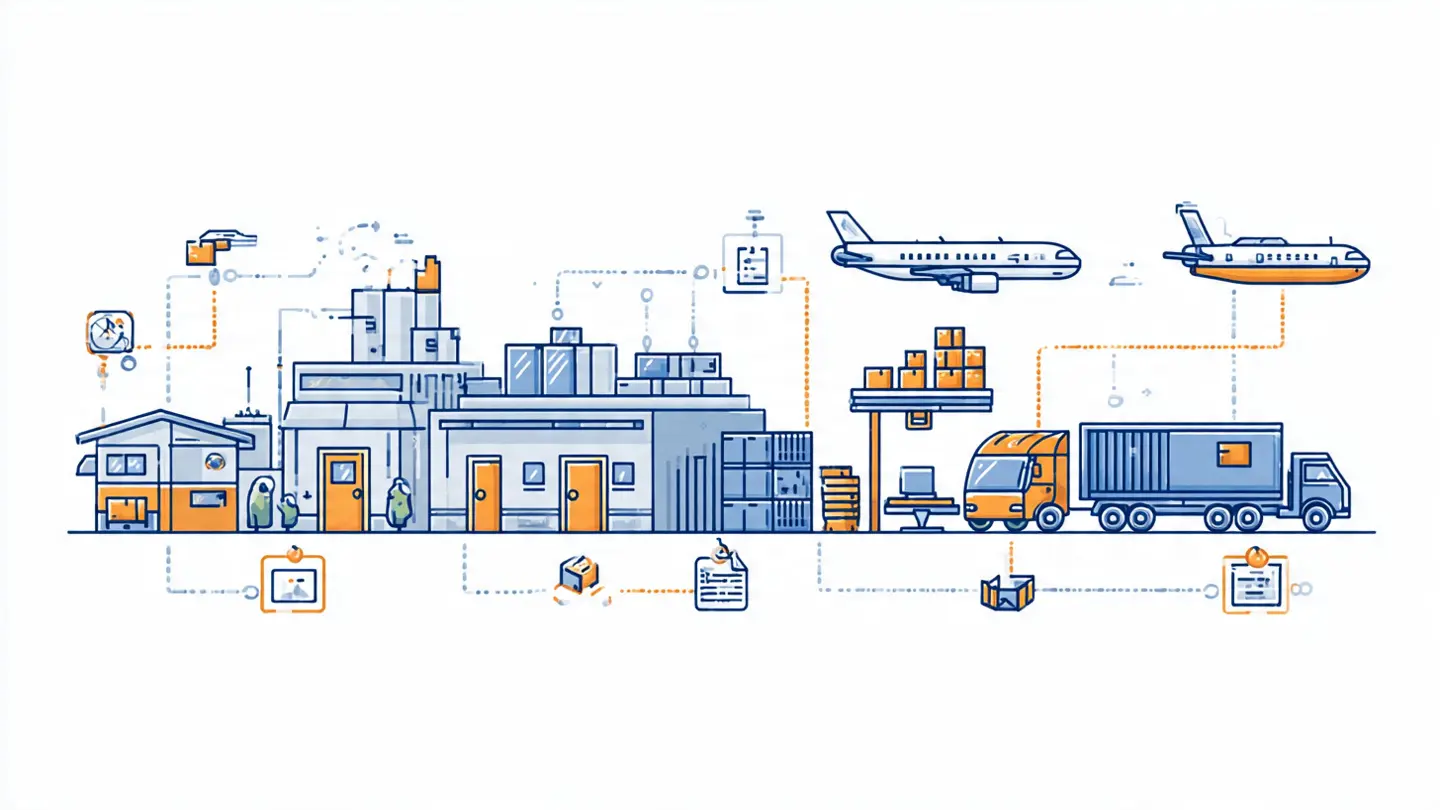
China global logistics services cover the entire process of moving goods from a manufacturer in China to a buyer anywhere in the world. That includes more than just putting boxes on a ship.
A full-service China logistics provider handles:
- Freight forwarding — booking and managing cargo space on ships, planes, or trains
- Customs brokerage — preparing documentation, calculating duties, clearing goods at origin and destination
- Warehousing — storing goods at origin before dispatch or at destination before last-mile delivery
- Door-to-door delivery — final mile handoff to the buyer, retailer, or Amazon fulfillment center
- Cargo compliance — especially for regulated goods like lithium batteries or DG (dangerous goods) cargo
The industry has shifted fast. Most businesses now use multimodal logistics — combining two or more transport modes in a single shipment to balance speed and cost. A cargo might leave Shanghai by truck, board a container ship in Ningbo, clear customs in Rotterdam, then travel by road to a warehouse in Germany. Understanding how these pieces fit together helps you make smarter decisions — and avoid expensive mistakes.
Sea, Air, Rail, or Road? Choosing the Right Mode
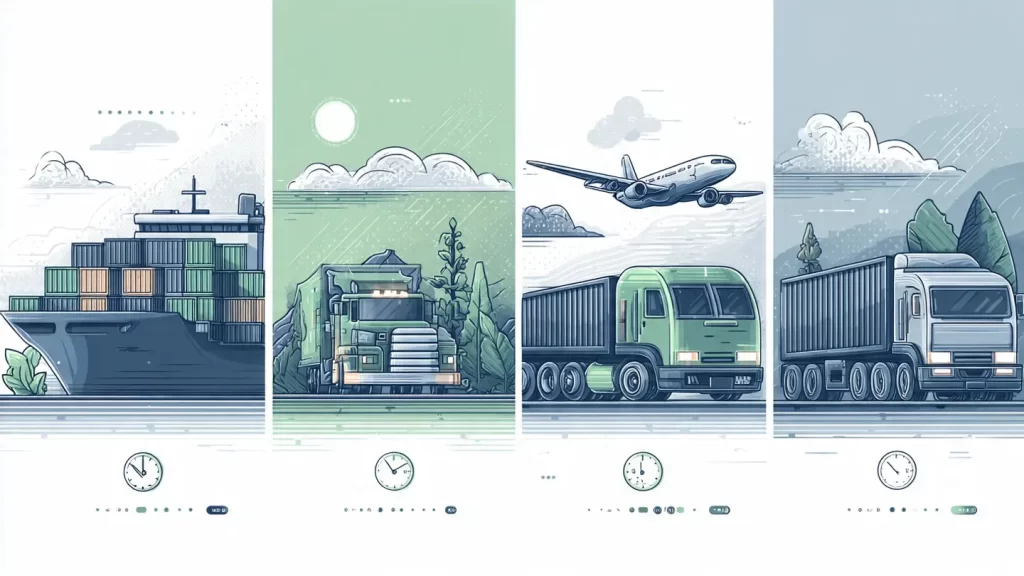
This is the first real decision every shipper faces. Each mode has a specific sweet spot. Here’s how they compare:
| Mode | Est. Transit (China → USA/EU) | Best For | Cost Level |
|---|---|---|---|
| Sea FCL | 25–35 days (USA) | Large volume, non-urgent | Lowest |
| Sea LCL | 30–40 days | Small–medium loads | Low–Medium |
| Air Freight | 5–10 days | High-value, urgent cargo | Highest |
| Railway (Belt & Road) | 18–22 days (EU) | Medium volume, EU-bound | Medium |
| Road/Truck | 3–7 days (regional Asia) | Cross-border regional moves | Low–Medium |
Sea freight is the default for most importers. If your cargo isn’t urgent and fills at least a pallet or two, sea is almost always the most cost-effective choice. FCL (Full Container Load) gives you a private container — better for large, regular shipments. LCL (Less than Container Load) shares container space with other shippers, which lowers cost for smaller volumes.
Air freight makes sense when speed matters more than cost — a product launch, a stockout situation, or high-value items where carrying cost outweighs freight spend. Expect to pay 4–6x more than sea, but gain 3–5x the speed.
Railway is the underused option that smart EU importers are finally discovering. China–Europe rail routes via the Belt & Road Initiative now run reliably on 18–22 day schedules, hitting cities like Duisburg, Warsaw, and Madrid. It’s the sweet spot between sea’s low cost and air’s speed — and it’s surprisingly stable even during peak seasons.
DDP, DDU, FOB, CIF — Which Incoterm Do You Actually Need?
Incoterms define one thing: who is responsible for what, and at which point during a shipment. Getting this wrong costs real money.
DDP — Delivered Duty Paid
The seller or forwarder handles everything — export customs, freight, import customs, duties, and door delivery. You receive goods with zero surprises. This is the best option for e-commerce brands and Amazon FBA sellers who don’t want to manage customs themselves.
DDU — Delivered Duty Unpaid
Goods arrive at your door, but you pay the import duties. Good for buyers who have customs accounts and prefer to manage duty payments themselves. Often slightly cheaper than DDP.
FOB — Free on Board
The supplier delivers goods to the named port. From that point, the buyer takes full responsibility. This is the most common term for experienced importers who have their own freight forwarder and want full control.
CIF — Cost, Insurance, Freight
The seller covers cost, insurance, and freight to the destination port — but not customs or last-mile delivery. You take over at the port. Widely used but less favored today because it limits the buyer’s control over freight choices.
Quick rule of thumb: If you’re new to importing from China, go DDP — it’s cleaner. As your volume grows and you build a logistics team, FOB gives you more control and often lower costs at scale.
Shipping Lithium Batteries and DG Cargo from China
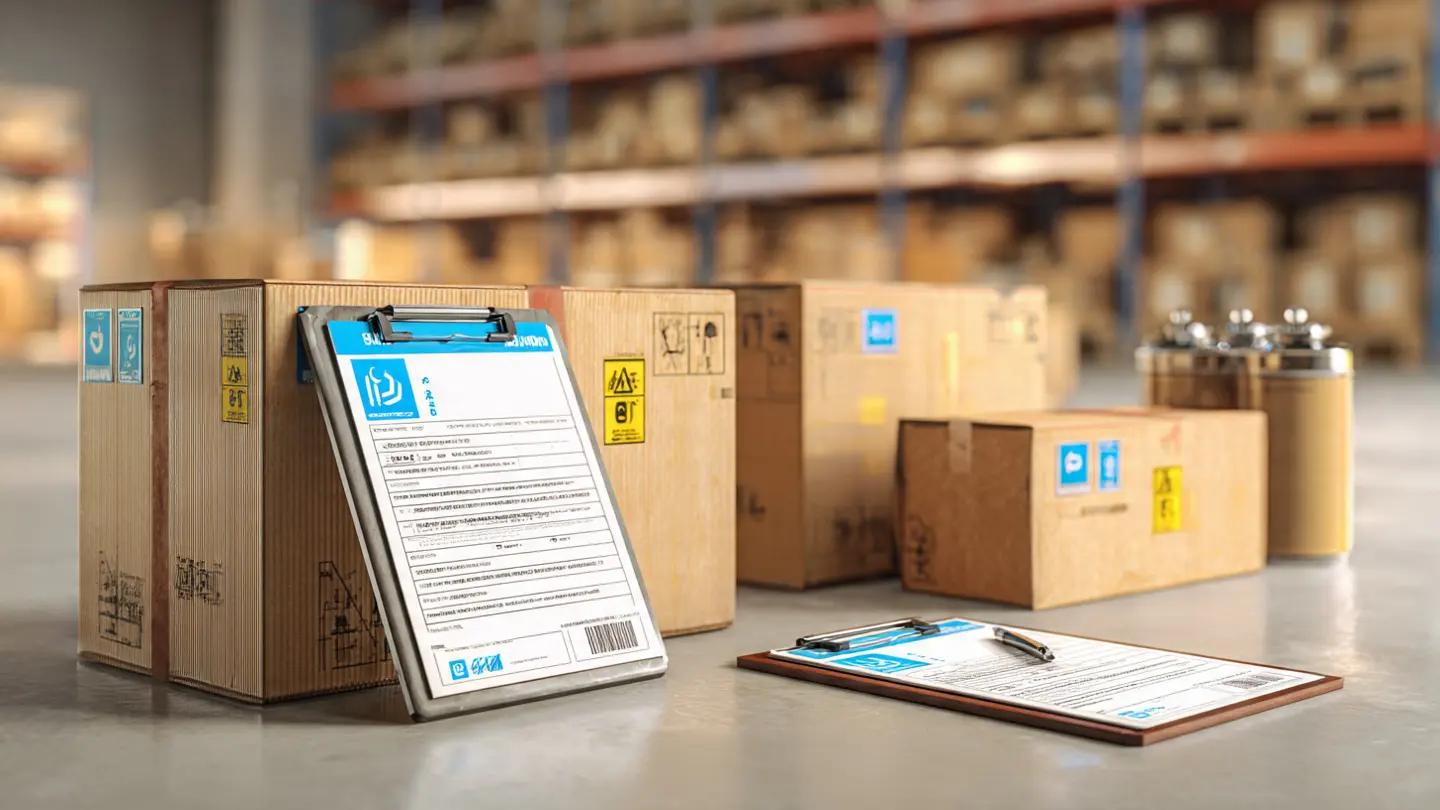
Here’s something most logistics guides skip entirely: lithium batteries are the most commonly mishandled cargo type in China exports.
Airlines refuse battery shipments every day. It’s not because batteries are impossible to ship — it’s because most shippers don’t follow IATA (International Air Transport Association) or IMDG (International Maritime Dangerous Goods) rules correctly.
Common mistakes include:
- Wrong UN number on the packing declaration (UN3480, UN3481, UN3090 — they’re not interchangeable)
- Missing or incomplete MSDS (Material Safety Data Sheet)
- Incorrect state-of-charge — lithium-ion cells must ship at ≤30% charge for certain classes
- Insufficient inner packaging protection
- Wrong packing group classification
Getting it right requires a forwarder with actual DG certification — not someone who “usually handles batteries.” Fexbuy’s DG-compliant shipping covers lithium batteries and regulated goods on dedicated EU and US routes, with full certification, stable schedules, and a low inspection rate that keeps your supply chain moving.
If you sell electronics, power tools, e-bikes, solar products, or anything battery-powered, this isn’t optional. It’s the difference between delivery and a costly return-to-origin.
Amazon FBA Shipping from China: Step by Step
Shipping to Amazon FBA from China has its own logic. Miss a step and Amazon rejects the shipment — or worse, loses it entirely.
Here’s the standard workflow Fexbuy manages for FBA clients:
- Supplier pickup — Fexbuy collects goods from your factory or supplier anywhere in China
- Warehouse intake — Cargo arrives at Fexbuy’s origin warehouse for inspection, consolidation, and prep
- Labeling and carton prep — FNSKU labels, carton marks, and pallet configuration per Amazon’s exact requirements
- Freight booking — Sea (FCL/LCL) or air depending on your timeline and inventory urgency
- Export customs clearance — Handled from China with full documentation
- Import customs + duties — Managed under DDP or DDU at the destination country
- Last-mile to Amazon FC — UPS, FedEx, or local carrier handoff directly to the Amazon fulfillment center
For a deeper look at the specific documents, costs, and timeline expectations involved, check out Fexbuy’s guide to FBA shipping from China — it covers common pitfalls that catch new sellers off guard.
Air vs Sea for FBA? Use air for urgent restocks or new product launches. Use sea for base inventory replenishment on established ASINs. Many smart sellers run both simultaneously — air for speed-sensitive SKUs, sea LCL for steady base stock.
Key China Shipping Routes in 2026
Route matters more than most people realize. Transit times, port congestion, and tariff exposure all vary significantly depending on where your cargo is headed.
China to USA
West Coast ports (LA/Long Beach) remain the primary entry point for China–USA cargo. Transit time via sea: 25–32 days from Shanghai. East Coast routing (via Panama) adds 5–8 days but bypasses West Coast congestion. In 2026, tariff exposure for China-origin goods remains a key planning factor — DDP pricing helps you lock in landed cost upfront.
For companies moving goods into North America, Fexbuy’s cross-border logistics for North America includes DDP air freight, road distribution, cold chain support, and US-Canada-Mexico freight solutions under one managed service.
China to Europe
Sea routing via the Suez Canal remains the standard for China–EU cargo (30–36 days to Northern Europe). Rail via the Belt & Road is gaining market share fast, especially for Germany, Poland, and Spain, with 18–22 day transit and competitive rates. Fexbuy’s railway options cover FCL, LCL, DDP, DDU, and FOB for EU-bound shipments.
China to UK
Post-Brexit, UK imports require their own customs entry — separate from EU clearance. VAT must be paid at import or deferred via duty deferment accounts. DDP is especially valuable for UK-bound shipments because it shields buyers from post-Brexit customs complexity. Fexbuy handles UK VAT deferment and customs clearance as part of its door-to-door UK service.
Beyond USA and Europe
Fexbuy also covers emerging high-growth corridors. The Africa route, for instance, requires experienced local partners who understand regulatory environments that vary dramatically by country. Fexbuy’s Africa logistics services team handles DG compliance, multimodal routing, and on-the-ground delivery across the continent.
Hidden Costs in China Freight — What to Watch For
The quote looked reasonable. Then the final invoice came with extra lines you didn’t expect. Sound familiar?
Here are the fees that catch importers off guard:
- THC (Terminal Handling Charges) — Origin and destination port handling fees, often charged separately from the freight rate
- Documentation fees — Bill of lading issuance, certificate of origin, export customs docs
- Destination port fees — Varies by port; can include security surcharges, fuel adjustments (BAF), and currency adjustments (CAF)
- Customs examination fees — If your cargo is selected for physical inspection, you pay for the exam
- Demurrage and detention — Daily charges if containers aren’t emptied or returned within free-time windows
- Residential delivery surcharges — Carriers like UPS and FedEx add fees for home delivery versus commercial addresses
A trustworthy logistics partner itemizes every charge upfront. Fexbuy’s no hidden costs policy means you get a full breakdown before your cargo moves — not a surprise on the invoice after it lands.
How to Choose a China Logistics Partner
There are hundreds of freight forwarders offering China logistics services. Most are middlemen without real infrastructure. Here’s a practical checklist before you commit:
1. Years of operation
Look for a proven track record, not just a slick website. 10+ years means they’ve handled supply chain disruptions, COVID, port strikes, and regulatory changes. Fexbuy has 21 years in the field.
2. Multimodal capability
Can they handle sea, air, rail, and road — and combine them when needed? Single-mode forwarders create gaps in your supply chain. If you want to explore global cross-border logistics options beyond one transport type, your partner should cover all modes.
3. DG and battery certification
If any part of your product range includes batteries or regulated goods, your forwarder must hold IATA and IMDG compliance. Ask for certificates — don’t assume.
4. In-house customs brokerage
Outsourced customs means another party, another delay risk, and less accountability. In-house brokerage keeps customs clearance under one roof.
5. Real-time tracking
You should be able to see where your cargo is at any point. Full-visibility tracking isn’t a premium feature in 2026 — it’s a baseline expectation.
6. On-time delivery rate
Ask for a real number, not a marketing claim. Industry average is around 85–90% during peak season. Fexbuy’s network maintains a 98% on-time delivery rate year-round, including Q4 peaks.
7. Transparent pricing
Ask for an itemized quote. If a forwarder resists breaking down costs, that’s your answer.
Frequently Asked Questions
Sea freight is the cheapest option for most shipments. LCL (Less than Container Load) suits smaller volumes, while FCL (Full Container Load) is most cost-effective for regular, high-volume shipments. Rail is competitive for EU-bound cargo if you don’t need air speed.
Sea freight from China to the US West Coast typically takes 25–32 days. East Coast routing via the Panama Canal takes 33–40 days. Actual transit varies by origin port, vessel schedule, and port congestion.
Yes — but only with the right compliance. Batteries must be properly classified (UN3480, UN3481, etc.), packed per IATA regulations, declared correctly, and shipped via carriers that accept DG cargo. Without proper documentation, airlines will refuse the shipment at check-in.
DDP stands for Delivered Duty Paid. Your forwarder or supplier handles everything — export, freight, import customs, duties, and last-mile delivery. You receive goods at your door with all costs settled. It’s the simplest incoterm for buyers who don’t want to manage customs.
Yes. Fexbuy manages the full FBA workflow — supplier pickup, warehouse prep, FNSKU labeling, freight booking (sea or air), customs clearance, and last-mile delivery directly to Amazon fulfillment centers in the US, EU, and UK.
Standard export documents include a commercial invoice, packing list, bill of lading or air waybill, certificate of origin, and (where applicable) export license. DG cargo requires additional documentation including MSDS and DG declarations.
Yes — Fexbuy’s network covers North America, Europe (EU and UK), Africa, Canada, and Australia. Each region has dedicated routing options with DDP/DDU/FOB/CIF availability.
Get a Free Quote for Your Shipment
Shipping from China doesn’t have to be a guessing game. Whether you’re moving a full container of electronics, sending an air freight restock to Amazon, or navigating battery cargo compliance for the first time — Fexbuy’s team has handled it before.
21 years of operations. 98% on-time delivery. No hidden costs. DG-compliant from day one.
Get your free shipping quote from Fexbuy — tell us what you’re shipping, where it’s going, and we’ll give you a clear, itemized price before anything moves.


