


Global Logistics and Supply Chain Services: The Complete Guide for Cross-Border Businesses
You ordered 5,000 units from a manufacturer in Shenzhen. Now what? Getting those goods from a factory floor in China to a customer’s doorstep in California — or a warehouse in Germany — involves a web of freight modes, customs rules, compliance documents, and carrier relationships. That’s exactly what global logistics and supply chain services exist to solve. And if you get it wrong, your goods sit in a port while your competitors keep shipping.
This guide breaks it all down — what these services actually include, how different shipping routes work, what the real costs look like, and how to pick a logistics partner that won’t let you down.
What Are Global Logistics and Supply Chain Services?
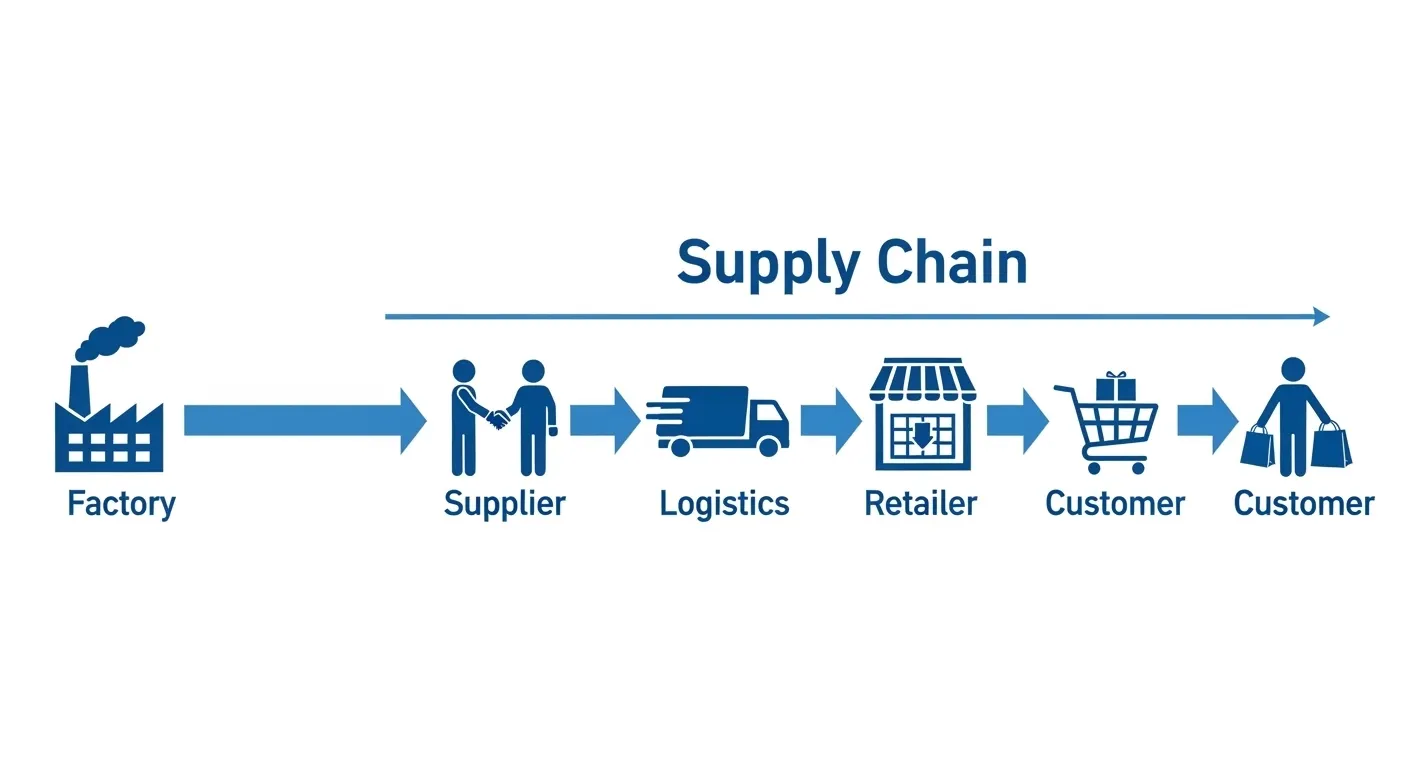
Global logistics refers to the physical movement of goods across international borders — by sea, air, rail, or road. It covers transportation, customs clearance, warehousing, and last-mile delivery.
Supply chain services are broader. They include every step from sourcing raw materials to delivering the finished product to the end customer. Think of logistics as one important part inside a larger supply chain machine.
Here’s the clearest way to think about it:
- Logistics = moving and storing goods efficiently
- Supply chain management = coordinating every partner, process, and resource involved in creating and delivering a product
When you hire a global logistics and supply chain services provider, you’re essentially outsourcing the entire physical journey of your product — from factory pickup to final delivery — to a team that does this every day.
Why Does This Matter for Your Business?
If you sell on Amazon, run a D2C brand, or import goods at volume, your logistics setup directly affects your margins, your delivery speed, and your customer satisfaction. A single customs delay can cost you your Buy Box rank. A wrong Incoterm can mean you’re paying VAT twice. These aren’t edge cases — they happen all the time to sellers who don’t have the right logistics partner.
The 5 Core Components of Global Supply Chain Services
Most providers bundle these services together, but it’s worth knowing what each one actually involves.
1. International Freight Forwarding
This is the foundation. Freight forwarders book cargo space on your behalf — whether it’s an ocean container, an air cargo hold, or a railway car. They handle route optimization, carrier selection, and booking confirmations.
You’ll typically choose between:
- FCL (Full Container Load) — you fill an entire container; better for large shipments
- LCL (Less than Container Load) — your cargo shares a container with others; more cost-effective for smaller volumes
Fexbuy’s international sea freight services (FCL & LCL) operate on dedicated China-to-US, China-to-EU, and China-to-UK routes with stable weekly schedules — so you’re not scrambling for space during peak season.
2. Customs Clearance and Compliance
Customs is where most logistics headaches actually happen. Your goods need the right HS codes, commercial invoices, packing lists, and certificates of origin. Miss one, and your shipment gets held — sometimes for weeks.
There are two main delivery terms that determine who handles customs:
- DDP (Delivered Duty Paid): The logistics provider handles all duties, taxes, and customs clearance. You know your exact landed cost upfront.
- DDU (Delivered Duty Unpaid): Customs fees fall on the buyer at the destination. It’s cheaper upfront but can surprise your customers.
Most e-commerce sellers prefer DDP because it removes uncertainty and protects the buyer experience.
3. Warehousing and Inventory Management
Good supply chain services include warehousing at origin (for consolidation) and sometimes at destination (for distribution). This is especially useful during Chinese New Year, when factories close and you need buffer stock ready to ship.
4. Last-Mile Delivery and Distribution
Getting a container to a destination port is only half the job. Last-mile delivery covers the final leg — from the port or warehouse to your customer’s door or an Amazon fulfillment center. This is often where costs spike and delays stack up.
5. Real-Time Tracking and Visibility
You shouldn’t have to guess where your cargo is. A strong logistics partner provides end-to-end tracking — from factory pickup in China to customs clearance to final delivery. Fexbuy’s full-visibility tracking system updates you at every checkpoint, so you’re never left wondering.
Global Logistics for E-Commerce Sellers — What’s Different?
Standard B2B freight and e-commerce logistics are not the same. E-commerce moves faster, involves smaller but more frequent shipments, and has to meet retailer-specific routing requirements.
Amazon FBA Routing and Compliance
Shipping to Amazon warehouses isn’t like shipping to a regular warehouse. Amazon has strict requirements around carton dimensions, labeling (FNSKU barcodes), pallet configurations, and delivery windows. If your shipment doesn’t comply, Amazon can refuse it — and charge you for the privilege.
Fexbuy’s Amazon FBA shipping service handles the entire process: factory pickup in China, warehouse consolidation, Amazon-compliant labeling, customs clearance with DDP, and final delivery to the fulfillment center. You don’t need to manage multiple vendors — it’s one clean workflow.
DDP vs. DDU — What You Actually Pay
Here’s a practical breakdown:
| Term | Who Handles Customs | Who Pays Duties & VAT | Best For |
|---|---|---|---|
| DDP | Your logistics provider | Included in freight cost | D2C brands, Amazon FBA sellers |
| DDU | Buyer at destination | Paid on arrival | B2B buyers who manage own customs |
| FOB | Buyer’s freight forwarder | Buyer pays from origin port | Importers with existing freight deals |
For most cross-border e-commerce sellers, DDP gives you the cleanest experience. There are no surprise charges at the destination, and your customers (or Amazon) receive the goods without customs hassle.
Peak Season Reliability — Why It Actually Matters
Q4 is brutal for shipping. Ports congest, air cargo rates triple, and carriers overbook. A logistics partner with intelligent routing and dedicated carrier contracts — not just whoever has cheap space — is what keeps your delivery rate stable when everyone else’s slips. Fexbuy’s 98% on-time delivery rate holds through peak season because of pre-booked capacity and multi-mode routing options.
Shipping Dangerous Goods and Lithium Batteries Internationally
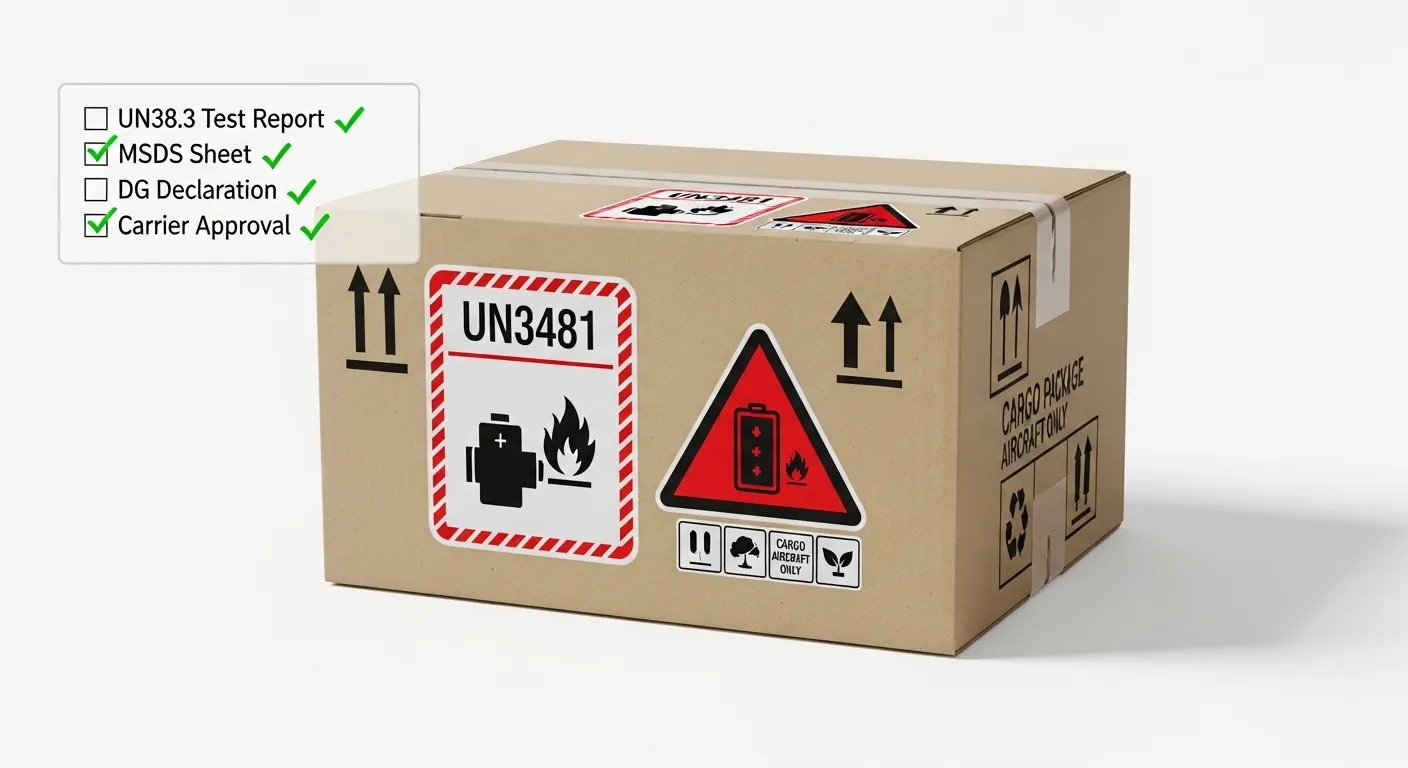
If you sell power banks, e-bikes, laptops, vapes, or any battery-powered product, you’re dealing with dangerous goods (DG) shipping. This is a specialized area that most general freight forwarders handle poorly — or refuse altogether.
The Regulatory Framework
Lithium batteries fall under strict international transport regulations:
- IATA Dangerous Goods Regulations for air freight
- IMDG Code for sea freight
- ADR regulations for road transport within Europe
These rules cover battery watt-hour ratings, state of charge, packaging requirements, and documentation. Non-compliance doesn’t just mean delays — it can mean cargo rejection, fines, or shipment destruction.
What DG-Compliant Shipping Looks Like in Practice
A proper DG logistics workflow includes:
- Battery certification (UN38.3 test reports, MSDS sheets)
- Correct packaging with inner/outer box labeling
- Accurate dangerous goods declarations
- Carrier approval for DG cargo
- Low customs inspection rates due to correct pre-clearance documentation
Fexbuy’s lithium battery transport service is built specifically for this. They handle full DG compliance from China — including VAT deferment for EU shipments — so your battery products move without the regulatory stress.
Key Global Trade Routes — China to US, EU, and UK
Most global logistics guides are written from a US or European perspective. But if you’re sourcing from China — which most e-commerce sellers do — the route structure looks different. Here’s what actually matters:
| Route | Best Mode | Estimated Transit Time | Recommended Incoterm |
|---|---|---|---|
| China → USA | Sea FCL/LCL or Air | Sea: 18–35 days / Air: 5–9 days | DDP or DDU |
| China → Germany / EU | Sea or Rail | Sea: 25–35 days / Rail: 14–20 days | DDP (VAT deferment available) |
| China → UK | Sea or Air | Sea: 22–30 days / Air: 5–8 days | DDP (post-Brexit customs handled) |
| China → Canada | Sea or Air | Sea: 18–28 days / Air: 5–7 days | DDP or DDU |
| China → Africa | Sea | Sea: 25–40 days | FOB or DDU |
Rail freight from China to Europe has become a serious option post-2020. It’s faster than sea and cheaper than air — typically hitting Germany in 14–18 days via the China-Europe Railway Express. Fexbuy’s railway transport service (FCL & LCL) covers this route with both full container and consolidated options.
How to Choose a Global Logistics and Supply Chain Partner
Not all logistics companies are equal — and choosing the wrong one is expensive. Here’s what to actually look for:
5 Questions to Ask Before You Hire
- Do you have dedicated routes, or do you broker space on the open market? Dedicated routes mean stability. Brokered space means you’re at the mercy of spot rates.
- Can you handle DG cargo, specifically lithium batteries? Most forwarders can’t. If your product involves batteries, ask this first.
- Do you offer DDP with VAT deferment for EU shipments? This saves your European buyers from unexpected charges at customs.
- What’s your on-time delivery rate during peak Q4? Anyone can hit 98% in February. Ask about October and November.
- Do you provide full end-to-end tracking? “We’ll let you know if there’s a problem” is not tracking.
Red Flags to Watch For
- Hidden surcharges (fuel, peak season, customs handling) not disclosed upfront
- No experience with your specific product category
- Poor communication when customs holds happen — because they will happen occasionally
- No China-side presence — if they can’t pick up from your supplier directly, you’ll need another vendor
What Do Global Logistics and Supply Chain Services Actually Cost?
Pricing in logistics is notoriously opaque. Here’s how to think about it honestly.
The Main Cost Drivers
- Weight and volume: Most shipments are charged on CBM (cubic meters) for sea or chargeable weight for air
- Route and mode: Air from China to the US costs 5–8x more than sea per kg — but saves 3–4 weeks
- Incoterms: DDP includes duties and VAT in the freight price; DDU does not
- Peak season premiums: Rates can spike 40–80% between September and November
- Special cargo: DG, oversized, or temperature-sensitive cargo always carries a surcharge
VAT Deferment for EU Shipments
If you ship DDP to Europe, ask your provider about VAT deferment. Instead of paying VAT upfront at customs, you defer it to the monthly VAT return — which protects your cash flow significantly on large shipments. Fexbuy offers this as a standard feature on EU routes.
How to Get an Accurate Quote
The fastest way to get a real number is to provide: cargo weight, dimensions (CBM), origin city in China, destination (city or Amazon warehouse code), and your preferred Incoterm. Ballpark quotes without these details are usually useless.
Frequently Asked Questions
What is the difference between global logistics and supply chain management?
Global logistics refers to the physical movement and storage of goods across borders — including freight, customs, and delivery. Supply chain management is broader: it covers every step from sourcing raw materials to delivering the finished product, including supplier relationships, production planning, and distribution strategy. Logistics is one function within a larger supply chain.
What does DDP mean in international shipping?
DDP stands for Delivered Duty Paid. It means your logistics provider handles all transportation, customs clearance, import duties, and taxes. You receive the goods at your door or warehouse with no additional fees. It’s the most straightforward Incoterm for e-commerce sellers.
How long does sea freight from China to the US take?
Standard sea freight from China to the US West Coast takes approximately 14–20 days. Shipping to East Coast ports adds another 7–10 days. Transit times vary based on the specific origin port in China and destination port in the US.
Can lithium batteries be shipped internationally?
Yes, but they require proper DG certification and compliance with IATA (air) or IMDG (sea) regulations. This includes UN38.3 test reports, correct packaging, labeling, and DG declarations. Working with a certified DG-compliant logistics provider like Fexbuy is essential for battery cargo.
What is Amazon FBA shipping and how does it work?
Amazon FBA (Fulfillment by Amazon) shipping involves sending your inventory directly to Amazon’s fulfillment centers. Your goods must meet Amazon’s specific labeling, packaging, and routing requirements. A logistics partner picks up from your supplier in China, prepares the shipment to Amazon standards, clears customs with DDP, and delivers directly to the designated Amazon warehouse.
How do I track my international shipment?
A reliable logistics provider gives you a tracking number and access to a tracking portal that updates at each checkpoint — from origin warehouse, to departure port, to customs clearance, to final delivery. Fexbuy provides full end-to-end visibility from China to the destination country.
What is the cheapest way to ship from China to Europe?
Sea freight LCL (Less than Container Load) is typically the cheapest option for small-to-medium shipments. Railway freight is a middle ground — faster than sea and more affordable than air. For time-sensitive or high-value cargo, air freight is faster but significantly more expensive.
What documents are needed for customs clearance?
Standard customs documents include: commercial invoice, packing list, bill of lading or air waybill, certificate of origin, and (for DG cargo) MSDS and UN38.3 test reports. Some destinations require additional certificates depending on the product type.
Why Choose Fexbuy for Global Logistics and Supply Chain Services?
Fexbuy isn’t a generalist freight broker. The company is built specifically for cross-border e-commerce businesses that source from China and sell in North America, Europe, and the UK. That focus matters.
Here’s what makes Fexbuy different:
- 21 years of international logistics experience — with a team that knows China’s shipping infrastructure inside out
- 98% on-time delivery rate — maintained through peak season via intelligent routing and dedicated carrier partnerships
- Full DG and lithium battery compliance — including battery certification, low inspection rates, and proper documentation
- No hidden costs — your quote includes freight, customs, duties, and delivery. No surcharge surprises.
- Multiple shipping modes — sea transport (FCL & LCL), air freight, railway transport, and Amazon FBA delivery — all under one roof
- VAT deferment for EU shipments — so your cash flow doesn’t take a hit at customs
- China pickup included — Fexbuy can collect directly from your supplier anywhere in China
Whether you’re shipping 50kg of electronics or 20 CBM of battery-powered scooters, Fexbuy handles the complexity so you can focus on selling.
Ready to simplify your global supply chain?
Get a Free Quote from Fexbuy →
Tell us your cargo type, origin, destination, and preferred Incoterm — and you’ll have a real price within 24 hours. No vague estimates, no hidden fees.


