


Lithium Battery Shipping From China to Australia
Fexbuy is a Shenzhen-based DG freight forwarder with 21 years’ experience in battery logistics, IATA / IMDG-compliant handling, DDP/DDU/FOB/CIF options, and quote support by Free Quote form or WhatsApp.
What We Ship From China to Australia
We support commercial battery shipments from factories, trading companies, OEM suppliers, electronics brands, Amazon sellers, repair-part distributors, and industrial importers.
Common cargo includes:
- Standalone lithium-ion batteries and lithium polymer battery packs
- Batteries packed with equipment, such as chargers, tools, instruments, and electronics
- Batteries contained in equipment, such as laptops, meters, medical devices, and control units
- Lithium metal batteries and cells where documentation is complete
- Power banks, e-bike batteries, scooter batteries, tool batteries, LiFePO4 packs, and ESS modules
- Battery-powered equipment or vehicles that need UN classification before booking
For buyers comparing broader battery lanes, our main lithium battery shipping service explains how we handle DG cargo across multiple destinations and transport modes.
Australia Rules That Make Battery Shipping Different
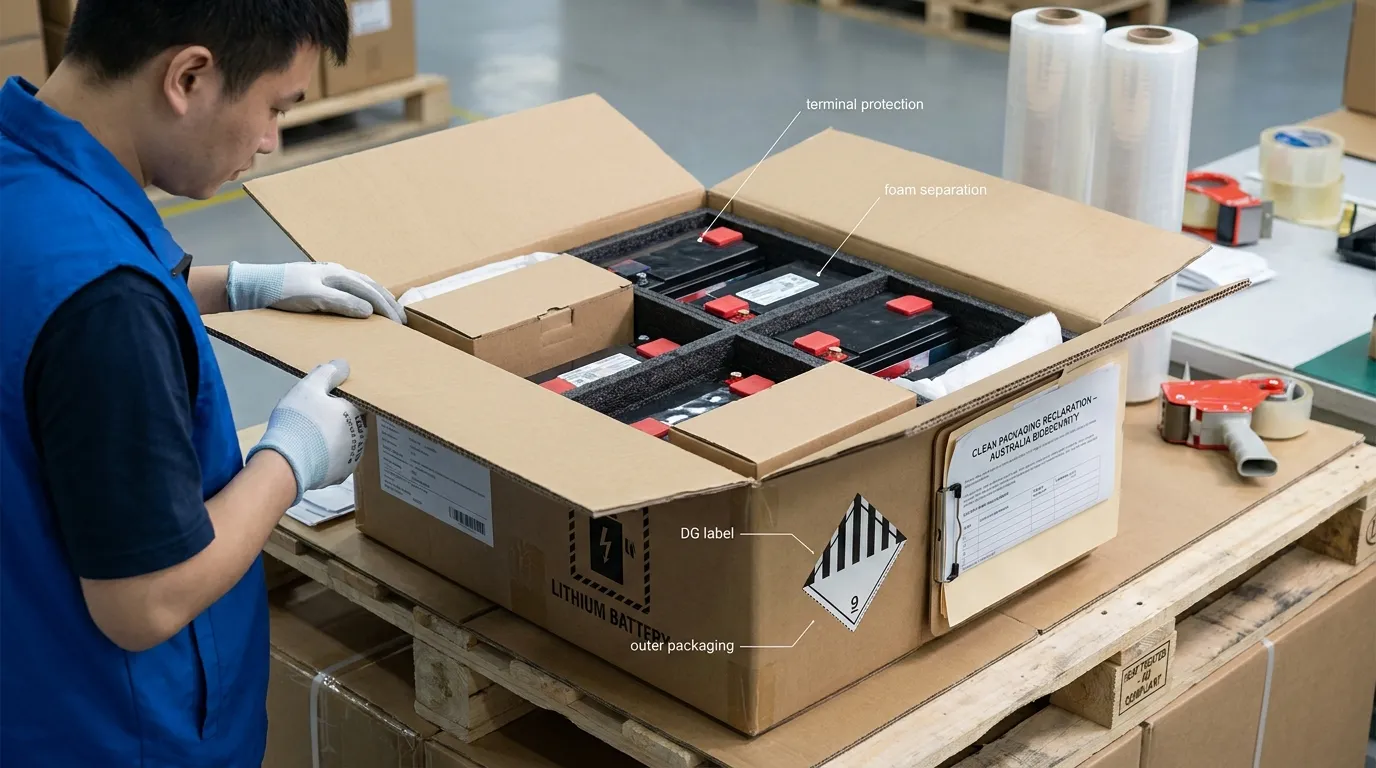
Australia is a sensitive destination for lithium battery freight because the shipment must satisfy both DG transport rules and Australian import requirements. A shipment may be correctly packed for international transport but still face delays if customs, GST, delivery address, or packaging declarations are not prepared clearly.
For Australia-bound cargo, we check the battery type, UN number, Watt-hour rating, lithium content, state of charge, packaging method, label requirements, and destination delivery conditions before booking. If the shipment uses wooden pallets, crates, dunnage, or other timber packaging, the importer must consider Australia’s biosecurity controls, including treated wood packaging and packing declaration requirements.
GST and import handling also matter. Some importers prefer DDP because they want one landed delivery solution with customs and tax handling arranged in advance. Others prefer DDU, FOB, or CIF because they already have an Australian customs broker or internal import process. The right option depends on cargo value, importer setup, delivery postcode, and whether the destination is a warehouse, Amazon facility, 3PL, business address, or project site.
UN Classification and DG Compliance Checks
Before any booking, the shipment must be classified correctly. The UN number affects carrier acceptance, labels, packing instructions, documents, and whether air freight is possible.
| UN Number | Cargo Type | Common Examples | Key Compliance Notes |
|---|---|---|---|
| UN3480 | Lithium-ion batteries shipped alone | Battery packs, cells, power banks | Usually stricter for air; SoC and CAO rules may apply |
| UN3481 | Lithium-ion batteries packed with or contained in equipment | Electronics, tools, devices | Equipment details and packing method must match documents |
| UN3090 | Lithium metal batteries shipped alone | Lithium metal cells or packs | Requires careful lithium content verification |
| UN3091 | Lithium metal batteries packed with or contained in equipment | Devices using lithium metal batteries | Classification must match product configuration |
| UN3171 | Battery-powered vehicle or equipment | E-bike, scooter, machinery | Needs review of battery installation and transport condition |
| UN3536 | Lithium batteries installed in cargo transport unit | Large battery systems in specific transport units | Used only when applicable to the actual cargo setup |
For Class 9 lithium battery cargo, we review UN38.3 test summary, MSDS/SDS, Dangerous Goods Declaration, invoice, packing list, battery photos, carton markings, terminal protection, short-circuit protection, and outer packaging. Standalone lithium-ion batteries may require a state-of-charge limit, often planned around the 30% SoC rule for air acceptance. Not every battery can move by air, so the transport mode must be selected after the DG review, not before it.
Shipping Methods and Planning Transit From China to Australia
The best mode depends on battery type, shipment size, urgency, destination city, and carrier acceptance. Exact transit time is confirmed at quote stage because DG acceptance, sailing schedules, customs release, and final delivery appointments can affect the plan.
| Mode | Best For | Planning Range | Notes |
|---|---|---|---|
| DG air freight | Urgent samples, small battery shipments, approved battery-in-equipment cargo | Faster option, confirmed per lane | Stronger restrictions; documents and SoC must be accepted before booking |
| DG sea freight LCL | Small to medium commercial shipments | Usually slower but more economical | Suitable when cartons can be consolidated under DG rules |
| DG sea freight FCL | Larger battery volumes, OEM orders, palletized cargo | Best for volume planning | More control over container loading, segregation, and documentation |
| DDP door delivery | Importers wanting customs/tax/final delivery arranged | Confirmed by postcode and cargo type | Useful for sellers, brands, and buyers without their own broker |
| DDU / FOB / CIF | Importers with their own broker or import setup | Depends on handover point | Buyer keeps more responsibility after arrival or destination clearance |
For importers who need landed delivery, our battery DDP shipping from China service is the natural option when customs clearance, GST handling, and final delivery need to be coordinated together.
5-Step Process: China Pickup to Australia Door Delivery
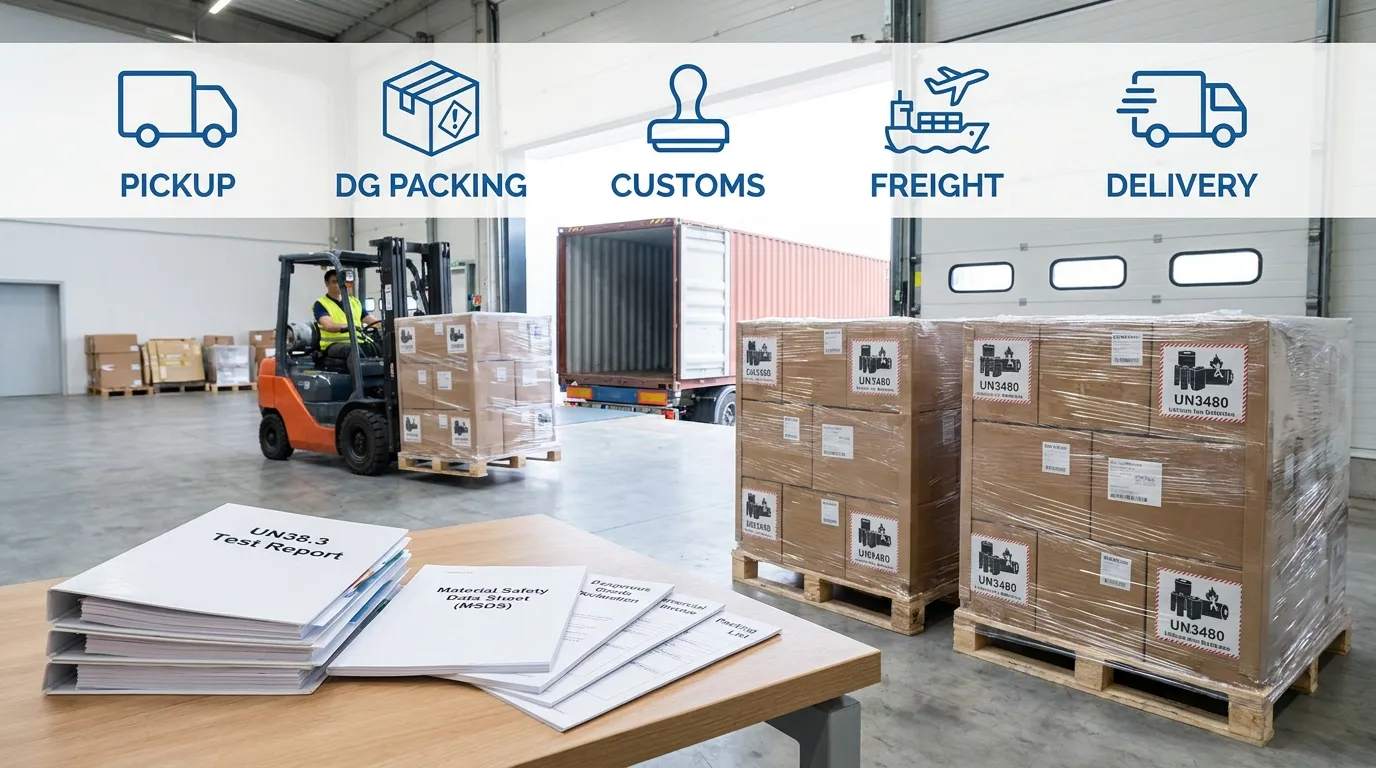
1. Supplier Pickup and Cargo Review
We collect shipment details from your supplier in Shenzhen, Guangzhou, Dongguan, Shanghai, Ningbo, Yiwu, or other China origin cities. The review starts with battery type, quantity, carton size, gross weight, destination postcode, and delivery address type.
2. DG Packing, Labeling and Document Check
Our team checks whether the cargo needs Class 9 labels, lithium battery marks, cargo aircraft only labels, UN specification packaging, pallet wrapping, terminal insulation, or repacking before export. This step reduces rejection risk before the shipment reaches the carrier.
3. China Export and Carrier Booking
After the DG documents match the cargo, we arrange export declaration and book the correct transport channel. For lithium batteries, carrier acceptance is not automatic; the documents, packing photos, and classification must align.
4. Air or Sea Freight to Australia
The cargo moves by approved air or sea channel based on classification, urgency, and cost target. We coordinate shipment tracking, routing updates, and arrival planning.
5. Australia Customs, GST/DDP Handling and Final Delivery
At destination, we support customs clearance, tax/payment handling according to the agreed Incoterm, and final delivery to warehouse, business address, Amazon/3PL facility, or project site in major Australian cities such as Sydney, Melbourne, Brisbane, Perth, and Adelaide.
Documents Required for Battery Imports Into Australia
A clean document set is one of the biggest factors in avoiding delays. For most commercial shipments, buyers should prepare:
- Commercial invoice with clear product description, HS code, value, and Incoterm
- Packing list with carton count, gross weight, net weight, and dimensions
- MSDS/SDS showing battery chemistry and hazard information
- UN38.3 test summary for lithium battery transport acceptance
- Dangerous Goods Declaration when required by the mode and carrier
- Battery photos, carton photos, and label photos
- Watt-hour rating or lithium content data
- State-of-charge confirmation for standalone lithium-ion batteries where required
- Importer details, delivery address, and Australian contact information
- Packing declaration and wood packaging details if pallets, crates, or dunnage are used
Missing, mismatched, or outdated documents can cause carrier refusal, customs questions, warehouse holds, repacking costs, or return risk.
DDP vs DDU for Australian Battery Importers
DDP is often chosen by Amazon sellers, small importers, and overseas brands that want door delivery without managing every customs step themselves. With DDP, the freight plan is built around landed delivery: export, international freight, import clearance, tax handling, and local delivery are coordinated under one shipping solution.
DDU, FOB, and CIF may work better when the Australian buyer already has a broker, GST process, or preferred local delivery partner. These options can give the importer more control, but they also require the buyer to manage more steps after arrival.
The key is deciding before shipment leaves China. Changing Incoterms after arrival can create delays, extra communication, and cost uncertainty.
Why Choose Fexbuy for China to Australia Battery Freight?
Fexbuy focuses on dangerous-goods battery logistics, not general parcel forwarding. That matters because lithium batteries require document review, packing control, carrier acceptance, and destination planning before the shipment moves.
Reasons importers work with us:
- 21 years of freight forwarding experience
- DG specialist team for lithium battery cargo
- UN38.3, IATA, and IMDG-compliant shipping process
- DDP/DDU/FOB/CIF service options
- Door-to-door delivery support from China to Australia
- Low inspection rate through pre-shipment document and packing checks
- 98% on-time performance across managed shipments
- Free Quote and WhatsApp support for fast RFQ review
If you also import batteries into North America, see our destination page for lithium battery shipping from China to USA for a similar lane-specific process.
FAQ
Can I arrange lithium battery shipping from China to Australia?
Yes. Lithium batteries can be shipped from China to Australia when the cargo is correctly classified, documented, packed, labeled, and booked through an approved DG transport channel. The forwarder must check the UN number, MSDS, UN38.3, packing method, and carrier acceptance before shipment.
What documents are needed to import lithium batteries into Australia?
Most shipments need a commercial invoice, packing list, MSDS/SDS, UN38.3 test summary, battery specifications, carton photos, and DG declaration where required. Australia-bound shipments may also need packing declarations and wood packaging details if pallets, crates, or dunnage are used.
What is the difference between UN3480 and UN3481?
UN3480 is for lithium-ion batteries shipped alone. UN3481 is for lithium-ion batteries packed with equipment or contained in equipment. This difference affects packing instructions, labels, documents, carrier acceptance, and whether air freight is available.
Can lithium batteries be shipped to Australia by air?
Some battery shipments can move by air, but not all. Standalone batteries face stricter limits, including state-of-charge and cargo-aircraft-only requirements. Battery-in-equipment shipments may be easier to accept, but the final decision depends on the battery specification and carrier rules.
Is DDP available for battery shipments to Australia?
Yes, DDP can be arranged for suitable commercial shipments after cargo review. It is useful when the importer wants customs clearance, GST handling, and final delivery coordinated as part of one door-to-door solution.
Why do battery shipments get rejected?
Common reasons include missing UN38.3, inconsistent MSDS information, wrong UN number, incorrect Class 9 labeling, exposed terminals, poor packaging, unclear invoice descriptions, undeclared battery content, or non-compliant timber packaging for Australia-bound cargo.
Get a Free Quote for China to Australia Battery Shipping
Send your battery specs, MSDS, UN38.3 test summary, carton size, gross weight, quantity, supplier city, Australian delivery postcode, and preferred Incoterm. Our DG team will check the classification, recommend air or sea freight, confirm DDP/DDU options, and provide a shipping plan.
Get a Free Quote or send the shipment details by WhatsApp to start your Australia battery freight review.


