


Rail Cargo Solutions: Closing the Visibility Gap for 2026 Planners
If you’re stepping into a planning role in 2026, your biggest enemy isn’t a late train, a customs queue, or a congested terminal – it’s the visibility gap that keeps you guessing. Data comes in bursts, each system speaks its own dialect, and by the time exceptions show up on your screen, you’re already behind. Rail Cargo Solutions change that equation. Rail’s structured events and steady timetables make it the most “forecastable” mode across Eurasia, but only if you can bring all the signals together in one reliable picture.
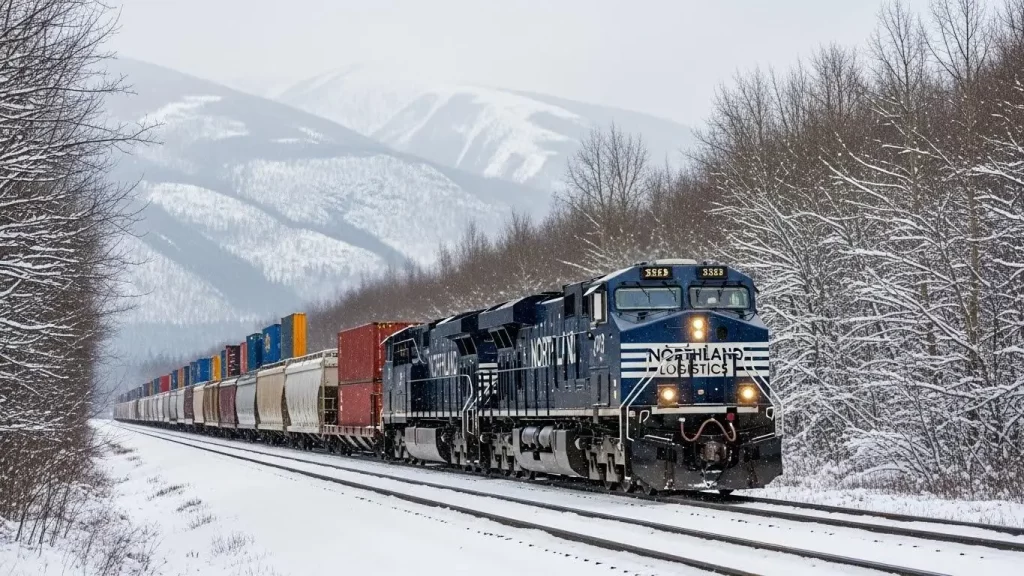
This guide shows how to reduce blind spots on China-Europe and China-UK corridors, cut cost and transit time with rail, use FEXBUY’s multi-source data to predict ETAs, handle cross-border exceptions before they become failures, and build a sustainable, dependable operation.
Closing the Visibility Gap
Most teams don’t suffer from a lack of data – they suffer from a lack of cohesion. EDI messages trickle in hours late. You can track a container but not the orders inside it. Border procedures feel opaque until a wagon is already waiting. Escalations rely on emails and calls instead of structured workflows. The result is reactive planning, inflated safety stocks, and service levels that wobble with each disruption.
A practical fix starts with three actions:
•Consolidate rail movement data from operators, forwarders, terminals, and customs into a single, consistent timeline.
•Normalize event milestones so status means the same thing across every lane and partner.
•Deliver predictive ETAs that account for dwell, border steps, and downstream impacts – so planners can trust the dates they commit.
When you do this well, you replan faster, carry less buffer stock, and deliver more orders on time without scrambling.
Why Rail Cuts Both Cost and Transit Time
On the China-Europe and China-UK lanes, rail sits in the sweet spot between air and sea. It moves faster than a vessel but at a fraction of the cost of flying. As a rule of thumb, Rail Cargo Solutions can reduce transport spend by roughly 50% versus air while trimming transit times by about 50% versus ocean. For planners forced to trade budget against lead time, that’s decisive.
There are structural reasons rail performs well:
•Schedules are precise and resilient. Trains aren’t stuck in road traffic, and they run in most weather conditions, including snow, heavy rain, and fog.
•The environment is controlled. Lower theft rates and fewer accidents translate into steadier plans and fewer claims.
•Inland reach is superior. Rail connects deep into continental hubs where planes and ships can’t reach directly, often shortening the last mile.
•Digitally aligned customs flows reduce friction. With a compliant workflow and document readiness checks tied to train slots, cross-border handovers get smoother.
And there’s a network effect: as more volume shifts from truck to train, road bottlenecks ease, and rail capacity becomes a dependable backbone for long-haul freight.
What Visibility Means in 2026
Visibility isn’t a pin on a map. It’s a living forecast that updates before you need it – across shipments and orders, from ramp to ramp, and all the way to your customer.
A modern rail visibility model should include:
•Real-time status at wagon, container, and order level, not just one layer.
•Predictive ETAs that incorporate terminal dwell, handovers, and border checks, updated with live performance.
•Early risk signals for missed connections, abnormal dwell, re-routing, equipment issues, or document gaps.
•Customs readiness indicators that tell you what’s missing and when it will block movement.
•End-to-end milestone integrity across pickup, ramp-in, line-haul, border exit/entry, terminal out, and final delivery.
When ETAs are credible and exceptions are transparent, every function moves in sync. Even amid the recent blizzards across Europe and the United States (grounded flights, road closures, reduced pickup windows, and carrier service suspensions), procurement buys to a realistic clock, inventory buffers shrink, and customer teams make promises they can keep, adjusting commitments with visibility into weather-driven delays and recovery plans.
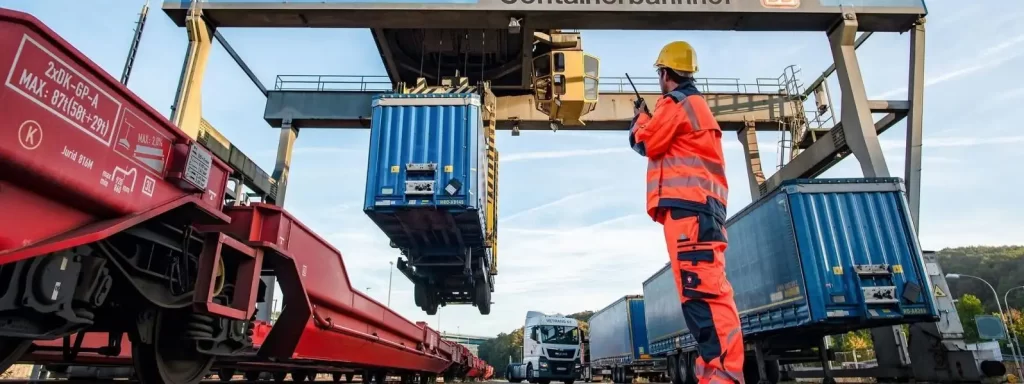
FEXBUY‘s Rail Cargo Solutions: Data In, One Timeline Out
FEXBUY was built around one premise: planners need a single truth. Our platform ingests live feeds from railway operators, freight forwarders, terminal operating systems, customs brokers, and IoT telematics. We standardize the noise into a coherent rail timeline so you don’t have to reconcile five screens to answer one question.
What that looks like in practice:
•Multi-source integration: schedules, movement messages, dwell records, border and release status, and sensor signals are harmonized into common milestones.
•Predictive ETAs: models blend published timetables with lane-level performance, weather resilience, terminal capacity, and historical dwell patterns. The result isn’t a generic ETA – it’s the ETA for this train, on this lane, in this week’s conditions.
•Risk scoring and alerts: if a connection is likely to be missed, a dwell turns abnormal, or a document gap threatens a crossing, planners see it before it bites.
•Planner workflows: exceptions funnel into queues with suggested actions, rebooking options, and communication tools on one screen so decisions travel fast.
Consider a Birmingham-bound order departing Chengdu. FEXBUY ingests the origin ramp event, links the chosen line-haul train, evaluates border handover capacity, and measures terminal dwell at critical hubs. If Brest shows unusual congestion or the customs broker flags a document gap for the UK leg, the system adjusts ETAs and escalates options before the problem reaches the customer.
End-to-End Visualization Without the Gaps
FEXBUY links the entire journey – factory pickup, ramp-in, line-haul, border handover, terminal operations, and final delivery – so you see the plan and the reality together. Container and order views stay synchronized, which means inventory and customer commitments follow the same clock. You can zoom out to corridor-level performance or drill down to a single wagon’s dwell history, depending on the question at hand.
Dashboards Planners Actually Use
KPIs focus on what you can act on: on-time performance by lane and partner, dwell by terminal, exception aging, and the orders most at risk. Filters by corridor, shipper, consignee, or SKU help prioritize the moves that matter, not just the ones that make noise. The goal is simple – to turn attention into outcomes.
Exception Management Across Borders
Disruptions are unavoidable; the advantage is catching them early and correcting course quickly. FEXBUY automates triage, escalates to the correct owner, and recommends actions that preserve service levels and keep customer commitments intact.
Our approach includes:
•Early-warning alerts when ETAs slide, connections are threatened, wagons draw flags, or terminals congest.
•Decision analytics that reveals options – the next possible train, reroute candidates – and models the ripple effect on orders and appointments.
•Collaboration workflows that share context and evidence with partners rather than a code alone, accelerating resolution.
When a train slot is missed at Malaszewicze, FEXBUY locates the next suitable departure, recalculates the ETA, highlights impacted orders, and starts a shared channel with the forwarder and customs broker. Planners move from surprise to solution in a single workflow.
Customs and Documentation, Handled Upfront
Cross-border moves are only as fast as their paperwork. FEXBUY tracks document completeness against each leg of the journey, aligning customs workflows with train schedules. By the time a shipment reaches an EU or UK border, you already know whether it’s clear to proceed. That reduces dwell at the gate and cuts the time planners spend chasing forms at the last minute.
Sustainability, Capacity, and Planning Confidence
Rail moves heavy and oversize cargo reliably while producing fewer emissions per ton-mile than road or air. As companies push toward emissions targets, Rail Cargo Solutions help logistics teams contribute measurable reductions without sacrificing service. High-capacity trains reduce dependence on truck drivers and insulate you from road congestion spikes. For planners, that means steadier transit times, better inventory turns, and fewer “heroics” to hit a delivery window.
Turning Rail Advantage Into Daily Wins
Adopting Rail Cargo Solutions isn’t just about a mode shift; it’s about making visibility real, exceptions manageable, and decisions faster. FEXBUY helps you convert rail’s inherent strengths into daily planning gains:
•Predictive ETAs you can defend in front of sales and customers.
•Fewer stockouts thanks to earlier risk signals and credible lead times.
•Safer, more controlled moves that reduce claims and surprises.
•Streamlined cross-border execution from China to Europe and the UK.
You get an integrated rail view, structured milestones, and actionable exceptions – all in one place.
Next Steps
•Request a live demo that uses your lanes and schedules so you can see the difference on familiar corridors.
•Benchmark rail ETAs and total landed cost against your current air and ocean mix; identify lanes where rail wins on both.
•Launch a pilot on a China-Europe corridor and measure the improvement in on-time performance and inventory stability.
Say yes to Rail Cargo Solutions that turn visibility into results. Contact FEXBUY to plan smarter, lower total landed cost, and deliver on time with confidence.


