


Mechanics Transportation Company for Oversized and Heavy Equipment Transport
Moving industrial machinery is not ordinary freight forwarding. A shipment may be oversized because of its dimensions, heavy because of its concentrated mass, or technically sensitive because vibration, moisture, lifting angle, or improper support could affect the equipment.
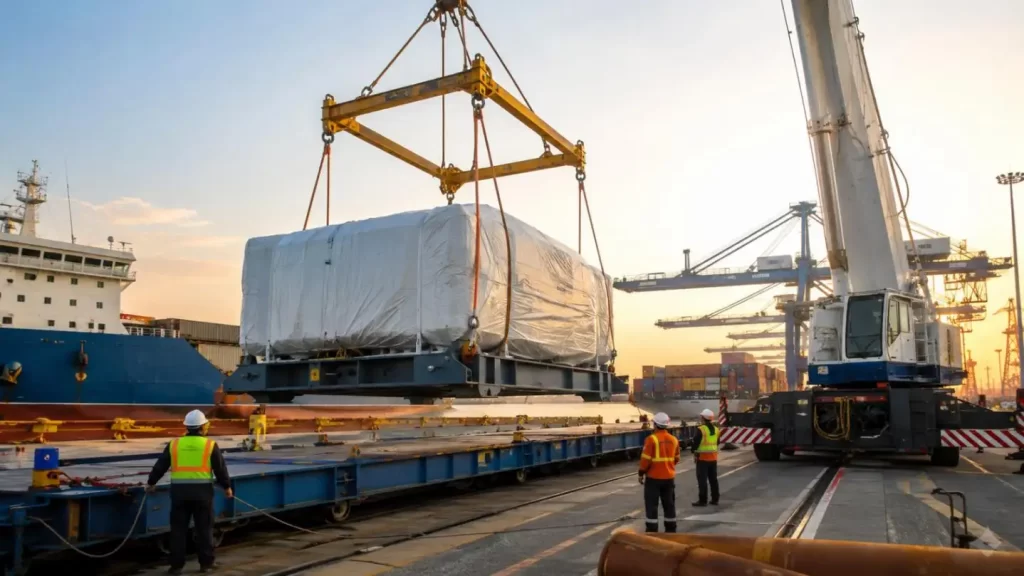
A professional Mechanics Transportation Company connects these variables into one transport plan. From Fexbuy’s perspective, the correct starting point is not the freight rate—it is verified cargo data, handling constraints, route feasibility, and delivery-site conditions.
When Is a Mechanics Transportation Company Necessary?
Standard freight may work when a machine fits inside a general-purpose container and can be handled by conventional forklifts. A specialized Mechanics Transportation Company is usually needed when:
•The packed dimensions exceed container or road limits.
•The equipment creates high point loads on the trailer or container floor.
•Its center of gravity is elevated, offset, or unknown.
•Loading requires cranes, jacking systems, skates, or rigging teams.
•The route involves bridge, tunnel, height, or axle-load restrictions.
•The machine must remain upright or within a specified tilt angle.
•Several road, rail, sea, or terminal operations must be coordinated.
Typical cargo includes CNC machines, injection molding machines, generators, compressors, industrial boilers, production lines, construction equipment, and large molds.
Oversized, Heavy, and Project Cargo Defined
These designations impact the choice of equipment, permits, stowage, and insurance.
| Cargo Category | Main Issue | Planning Priority |
| Oversized Cargo | Exceeds normal length, width, or height | Route clearance and special permits |
| Heavy Cargo | Exceeds normal weight or axle capacity | Load distribution and lifting capacity |
| High-value Machinery | High financial or operational value | Packing, monitoring, and insurance |
| Project Cargo | Multiple units or transport stages | Sequencing and multimodal coordination |
One machine may fit in all four categories. When assessing a shipment, a Mechanics Transportation Company must look at the shipment as a complete project rather than thinking about it in terms of weight alone.
Technical Data Required Before Quotation
At Fexbuy, machinery transport planning begins with a technical cargo sheet. “One machine” is not enough information for a dependable quotation.
The shipper should provide:
•Equipment name, value, and HS code
•Unpacked and packed dimensions
•Net weight and gross shipping weight
•Center-of-gravity position
•Base-frame dimensions and load-bearing points
•Approved lifting and lashing points
•Whether the machine can be dismantled or tilted
•Pickup and delivery-site access conditions
•Target delivery date
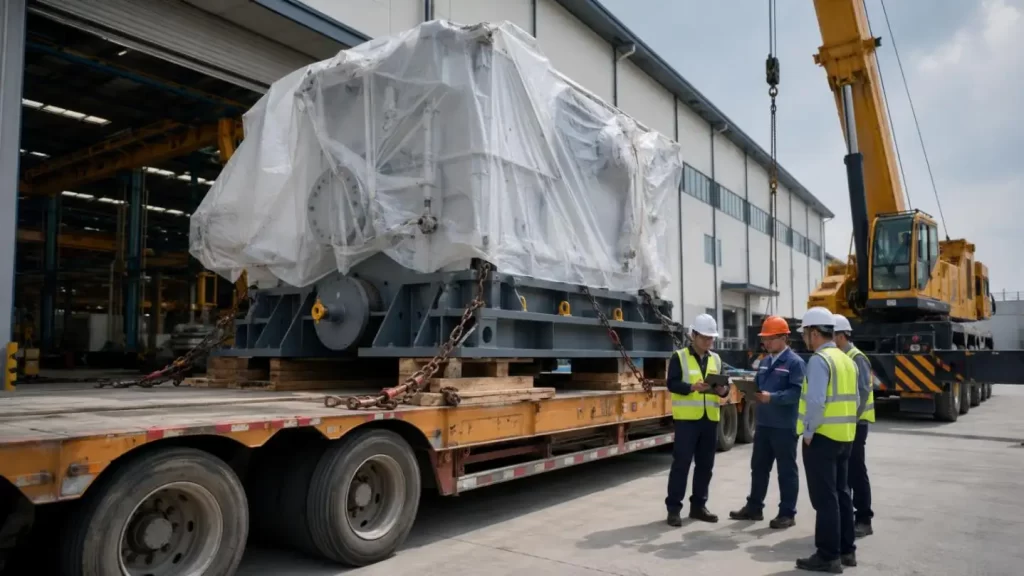
Drawings, photographs, packing plans, and lifting instructions help the Mechanics Transportation Company identify risks before equipment reaches the port. Incorrect dimensions can cause rejected bookings, failed lifting operations, rehandling charges, or last-minute mode changes.
Choosing the Transport Method
The right mode depends on cargo geometry, lifting conditions, route access, schedule, and total landed cost.
| Method | Best Used For | Key Limitation |
| Standard container | Equipment within door and internal limits | Restricted loading clearance |
| Open-top container | Tall machinery loaded vertically | Weather protection and crane access |
| Flat rack | Wide, tall, or irregular equipment | Lashing design and out-of-gauge charges |
| Ro-Ro | Mobile or trailer-mounted machinery | Suitable port and rolling access required |
| Breakbulk | Very large individual units | More terminal handling and lifting |
| Multimodal transport | Long-distance industrial projects | Transfer points require close coordination |
A competent Mechanics Transportation Company compares the complete logistics chain. A low ocean rate can be misleading if it excludes special lifting, terminal storage, escort vehicles, permits, or final unloading.
Load Engineering and Cargo Securing
Heavy machinery should not be secured only by adding more chains. The securing plan must consider:
•Cargo mass and center of gravity
•Forward, rearward, and lateral transport forces
•Lashing angle and working load limit
•Strength of anchor and lifting points
•Friction between the machine base and deck
•Blocking, bracing, edge protection, and anti-slip materials
For example, U.S. cargo-securement rules include specific requirements for heavy vehicles, equipment, and machinery, while also defining the forces that securement systems must withstand. Requirements vary by jurisdiction, so calculations and restraint methods must be checked against the rules applicable to the route.
The Mechanics Transportation Company should additionally take into account the IMO/ILO/UNECE CTU Code when handling containerized or intermodal cargo. This code concerns the packaging, loading, and weight distribution of cargo as well as the security of cargo during both sea and land transportation.
Packing, Permits and Documentation
Machinery packaging should depend on the condition it is expected to encounter:
•Concentrated loads should be packaged on reinforced wooden or steel bases.
•Moisture sensitive parts should be packaged with vacuum barrier films.
•Desiccants and vapor corrosion inhibitors should be packaged with shake and tilt indicators.
•Control panels and protruding parts should be packaged separately.
•Photographs should be taken of control panels and protruding parts prior to packaging.
International shipments of solid wood Crates, dunnage, and packaging supports may be subject to treatment and marking under ISPM 15. Packaging should be confirmed to adhere to the requirements of the standard, as Plywood and processed wood may be treated differently.
The Mechanics Transportation Company should also verify oversize permits, approved travel windows, escort requirements, customs documentation, and port restrictions, as well as the arrangements made for the unloading of the cargo at the destination.
What Determines Machinery Transport Cost?
A professional quotation should separate the major cost components.
| Cost Component | Main Pricing Drivers |
| Main transport | Distance, mode, equipment type, and route |
| Special handling | Crane capacity, rigging crew, and lift complexity |
| Out-of-gauge service | Dimensions, slot availability, and terminal rules |
| Road compliance | Permits, escorts, surveys, and road restrictions |
| Port charges | Handling, storage, documentation, and inspections |
| Risk protection | Packing method, declared value, and insurance |
| Final delivery | Site access, unloading equipment, and waiting time |
Fexbuy recommends comparing total delivered logistics cost, not the headline freight rate. Excluded charges can be more significant than the initial price difference between quotations.
Planning Heavy Equipment Transport with Fexbuy
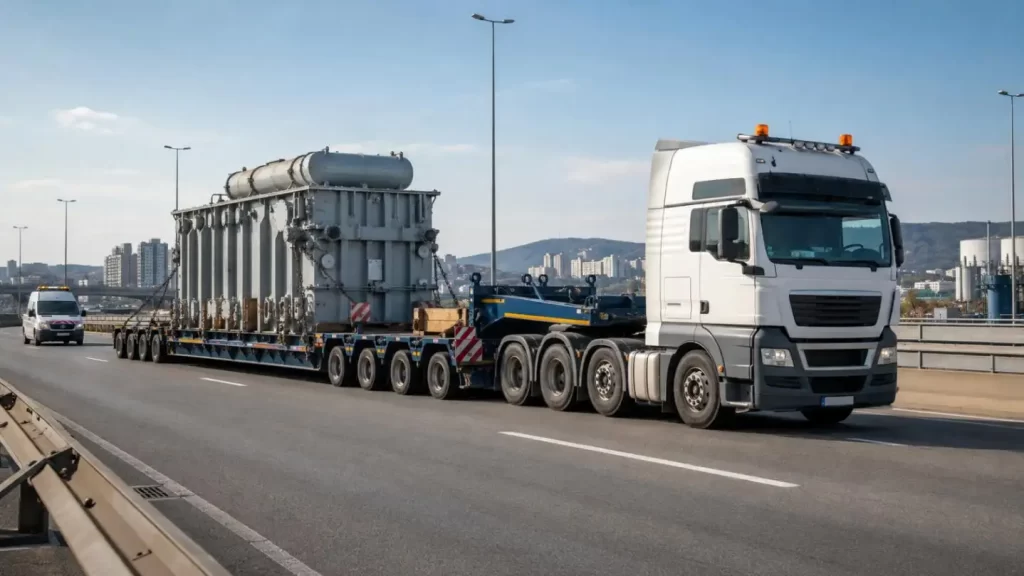
A Mechanics Transportation Company works to manage the interfaces between the factory, packing team, carrier, port, customs, and the destination. Effective planning minimizes rehandling, changes in route, equipment breakage, and unexpected delays to the project.
Fexbuy is able to evaluate your cargo, mode of transport, and coordinate the exports and imports as well as the last mile delivery of your oversized and heavy machinery from China. To get a transport quote, send them the dimensions and weight of your equipment, pictures, the location of pickup and delivery, and your time constraints.
About Fexbuy
Fexbuy offers international logistics services with an experienced team, trusted partners, and effective operational procedures. We help our customers by controlling quality in every aspect of the service we offer, including booking, cargo handling, customs clearance, transport, and delivery. Fexbuy has 21 years of experience in international logistics and has expertise in advanced planning of shipments, coordination with customs, and risk management for international deliveries. We have a solid logistics network for all modes of transport (air, ocean, rail, road, and combined transport) for all major international trade routes. Through advanced planning, Fexbuy uses proactive exception management to track shipments and achieve an on-time delivery rate of 98%.
FAQs
Q1. Can Fexbuy transport oversized and heavy machinery from China?
Yes. Fexbuy can coordinate transportation for CNC machines, injection molding equipment, generators, industrial production lines, construction machinery, and other oversized or heavy cargo. The final solution depends on the equipment’s dimensions, weight, lifting points, and destination.
Q2. What information does Fexbuy need to prepare a quotation?
Customers should provide:
•Equipment name and photographs
•Packed and unpacked dimensions
•Net and gross weight
•Pickup and delivery addresses
•HS code and declared value
•Lifting or handling requirements
•Expected shipping schedule
Accurate cargo information helps Fexbuy prepare a more reliable transport proposal.
Q3. Which shipping methods can Fexbuy arrange for heavy equipment?
Depending on cargo specifications, Fexbuy can evaluate standard containers, open-top containers, flat racks, Ro-Ro shipping, breakbulk shipping, specialized road transport, and multimodal solutions.
Q4. Does Fexbuy provide door-to-door machinery transportation?
Fexbuy can coordinate pickup, export procedures, international transport, customs clearance, destination delivery, and unloading arrangements. Door-to-door availability depends on local regulations, road access, and handling resources at the destination.
Q5. Can Fexbuy help with machinery packing?
Yes. Fexbuy can help coordinate suitable export packing, including reinforced wooden bases, moisture-barrier materials, rust protection, shock indicators, and compliant wooden crates. The packing method is selected according to the machine’s weight and sensitivity.
Share:


